Loading...
Fuad Chehab vs Marouf al-Bakhit
Fuad Chehab leads by 8.3 pts · 2 figures compared
…
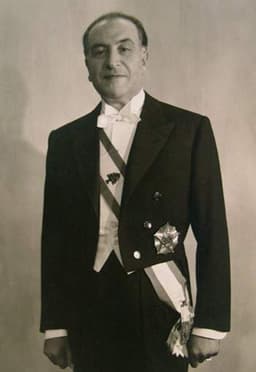
Fuad Chehab
General · Modern
49.9Total
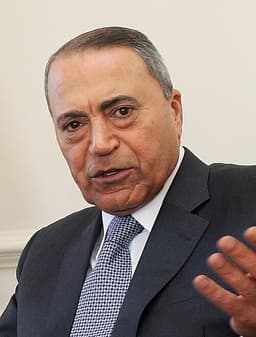
Marouf al-Bakhit
General · Modern
41.6Total
Basic Information
Born
1902
1947
Died
1973
—
Era
Modern
Modern
Nationality
Lebanon
Jordan
Occupation
General
General
Civilization
Middle Eastern
Middle Eastern
Score Comparison
Military (10%)
10.2
10.2
Political (20%)
70.0
61.3
Influence (20%)
54.1
48.6
Legacy (20%)
44.2
38.3
Leadership (15%)
72.0
40.0
Strategy (15%)
30.3
36.8
TOTAL
49.9
41.6
Fuad Chehab — Complete Timeline
1958 AD
Launched Chehabist reforms and modernizationReform◆ Major
President Chehab implemented a series of reforms known as Chehabism, including administrative modernization, economic planning, and strengthening state institutions. He established the Central Bank of Lebanon and the Civil Service Board.
ReformModernizationState Building
Impact: nationalconstructive
Elected President of LebanonPolitical Action◆ Major
Fuad Chehab was elected President of Lebanon on September 23, 1958, succeeding Camille Chamoun. His election ended the 1958 crisis and was supported by both Christian and Muslim factions seeking stability.
PresidencyElectionStabilization
Impact: nationalconstructive
Created the Deuxième Bureau intelligence agencyPolitical Action
Chehab expanded the role of the Deuxi
IntelligenceSecurityAuthoritarianism
Impact: national
1960 AD
Presided over the 1960s economic boomOther
Under Chehab's presidency, Lebanon experienced a period of economic growth and stability, with Beirut becoming a major financial and tourism hub. His policies attracted foreign investment and expanded the middle class.
Economic GrowthBeirutProsperity
Impact: nationalconstructive
1964 AD
Refused to amend constitution for a second termPolitical Action
Chehab declined to seek a second term as president, respecting the constitutional limit. He retired from politics in 1964, setting a precedent for peaceful transitions of power in Lebanon.
ConstitutionTerm LimitRetirement
Impact: nationalconstructive
Marouf al-Bakhit — Complete Timeline
2005 AD
Appointed Prime Minister of JordanPolitical Action◆ Major
King Abdullah II appointed Marouf al-Bakhit as Prime Minister of Jordan in November 2005, following the 2005 Amman bombings. Al-Bakhit, a former intelligence chief, was tasked with restoring security and stability.
JordanPrime MinisterAppointment
Impact: national
2007 AD
Resigned as Prime MinisterPolitical Action
Marouf al-Bakhit resigned as Prime Minister of Jordan in November 2007 after parliamentary elections. His resignation followed criticism of economic policies and political reforms.
JordanPrime MinisterResignation
Impact: national
2011 AD
Appointed Prime Minister for Second TermPolitical Action◆ Major
King Abdullah II appointed Marouf al-Bakhit as Prime Minister again in February 2011, during the Arab Spring protests. Al-Bakhit was tasked with implementing political reforms to address public demands.
JordanArab SpringPrime Minister
Impact: national
Resigned as Prime Minister for Second TermPolitical Action
Marouf al-Bakhit resigned as Prime Minister in October 2011, after failing to satisfy protesters' demands for faster political reforms. His resignation marked the end of his second term.
JordanArab SpringResignation
Impact: national
Expert Analysis
Fuad Chehab vs Marouf al-Bakhit
### The General and the Crisis: Two Paths of Power in the Arab World
In the summer of 1958, Beirut was a city under siege. Barricades blocked the streets, gunfire echoed from the mountains, and the very fabric of Lebanon seemed to be tearing apart. A year earlier, a civil war had erupted between Christian factions loyal to President Camille Chamoun and a coalition of Muslim and leftist rebels backed by Gamal Abdel Nasser’s Egypt. The United States Marines landed on the beaches to restore order. Into this inferno stepped a quiet, ascetic general named Fuad Chehab. Half a century later, in February 2011, another general stood at a different crossroads. In Amman, Jordan, King Abdullah II summoned Marouf al-Bakhit, a former intelligence chief, to form a government. The Arab Spring was sweeping the region, and the throne was shaking. Both men were soldiers called to politics in times of national trauma. But their responses, their ambitions, and their legacies could not have been more different. Why did one become a reformer who reshaped a nation, while the other became a caretaker who merely held the line?
### Origins: The Making of Two Generals
Fuad Chehab was born in 1902 into a family of Lebanese aristocrats with deep roots in the Maronite Christian community. He was raised in a world of French colonial influence and Ottoman decline, where the idea of a modern, independent Lebanon was still a dream. Trained at the French military academy at St. Cyr, Chehab absorbed the discipline of a professional officer. But he also carried a sense of mission. Lebanon, he believed, was a fragile mosaic of sects—Maronites, Sunnis, Shia, Druze—that required a neutral arbiter above the fray. His military career was unremarkable in combat, but he cultivated a reputation for integrity and detachment.
Marouf al-Bakhit, born in 1947, came from a different world. He grew up in a Jordan shaped by the 1948 Nakba, the influx of Palestinian refugees, and the long shadow of King Hussein. He, too, was a military man, rising through the ranks of the Jordanian army and later heading the General Intelligence Department (the mukhabarat). His training was not in French liberalism but in the gritty reality of a monarchy that survived by balancing tribal loyalties, Palestinian nationalism, and Western patronage. Where Chehab was an idealist in uniform, Bakhit was a pragmatist—a man who knew the power of secrets and the fragility of control.
### Rise to Power: The Paths of Entry
Chehab’s entry into the presidency was accidental and reluctant. In 1958, after months of civil war, the political elite realized that only a figure trusted by both sides could restore order. Chehab was not a politician; he had never sought power. But when the parliament elected him on September 23, 1958, he accepted the burden. His first act was to call for a ceasefire and to refuse to punish the rebels. He understood that the crisis was not just about personalities but about a broken social contract.
Bakhit’s rise was more calculated. He was appointed Prime Minister in November 2005, immediately after the Amman bombings—a coordinated al-Qaeda attack on three hotels that killed 60 people. The king needed a security man to restore confidence. Bakhit’s second term, in February 2011, was even more explicitly a crisis appointment. The Arab Spring had reached Jordan; protests demanded political reform, an end to corruption, and a more representative parliament. Bakhit was chosen not for his vision but for his reliability. He was the king’s safe pair of hands.
### Leadership & Governance: Reformer vs. Caretaker
Chehab’s presidency was defined by a bold experiment known as Chehabism—a doctrine of state-led modernization, administrative reform, and the creation of institutions that could transcend sectarianism. He launched the Central Bank, the National Social Security Fund, and the Litani River project to bring electricity and water to rural areas. He expanded the Deuxième Bureau, the military intelligence agency, to monitor politicians, journalists, and activists. This was not a sign of paranoia but of a belief that the state needed to be strong enough to resist sectarian pressures. Chehab also refused to amend the constitution to seek a second term in 1964, a rare act of self-restraint in a region where leaders clung to power.
Bakhit’s governance was the opposite. His first term focused on security: cracking down on Islamist militants and stabilizing the economy. His second term, during the Arab Spring, was a masterclass in damage control. He promised reforms—a new electoral law, anti-corruption measures, and greater freedoms—but delivered little. The protests continued, and by October 2011, he resigned, having failed to satisfy either the protesters or the king. His legacy is one of stasis. He managed crises but never transformed the system.
### Triumph & Tragedy
Chehab’s greatest triumph was the 1960s economic boom. Beirut became the “Paris of the Middle East,” a hub for finance, tourism, and culture. The reforms he set in motion gave Lebanon a decade of stability. But his tragedy was that Chehabism did not outlast him. After 1964, the old sectarian forces reasserted themselves, and the Deuxième Bureau became a tool of oppression. The 1975 civil war would destroy much of what he built.
Bakhit’s triumph was his survival. He kept Jordan stable during a volatile period, preventing the kind of explosion that toppled regimes in Tunisia, Egypt, and Libya. But his tragedy was that he offered no lasting solution. The protests of 2011 were a warning; by 2018, Jordan’s economy was in crisis again, and the same grievances remained. Bakhit was a firefighter, not an architect.
### Character & Destiny
Chehab was a man of principle. He believed that a general’s duty was to serve the nation, not himself. He was austere, almost monkish, and his refusal to seek a second term was seen as a sign of integrity. But his character also limited him. He was distrustful of politicians and preferred to rule through intelligence networks, which alienated many. His destiny was to be a tragic reformer—a man who saw the future but could not make it last.
Bakhit was a man of loyalty. His entire career was built on serving the monarchy. He was not a visionary; he was a technician. His destiny was to be a placeholder—a figure who held the door open for others but never walked through it himself.
### Legacy
Chehab is remembered as one of Lebanon’s most important presidents. His name is synonymous with a brief era of hope. Historians debate whether Chehabism was a genuine reform movement or a veiled form of authoritarianism, but his impact is undeniable. He showed that a military man could be a democrat.
Bakhit is largely forgotten. Outside of Jordan, few remember his name. His legacy is the lesson that crisis management without reform is a temporary fix. In the end, both generals were called to lead in times of upheaval. One tried to build a new house; the other simply patched the roof. The difference was not just in their skills but in their vision of what a leader should be.
### Conclusion
The stories of Fuad Chehab and Marouf al-Bakhit are mirrors held up to the modern Arab world. They remind us that the same uniform can produce very different leaders. Chehab’s Lebanon, for all its flaws, dared to imagine a state above sects. Bakhit’s Jordan, for all its stability, remained a monarchy where power flowed from the throne. Perhaps the most poignant difference is this: Chehab left office because he chose to; Bakhit left because he had no choice. In that contrast lies the enduring question of whether generals can truly be reformers—or whether they are always, in the end, just soldiers following orders.
Rankings
🥇
Fuad ChehabLeader
Mil: 10.2Pol: 70.0Inf: 54.1
49.9
🥈
Marouf al-Bakhit
Mil: 10.2Pol: 61.3Inf: 48.6
41.6
+8.3 behind
How This Comparison Works
Algorithm
Each figure is scored on 6 dimensions (0—100 scale) based on structured historical data: Military (10%), Political (20%), Influence (20%), Legacy (20%), Leadership (15%), Strategy (15%). The weighted total produces the final ranking.
Data Sources
Scores are computed from structured sub-indicators in the database. Scale factors adjust for era (Ancient ×0.85, Modern ×1.0) and civilization size (Eastern ×1.05, Other ×0.80) to account for differences in population and military scale.
Maximum 3 Figures
Comparisons are limited to 2—3 figures to ensure readability and statistical meaningfulness.
Error Margins
±5 points per dimension — Sub-scores are derived from historical records with inherent uncertainty. Two figures within 5 points on a dimension should be considered roughly equivalent in that area.
Total Score Accuracy
±3 points overall — The weighted combination of 6 dimensions produces a total score with approximately ±3 points of uncertainty. Differences of less than 3 points are not statistically significant— the figures are effectively tied.
Known Limitations
- Historical records are incomplete and uneven across civilizations
- Figures from oral-tradition societies may be underrepresented
- Occupation labels can misclassify multi-role figures
- Scores measure capability and impact, not moral character
- Quantitative scoring is a comparison tool, not absolute truth
Capability Radar
Military (10%) — Battles & Warfare
Battles
5
5
Win Rate
5
5
Expansion
5
5
Political (20%) — Governance & Reform
Reform
65
30
Diplomacy
60
40
Economy
50
30
Influence (20%) — Cultural & Global Reach
Cultural
30
10
Global
25
10
Legacy (20%) — Historical Impact
Historical
35
10
Longevity
30
10
Leadership (15%) — Power & Stability
Tenure
55
40
Stability
45
35
Strategy (15%) — Tactics & Innovation
Strategy
10
10
Tactics
10
10
Reform
20
10
Similar Comparisons
Comments & Discussion
OldSchoolStrategist6/16/2026
Chehab was the real deal—a St. Cyr grad who understood that Lebanon’s 1958 crisis wasn’t a military problem but a political one. He didn’t just pacify the streets; he rebuilt the state with sweeping reforms, creating the Central Bank and civil service. By contrast, al-Bakhit was a classic security man, doubling down on repression during the 2011 protests. He brought out riot police instead of offering real change. One had vision; the other just followed orders.
数字考古学家6/16/2026
数据从不撒谎:1958年黎巴嫩内战期间,夏哈布接手的是一个GDP增长率仅为1.2%的破碎国家,但他推动的行政改革让1960年代年增长率跃升至6%以上。巴希特呢?2011年约旦陷入动荡时,他主导的经济紧缩政策居然把青年失业率推高到27%!数字不会骗人:一个将军建医院、修学校的数字翻了一番;另一个将军则让贫困率飙升。改革派还是维稳派?不看口号看数据。
ClassicsScholar6/16/2026
Chehab channeled the Aristotelian ideal of the philosopher-king: a reluctant ruler who governed with wisdom and restraint. His 1958 "no victor, no vanquished" policy echoed Pericles' call for national unity after civil strife. al-Bakhit, by contrast, was a textbook praetorian—the man who secured the throne but deepened the schism between state and citizen. When history tests a soldier's soul, one builds an academy for order; the other just polices the crowd.
暴躁老饕6/16/2026
夏哈布在任期间搞了什么?把黎巴嫩的烂摊子收拾成中东瑞士!提尔古港的改造,贝鲁特水渠的修复——全是真金白银的民生工程。巴希特呢?2011年到现在,约旦那破高速公路修了十年还没通到亚喀巴!士兵要的不是军靴踩遍街道,该是工兵推土机铺路。一个将军建学校,一个将军修监狱,当兵出身的差距咋就这么大呢?
RevisionistShadow6/16/2026
Let’s not romanticize Chehab too much. His "reforms" centralized power in the presidency and integrated the Deuxième Bureau (military intelligence) into every level of society—a precursor to the surveillance state that would haunt Lebanon later. al-Bakhit’s real sin wasn’t being a security thug, but being a loyalist who refused to even fake reform. Both men militarized governance. Chehab just wore a better costume: the ascetic reformer who tightened the leash under a velvet glove.