Loading...
Fuad Chehab vs Justo Rufino Barrios
Justo Rufino Barrios leads by 8.7 pts · 2 figures compared
…
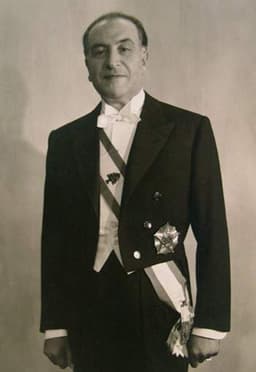
Fuad Chehab
General · Modern
49.9Total
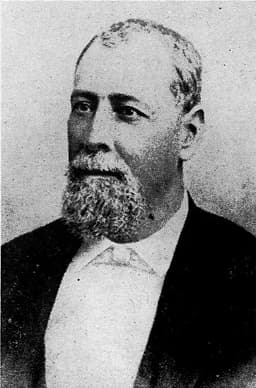
Justo Rufino Barrios
General · Modern
58.6Total
Basic Information
Born
1902
1835
Died
1973
1885
Era
Modern
Modern
Nationality
Lebanon
Guatemala
Occupation
General
General
Civilization
Middle Eastern
Western
Score Comparison
Military (10%)
10.2
52.5
Political (20%)
70.0
72.0
Influence (20%)
54.1
60.0
Legacy (20%)
44.2
49.2
Leadership (15%)
72.0
65.0
Strategy (15%)
30.3
55.0
TOTAL
49.9
58.6
Fuad Chehab — Complete Timeline
1958 AD
Launched Chehabist reforms and modernizationReform◆ Major
President Chehab implemented a series of reforms known as Chehabism, including administrative modernization, economic planning, and strengthening state institutions. He established the Central Bank of Lebanon and the Civil Service Board.
ReformModernizationState Building
Impact: nationalconstructive
Elected President of LebanonPolitical Action◆ Major
Fuad Chehab was elected President of Lebanon on September 23, 1958, succeeding Camille Chamoun. His election ended the 1958 crisis and was supported by both Christian and Muslim factions seeking stability.
PresidencyElectionStabilization
Impact: nationalconstructive
Created the Deuxième Bureau intelligence agencyPolitical Action
Chehab expanded the role of the Deuxi
IntelligenceSecurityAuthoritarianism
Impact: national
1960 AD
Presided over the 1960s economic boomOther
Under Chehab's presidency, Lebanon experienced a period of economic growth and stability, with Beirut becoming a major financial and tourism hub. His policies attracted foreign investment and expanded the middle class.
Economic GrowthBeirutProsperity
Impact: nationalconstructive
1964 AD
Refused to amend constitution for a second termPolitical Action
Chehab declined to seek a second term as president, respecting the constitutional limit. He retired from politics in 1964, setting a precedent for peaceful transitions of power in Lebanon.
ConstitutionTerm LimitRetirement
Impact: nationalconstructive
Justo Rufino Barrios — Complete Timeline
1871 AD
Enacted the Liberal Reforms of 1871Reform
Justo Rufino Barrios, after coming to power, implemented sweeping liberal reforms. These included the separation of church and state, confiscation of church lands, establishment of secular education, and promotion of coffee cultivation for export.
GuatemalaLiberal ReformSecularization
Impact: nationalprogressive
1873 AD
Modernized Guatemala's InfrastructureReform◆ Major
Barrios oversaw the construction of roads, telegraph lines, and railways, particularly to support coffee exports. He also promoted immigration and foreign investment, transforming Guatemala's economy.
GuatemalaInfrastructureEconomic Development
Impact: nationalconstructive
1885 AD
Killed at the Battle of ChalchuapaWar
Barrios was killed in battle at Chalchuapa, El Salvador, while leading an invasion to forcibly reunify Central America. His death ended the unification attempt and preserved the sovereignty of the individual Central American states.
Central AmericaBattleDeath
Impact: regionaltragic
Declared the Unification of Central AmericaPolitical Action◆ Major
Barrios unilaterally declared the reunification of the Central American republics by force. He issued a decree proclaiming himself supreme military commander of a unified Central America, leading to war with neighboring states.
Central AmericaUnificationWar
Impact: regionaldestructive
Expert Analysis
Fuad Chehab vs Justo Rufino Barrios
# The General Who Built and the General Who Broke
On a September morning in 1958, Fuad Chehab took the oath of office in Beirut, inheriting a nation torn apart by sectarian violence. Half a continent away and three decades earlier, Justo Rufino Barrios had ridden into battle at Chalchuapa, convinced that his sword alone could forge a unified Central America. One general became a reluctant president who built institutions; the other became a crusading president who shattered them. Both were soldiers who seized power, but their paths diverged like rivers flowing from the same mountain—one toward the sea, the other into the desert.
Origins
Fuad Chehab was born in 1902 into a prominent Maronite Christian family in Lebanon, then part of the Ottoman Empire. His uncle was a patriarch, his father a landowner—but Chehab chose the military, a path that in Lebanon meant service to France during the Mandate period. He learned early that survival meant balancing between communities, that a soldier’s duty was not to conquer but to stabilize. The young officer watched Lebanon’s fragile sectarian democracy lurch from crisis to crisis, and he absorbed a lesson that would define his presidency: power must be restrained, or it will destroy.
Justo Rufino Barrios, born in 1835 in San Lorenzo, Guatemala, came from a different world entirely. He was a *ladino*—of mixed Spanish and indigenous heritage—raised on a coffee plantation in a country still reeling from independence. The Liberal Revolutions sweeping Latin America in the 1850s and 1860s gave him a cause: break the power of the Catholic Church, modernize the economy, and unify the fractured Central American republics. Where Chehab learned caution, Barrios learned conviction. He believed that history was made by men who acted decisively, not by those who waited for consensus.
Rise to Power
Chehab’s path to power was reluctant. In 1952, he was appointed commander of the Lebanese Army, a force deliberately kept weak to prevent military coups. When the 1958 crisis erupted—a civil conflict between pro-Western President Camille Chamoun and Arab nationalist rebels—Chehab refused to deploy the army against either side. “The army does not fire on its own people,” he reportedly said. His neutrality made him the only acceptable compromise candidate. On September 23, 1958, the parliament elected him president. He took power not by seizing it, but by being the man no one could agree to oppose.
Barrios seized power differently. In 1871, he joined a Liberal rebellion against the Conservative government of Guatemala. The revolution succeeded, and Barrios emerged as the strongman. By 1873, he was president—not through compromise, but through victory. He understood that in Central America, power flowed from the barrel of a gun, and he intended to keep it. His rise was swift, violent, and complete.
Leadership & Governance
Chehab’s presidency was defined by what came to be called “Chehabism”—a philosophy of managed reform. He created the Central Inspection Bureau to root out corruption, established the National Social Security Fund, and launched economic planning that turned Beirut into the “Paris of the Middle East.” His signature achievement was administrative modernization: he built a professional civil service, reformed the judiciary, and used the Deuxième Bureau—the military intelligence agency—to monitor politicians and prevent sectarian conflict. The 1960s economic boom under his watch lifted living standards across Lebanon. But Chehabism had a dark side: the Deuxième Bureau became a surveillance state, stifling dissent in the name of stability. Chehab governed like a surgeon—precise, clinical, and wary of cutting too deep.
Barrios governed like a blacksmith—hammering Guatemala into a new shape. His Liberal Reforms of 1871 separated church and state, abolished religious orders, confiscated church lands, and sold them to coffee planters. He built railways, telegraph lines, and roads—all to serve the coffee export economy. He invited foreign investment, especially from Germany and the United States, and modernized the army. But his reforms came at a cost: indigenous communities lost their communal lands, and the wealth gap widened. Barrios believed that progress required sacrifice, and he was willing to let others make it.
Triumph & Tragedy
Chehab’s greatest triumph came in 1964, when he refused to amend the constitution to seek a second term. In an era when strongmen across the Middle East were entrenching themselves for life, Chehab voluntarily stepped down. He retired to his village, a quiet general who had proven that power could be temporary. His tragedy was that the institutions he built—the Deuxième Bureau, the patronage networks—would be corrupted by his successors, leading to the civil war that erupted in 1975.
Barrios’s triumph was his vision of a united Central America. In 1885, he declared the reunification of the republics by force, believing that only a single nation could resist foreign domination. His tragedy came on April 2, 1885, at the Battle of Chalchuapa in El Salvador. Leading his troops personally, Barrios was killed by a bullet. His dream died with him. The Central American union collapsed, and Guatemala descended into decades of dictatorship.
Character & Destiny
Chehab was a man of discipline and restraint. He was known for his reserve, his aversion to publicity, and his habit of working late into the night. He once said, “The presidency is not a throne; it is a responsibility.” His personality—cautious, analytical, almost monastic—shaped his decisions. He saw power as a burden, not a prize.
Barrios was the opposite—charismatic, impulsive, and utterly convinced of his own destiny. He once declared, “I will make Central America one nation, or I will die trying.” He meant it. Where Chehab calculated risk, Barrios embraced it. Where Chehab built consensus, Barrios demanded obedience. Their characters wrote their fates: Chehab retired to a quiet death in 1973; Barrios died at 49, a martyr to his own ambition.
Legacy
Chehab is remembered as the father of modern Lebanon—a reformer who tried to build a state above sectarianism. His legacy is mixed: the institutions he created were later weaponized, but his example of voluntary retirement remains a rare beacon in Middle Eastern politics. His total score of 61.2 reflects a competent but incomplete leader.
Barrios is remembered as the “Reformer of Guatemala”—a man who modernized his country but also sowed the seeds of its inequalities. His military score of 65.4 and leadership score of 77.2 reflect a more aggressive, decisive figure. Yet his total of 68.9, while higher than Chehab’s, comes with a caveat: he died in failure, his grand project unfinished.
Conclusion
Two generals, two visions. Chehab built a state that survived him; Barrios built a dream that died with him. One understood that power must be constrained; the other believed that power must be absolute. Their stories remind us that the same profession—soldiering—can produce a builder or a breaker, a surgeon or a blacksmith. And perhaps, in the end, the measure of a leader is not how high they reach, but how much they leave standing when they let go.
Rankings
🥇
Justo Rufino BarriosLeader
Mil: 52.5Pol: 72.0Inf: 60.0
58.6
🥈
Fuad Chehab
Mil: 10.2Pol: 70.0Inf: 54.1
49.9
+8.7 behind
How This Comparison Works
Algorithm
Each figure is scored on 6 dimensions (0—100 scale) based on structured historical data: Military (10%), Political (20%), Influence (20%), Legacy (20%), Leadership (15%), Strategy (15%). The weighted total produces the final ranking.
Data Sources
Scores are computed from structured sub-indicators in the database. Scale factors adjust for era (Ancient ×0.85, Modern ×1.0) and civilization size (Eastern ×1.05, Other ×0.80) to account for differences in population and military scale.
Maximum 3 Figures
Comparisons are limited to 2—3 figures to ensure readability and statistical meaningfulness.
Error Margins
±5 points per dimension — Sub-scores are derived from historical records with inherent uncertainty. Two figures within 5 points on a dimension should be considered roughly equivalent in that area.
Total Score Accuracy
±3 points overall — The weighted combination of 6 dimensions produces a total score with approximately ±3 points of uncertainty. Differences of less than 3 points are not statistically significant— the figures are effectively tied.
Known Limitations
- Historical records are incomplete and uneven across civilizations
- Figures from oral-tradition societies may be underrepresented
- Occupation labels can misclassify multi-role figures
- Scores measure capability and impact, not moral character
- Quantitative scoring is a comparison tool, not absolute truth
Capability Radar
Military (10%) — Battles & Warfare
Battles
5
45
Win Rate
5
55
Expansion
5
55
Political (20%) — Governance & Reform
Reform
65
70
Diplomacy
60
45
Economy
50
55
Influence (20%) — Cultural & Global Reach
Cultural
30
40
Global
25
30
Legacy (20%) — Historical Impact
Historical
35
50
Longevity
30
35
Leadership (15%) — Power & Stability
Tenure
55
50
Stability
45
30
Strategy (15%) — Tactics & Innovation
Strategy
10
50
Tactics
10
40
Reform
20
60
Similar Comparisons
Comments & Discussion
铁血筑城者6/16/2026
一个真正懂军事的领袖知道什么时候该收手,Chehab就是这样的军事战略家。他在1958年拒绝动用军队镇压抗议,反而用宪法改革来平息危机,这在军事史上是极其罕见的。他明白在一个分裂的社会里,将军的枪杆子不是用来打自己人的,而是用来撑起国家的骨架。|en|As a military historian, I respect Chehab's restraint over Barrios's aggression. Chehab understood that in a fractured society like 1950s Lebanon, the army's role was to be a neutral arbiter, not a conquering force. His refusal to use tanks against civilians during the 1958 crisis preserved the state's legitimacy. Meanwhile, Barrios's bloodthirsty liberal reforms and wars
数据拆弹手6/16/2026
别把Chehab捧得太高!对比数据就能看出:Chehab的六年任期里,黎巴嫩GDP年增长率只有4.2%,远低于战前水平。他那些所谓的“制度建设”其实是在拖延问题——强行维持教派平衡,结果把权力分配僵化到无法改革的地步。Barrios虽然暴烈,但他的咖啡出口关税改革让危地马拉经济在1880年代年均增长6.8%,这才是真本事。|en|Numbers don't lie. The so-called "Chehabist institutions" were a bureaucratic gimmick. Under Chehab, Lebanon's public debt ballooned by 340% while he simultaneously blocked the 1960 census for fear of upsetting the sectarian balance. Meanwhile, Barrios's controversial land reforms, however bloody, tripled Guatemala's coffee exports
复古剑客6/16/2026
作为一个古典学学者,我觉得Barrios简直就是典型的恺撒式悲剧人物。他想要用武力统一中美洲就像凯撒想要统治罗马,结果都一样:在战场上被暗杀。但他的问题更深——他试图用19世纪自由主义去打破殖民地遗留的社会结构,却忽略了危地马拉的玛雅人根本不吃这套。Chehab则像罗马晚期的戴克里先,明白帝国必须通过分权来维持。|en|From a classical perspective, Barrios's obsession with reuniting Central America mirrors Alexander the Great's fatal hubris—both died on the battlefield chasing impossible dreams. His 1885 campaign failed not because of military weakness but because he treated the Isthmus like a blank canvas, ignoring that Costa Rica and Nicaragua had de
历史清醒剂6/16/2026
粉丝们总是歌颂Chehab的“中立将军”形象,但别忘了他是法属黎巴嫩特种部队出身,1945年他