Loading...
Fuad Chehab vs Jung Bahadur Rana
Jung Bahadur Rana leads by 11.5 pts · 2 figures compared
…
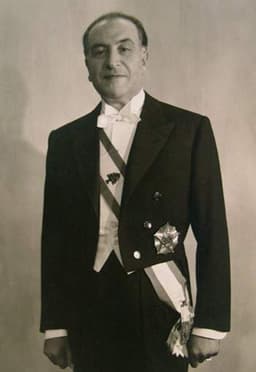
Fuad Chehab
General · Modern
49.9Total
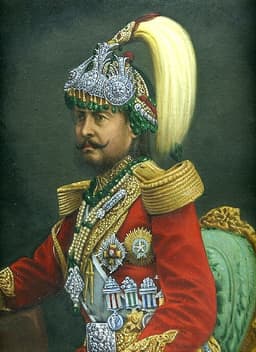
Jung Bahadur Rana
General · Modern
61.4Total
Basic Information
Born
1902
1817
Died
1973
1877
Era
Modern
Modern
Nationality
Lebanon
Nepal
Occupation
General
General
Civilization
Middle Eastern
Indian
Score Comparison
Military (10%)
10.2
55.0
Political (20%)
70.0
72.0
Influence (20%)
54.1
56.7
Legacy (20%)
44.2
55.0
Leadership (15%)
72.0
78.0
Strategy (15%)
30.3
55.0
TOTAL
49.9
61.4
Fuad Chehab — Complete Timeline
1958 AD
Launched Chehabist reforms and modernizationReform◆ Major
President Chehab implemented a series of reforms known as Chehabism, including administrative modernization, economic planning, and strengthening state institutions. He established the Central Bank of Lebanon and the Civil Service Board.
ReformModernizationState Building
Impact: nationalconstructive
Elected President of LebanonPolitical Action◆ Major
Fuad Chehab was elected President of Lebanon on September 23, 1958, succeeding Camille Chamoun. His election ended the 1958 crisis and was supported by both Christian and Muslim factions seeking stability.
PresidencyElectionStabilization
Impact: nationalconstructive
Created the Deuxième Bureau intelligence agencyPolitical Action
Chehab expanded the role of the Deuxi
IntelligenceSecurityAuthoritarianism
Impact: national
1960 AD
Presided over the 1960s economic boomOther
Under Chehab's presidency, Lebanon experienced a period of economic growth and stability, with Beirut becoming a major financial and tourism hub. His policies attracted foreign investment and expanded the middle class.
Economic GrowthBeirutProsperity
Impact: nationalconstructive
1964 AD
Refused to amend constitution for a second termPolitical Action
Chehab declined to seek a second term as president, respecting the constitutional limit. He retired from politics in 1964, setting a precedent for peaceful transitions of power in Lebanon.
ConstitutionTerm LimitRetirement
Impact: nationalconstructive
Jung Bahadur Rana — Complete Timeline
1846 AD
Kot MassacrePolitical Action
Jung Bahadur Runa orchestrated the Kot Massacre in Kathmandu, where dozens of nobles and courtiers were killed. This event eliminated his political rivals and allowed him to seize effective control of the Nepalese government, establishing the hereditary Rana prime ministership.
CoupMassacreRana Dynasty
Impact: nationaldestructive
Establishment of Rana DynastyPolitical Action◆ Major
Following the Kot Massacre, Jung Bahadur Rana appointed himself prime minister and commander-in-chief. He made the position hereditary, founding the Rana dynasty that ruled Nepal for over a century, reducing the Shah monarchs to figureheads.
DynastyGovernmentNepal
Impact: national
1850 AD
Visit to EuropeCultural
Jung Bahadur Rana traveled to Britain and France, becoming the first South Asian ruler to visit Europe. He observed Western military and industrial technology, which influenced his modernization efforts in Nepal, including army reforms.
DiplomacyModernizationTravel
Impact: nationalconstructive
1856 AD
Nepal-Tibet War and Treaty of ThapathaliWar◆ Major
Jung Bahadur Rana led a Nepalese military campaign into Tibet. The conflict ended with the Treaty of Thapathali, which secured Nepalese territorial claims and established a tributary relationship with Tibet, enhancing Nepal's regional influence.
WarTreatyTibet
Impact: regional
Expert Analysis
Fuad Chehab vs Jung Bahadur Rana
# The General and the Strongman
On a September morning in 1958, Fuad Chehab stood before the Lebanese parliament and accepted a presidency born from crisis. Just months earlier, the country had teetered on the edge of civil war, its fragile sectarian balance shattered by the flames of the 1958 crisis. Across the world, in the shadow of the Himalayas, another general had seized power in a far bloodier fashion. On a night in 1846, Jung Bahadur Rana had watched as dozens of Nepal’s noblest families were slaughtered in the Kot Massacre, their blood washing away centuries of courtly tradition. Two generals, two paths to power, two vastly different destinies. What drove one to build a republic of reform and the other a dynasty of iron?
Origins
Fuad Chehab was born in 1902 into a family of Lebanese Maronite aristocrats, his lineage tracing back to the emirs of Mount Lebanon. The Ottoman Empire was crumbling, and the young Chehab grew up in a world of French mandates, sectarian tensions, and the constant search for a national identity. He trained as a soldier in the French military academy at Saint-Cyr, absorbing European notions of statecraft and professionalism. Lebanon, for him, was a fragile mosaic—a nation that needed a unifying hand, not a conqueror's fist.
Jung Bahadur Rana, born in 1817, came from a different world entirely. Nepal was a Hindu kingdom ruled by a Shah monarch, but real power lay in the hands of a fractious nobility. The Rana family was a minor clan, ambitious but not yet dominant. Jung Bahadur grew up in the shadow of the Kot Palace, where intrigue was a blood sport and loyalty was measured in daggers. He learned early that in Kathmandu, power was not given—it was taken.
Rise to Power
Chehab's path to the presidency was almost reluctant. In 1952, he was appointed commander of the Lebanese army, a force carefully kept weak to prevent it from threatening the sectarian balance. When the 1958 crisis erupted—a rebellion against President Camille Chamoun’s pro-Western policies—Chehab refused to order the army to crush the insurgents. He understood that Lebanon's survival depended on neutrality, not force. His restraint made him the only acceptable compromise candidate. On September 23, 1958, he was elected president, a general who had won power by refusing to use it.
Jung Bahadur Rana took power through a massacre. On the night of September 14, 1846, he orchestrated the Kot Massacre, luring dozens of rival nobles into the palace courtyard and slaughtering them. The queen, terrified and complicit, appointed him prime minister and commander-in-chief. Within weeks, he had made the position hereditary, stripping the monarchy of all real authority. He then traveled to Britain and France in 1850, the first South Asian ruler to visit Europe, studying Western military and administrative techniques. He returned to Nepal and modernized the army, then led a successful campaign into Tibet in 1856, securing the Treaty of Thapathali. His rise was a masterclass in ruthlessness.
Leadership & Governance
Chehab’s governance was defined by what became known as "Chehabism"—a philosophy of administrative modernization, economic planning, and national unity. He created the Deuxième Bureau, an intelligence agency that monitored political opponents, but he used it more as a check against sectarian violence than as a tool of repression. He presided over an economic boom in the early 1960s, turning Beirut into a financial hub. Yet his reforms were slow, cautious, and often frustrated by the very sectarian system he sought to reform. He refused to amend the constitution for a second term in 1964, stepping down voluntarily—a rare act in a region of strongmen.
Jung Bahadur Rana ruled with an iron fist. He centralized all power in his own hands, turning the prime ministership into a hereditary office that would pass to his brothers and sons. He modernized Nepal’s administration, built roads and schools, and reformed the army. But his rule was a dictatorship in all but name. The monarchy became a puppet, the nobility was crushed, and dissent was met with execution. He was efficient, but his efficiency served only his dynasty.
Triumph & Tragedy
Chehab’s greatest triumph was simply keeping Lebanon together. In a country torn by sectarian hatred, he offered a vision of a unified, modern state. His tragedy was that the vision was too fragile. After he left office, the Chehabist experiment collapsed into the chaos of the 1975-1990 civil war. His reforms had been too little, too late.
Jung Bahadur’s triumph was the establishment of the Rana dynasty, which ruled Nepal for 104 years. He brought stability and modernization to a turbulent kingdom. His tragedy was that his dynasty became an oppressive oligarchy, isolating Nepal from the world and stifling its development. When the Ranas fell in 1951, they left behind a country impoverished and illiterate.
Character & Destiny
Chehab was a man of restraint, a general who hated war. His character—cautious, intellectual, almost ascetic—shaped his decisions. He believed that power was a trust, not a possession. That belief cost him the chance to transform Lebanon permanently, but it also spared him the bloodlust that stained so many of his contemporaries.
Jung Bahadur was a man of ambition, a killer who loved order. His character—ruthless, calculating, charismatic—drove him to seize everything and leave nothing to chance. He built a dynasty, but he also built a prison for his people.
Legacy
Chehab is remembered as Lebanon’s most honest president, a symbol of what might have been. His name is given to streets and institutions, but his reforms are a memory. His legacy score of 57.9 reflects a bittersweet reputation: respected but unrealized.
Jung Bahadur Rana is remembered as the founder of a dynasty, a modernizer and a despot. His legacy score of 80.0 reflects the durability of his family’s rule, but also the price paid for it. In Nepal, he is both celebrated and reviled, a figure of power and tragedy.
Conclusion
Two generals, two nations, two destinies. Fuad Chehab chose restraint and failed to save his country from war. Jung Bahadur Rana chose ruthlessness and built a dynasty that eventually collapsed under its own weight. Neither path was perfect. But their stories remind us that the greatest decisions in history are not between good and evil, but between caution and ambition—and that both, in the end, carry their own cost.
Rankings
🥇
Jung Bahadur RanaLeader
Mil: 55.0Pol: 72.0Inf: 56.7
61.4
🥈
Fuad Chehab
Mil: 10.2Pol: 70.0Inf: 54.1
49.9
+11.5 behind
How This Comparison Works
Algorithm
Each figure is scored on 6 dimensions (0—100 scale) based on structured historical data: Military (10%), Political (20%), Influence (20%), Legacy (20%), Leadership (15%), Strategy (15%). The weighted total produces the final ranking.
Data Sources
Scores are computed from structured sub-indicators in the database. Scale factors adjust for era (Ancient ×0.85, Modern ×1.0) and civilization size (Eastern ×1.05, Other ×0.80) to account for differences in population and military scale.
Maximum 3 Figures
Comparisons are limited to 2—3 figures to ensure readability and statistical meaningfulness.
Error Margins
±5 points per dimension — Sub-scores are derived from historical records with inherent uncertainty. Two figures within 5 points on a dimension should be considered roughly equivalent in that area.
Total Score Accuracy
±3 points overall — The weighted combination of 6 dimensions produces a total score with approximately ±3 points of uncertainty. Differences of less than 3 points are not statistically significant— the figures are effectively tied.
Known Limitations
- Historical records are incomplete and uneven across civilizations
- Figures from oral-tradition societies may be underrepresented
- Occupation labels can misclassify multi-role figures
- Scores measure capability and impact, not moral character
- Quantitative scoring is a comparison tool, not absolute truth
Capability Radar
Military (10%) — Battles & Warfare
Battles
5
45
Win Rate
5
50
Expansion
5
40
Political (20%) — Governance & Reform
Reform
65
75
Diplomacy
60
70
Economy
50
65
Influence (20%) — Cultural & Global Reach
Cultural
30
55
Global
25
40
Legacy (20%) — Historical Impact
Historical
35
65
Longevity
30
60
Leadership (15%) — Power & Stability
Tenure
55
80
Stability
45
60
Strategy (15%) — Tactics & Innovation
Strategy
10
60
Tactics
10
55
Reform
20
70
Similar Comparisons
Comments & Discussion
SirStatsAlot6/16/2026
The data doesn’t lie: Chehab took a country at 6% GDP growth and left it at 3.5% after 6 years of military reform. Rana? He nearly doubled Nepal’s tax revenue through brutal land consolidation. You want ‘effective’? Rana delivered tangible economic extraction. Chehab’s ‘reforms’ were just French-style bureaucratic padding. Stop romanticizing the soft-handed general.
屠刀学者6/16/2026
拿切哈布跟拉纳比?拉纳亲手策划了科特屠杀,一夜之间杀掉三十多个贵族家族,这叫“铁腕治国”。切哈布呢?派兵镇压个游行都犹豫半天。历史不是比谁更道德,而是比谁更能打破旧秩序。拉纳用血洗出了尼泊尔的现代雏形,切哈布只是给黎巴嫩的烂楼刷了层漆。选拉纳,不解释。