Loading...
Fuad Chehab vs John Lambert
John Lambert leads by 6.8 pts · 2 figures compared
…
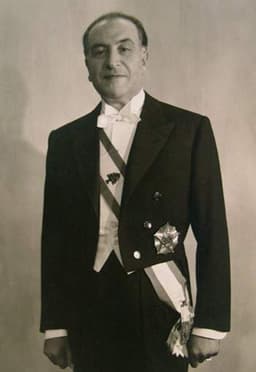
Fuad Chehab
General · Modern
49.9Total
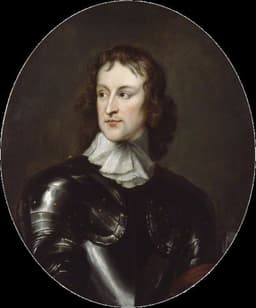
John Lambert
General · Modern
56.7Total
Basic Information
Born
1902
1619
Died
1973
1684
Era
Modern
Modern
Nationality
Lebanon
England
Occupation
General
General
Civilization
Middle Eastern
Western
Score Comparison
Military (10%)
10.2
70.0
Political (20%)
70.0
45.0
Influence (20%)
54.1
59.0
Legacy (20%)
44.2
50.0
Leadership (15%)
72.0
68.0
Strategy (15%)
30.3
55.0
TOTAL
49.9
56.7
Fuad Chehab — Complete Timeline
1958 AD
Launched Chehabist reforms and modernizationReform◆ Major
President Chehab implemented a series of reforms known as Chehabism, including administrative modernization, economic planning, and strengthening state institutions. He established the Central Bank of Lebanon and the Civil Service Board.
ReformModernizationState Building
Impact: nationalconstructive
Elected President of LebanonPolitical Action◆ Major
Fuad Chehab was elected President of Lebanon on September 23, 1958, succeeding Camille Chamoun. His election ended the 1958 crisis and was supported by both Christian and Muslim factions seeking stability.
PresidencyElectionStabilization
Impact: nationalconstructive
Created the Deuxième Bureau intelligence agencyPolitical Action
Chehab expanded the role of the Deuxi
IntelligenceSecurityAuthoritarianism
Impact: national
1960 AD
Presided over the 1960s economic boomOther
Under Chehab's presidency, Lebanon experienced a period of economic growth and stability, with Beirut becoming a major financial and tourism hub. His policies attracted foreign investment and expanded the middle class.
Economic GrowthBeirutProsperity
Impact: nationalconstructive
1964 AD
Refused to amend constitution for a second termPolitical Action
Chehab declined to seek a second term as president, respecting the constitutional limit. He retired from politics in 1964, setting a precedent for peaceful transitions of power in Lebanon.
ConstitutionTerm LimitRetirement
Impact: nationalconstructive
John Lambert — Complete Timeline
1648 AD
Battle of PrestonWar◆ Major
John Lambert commanded parliamentary forces at the Battle of Preston, defeating a Scottish royalist army. The victory helped secure the parliamentary cause in the Second English Civil War.
BattleEnglish Civil WarParliament
Impact: national
1653 AD
Drafted the Instrument of GovernmentPolitical Action◆ Major
John Lambert was the principal author of the Instrument of Government, the written constitution that established the Protectorate under Oliver Cromwell. The document created a Lord Protector and a Council of State, but was never fully implemented.
ConstitutionProtectorateCromwell
Impact: nationalconstructive
1662 AD
Exiled to GuernseyPolitical Action◆ Major
After the Restoration, John Lambert was tried for treason and exiled to the island of Guernsey. He spent the remainder of his life in captivity, never regaining political influence.
ExileRestorationPunishment
Impact: nationaltragic
Expert Analysis
Fuad Chehab vs John Lambert
# The General Who Built a Constitution and the General Who Built a State
On a winter morning in 1662, John Lambert stood in the Tower of London, awaiting trial for high treason. Twenty years earlier, he had been Oliver Cromwell’s most brilliant lieutenant, the man who crushed royalist armies at Preston and who drafted England’s first written constitution. Now, the monarchy he had helped destroy was back, and it wanted him dead. Across the centuries and continents, another general faced a very different fate. In September 1958, Fuad Chehab rode through the streets of Beirut, elected president of a Lebanon torn by sectarian violence. Where Lambert had built for revolution, Chehab built for reconciliation. Both were generals who tried to reshape their nations through law and order. One ended in exile, the other in quiet retirement. The question is why.
Origins
John Lambert was born in 1619 into the Yorkshire gentry, a world of manor houses and Puritan piety. The England of his youth was a tinderbox: King Charles I ruled without Parliament, religious dissent was crushed, and the old feudal order was cracking under the weight of commerce and Calvinism. Lambert studied law at the Inns of Court, but the call of arms proved stronger. When civil war erupted in 1642, he chose Parliament—not out of republican zeal, but because he believed in limited government and the rule of law. He was a man of the English Reformation, shaped by the belief that authority must be accountable.
Fuad Chehab was born in 1902 into a Maronite Christian family in Beirut, then part of the Ottoman Empire. His world was a mosaic of sects and empires: Sunni Muslims, Druze, Greek Orthodox, and Maronites lived side by side under Ottoman rule, then French mandate. Chehab’s father was a Lebanese army officer; his uncle was a patriarch of the Maronite Church. He grew up fluent in Arabic, French, and Turkish, trained at the French military academy in Damascus, and served in the French colonial forces. Where Lambert inherited a tradition of parliamentary struggle, Chehab inherited a tradition of communal balancing. His England was a nation fighting over sovereignty; his Lebanon was a nation fighting over survival.
Rise to Power
Lambert’s rise came on the battlefield. At the Battle of Preston in 1648, he commanded the parliamentary forces that crushed a Scottish royalist invasion. He was just twenty-nine. His strategy—swift marches, coordinated infantry and cavalry, relentless pursuit—earned him Cromwell’s trust. But Lambert was not merely a soldier. After the king’s execution in 1649, he became the leading voice for a constitutional settlement. When Cromwell dissolved Parliament in 1653, Lambert presented the Instrument of Government, a written constitution that created a Protectorate with a Lord Protector, a Council of State, and a Parliament. It was audacious: for the first time in English history, a nation would be governed by a codified document, not by royal prerogative.
Chehab’s rise was different. He never fought a major battle. Instead, he built a reputation as a modernizer within the Lebanese army, which he helped transform from a French colonial force into a national institution. In 1958, Lebanon erupted into civil war after President Camille Chamoun tried to amend the constitution to seek a second term. The crisis pitted Maronite Christians against Muslim and Druze factions, with the United States landing Marines to stabilize the country. Chehab, then army commander, refused to use military force against any side. He brokered a ceasefire, and when Chamoun stepped down, Chehab was elected president on September 23, 1958. He entered office not as a conqueror, but as a mediator.
Leadership & Governance
Lambert’s governance was a paradox. As the architect of the Instrument of Government, he sought to balance military power with parliamentary consent. The constitution gave Cromwell extensive executive authority, but also required him to call Parliament every three years and to seek its approval for taxes. Lambert believed that the army’s victory must be institutionalized—that the revolution could survive only through law. Yet he was also a creature of the army. When Cromwell dismissed Parliament in 1655 and imposed military rule through Major-Generals, Lambert supported him. The general who had written a constitution became the enforcer of martial law. His vision of a balanced republic collapsed under the weight of Cromwell’s autocracy.
Chehab’s governance was a study in restraint. He called his program “Chehabism”: administrative modernization, economic planning, and political neutrality. He created the Central Bank, launched infrastructure projects, and expanded the Deuxième Bureau, the military intelligence agency, to monitor sectarian factions and prevent coups. He refused to align Lebanon with either the United States or the Soviet Union, instead steering a neutral course. His goal was not to transform Lebanon’s sectarian system, but to stabilize it. Where Lambert tried to remake England’s constitution, Chehab tried to manage Lebanon’s divisions. The difference was profound: Lambert believed in a single national will; Chehab believed in a fragile equilibrium.
Triumph & Tragedy
Lambert’s greatest triumph was the Instrument of Government itself. It was the first written constitution in the English-speaking world, a direct ancestor of the American Constitution. His greatest tragedy came after Cromwell’s death in 1658. When the Protectorate collapsed into chaos, Lambert tried to restore the army’s authority, but he had no Cromwell to lead. In 1660, the monarchy was restored under Charles II. Lambert was arrested, tried for treason, and sentenced to death. He was spared execution but exiled to the island of Guernsey, where he spent his final twenty years in a stone fortress, writing about botany and theology. The man who had drafted a constitution died forgotten.
Chehab’s triumph was the 1960s economic boom. Beirut became the banking capital of the Middle East, a glittering city of skyscrapers and nightclubs. Tourism soared, and Lebanon’s GDP grew faster than any Arab state. His tragedy was the Deuxième Bureau. What began as a tool for stability became a surveillance state, spying on journalists, politicians, and students. Critics accused Chehab of authoritarianism, of trading liberty for order. In 1964, he refused to amend the constitution for a second term, retiring peacefully. But the intelligence apparatus he built would be used by his successors to crush dissent, fueling the resentment that exploded into civil war in 1975.
Character & Destiny
Lambert was a man of principle and ambition, but his principles were rigid. He believed that the army was the guardian of the revolution, and that law must serve the righteous cause. This made him a brilliant revolutionary but a failed statesman. He could not adapt when Cromwell died, nor could he accept the Restoration. His exile was not just political—it was existential. He had bet everything on a republic that vanished.
Chehab was a man of caution and patience. He understood that Lebanon’s sects could not be united, only balanced. He governed not as a visionary, but as a caretaker. His refusal to seek a second term was not modesty—it was realism. He knew that his reforms were fragile, that the sectarian system would outlast him. His retirement was a quiet acknowledgment that some problems cannot be solved, only managed.
Legacy
John Lambert is remembered by historians as a footnote—the man who wrote England’s forgotten constitution. The Instrument of Government was abandoned in 1657, and England returned to monarchy. But its ideas survived: written constitutions, separation of powers, parliamentary supremacy. When the American Founders drafted their Constitution in 1787, they were drawing on Lambert’s experiment.
Fuad Chehab is remembered as Lebanon’s most respected president, the father of modern Lebanese statehood. His reforms gave Lebanon a decade of prosperity and stability. But his legacy is shadowed by the Deuxième Bureau and the civil war that followed. Today, Lebanese politicians invoke his name, but his vision of a neutral, technocratic state has never been fully realized.
Conclusion
Both generals faced the same question: How do you build order in a fractured nation? Lambert answered with a constitution and an army. Chehab answered with intelligence and neutrality. Lambert’s England was too divided for his constitution to hold. Chehab’s Lebanon was too divided for his neutrality to last. In the end, both men were prisoners of their times—Lambert in a Guernsey fortress, Chehab in a quiet Beirut apartment. Their stories remind us that the hardest task of leadership is not winning power, but knowing what power can and cannot achieve.
Rankings
🥇
John LambertLeader
Mil: 70.0Pol: 45.0Inf: 59.0
56.7
🥈
Fuad Chehab
Mil: 10.2Pol: 70.0Inf: 54.1
49.9
+6.8 behind
How This Comparison Works
Algorithm
Each figure is scored on 6 dimensions (0—100 scale) based on structured historical data: Military (10%), Political (20%), Influence (20%), Legacy (20%), Leadership (15%), Strategy (15%). The weighted total produces the final ranking.
Data Sources
Scores are computed from structured sub-indicators in the database. Scale factors adjust for era (Ancient ×0.85, Modern ×1.0) and civilization size (Eastern ×1.05, Other ×0.80) to account for differences in population and military scale.
Maximum 3 Figures
Comparisons are limited to 2—3 figures to ensure readability and statistical meaningfulness.
Error Margins
±5 points per dimension — Sub-scores are derived from historical records with inherent uncertainty. Two figures within 5 points on a dimension should be considered roughly equivalent in that area.
Total Score Accuracy
±3 points overall — The weighted combination of 6 dimensions produces a total score with approximately ±3 points of uncertainty. Differences of less than 3 points are not statistically significant— the figures are effectively tied.
Known Limitations
- Historical records are incomplete and uneven across civilizations
- Figures from oral-tradition societies may be underrepresented
- Occupation labels can misclassify multi-role figures
- Scores measure capability and impact, not moral character
- Quantitative scoring is a comparison tool, not absolute truth
Capability Radar
Military (10%) — Battles & Warfare
Battles
5
65
Win Rate
5
60
Expansion
5
40
Political (20%) — Governance & Reform
Reform
65
55
Diplomacy
60
50
Economy
50
45
Influence (20%) — Cultural & Global Reach
Cultural
30
35
Global
25
30
Legacy (20%) — Historical Impact
Historical
35
50
Longevity
30
40
Leadership (15%) — Power & Stability
Tenure
55
60
Stability
45
40
Strategy (15%) — Tactics & Innovation
Strategy
10
65
Tactics
10
70
Reform
20
55
Similar Comparisons
Comments & Discussion
LambertWasRight6/16/2026
Lambert didn't fail because his constitution was weak—he failed because circumstances required a tyrant. The Instrument of Government was brilliant precisely because it tried to merge military necessity with constitutional checks. Chehab had it easy: Lebanon gave him a crisis where everyone was exhausted enough to compromise. Lambert faced a country still vibrating with revolutionary energy, where genuine reconciliation was impossible. He should have either embraced full dictatorship or never be
黎巴嫩观察者6/16/2026
Chehab才是真正的务实者。他16年的军队生涯让他明白一个道理:黎巴嫩不可能靠枪杆子统一。Lambert想用法律框架管住革命,Chehab知道教派矛盾只能通过经济手段化解——修路、建学校、搞公共卫生。黎巴嫩内战前那几年和平,不是靠宪法条文,而是靠他用军队修了1500公里公路。将军的宪法,顶不上将军的推土机。
DataDemolisher6/16/2026
Everyone romanticizes these "general-constitutionalists" but the numbers tell a different story. Lambert's Instrument of Government lasted exactly 4 years before collapsing into military dictatorship. Chehab's reforms? Lebanon had 33 government crises between 1943 and 1975 despite six years of his rule. Coincidence? Please. The only difference is that Lambert's failure was spectacular and decisive while Chehab's was merely a prolonged, bureaucratic mediocrity. Both generals, zero lasting systems
经典学究6/16/2026
你们都在讨论政治制度,但忽略了关键:Lambert和Chehab都误解了将军与法律的关系。色诺芬在《居鲁士的教育》里说得很清楚——真正的领袖既要能挥剑又要能持法。但Lambert用法律约束剑,Chehab用剑执行法律。前者在1648年普雷斯顿战役的胜利者,到头来被自己的法律定罪;后者用军队镇压叛乱,却靠黎巴嫩传统中的和解精神活了命。不是制度差异,是命运差异。
RevisionistSoul6/16/2026
The real irony? Lambert was the architect of the Instrument of Government, sure, but he personally made it unworkable. He refused Cromwell's offer of kingship in 1657, then watched as the Major-Generals' regime made a mockery of civilian rule. Chehab, meanwhile, actively suppressed the military's political ambitions. Lambert wanted to be a constitutionalist while keeping dictatorial powers; Chehab accepted that democratic legitimacy meant real constraints. The difference isn't circumstance—it's