Loading...
Fuad Chehab vs Huang Xing
Huang Xing leads by 7.6 pts · 2 figures compared
…
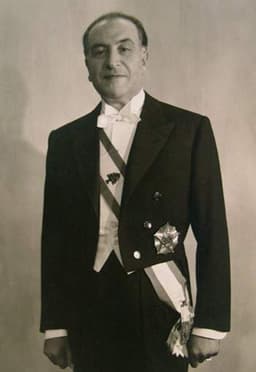
Fuad Chehab
General · Modern
49.9Total
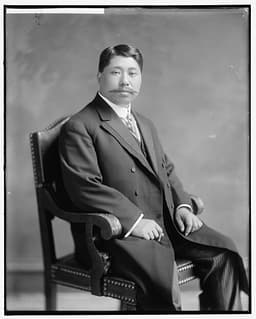
Huang Xing
General · Modern
57.5Total
Basic Information
Born
1902
1874
Died
1973
1916
Era
Modern
Modern
Nationality
Lebanon
China
Occupation
General
General
Civilization
Middle Eastern
Eastern
Score Comparison
Military (10%)
10.2
46.7
Political (20%)
70.0
53.8
Influence (20%)
54.1
62.0
Legacy (20%)
44.2
56.0
Leadership (15%)
72.0
62.0
Strategy (15%)
30.3
60.0
TOTAL
49.9
57.5
Fuad Chehab — Complete Timeline
1958 AD
Launched Chehabist reforms and modernizationReform◆ Major
President Chehab implemented a series of reforms known as Chehabism, including administrative modernization, economic planning, and strengthening state institutions. He established the Central Bank of Lebanon and the Civil Service Board.
ReformModernizationState Building
Impact: nationalconstructive
Elected President of LebanonPolitical Action◆ Major
Fuad Chehab was elected President of Lebanon on September 23, 1958, succeeding Camille Chamoun. His election ended the 1958 crisis and was supported by both Christian and Muslim factions seeking stability.
PresidencyElectionStabilization
Impact: nationalconstructive
Created the Deuxième Bureau intelligence agencyPolitical Action
Chehab expanded the role of the Deuxi
IntelligenceSecurityAuthoritarianism
Impact: national
1960 AD
Presided over the 1960s economic boomOther
Under Chehab's presidency, Lebanon experienced a period of economic growth and stability, with Beirut becoming a major financial and tourism hub. His policies attracted foreign investment and expanded the middle class.
Economic GrowthBeirutProsperity
Impact: nationalconstructive
1964 AD
Refused to amend constitution for a second termPolitical Action
Chehab declined to seek a second term as president, respecting the constitutional limit. He retired from politics in 1964, setting a precedent for peaceful transitions of power in Lebanon.
ConstitutionTerm LimitRetirement
Impact: nationalconstructive
Huang Xing — Complete Timeline
1905 AD
Co-founded the TongmenghuiPolitical Action◆ Major
Huang Xing co-founded the Tongmenghui (Revolutionary Alliance) in Tokyo with Sun Yat-sen. He became its military leader, organizing armed uprisings against the Qing dynasty.
TongmenghuiRevolutionMilitary
Impact: nationalconstructive
1911 AD
Led the Wuchang UprisingWar
Huang Xing led the Wuchang Uprising, which sparked the Xinhai Revolution. He commanded revolutionary forces against Qing troops, securing initial victories that led to the dynasty's collapse.
Xinhai RevolutionUprisingMilitary
Impact: nationalconstructive
1912 AD
Served as Minister of War in the RepublicPolitical Action◆ Major
Huang Xing served as Minister of War in the provisional government of the Republic of China. He worked to organize a national army and defend the republic against counter-revolutionary forces.
GovernmentMilitaryRepublic
Impact: nationalconstructive
1913 AD
Led the Second Revolution Against Yuan ShikaiWar◆ Major
Huang Xing led the Second Revolution, an armed uprising against President Yuan Shikai's authoritarian rule. The rebellion failed due to lack of coordination and military inferiority, forcing Huang into exile.
Second RevolutionYuan ShikaiExile
Impact: nationaltragic
1916 AD
Died in Exile in ShanghaiPolitical Action
Huang Xing died in Shanghai after returning from exile in Japan and the United States. His death marked the loss of a key military leader of the Chinese revolution, though his legacy endured.
DeathExileRevolution
Impact: nationaltragic
Expert Analysis
Huang Xing vs Fuad Chehab
# The General as Statesman: Fuad Chehab and Huang Xing
In the autumn of 1958, as American Marines waded ashore onto the beaches of Beirut to quell a sectarian uprising, a tall, ascetic Lebanese general named Fuad Chehab accepted the presidency of a nation on the brink of disintegration. Half a century earlier and half a world away, in the smoky revolutionary underground of Tokyo, another general—Huang Xing—clasped hands with Sun Yat-sen to forge the organization that would topple an empire. Both men were soldiers who dreamed of building republics. One succeeded in stabilizing his country, only to see his reforms slowly corroded; the other died in exile, his revolution unfinished. Their divergent paths reveal the cruel logic of history—how timing, geography, and the texture of a nation’s wounds shape what a leader can achieve.
Origins
Fuad Chehab was born into Lebanon’s Maronite Christian aristocracy in 1902, a world of mountain villages, French mandates, and a delicate sectarian balance that had been codified by the Ottomans and refined by the colonial powers. He trained as a soldier in the French military academy at Damascus and later in France, absorbing the discipline of a professional army but also the republican ideals of the French Third Republic. His Lebanon was a mosaic of eighteen recognized sects, each with militias and foreign patrons. To survive, one learned to negotiate, not to conquer.
Huang Xing, born in 1874, came of age in a China convulsed by the dying Qing Dynasty. He grew up in Hunan province, a region known for its fierce scholars and rebellious spirits. Unlike Chehab, who inherited a state (however fragile), Huang Xing inherited an empire in collapse—humiliated by foreign powers, wracked by famines, and ruled by a court that seemed indifferent to modernity. He studied in Japan, where he absorbed the radical nationalism of the Meiji Restoration. For Huang, the path forward was not reform but revolution.
Rise to Power
Chehab’s ascent was cautious and institutional. He served as commander of the Lebanese army during the 1958 crisis, when President Camille Chamoun’s attempt to amend the constitution for a second term sparked a Muslim-led insurgency. Chehab refused to order the army to crush the rebels, earning him trust from both sides. When Chamoun stepped down, the parliament elected Chehab president on September 23, 1958, precisely because he seemed above the sectarian fray. He was the general who did not want to fight.
Huang Xing’s rise was forged in the crucible of failed uprisings. In 1905, he co-founded the Tongmenghui with Sun Yat-sen, becoming the military arm of the revolutionary movement. He led a series of desperate, bloody attempts to spark a nationwide revolt—most notably the Wuchang Uprising of October 1911, which finally succeeded. When the Qing Dynasty crumbled, Huang Xing became the provisional government’s Minister of War, tasked with building a national army from scratch. He was the general who had to fight.
Leadership & Governance
Chehab’s governing philosophy—later called “Chehabism”—was a unique blend of authoritarian reformism and democratic restraint. He expanded the Deuxième Bureau, Lebanon’s military intelligence agency, to monitor politicians and prevent sectarian polarization. At the same time, he launched ambitious economic planning, built infrastructure, and modernized the bureaucracy. Beirut boomed as a financial hub. Yet his rule was paradoxical: he centralized power to protect the state, but refused to amend the constitution to extend his term, stepping down in 1964. He believed that institutions, not personalities, should govern.
Huang Xing’s governance was a tragedy of timing. As Minister of War in 1912, he tried to professionalize the revolutionary forces and create a republican army loyal to the state rather than to warlords. But Yuan Shikai, the former Qing general who became president, outmaneuvered the revolutionaries. Huang Xing led the “Second Revolution” in 1913—a desperate armed uprising against Yuan’s authoritarian drift—but it failed. He fled into exile, his dream of a unified republic shattered. Where Chehab had the luxury of a functioning state, Huang Xing faced a vacuum that ambitious men rushed to fill.
Triumph & Tragedy
Chehab’s greatest moment was his refusal to hold onto power. In 1964, despite popular pressure to run again, he declined, setting a precedent for peaceful transition. His tragedy was that his reforms did not outlive him. The Deuxième Bureau became corrupt and repressive; the sectarian system he tried to manage eventually collapsed into civil war in 1975, two years after his death.
Huang Xing’s triumph was the Wuchang Uprising, which ended two thousand years of imperial rule. His tragedy was dying in exile in Shanghai in 1916, at age 42, his body worn out by years of struggle and disappointment. He never saw the republic he helped found become a reality.
Character & Destiny
Chehab was a stoic, almost monkish figure—aloof, intellectual, suspicious of charisma. He governed by calculation, not passion. His caution preserved Lebanon for six years but could not solve its deeper fractures. Huang Xing was the opposite: a man of action, impulsive and brave, who led from the front. He inspired devotion but made strategic errors. His military score of 42.1 reflects a general whose courage exceeded his tactical brilliance; Chehab’s 19.9 shows a soldier who never wanted to command armies, only to govern.
Legacy
Chehab is remembered in Lebanon as a flawed but sincere reformer, a symbol of what the country might have become. Huang Xing is honored in China as a founding father, his face on currency and his name in textbooks, yet his practical achievements were fleeting. Both men tried to build republics in societies that were not ready for them. One succeeded temporarily; the other failed permanently. But history judges them not by the durability of their work, but by the nobility of their intent.
Conclusion
Standing on the deck of a ship fleeing China in 1913, Huang Xing might have looked back at a coast where his revolution was already unraveling. In the presidential palace of Beirut in 1964, Chehab signed the papers that ended his term, knowing the sectarian demons he had suppressed would one day return. Both men were generals who understood that the hardest battles are not fought with armies, but with the stubborn, broken clay of human societies. Their stories remind us that leadership is not merely about winning—it is about knowing what you are fighting for, and when to lay down the sword.
Rankings
🥇
Huang XingLeader
Mil: 46.7Pol: 53.8Inf: 62.0
57.5
🥈
Fuad Chehab
Mil: 10.2Pol: 70.0Inf: 54.1
49.9
+7.6 behind
How This Comparison Works
Algorithm
Each figure is scored on 6 dimensions (0—100 scale) based on structured historical data: Military (10%), Political (20%), Influence (20%), Legacy (20%), Leadership (15%), Strategy (15%). The weighted total produces the final ranking.
Data Sources
Scores are computed from structured sub-indicators in the database. Scale factors adjust for era (Ancient ×0.85, Modern ×1.0) and civilization size (Eastern ×1.05, Other ×0.80) to account for differences in population and military scale.
Maximum 3 Figures
Comparisons are limited to 2—3 figures to ensure readability and statistical meaningfulness.
Error Margins
±5 points per dimension — Sub-scores are derived from historical records with inherent uncertainty. Two figures within 5 points on a dimension should be considered roughly equivalent in that area.
Total Score Accuracy
±3 points overall — The weighted combination of 6 dimensions produces a total score with approximately ±3 points of uncertainty. Differences of less than 3 points are not statistically significant— the figures are effectively tied.
Known Limitations
- Historical records are incomplete and uneven across civilizations
- Figures from oral-tradition societies may be underrepresented
- Occupation labels can misclassify multi-role figures
- Scores measure capability and impact, not moral character
- Quantitative scoring is a comparison tool, not absolute truth
Capability Radar
Military (10%) — Battles & Warfare
Battles
5
35
Win Rate
5
30
Expansion
5
20
Political (20%) — Governance & Reform
Reform
65
60
Diplomacy
60
55
Economy
50
30
Influence (20%) — Cultural & Global Reach
Cultural
30
40
Global
25
40
Legacy (20%) — Historical Impact
Historical
35
55
Longevity
30
45
Leadership (15%) — Power & Stability
Tenure
55
40
Stability
45
25
Strategy (15%) — Tactics & Innovation
Strategy
10
45
Tactics
10
40
Reform
20
50
Similar Comparisons
Comments & Discussion
BattleAxeArchivist6/16/2026
Huang Xing was the real muscle behind the 1911 Revolution, yet Sun Yat-sen hogs all the credit. Without Huang’s battlefield grit at Wuchang, Sun’s talk of democracy would’ve died on paper. Fuad Chehab at least engineered a real ceasefire in 1958, preserving Lebanon’s fragile peace, while Huang ended up in exile after his Second Revolution failed. One died disillusioned, the other saw his reforms eroded, but Chehab’s legacy of stability trumps Huang’s tactical brilliance any day.
篡位侦探6/16/2026
这是一场制度的对决,不是人的对决。傅阿德谢哈布用军队当胶水,粘合了教派分裂的黎巴嫩,但那是买来的时间。他拒绝改革选举法,只是延期爆炸。黄兴呢?他本想用共和取代专制,却输给了袁世凯的枪杆子。历史从不奖励理想主义,它只奖励时机——谢哈布赶上了冷战的美元流,黄兴撞上了帝国的断气期。我站谢哈布:会活的政治比会死的革命更值钱。
SandpaperScholar6/16/2026
Stop romanticizing these two as martyrs. Huang Xing was a tactical disaster—lost every major battle he directly commanded, including the Nanjing campaign. Chehab, by contrast, understood that in Lebanon, survival meant neutrality. He kept the army out of sectarian conflict and prevented a full-blown civil war in 1958. That’s not cowardice; that’s smart statecraft. Huang’s emotional style might have inspired poets, but Chehab’s cold pragmatism saved lives. I’ll take the banker over the brawler.
老犀牛6/16/2026
都别吵了,你们把谢哈布捧成了圣人,把黄兴贬成了莽夫。但真相是:谢哈布的成功建立在法国的殖民遗产和美国的冷战斗士上,没有这两根拐杖,他早摔跤了。黄兴呢?他白手起家,在一个没有现代军要、没有外国扶持的旧帝国里打游击。你们口中的“失败”,是因为他拒绝当外国傀儡。拿美援换稳定?这种胜利我不稀罕。黄兴才是真汉子,谢哈布不过是个精致的代理人。
CoffeepotCritic6/16/2026
Comparing these two is like contrasting a chess player with a boxer. Chehab played the long game, quietly building institutions like the Lebanese Army Intelligence to check sectarian power. Huang was all in for the knockout punch—instant revolution, no patience for institutional rot. But here’s the kicker: Chehab’s gradualist reforms got dismantled by warlords after he left, while Huang’s revolutionary DNA seeded the CCP’s later success. Huang lost the battle but won the ideological war. Long-te