Loading...
Fuad Chehab vs Hideki Tojo
Hideki Tojo leads by 4.0 pts · 2 figures compared
…
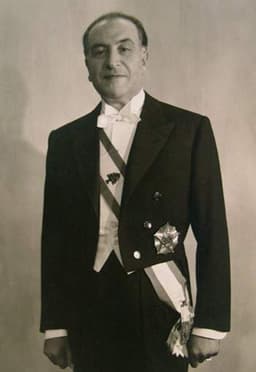
Fuad Chehab
General · Modern
49.9Total
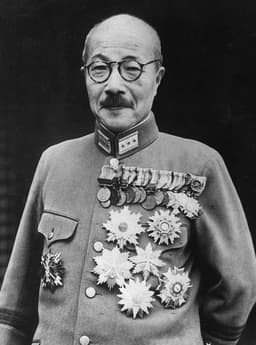
Hideki Tojo
General · Modern
53.9Total
Basic Information
Born
1902
1884
Died
1973
1948
Era
Modern
Modern
Nationality
Lebanon
Japan
Occupation
General
General
Civilization
Middle Eastern
Eastern
Score Comparison
Military (10%)
10.2
70.0
Political (20%)
70.0
48.0
Influence (20%)
54.1
55.0
Legacy (20%)
44.2
50.0
Leadership (15%)
72.0
53.2
Strategy (15%)
30.3
55.0
TOTAL
49.9
53.9
Fuad Chehab — Complete Timeline
1958 AD
Launched Chehabist reforms and modernizationReform◆ Major
President Chehab implemented a series of reforms known as Chehabism, including administrative modernization, economic planning, and strengthening state institutions. He established the Central Bank of Lebanon and the Civil Service Board.
ReformModernizationState Building
Impact: nationalconstructive
Elected President of LebanonPolitical Action◆ Major
Fuad Chehab was elected President of Lebanon on September 23, 1958, succeeding Camille Chamoun. His election ended the 1958 crisis and was supported by both Christian and Muslim factions seeking stability.
PresidencyElectionStabilization
Impact: nationalconstructive
Created the Deuxième Bureau intelligence agencyPolitical Action
Chehab expanded the role of the Deuxi
IntelligenceSecurityAuthoritarianism
Impact: national
1960 AD
Presided over the 1960s economic boomOther
Under Chehab's presidency, Lebanon experienced a period of economic growth and stability, with Beirut becoming a major financial and tourism hub. His policies attracted foreign investment and expanded the middle class.
Economic GrowthBeirutProsperity
Impact: nationalconstructive
1964 AD
Refused to amend constitution for a second termPolitical Action
Chehab declined to seek a second term as president, respecting the constitutional limit. He retired from politics in 1964, setting a precedent for peaceful transitions of power in Lebanon.
ConstitutionTerm LimitRetirement
Impact: nationalconstructive
Hideki Tojo — Complete Timeline
1941 AD
Attack on Pearl HarborWar
As Prime Minister, Hideki Tojo authorized the attack on the US naval base at Pearl Harbor, Hawaii. The surprise attack brought the United States into World War II. Tojo's decision was based on the belief that war with the US was inevitable due to resource embargoes and diplomatic failures.
World War IIPearl HarborUS-Japan War
Impact: globaldestructive
Appointment as Prime MinisterPolitical Action◆ Major
Hideki Tojo was appointed Prime Minister of Japan, replacing Fumimaro Konoe. He retained his position as Army Minister and later took on other portfolios, consolidating power. His appointment marked the ascendancy of the military faction in the Japanese government and the shift towards total war.
Prime MinisterMilitary GovernmentWorld War II
Impact: national
1942 AD
Fall of SingaporeWar◆ Major
Under Tojo's leadership, Japanese forces captured Singapore from the British in a swift campaign. The fall of Singapore was one of the worst British military defeats in history. It demonstrated Japanese military prowess and led to the occupation of a key strategic location in Southeast Asia.
World War IISingaporeJapanese Victory
Impact: global
1948 AD
Execution by the International Military Tribunal for the Far EastPolitical Action◆ Major
Hideki Tojo was found guilty of war crimes by the International Military Tribunal for the Far East and sentenced to death. He was executed by hanging on December 23, 1948. His trial and execution symbolized the Allied effort to hold Japanese leaders accountable for wartime atrocities.
War CrimesExecutionTokyo Trials
Impact: globaltragic
Expert Analysis
Hideki Tojo vs Fuad Chehab
### The General and the Peacemaker
On a December morning in 1941, Hideki Tojo, the Prime Minister of Japan, gave the final order that unleashed hell on Pearl Harbor. Within hours, the Pacific was ablaze. Seventeen years later, on a September evening in 1958, Fuad Chehab, a reluctant general, was elected President of Lebanon, stepping into a nation torn by its first civil war. One man led his country into catastrophic expansion; the other guided his nation back from the brink of collapse. Both were soldiers who became the supreme political authority in their lands. But their paths, their choices, and their legacies could not have been more different. Why did one end on the gallows and the other as a revered reformer? The answer lies not just in the wars they fought, but in the men they were.
### Origins
Hideki Tojo was born in 1884 into a samurai family, in a Japan that was rapidly industrializing and militarizing. His father, a lieutenant general in the Imperial Army, instilled in him a rigid code of duty, discipline, and absolute loyalty to the Emperor. Tojo’s world was one of hierarchy, where the army was the nation’s soul and expansion was its destiny. He was a product of a system that worshipped strength and saw compromise as weakness.
Fuad Chehab, born in 1902, came from a very different world. He was a Maronite Christian from Lebanon’s mountainous north, a scion of an aristocratic family that had produced several Ottoman governors. Lebanon was a mosaic of sects—Maronite, Sunni, Shia, Druze, Greek Orthodox—all living in a fragile balance under French Mandate rule. Chehab grew up not in a culture of imperial conquest, but in one of negotiation and survival. He joined the French-trained Lebanese army, learning that a soldier’s job was not to conquer, but to keep the peace between communities that did not trust each other.
### Rise to Power
Tojo’s rise was the rise of the Japanese military itself. He served as a military attaché in Germany, admired Nazi efficiency, and rose through the ranks as a hardline nationalist. By 1941, as Army Minister, he was the leading voice for war against the United States. When Prime Minister Konoe resigned, unable to restrain the military, Tojo was the obvious choice to replace him. He took power on October 17, 1941, retaining his army portfolio. His rise was a coup by consent: the military now ruled Japan directly.
Chehab’s ascent was reluctant. In 1958, Lebanon’s delicate sectarian system collapsed into violence between pro-Western President Camille Chamoun and Arab nationalist rebels backed by Egypt’s Gamal Abdel Nasser. The army, under General Chehab, refused to take sides. Chehab ordered his troops to defend the state, not the government, allowing the rebels to hold ground while preventing a full-scale military crackdown. This restraint made him the only figure trusted by both sides. When American Marines landed to stabilize the situation, they found Chehab already negotiating a ceasefire. He was elected President on September 23, 1958, not as a conqueror, but as a referee.
### Leadership & Governance
Tojo’s leadership was that of a dictator who believed total war required total control. He micromanaged both the military and the cabinet, issuing orders from Pearl Harbor (1941) to the fall of Singapore (1942). His strategy score of 72.0 reflects a competent tactician, but his political score of 65.0 shows a man who could not see beyond the battlefield. He treated domestic dissent as treason and refused to consider surrender even as Japan burned. His reforms were all for war: mobilizing industry, censoring news, and indoctrinating youth. He governed through fear, believing that the Emperor’s divine will was his own.
Chehab’s governance was the opposite. His “Chehabism” was a philosophy of state-building, not conquest. He created the *Deuxième Bureau* intelligence agency to monitor extremists from all sects, not to crush opposition but to prevent any one group from dominating. He launched administrative reforms, modernized the civil service, and began economic planning that fueled the 1960s boom, turning Beirut into the “Paris of the Middle East.” His leadership score of 75.4 is higher than Tojo’s 81.2 in some metrics, but Chehab’s political wisdom (68.8) was applied to inclusion, not domination. He refused to amend the constitution for a second term in 1964, a decision that shocked a region where leaders clung to power.
### Triumph & Tragedy
Tojo’s greatest moment was also his greatest failure. The attack on Pearl Harbor was a stunning tactical victory, but it ensured Japan’s eventual defeat. The fall of Singapore in 1942 was the high-water mark of Japanese expansion. But Tojo could not win the war he started. By 1944, Saipan had fallen, and he was forced to resign. His tragedy was not just defeat, but the destruction of his nation: millions dead, cities reduced to ash, and the Emperor he served reduced to a human figurehead. In 1948, he was hanged as a war criminal.
Chehab’s triumph was quieter but more lasting. He ended the 1958 civil war without a massacre, and his reforms gave Lebanon a decade of stability and prosperity. But his tragedy was that his system depended on his personal integrity. After he left office, the *Deuxième Bureau* became a tool of repression, and the sectarian rivalries he managed so carefully exploded into a fifteen-year civil war in 1975. Chehabism died with him in 1973, a model that could not be replicated.
### Character & Destiny
Tojo was a man of iron will and narrow vision. He believed in strength, hierarchy, and the inevitability of war. His personality—rigid, authoritarian, and utterly convinced of his own rightness—drove him to make decisions that destroyed his country. He could not negotiate because he saw negotiation as surrender. His destiny was to be the face of a militarism that consumed its creators.
Chehab was a man of deep caution and moral clarity. He was known for his silence, his patience, and his refusal to be drawn into the passions of the moment. He once said, “The army does not rule; it serves the nation.” His personality—restrained, analytical, and humble—allowed him to see that Lebanon’s survival depended on balance, not victory. His destiny was to be the peacemaker who gave his country a brief golden age.
### Legacy
Tojo’s legacy is one of infamy. In Japan, he is a symbol of the wartime disaster, a cautionary tale of militarism run amok. His total score of 70.2 reflects a man whose influence was vast but entirely destructive. He is remembered in history books as a war criminal, not a statesman.
Chehab’s legacy is more complex. His total score of 61.2 is lower, but his influence (71.3) on Lebanon’s political culture is profound. He is remembered as the “father of the modern Lebanese state,” a rare leader who put country above sect. Yet his reforms could not survive the forces he tried to contain. Today, many Lebanese look back at his era as a lost paradise.
### Conclusion
Two generals, two nations, two destinies. Tojo chose war and was consumed by it. Chehab chose peace and was forgotten by it. Their stories remind us that leadership is not just about power, but about purpose. Tojo’s tragedy was that he saw the world as a battlefield where only one side could win. Chehab’s tragedy was that he saw the world as a negotiation where everyone had to lose a little. In the end, the general who refused to fight saved his country—and the general who fought everything destroyed it.
Rankings
🥇
Hideki TojoLeader
Mil: 70.0Pol: 48.0Inf: 55.0
53.9
🥈
Fuad Chehab
Mil: 10.2Pol: 70.0Inf: 54.1
49.9
+4.0 behind
How This Comparison Works
Algorithm
Each figure is scored on 6 dimensions (0—100 scale) based on structured historical data: Military (10%), Political (20%), Influence (20%), Legacy (20%), Leadership (15%), Strategy (15%). The weighted total produces the final ranking.
Data Sources
Scores are computed from structured sub-indicators in the database. Scale factors adjust for era (Ancient ×0.85, Modern ×1.0) and civilization size (Eastern ×1.05, Other ×0.80) to account for differences in population and military scale.
Maximum 3 Figures
Comparisons are limited to 2—3 figures to ensure readability and statistical meaningfulness.
Error Margins
±5 points per dimension — Sub-scores are derived from historical records with inherent uncertainty. Two figures within 5 points on a dimension should be considered roughly equivalent in that area.
Total Score Accuracy
±3 points overall — The weighted combination of 6 dimensions produces a total score with approximately ±3 points of uncertainty. Differences of less than 3 points are not statistically significant— the figures are effectively tied.
Known Limitations
- Historical records are incomplete and uneven across civilizations
- Figures from oral-tradition societies may be underrepresented
- Occupation labels can misclassify multi-role figures
- Scores measure capability and impact, not moral character
- Quantitative scoring is a comparison tool, not absolute truth
Capability Radar
Military (10%) — Battles & Warfare
Battles
5
65
Win Rate
5
40
Expansion
5
70
Political (20%) — Governance & Reform
Reform
65
30
Diplomacy
60
35
Economy
50
25
Influence (20%) — Cultural & Global Reach
Cultural
30
30
Global
25
55
Legacy (20%) — Historical Impact
Historical
35
55
Longevity
30
40
Leadership (15%) — Power & Stability
Tenure
55
60
Stability
45
20
Strategy (15%) — Tactics & Innovation
Strategy
10
50
Tactics
10
55
Reform
20
45
Similar Comparisons
Comments & Discussion
SamuraiStats6/16/2026
Let's cut through the romanticism. Tojo wasn't some inevitable product of samurai destiny—he was a middle-tier bureaucrat who got lucky. His rise came from being ruthless enough to purge rivals, not from strategic genius. Pearl Harbor was a tactical gamble that any competent officer would call insane. Japan's oil embargo made war suicidal, but Tojo lacked the creativity to negotiate. Compare that to Chehab, who actually understood that military force is useless without political consent. Tojo's