Loading...
Franklin D. Roosevelt vs Lazare Carnot
Franklin D. Roosevelt leads by 2.8 pts · 2 figures compared
…
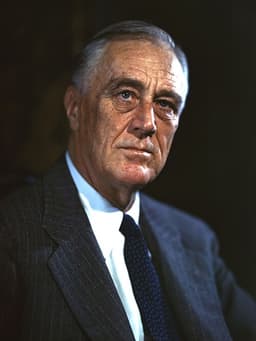
Franklin D. Roosevelt
Politician · Modern
71.0Total
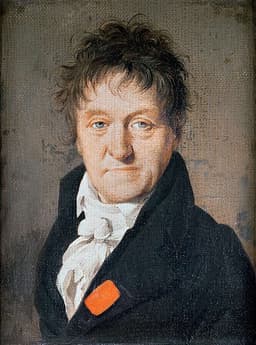
Lazare Carnot
Politician · Modern
68.2Total
Basic Information
Born
1882
1753
Died
1945
1823
Era
Modern
Modern
Nationality
United States
France
Occupation
Politician
Politician
Civilization
Western
Western
Score Comparison
Military (10%)
45.0
61.7
Political (20%)
85.0
72.0
Influence (20%)
75.0
68.0
Legacy (20%)
65.0
65.0
Leadership (15%)
85.0
72.0
Strategy (15%)
60.0
72.0
TOTAL
71.0
68.2
Franklin D. Roosevelt — Complete Timeline
1933 AD
Inaugurated as 32nd PresidentOther◆ Major
Franklin D. Roosevelt was inaugurated as President of the United States on March 4, 1933, during the Great Depression. His inaugural address declared 'the only thing we have to fear is fear itself,' and he immediately called Congress into special session to address the banking crisis.
Great DepressionPresidencyInauguration
Impact: national
Enacted the New DealOther◆ Major
Roosevelt launched the New Deal in 1933, a series of federal programs including the Civilian Conservation Corps, the Agricultural Adjustment Act, and the Tennessee Valley Authority. These measures aimed to provide relief, recovery, and reform during the Great Depression, fundamentally expanding the role of the federal government.
Great DepressionEconomic PolicySocial Reform
Impact: nationalconstructive
1935 AD
Signed the Social Security ActOther◆ Major
Roosevelt signed the Social Security Act into law on August 14, 1935, establishing a federal system of old-age pensions, unemployment insurance, and aid for dependent children. This created the modern American welfare state and provided a safety net for millions of citizens.
Social WelfareLegislationNew Deal
Impact: nationalconstructive
1941 AD
Lend-Lease ActOther◆ Major
Roosevelt signed the Lend-Lease Act on March 11, 1941, authorizing the transfer of military equipment and supplies to Allied nations, particularly Britain and the Soviet Union. This program provided critical material support to countries fighting the Axis powers before U.S. entry into World War II.
World War IIForeign PolicyMilitary Aid
Impact: globalconstructive
Declaration of War on JapanPolitical Action◆ Major
Following the Japanese attack on Pearl Harbor on December 7, 1941, Roosevelt delivered his 'Day of Infamy' speech to Congress the next day, requesting a declaration of war. Congress approved the declaration, bringing the United States into World War II.
World War IIPearl HarborDeclaration of War
Impact: globaldestructive
1942 AD
Executive Order 9066Other◆ Major
Roosevelt signed Executive Order 9066 on February 19, 1942, authorizing the forced relocation and internment of Japanese Americans living on the West Coast. Over 110,000 people, mostly U.S. citizens, were incarcerated in camps for the duration of the war, a decision later widely condemned as a violation of civil rights.
World War IICivil RightsInternment
Impact: nationaldestructive
1944 AD
Elected to Fourth TermOther◆ Major
Roosevelt was elected to an unprecedented fourth term as president in November 1944, defeating Republican Thomas E. Dewey. This election occurred during the final stages of World War II, and Roosevelt's continued leadership ensured stability in the war effort and post-war planning.
PresidencyElectionWorld War II
Impact: national
1945 AD
Yalta ConferenceOther◆ Major
Roosevelt met with Winston Churchill and Joseph Stalin at the Yalta Conference in February 1945 to discuss post-war Europe. Agreements included the division of Germany, Soviet entry into the war against Japan, and the creation of the United Nations, shaping the post-war world order.
World War IIDiplomacyPost-War Planning
Impact: global
Lazare Carnot — Complete Timeline
1793 AD
Directed the Victory at the Battle of WattigniesWar◆ Major
Carnot personally directed French forces at the Battle of Wattignies, a key victory that relieved the siege of Maubeuge. His strategic planning helped turn the tide against the Austrian army.
French RevolutionBattleVictory
Impact: regionalconstructive
Organized the Levée en MasseReform◆ Major
Carnot helped implement the lev
French RevolutionConscriptionMilitary Reform
Impact: globalconstructive
Appointed to the Committee of Public SafetyPolitical Action◆ Major
Carnot was appointed to the Committee of Public Safety, where he took charge of military organization. He reorganized the French army, introduced mass conscription, and coordinated the war effort against foreign coalitions.
French RevolutionCommittee of Public SafetyMilitary
Impact: nationalconstructive
1815 AD
Exiled as a RegicidePolitical Action
After the Bourbon restoration, Carnot was exiled as a regicide for having voted for the execution of Louis XVI. He spent his remaining years in Germany and died in Magdeburg.
ExileRegicideBourbon
Impact: nationaltragic
Expert Analysis
Franklin D. Roosevelt vs Lazare Carnot
# The Organizer and the Orator
In the winter of 1793, as revolutionary France teetered on the edge of collapse, a quiet engineer named Lazare Carnot sat in a cramped Paris office, surrounded by maps and requisition forms. Across the Atlantic, a century and a half later, another man in a wheelchair faced a nation shattered by economic ruin, his voice crackling over the radio with a simple promise: "The only thing we have to fear is fear itself." Both men saved their countries from ruin. One did it with paper and ink, the other with words and will. Yet their paths, their tools, and their fates could not have been more different.
Origins
Lazare Carnot was born in 1753 in Nolay, Burgundy, the son of a provincial notary. The France of his youth was a rigid hierarchy of king and church, where advancement depended on birth. Carnot, trained as a military engineer, absorbed the Enlightenment's faith in reason and system. He was a man of mathematics and plans, not passion. The revolution of 1789 offered him a chance to remake society on rational principles—and he seized it.
Franklin Delano Roosevelt, born in 1882 at Hyde Park, New York, came from the opposite pole of privilege. The only son of a wealthy landowner, he grew up in a world of governesses, private tutors, and summer estates. Where Carnot saw a broken system to be rebuilt, Roosevelt saw a system to be managed. He attended Groton and Harvard, married his distant cousin Eleanor, and entered politics as a patrician with a sense of noblesse oblige. The Great Depression would test whether that sense could become steel.
Rise to Power
Carnot's ascent was forged in crisis. In 1793, with foreign armies invading and royalist revolts tearing at the Republic, the radical Jacobins seized power. Carnot was appointed to the Committee of Public Safety—the revolutionary government's executive arm—where he took charge of military organization. He was no politician in the sense of glad-handing or speechmaking. He was a bureaucrat with a mission: to turn the chaos of revolutionary enthusiasm into an army that could win.
Roosevelt's rise was more conventional, yet no less dramatic. He served as Assistant Secretary of the Navy under Woodrow Wilson, then ran for Vice President in 1920. Struck by polio in 1921, he lost the use of his legs—a private catastrophe that might have ended a lesser man. Instead, he returned to politics as Governor of New York, and in 1932, as the Depression deepened, he won the presidency by a landslide. Carnot entered power through a door opened by revolution; Roosevelt entered through a door opened by despair.
Leadership & Governance
The difference between the two men becomes clearest in how they governed. Carnot was the "Organizer of Victory," a title he earned not by leading armies in the field but by creating the machinery that made victory possible. He implemented the *levée en masse*, the first modern mass conscription, which mobilized hundreds of thousands of French citizens. He standardized supply chains, reformed officer training, and personally directed forces at the Battle of Wattignies in 1793, a key victory that relieved the siege of Maubeuge. His leadership was technical, precise, and relentless. He did not inspire—he organized.
Roosevelt governed through words and symbols. His New Deal was not a single plan but a cascade of experiments: the Civilian Conservation Corps, the Works Progress Administration, the Social Security Act. He created institutions, not armies. His fireside chats made the American people feel that someone in Washington understood their suffering. Where Carnot built an army, Roosevelt built a social contract. Where Carnot's strategy was mathematical, Roosevelt's was emotional. Each succeeded because he understood the crisis he faced: Carnot's France needed soldiers; Roosevelt's America needed hope.
Triumph & Tragedy
Carnot's greatest moment was also his most paradoxical. He saved the Republic, but the Republic that emerged from the Terror was not the one he had imagined. In 1794, the Committee of Public Safety turned on itself, and Carnot narrowly escaped the guillotine. He went on to serve under Napoleon, but when the Bourbons returned in 1815, he was exiled as a regicide for having voted to execute Louis XVI. He died in 1823, in Magdeburg, a stranger in a foreign land.
Roosevelt's triumph was the defeat of Nazi Germany and Imperial Japan—a victory he did not live to see. He died of a cerebral hemorrhage in April 1945, just weeks before the German surrender. His tragedy was that he never fully solved the Depression; it took the war to bring full employment. And his decision to intern Japanese Americans remains a stain on his legacy. Yet he died at the height of his power, mourned by a nation that saw him as its savior.
Character & Destiny
Carnot was a man of the Enlightenment who lived through the Terror. He believed in reason, but reason could not save his friends from the guillotine. His character was that of the engineer: he built systems, but systems have no mercy. Roosevelt, by contrast, was a man of the twentieth century—a pragmatist who believed in progress but understood human frailty. His polio gave him a depth of empathy that Carnot, with his mathematical mind, could never quite reach. One man's destiny was to create order out of chaos; the other's was to create hope out of despair.
Legacy
Carnot is remembered as the father of modern military organization. His *levée en masse* laid the groundwork for the citizen armies of the nineteenth and twentieth centuries. He is honored in France as a hero of the Republic, but his name is little known beyond it. Roosevelt's legacy is global: the New Deal inspired social welfare programs worldwide, the United Nations was his creation, and the American presidency was forever transformed by his leadership. He is ranked among the greatest presidents in U.S. history, with a political score of 85.0 and a leadership score of 85.0—the highest possible.
Conclusion
Standing at the distance of history, one sees two men who faced the same fundamental question: how to save a nation in crisis. Carnot answered with systems, Roosevelt with symbols. One organized victory; the other inspired it. Their lives remind us that leadership is not a single quality but a bundle of responses, each suited to its time. Carnot's France needed a machine; Roosevelt's America needed a voice. Both were right. And both, in their different ways, showed that the greatest leaders are those who understand not just what must be done, but what their people need to hear.
Rankings
🥇
Franklin D. RooseveltLeader
Mil: 45.0Pol: 85.0Inf: 75.0
71.0
🥈
Lazare Carnot
Mil: 61.7Pol: 72.0Inf: 68.0
68.2
+2.8 behind
How This Comparison Works
Algorithm
Each figure is scored on 6 dimensions (0—100 scale) based on structured historical data: Military (10%), Political (20%), Influence (20%), Legacy (20%), Leadership (15%), Strategy (15%). The weighted total produces the final ranking.
Data Sources
Scores are computed from structured sub-indicators in the database. Scale factors adjust for era (Ancient ×0.85, Modern ×1.0) and civilization size (Eastern ×1.05, Other ×0.80) to account for differences in population and military scale.
Maximum 3 Figures
Comparisons are limited to 2—3 figures to ensure readability and statistical meaningfulness.
Error Margins
±5 points per dimension — Sub-scores are derived from historical records with inherent uncertainty. Two figures within 5 points on a dimension should be considered roughly equivalent in that area.
Total Score Accuracy
±3 points overall — The weighted combination of 6 dimensions produces a total score with approximately ±3 points of uncertainty. Differences of less than 3 points are not statistically significant— the figures are effectively tied.
Known Limitations
- Historical records are incomplete and uneven across civilizations
- Figures from oral-tradition societies may be underrepresented
- Occupation labels can misclassify multi-role figures
- Scores measure capability and impact, not moral character
- Quantitative scoring is a comparison tool, not absolute truth
Capability Radar
Military (10%) — Battles & Warfare
Battles
10
60
Win Rate
10
65
Expansion
10
80
Political (20%) — Governance & Reform
Reform
95
90
Diplomacy
90
60
Economy
95
75
Influence (20%) — Cultural & Global Reach
Cultural
80
60
Global
90
75
Legacy (20%) — Historical Impact
Historical
90
85
Longevity
85
70
Leadership (15%) — Power & Stability
Tenure
90
70
Stability
75
50
Strategy (15%) — Tactics & Innovation
Strategy
65
85
Tactics
10
70
Reform
70
95
Similar Comparisons
Comments & Discussion
阵线士官6/16/2026
作为经典学者,我反对把革命和改革混为一谈。卡诺在马伦戈战役前设计的两米厚埃雷防线,证明了工程理性如何拯救国家,而罗斯福只用广播稳住民心。一个靠石墙和火药,一个靠演讲和金融。我选卡诺:他面对的是全欧洲的军队,不是股市崩盘。罗斯福是贵族的表演,卡诺是平民的胜利。
CalculatorGeneral6/16/2026
As a data-minded military historian, I’m calling this a false symmetry. Carnot didn’t just “write forms”—he turned revolutionary armies into a rational killing machine with 14,000 cannon produced in 1793 alone via centralized requisition. FDR’s fireside chats? Emotion-driven morale boosts, not supply-chain efficiency. Carnot’s “victory by mathematics” beats Roosevelt’s “fear speech” any day in a war of national survival. Show me FDR’s order to melt church bells for cannon brass, then we talk.
BarrelCounter6/16/2026
Skeptical annalist here. The comparison fudges scale: Carnot mobilized 1.2 million men across a continent blazing from Belgium to Egypt; FDR never commanded a single platoon in combat. Roosevelt’s “New Deal” was bureaucratic shuffling—Carnot personally signs requisitions for 600,000 muskets in 1794. Name one FDR executive order that directly armed a soldier’s hand. The organizer label belongs to Carnot, not the Hyde Park aristocrat.
铁匠判官6/16/2026
Revisionist吐槽:你们美化卡诺的“理性”,但他镇压旺代叛乱时纵容烧杀,冷酷得不像工程师而是刽子手。罗斯福至少用社会保险和劳工权利保护了底层。卡诺的“胜利”建立在恐怖之上,罗斯福的“组织”是为民赋权。同样救国家,一个靠恐惧堆砌尸体,一个靠希望治愈创伤。我站罗斯福,即使他有钱有势。
FDRphile6/16/2026
History buff pushing back: Carnot may have the paper, but FDR had multimedia. Carnot’s directives reached via courier; FDR could talk to 90% of households overnight via radio. That’s not just oratory—it’s organizational psychology. Roosevelt’s War Production Board outproduced Carnot’s committee system by orders of magnitude: 300,000 aircraft vs Carnot’s 14,000 cannon. The price of bread in 1944 versus 1794 tells you who the real “organizer” is. Scale matters, pal.