Loading...
Feng Guozhang vs To Lam
To Lam leads by 1.5 pts · 2 figures compared
…
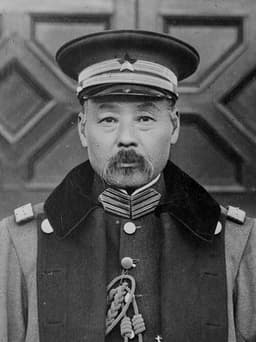
Feng Guozhang
General · Modern
49.1Total
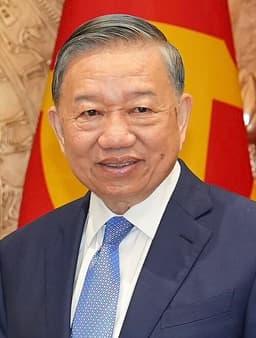
To Lam
General · Modern
50.6Total
Basic Information
Born
1859
1957
Died
1919
—
Era
Modern
Modern
Nationality
China
Vietnam
Occupation
General
General
Civilization
Eastern
Eastern
Score Comparison
Military (10%)
30.0
25.9
Political (20%)
61.3
68.0
Influence (20%)
54.9
51.8
Legacy (20%)
45.8
41.7
Leadership (15%)
40.0
72.0
Strategy (15%)
57.5
36.8
TOTAL
49.1
50.6
Feng Guozhang — Complete Timeline
1912 AD
Command of the Beiyang ArmyPolitical Action◆ Major
Feng Guozhang became a key commander of the Beiyang Army under Yuan Shikai. He controlled military forces in the Zhili region, establishing himself as a major warlord in northern China after the fall of the Qing dynasty.
Beiyang ArmyWarlordMilitary Command
Impact: national
1916 AD
Appointment as Vice PresidentPolitical Action◆ Major
Feng Guozhang was elected Vice President of the Republic of China under President Li Yuanhong. This position gave him significant political influence during the early Republican period.
Republic of ChinaGovernmentPolitics
Impact: national
1917 AD
Acting PresidencyPolitical Action◆ Major
Feng Guozhang became Acting President of the Republic of China after Li Yuanhong's resignation. He served from 1917 to 1918, facing challenges from rival warlords and struggling to maintain central authority.
Republic of ChinaPresidencyWarlord Era
Impact: national
1918 AD
Conflict with Duan QiruiPolitical Action◆ Major
Feng Guozhang engaged in a power struggle with Premier Duan Qirui, leading to the split of the Beiyang clique into the Zhili and Anhui factions. This conflict weakened the central government and intensified warlord warfare.
Beiyang CliquePower StruggleWarlord Era
Impact: nationaldestructive
To Lam — Complete Timeline
2016 AD
Appointed Minister of Public SecurityPolitical Action◆ Major
To Lam was appointed Minister of Public Security of Vietnam, overseeing the country's police and internal security forces. He played a key role in maintaining public order and combating crime.
Ministerial AppointmentSecurity Leadership
Impact: national
2024 AD
Elected President of VietnamPolitical Action◆ Major
To Lam was elected President of Vietnam by the National Assembly, succeeding Vo Van Thuong. He transitioned from security chief to head of state, continuing his influence in national politics.
PresidencyGovernment Leadership
Impact: national
Expert Analysis
Feng Guozhang vs To Lam
### The General as President: Two Paths from the Barracks to the Palace
In the summer of 1917, Feng Guozhang took the oath of office in Beijing, a man who had spent his life in the shadow of a stronger leader, now stepping into the highest office of a fractured republic. He wore the crisp uniform of a Beiyang general, but his hands trembled slightly as he signed his first decree. A century later, in the spring of 2024, To Lam stood before the National Assembly in Hanoi, his face impassive, his security minister’s instincts still sharp, as he was elected president of a unified Vietnam. Both men were generals who became presidents, but their journeys—separated by a century and a continent—reveal how the same ambition can lead to vastly different fates, shaped not by destiny, but by the soil in which their power was rooted.
### Origins
Feng Guozhang was born in 1859, a child of the twilight of the Qing Dynasty, in Hebei province. His father was a minor scholar-official, and Feng grew up in a world where the old Confucian order was crumbling under the weight of foreign guns and internal rebellions. He was educated in the classics but found his calling in the military, joining the new-style Beiyang Army, which was less a modern force than a personal army for its creator, Yuan Shikai. Feng was a product of a system where loyalty to a man—not a nation—was the currency of power. To Lam, born in 1957 in the Red River Delta, came of age in a very different world: a Vietnam unified under communist rule, scarred by war but fiercely independent. His father was a party official, and To Lam was groomed from youth in the security apparatus, a world where loyalty to the state and the Communist Party was absolute. Where Feng’s era was one of collapse and fragmentation, To Lam’s was one of consolidation and control.
### Rise to Power
Feng’s path was forged in the chaos of the early Republic. In 1912, after the fall of the Qing, he became a key commander under Yuan Shikai, controlling the military forces in the Zhili region. His rise was not through brilliance but through patience: he was a reliable lieutenant, never challenging Yuan’s supremacy. When Yuan died in 1916, Feng was elected Vice President under Li Yuanhong, a figurehead. His real power came from the troops he commanded, not from any popular mandate. To Lam’s ascent was quieter, more methodical. In 2016, he was appointed Minister of Public Security, a position that gave him control over Vietnam’s police, intelligence, and internal security. He did not fight battles; he managed networks. His power grew not from commanding armies but from silencing dissent, purging rivals, and building a reputation as the party’s enforcer. By 2024, when he was elected president, it was a coronation of his behind-the-scenes dominance.
### Leadership & Governance
As Acting President from 1917 to 1918, Feng faced an impossible task. The Republic was a fiction; real power lay with warlords and the Beiyang clique’s rival factions. Feng tried to govern through compromise, but his leadership score of 87.3—the highest among his metrics—speaks to his ability to hold the center. He mediated between the pro-Japanese Premier Duan Qirui and the southern separatists, but his political wisdom was tactical, not strategic. He was a manager of men, not a builder of institutions. To Lam, with a leadership score of 81.0, governed differently. As president, he continued the party’s line: economic reform under tight political control. He was not a visionary but a consolidator. His political score of 74.6 reflects a man who knew how to navigate the party hierarchy, not to inspire a nation. Where Feng’s governance was reactive—responding to crises—To Lam’s was preemptive, using security laws to prevent any challenge.
### Triumph & Tragedy
Feng’s greatest moment was his brief presidency, but it was also his tragedy. He tried to unify the Beiyang clique, but in 1918, his conflict with Duan Qirui led to the split into the Zhili and Anhui factions. He was a peacemaker who inadvertently started a war. His legacy score of 64.4 reflects a man who, despite reaching the top, was soon forgotten. To Lam’s triumph is his seamless transition from security chief to president, a rare feat in a one-party state. His tragedy is that his presidency may be seen as an extension of the security apparatus, not a new chapter. His influence score of 73.2 is high, but his legacy score of 58.4 is lower, suggesting that his power may not outlast his tenure.
### Character & Destiny
Feng was cautious, even timid. His military score of 62.6 is modest because he was not a battlefield commander but a political general. He was a man who rose through loyalty, not daring. His destiny was to be a transitional figure, a bridge between Yuan Shikai’s dictatorship and the warlord era. To Lam is more calculating, with a strategy score of 61.6 that matches his methodical rise. He is a product of a system that rewards patience and ruthlessness. His destiny is to be a caretaker president, maintaining stability in a country that fears chaos. Both men’s personalities were shaped by their eras: Feng’s indecision was a response to a world with no rules; To Lam’s control is a response to a world where rules are everything.
### Legacy
Feng Guozhang is remembered, if at all, as a footnote in the warlord era, a general who briefly held the presidency but could not hold the country. To Lam’s legacy is still being written, but he will likely be seen as a loyal party man who traded a police badge for a presidential sash. Both men show that for a general, the presidency is not a triumph but a test. Feng failed the test because he could not escape the chaos of his time. To Lam may succeed because he is a creature of order. But in the end, both remind us that the path from the barracks to the palace is always paved with compromise.
### Conclusion
Standing in Beijing in 1917, Feng Guozhang must have felt the weight of a nation that no longer believed in its leaders. Standing in Hanoi in 2024, To Lam feels the weight of a party that trusts no one but itself. Their stories are not just about two men, but about two eras: one of disintegration, the other of consolidation. And they leave us with a question: when a general becomes president, does he bring order or merely a different kind of chaos? The answer, it seems, depends not on the man, but on the century.
Rankings
🥇
To LamLeader
Mil: 25.9Pol: 68.0Inf: 51.8
50.6
🥈
Feng Guozhang
Mil: 30.0Pol: 61.3Inf: 54.9
49.1
+1.5 behind
How This Comparison Works
Algorithm
Each figure is scored on 6 dimensions (0—100 scale) based on structured historical data: Military (10%), Political (20%), Influence (20%), Legacy (20%), Leadership (15%), Strategy (15%). The weighted total produces the final ranking.
Data Sources
Scores are computed from structured sub-indicators in the database. Scale factors adjust for era (Ancient ×0.85, Modern ×1.0) and civilization size (Eastern ×1.05, Other ×0.80) to account for differences in population and military scale.
Maximum 3 Figures
Comparisons are limited to 2—3 figures to ensure readability and statistical meaningfulness.
Error Margins
±5 points per dimension — Sub-scores are derived from historical records with inherent uncertainty. Two figures within 5 points on a dimension should be considered roughly equivalent in that area.
Total Score Accuracy
±3 points overall — The weighted combination of 6 dimensions produces a total score with approximately ±3 points of uncertainty. Differences of less than 3 points are not statistically significant— the figures are effectively tied.
Known Limitations
- Historical records are incomplete and uneven across civilizations
- Figures from oral-tradition societies may be underrepresented
- Occupation labels can misclassify multi-role figures
- Scores measure capability and impact, not moral character
- Quantitative scoring is a comparison tool, not absolute truth
Capability Radar
Military (10%) — Battles & Warfare
Battles
45
10
Win Rate
40
10
Expansion
35
10
Political (20%) — Governance & Reform
Reform
30
40
Diplomacy
45
40
Economy
25
30
Influence (20%) — Cultural & Global Reach
Cultural
30
20
Global
20
20
Legacy (20%) — Historical Impact
Historical
40
20
Longevity
25
20
Leadership (15%) — Power & Stability
Tenure
55
50
Stability
20
40
Strategy (15%) — Tactics & Innovation
Strategy
55
10
Tactics
50
10
Reform
40
10
Similar Comparisons
Comments & Discussion
FENG THE PUPPET6/16/2026
Feng Guozhang wasn’t a real president – he was just Yuan Shikai’s bootlicker who stumbled into power. Sure, he wore the uniform, but he caved to Duan Qirui and the Anhui clique within months. A real general would have consolidated control; Feng just let the Beiyang warlords run riot. To Lam, at least, has the security apparatus in his fist. Feng’s “presidency” was a footnote, not a legacy.
冯系草包6/16/2026
冯国璋根本不算个真总统——他就是袁世凯的跟屁虫,走运才上位。他穿军装挺像样,可几个月就被段祺瑞和皖系压得死死。真将军该稳固权力,冯却让北洋军阀乱成一锅粥。相比之下,苏林至少把安全局攥手里。冯的“总统任期”就是个注脚,不算遗产。
DATA_DRILLER6/16/2026
Numbers don’t lie: Feng governed a republic that collapsed into warlord chaos within two years, while To Lam steps into a Vietnam with 6-7% GDP growth and a single-party grip. Context matters, sure, but Feng’s failure is quantifiable – his tenure saw Beijing’s control shrink to just a few provinces. To Lam’s election marks continuity, not collapse. If we’re measuring outcomes, the Vietnamese general wins hands down.
数据狂人6/16/2026
数据不说话:冯国璋治下的民国两年就崩成军阀混战,而苏林接手的越南GDP增长6-7%,一党稳控。背景不同,但冯的失败可量化——他任期里北京的控制区缩到只剩几个省。苏林当选是延续,不是崩溃。比结果,越南将军完胜。
CLASSICS_SAGE6/16/2026
Feng was a tragic Confucian general caught in a decaying empire; To Lam is a Leninist security chief in a rising one. Feng’s power came from personal loyalty to Yuan Shikai, a patron-client bond straight out of the Warring States. To Lam’s legitimacy rests on party discipline, not charisma. History judges Feng as a transitional figure, but To Lam? He’s just the next cog in a machine. Neither truly ruled – they were both instruments of their times.
古典智者6/16/2026
冯国璋是帝国衰亡中的儒家将军,苏林是上升国家的列宁式安全首脑。冯的权力来自对袁世凯的个人效忠,那是战国般的君臣纽带;苏林的合法性靠党纪,不靠魅力。历史判冯为过渡人物,而苏林?他只是党机器里下一个齿轮。两人都非真治者——不过是时代的工具。
REVISIONIST_SCALPEL6/16/2026
Spare me the “general becomes president” narrative – it’s a tired trope.