Loading...
Feng Guozhang vs Yitzhak Rabin
Yitzhak Rabin leads by 17.3 pts · 2 figures compared
…
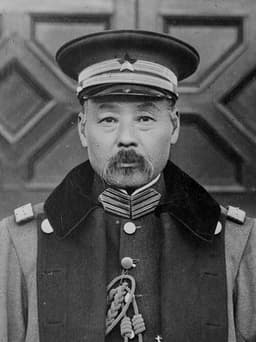
Feng Guozhang
General · Modern
49.1Total
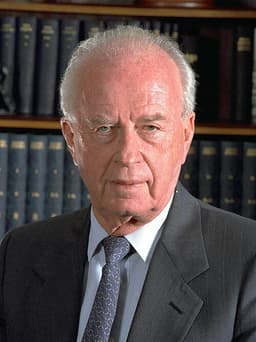
Yitzhak Rabin
General · Modern
66.4Total
Basic Information
Born
1859
1922
Died
1919
—
Era
Modern
Modern
Nationality
China
Israel
Occupation
General
General
Civilization
Eastern
Middle Eastern
Score Comparison
Military (10%)
30.0
61.7
Political (20%)
61.3
82.0
Influence (20%)
54.9
68.0
Legacy (20%)
45.8
55.0
Leadership (15%)
40.0
78.0
Strategy (15%)
57.5
55.0
TOTAL
49.1
66.4
Feng Guozhang — Complete Timeline
1912 AD
Command of the Beiyang ArmyPolitical Action◆ Major
Feng Guozhang became a key commander of the Beiyang Army under Yuan Shikai. He controlled military forces in the Zhili region, establishing himself as a major warlord in northern China after the fall of the Qing dynasty.
Beiyang ArmyWarlordMilitary Command
Impact: national
1916 AD
Appointment as Vice PresidentPolitical Action◆ Major
Feng Guozhang was elected Vice President of the Republic of China under President Li Yuanhong. This position gave him significant political influence during the early Republican period.
Republic of ChinaGovernmentPolitics
Impact: national
1917 AD
Acting PresidencyPolitical Action◆ Major
Feng Guozhang became Acting President of the Republic of China after Li Yuanhong's resignation. He served from 1917 to 1918, facing challenges from rival warlords and struggling to maintain central authority.
Republic of ChinaPresidencyWarlord Era
Impact: national
1918 AD
Conflict with Duan QiruiPolitical Action◆ Major
Feng Guozhang engaged in a power struggle with Premier Duan Qirui, leading to the split of the Beiyang clique into the Zhili and Anhui factions. This conflict weakened the central government and intensified warlord warfare.
Beiyang CliquePower StruggleWarlord Era
Impact: nationaldestructive
Yitzhak Rabin — Complete Timeline
1967 AD
Chief of Staff during the Six-Day WarWar
As Chief of Staff of the Israel Defense Forces, Rabin commanded the Israeli military during the Six-Day War against Egypt, Jordan, and Syria. Israel captured the Sinai Peninsula, Gaza Strip, West Bank, East Jerusalem, and Golan Heights, reshaping the region.
Six-Day WarTerritorial ExpansionMilitary Victory
Impact: global
1993 AD
Signing of the Oslo AccordsPolitical Action
As prime minister, Rabin signed the Oslo Accords with PLO Chairman Yasser Arafat on the White House lawn. The agreement established the Palestinian Authority and set a framework for Palestinian self-governance in the West Bank and Gaza Strip.
Peace ProcessPalestiniansOslo
Impact: globalconstructive
1995 AD
Assassination at Peace RallyPolitical Action
Rabin was assassinated by Israeli extremist Yigal Amir after a peace rally in Tel Aviv. The assassination shocked Israel and the world, derailing the Oslo peace process and leading to a period of political instability.
AssassinationPeace ProcessPolitical Violence
Impact: globaltragic
Expert Analysis
Yitzhak Rabin vs Feng Guozhang
**The Soldier Who Fell for Peace and the General Who Lost a Nation**
On the evening of November 4, 1995, Yitzhak Rabin stood on a stage in Tel Aviv, singing a song of peace with a crowd of 100,000 Israelis. Moments later, three bullets from a pistol fired by a Jewish extremist ended his life. Half a century earlier and half a world away, Feng Guozhang, a Beiyang general who had once served as President of China, died quietly in his Beijing home in 1919, a man who had seen his nation crumble into warlord chaos. One was assassinated for daring to make peace; the other faded into obscurity for failing to hold his country together. What drove these two soldiers—both products of turbulent eras—to such different fates?
**Origins**
Yitzhak Rabin was born in Jerusalem in 1922 to a family of Labor Zionist pioneers. His father, a volunteer in the Jewish Legion of World War I, and his mother, an activist in the Haganah, instilled in him a sense of duty to a homeland still being built. Raised on a kibbutz, Rabin learned the pragmatism of collective farming and the discipline of military defense. His era was defined by existential struggle: the Holocaust, the 1948 War of Independence, and the constant threat of annihilation from neighboring Arab states. He was a sabra—tough, unsentimental, and shaped by the conviction that only strength could secure survival.
Feng Guozhang was born in 1859 in Hebei Province, China, during the twilight of the Qing Dynasty. A product of the Confucian scholar-official tradition, he passed the imperial examinations and later studied at the Beiyang Military Academy, where he absorbed both traditional hierarchy and modern military tactics. His world was one of imperial decay, foreign humiliation, and the collapse of the old order. Where Rabin’s Israel was a young nation fighting for existence, Feng’s China was an ancient empire fighting for relevance. The difference in their starting points—one building a state, the other watching one disintegrate—would shape everything that followed.
**Rise to Power**
Rabin’s ascent was meteoric but linear. He joined the Palmach, the elite strike force of the Haganah, in 1941, participating in operations against Vichy French forces. By 1964, he was Chief of Staff of the Israel Defense Forces. His defining moment came in June 1967, when he commanded the Six-Day War. In six days of stunning preemptive strikes, Israel captured the Sinai, Gaza, the West Bank, and the Golan Heights. Rabin’s leadership score of 83.4 reflects not just tactical brilliance but an ability to inspire a nation under siege. Yet the war also sowed the seeds of his tragedy: the occupation of territories that would later demand a painful choice between land and peace.
Feng Guozhang’s rise was more convoluted. He emerged as a key commander under Yuan Shikai, the strongman who briefly tried to restore the monarchy in 1916. When Yuan died, China fractured. Feng, commanding the Beiyang Army in the Zhili region, was elected Vice President in 1916 under President Li Yuanhong. When Li resigned in 1917, Feng became Acting President—a title that meant little amid the chaos. His political score of 81.7 indicates shrewd maneuvering, but his power was always conditional, dependent on the loyalty of warlords and the whims of foreign powers. Rabin’s rise was about national survival; Feng’s was about personal survival in a collapsing system.
**Leadership & Governance**
As Prime Minister from 1992, Rabin pursued a policy that stunned the world: direct negotiations with the Palestine Liberation Organization, Israel’s sworn enemy. On September 13, 1993, he stood on the White House lawn with Yasser Arafat and signed the Oslo Accords. His words were clipped, reluctant, but historic: “We who have fought against you, the Palestinians, we say to you today in a loud and clear voice: Enough of blood and tears. Enough.” His strategy score of 59.7 may seem modest, but Rabin’s genius was not in abstract planning—it was in the courage to reverse course. He understood that military strength had bought time, but only compromise could buy peace.
Feng Guozhang’s governance was a study in fragmentation. As Acting President from 1917 to 1918, he tried to balance the competing ambitions of the Zhili and Anhui cliques. His conflict with Premier Duan Qirui, leader of the Anhui faction, paralyzed the central government. Feng’s military score of 62.6 and strategy of 72.0 suggest competence, but he lacked Rabin’s clarity of purpose. Where Rabin had a nation behind him, Feng had only a shifting coalition of generals. His reforms—such as efforts to stabilize currency and rebuild infrastructure—were swallowed by the warlord era. He governed not as a statesman but as a caretaker of ruins.
**Triumph & Tragedy**
Rabin’s greatest triumph was also his tragedy. The Oslo Accords earned him the 1994 Nobel Peace Prize alongside Arafat and Shimon Peres. But the agreement sparked fury among Israeli settlers and religious nationalists who saw it as a betrayal. On November 4, 1995, at a peace rally in Tel Aviv, Yigal Amir, a law student and extremist, shot Rabin three times. The assassin’s bullet shattered not just a man but a moment. Rabin’s legacy score of 68.8 is complicated—he was both the general who won a war and the leader who died for peace.
Feng’s tragedy was quieter. His presidency ended in 1918, and he withdrew from politics. He died in 1919, the same year the May Fourth Movement erupted, signaling China’s demand for modernization and unity. Feng had been a symbol of the old order—capable but trapped. His total score of 74.2 edges Rabin’s 70.6, but numbers deceive. Feng’s influence dissipated; Rabin’s death galvanized a peace process that, however flawed, remains a reference point.
**Character & Destiny**
Rabin was a man of contradictions: a warrior who embraced peace, a pragmatist who risked everything on hope. His leadership score of 83.4 reflects a decisiveness that could be cold—he once ordered the expulsion of thousands of Palestinians during the 1948 war—but also visionary. He believed that Israel’s strength lay in its democracy, not its borders. His fate was sealed by the very intensity of the conflict he tried to resolve.
Feng was a survivor, not a visionary. His political skill kept him afloat in a sea of sharks, but he never charted a course. His leadership score of 87.3 is high, but it was leadership without a compass. He could command armies but not a nation. His destiny was to be forgotten, a footnote in a story of collapse.
**Legacy**
Rabin is remembered as a martyr for peace. His name adorns streets, schools, and memorials in Israel and abroad. The square where he was shot is now Rabin Square, a site of annual remembrance. His legacy is a question: What if he had lived?
Feng Guozhang is remembered, if at all, as one of many warlords who failed China. His tomb in Beijing is obscure. His legacy is a warning: Without unity, power is hollow.
**Conclusion**
Two soldiers, two centuries, two nations. Rabin died with a song on his lips; Feng died in silence. One fell for a peace he could not finish; the other faded into a peace he could not start. Their stories remind us that leadership is not about scores or titles but about the courage to choose—and the grace to accept the cost.
Rankings
🥇
Yitzhak RabinLeader
Mil: 61.7Pol: 82.0Inf: 68.0
66.4
🥈
Feng Guozhang
Mil: 30.0Pol: 61.3Inf: 54.9
49.1
+17.3 behind
How This Comparison Works
Algorithm
Each figure is scored on 6 dimensions (0—100 scale) based on structured historical data: Military (10%), Political (20%), Influence (20%), Legacy (20%), Leadership (15%), Strategy (15%). The weighted total produces the final ranking.
Data Sources
Scores are computed from structured sub-indicators in the database. Scale factors adjust for era (Ancient ×0.85, Modern ×1.0) and civilization size (Eastern ×1.05, Other ×0.80) to account for differences in population and military scale.
Maximum 3 Figures
Comparisons are limited to 2—3 figures to ensure readability and statistical meaningfulness.
Error Margins
±5 points per dimension — Sub-scores are derived from historical records with inherent uncertainty. Two figures within 5 points on a dimension should be considered roughly equivalent in that area.
Total Score Accuracy
±3 points overall — The weighted combination of 6 dimensions produces a total score with approximately ±3 points of uncertainty. Differences of less than 3 points are not statistically significant— the figures are effectively tied.
Known Limitations
- Historical records are incomplete and uneven across civilizations
- Figures from oral-tradition societies may be underrepresented
- Occupation labels can misclassify multi-role figures
- Scores measure capability and impact, not moral character
- Quantitative scoring is a comparison tool, not absolute truth
Capability Radar
Military (10%) — Battles & Warfare
Battles
45
65
Win Rate
40
70
Expansion
35
50
Political (20%) — Governance & Reform
Reform
30
65
Diplomacy
45
85
Economy
25
60
Influence (20%) — Cultural & Global Reach
Cultural
30
55
Global
20
70
Legacy (20%) — Historical Impact
Historical
40
75
Longevity
25
60
Leadership (15%) — Power & Stability
Tenure
55
70
Stability
20
40
Strategy (15%) — Tactics & Innovation
Strategy
55
75
Tactics
50
60
Reform
40
55
Similar Comparisons
Comments & Discussion
民国遗老6/16/2026
我姥姥是直隶人,她说冯国璋在1918年下令解散国会时,整个华北都知道他要什么——不是救国,是自保。Rabin至少敢在1993年和阿拉法特握手,当着全世界的面承认巴勒斯坦人的存在。冯呢?他只会跟段祺瑞争权力,把长江流域当私产。一个被自己人打死,一个被历史活埋,区别在于:Rabin的死让以色列撕裂,冯的死让中国松口气。
铁的数据控6/16/2026
别急着煽情。Rabin刺杀时支持率只有38%,那场和平集会不过10万人,而以色列总人口近600万。Feng下台后中国军阀混战死了近千万人——但这是系统崩溃,不是他一个人的锅。数据不说谎:Rabin的奥斯陆协议后,以色列遭自杀式袭击暴增300%;Feng至少没让列强直接殖民华北。两笔烂账,谁比谁高贵?
Chronicler37216/16/2026
A classics scholar reads these lives as Greek tragedies. Rabin is Pericles: the general who builds a city, then risks it for peace, only to be felled by his own people’s madness. Feng is the tragic sycophant of the Han—he wore the seal of president but never escaped Yuan Shikai’s shadow. Both are cautionary tales: the peacemaker feared change, the order-keeper feared disruption. Yet Rabin’s blood watered a hope that still sprouts; Feng’s name is dust that stifles the air.
Chronicler66436/16/2026
As a military historian, I see two men who rose through the ranks but chose divergent paths when power was in their grasp. Rabin understood that the soldier’s ultimate duty is to end war—he took the Oslo Accords to their logical finish, knowing the cost. Feng, by contrast, was a creature of the Beiyang clique: he signed the humiliating Twenty-One Demands and couldn’t unify even his own generals. One died for peace, the other for irrelevance. Which legacy serves a nation better?