Loading...
Feng Guozhang vs Sitiveni Rabuka
Sitiveni Rabuka leads by 2.6 pts · 2 figures compared
…
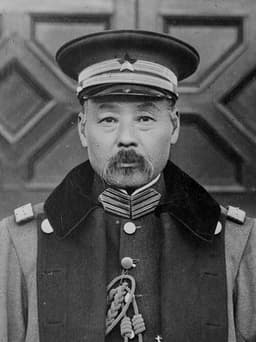
Feng Guozhang
General · Modern
49.1Total
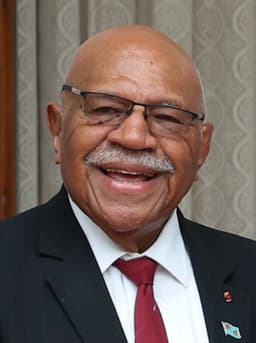
Sitiveni Rabuka
General · Modern
51.7Total
Basic Information
Born
1859
1948
Died
1919
—
Era
Modern
Modern
Nationality
China
Fiji
Occupation
General
General
Civilization
Eastern
Other
Score Comparison
Military (10%)
30.0
10.2
Political (20%)
61.3
60.0
Influence (20%)
54.9
53.3
Legacy (20%)
45.8
46.7
Leadership (15%)
40.0
85.0
Strategy (15%)
57.5
39.6
TOTAL
49.1
51.7
Feng Guozhang — Complete Timeline
1912 AD
Command of the Beiyang ArmyPolitical Action◆ Major
Feng Guozhang became a key commander of the Beiyang Army under Yuan Shikai. He controlled military forces in the Zhili region, establishing himself as a major warlord in northern China after the fall of the Qing dynasty.
Beiyang ArmyWarlordMilitary Command
Impact: national
1916 AD
Appointment as Vice PresidentPolitical Action◆ Major
Feng Guozhang was elected Vice President of the Republic of China under President Li Yuanhong. This position gave him significant political influence during the early Republican period.
Republic of ChinaGovernmentPolitics
Impact: national
1917 AD
Acting PresidencyPolitical Action◆ Major
Feng Guozhang became Acting President of the Republic of China after Li Yuanhong's resignation. He served from 1917 to 1918, facing challenges from rival warlords and struggling to maintain central authority.
Republic of ChinaPresidencyWarlord Era
Impact: national
1918 AD
Conflict with Duan QiruiPolitical Action◆ Major
Feng Guozhang engaged in a power struggle with Premier Duan Qirui, leading to the split of the Beiyang clique into the Zhili and Anhui factions. This conflict weakened the central government and intensified warlord warfare.
Beiyang CliquePower StruggleWarlord Era
Impact: nationaldestructive
Sitiveni Rabuka — Complete Timeline
1987 AD
1987 Fijian Coup d'étatPolitical Action
Rabuka, as a colonel in the Fijian military, led a coup overthrowing the elected government of Timoci Bavadra. The coup was motivated by ethnic Fijian opposition to Indo-Fijian political influence. Rabuka declared Fiji a republic.
CoupMilitary InterventionEthnic Tension
Impact: nationaldestructive
1992 AD
1992 Election as Prime MinisterPolitical Action◆ Major
Rabuka transitioned from military leader to civilian politician, winning the 1992 general election as leader of the Fijian Political Party. He became Prime Minister, serving until 1999.
ElectionCivilian GovernmentPolitical Transition
Impact: national
1997 AD
1997 Constitution ReformReform◆ Major
Rabuka's government oversaw the adoption of a new constitution that removed ethnic-based voting and provided for a multi-ethnic government. The constitution aimed to reduce ethnic tensions and promote national unity.
ConstitutionReformEthnic Reconciliation
Impact: nationalconstructive
1999 AD
1999 General Election DefeatPolitical Action◆ Major
Rabuka's government was defeated in the general election by the Labour Party led by Mahendra Chaudhry. Rabuka stepped down as Prime Minister, marking the end of his first period in power.
Election DefeatGovernment ChangeChaudhry
Impact: national
2022 AD
2022 Return as Prime MinisterPolitical Action◆ Major
Rabuka led the People's Alliance to victory in the 2022 general election, forming a coalition government. He became Prime Minister again, 23 years after his previous tenure, promising democratic reforms.
ElectionReturn to PowerCoalition Government
Impact: national
Expert Analysis
Sitiveni Rabuka vs Feng Guozhang
### The General Who Became President, Twice
On a sweltering August afternoon in 1917, Feng Guozhang stepped into the presidential palace in Beijing, a man caught between two worlds. He was a product of the imperial order, a Confucian-trained scholar-general who had served the Qing dynasty, yet he now wore the Western-style suit of a republican president. Half a world away and seventy years later, on a humid May morning in 1987, Sitiveni Rabuka, a colonel in the Fijian military, walked into the parliament building in Suva and, with a small group of armed soldiers, ended a month-old government. One man inherited a crumbling empire; the other seized a young democracy. Both were generals who became politicians. But their paths—and their legacies—diverged as sharply as the civilizations they represented.
**Origins**
Feng Guozhang was born in 1859, the twilight of the Qing dynasty, into a world of rigid hierarchies and whispered rebellions. He came from Hebei province, the heartland of the Beiyang Army, and was educated in the classical Confucian tradition before being drawn to the new military academies that the dynasty, in its desperation, had begun to establish. He was a man of the old order learning the tools of the new. His era was one of collapse: the Taiping Rebellion, the Opium Wars, the Boxer Uprising—each disaster chipped away at the Mandate of Heaven. For Feng, the state was a fragile vessel, and power was something to be held, not shared.
Sitiveni Rabuka was born in 1948, in a Fiji that was still a British colony, a sugar-and-coconut outpost of empire. He grew up in a village on the island of Vanua Levu, the son of a Methodist lay preacher. His world was shaped by communal land rights, chiefly authority, and the uneasy balance between indigenous Fijians and the Indo-Fijian descendants of indentured laborers. When Fiji became independent in 1970, it was a constitutional democracy, but beneath the surface, ethnic tensions simmered. Rabuka joined the army, a small and professional force, and rose through its ranks. His era was one of decolonization and hope—but also of fear that democracy would mean the loss of indigenous Fijian control.
**Rise to Power**
Feng Guozhang’s rise was methodical, a ladder of patronage and performance. He caught the eye of Yuan Shikai, the strongman who had built the Beiyang Army into the most formidable military force in China. In 1912, when the Qing fell and the Republic was declared, Feng became a key commander of that army, controlling forces in the Zhili region. He was not a revolutionary; he was a survivor. When Yuan Shikai tried to make himself emperor in 1915, Feng stayed loyal to the Republic—or, more accurately, to the idea that power should be balanced among generals, not seized by one. By 1916, he was elected Vice President under Li Yuanhong. He had arrived, but only to the second chair.
Rabuka’s rise was sudden and violent. In 1987, a coalition government led by Timoci Bavadra, an ethnic Indian, won the general election. To many indigenous Fijians, this was an existential threat. Rabuka, then a colonel, did not consult the chiefs or the church elders. On May 14, he led a small group of soldiers into parliament, arrested the government, and declared martial law. It was a coup d’état—clean, swift, and shocking. He was 39 years old. Within months, he had made himself head of state. He had not climbed a ladder; he had kicked it over and built his own.
**Leadership & Governance**
Feng Guozhang’s leadership was a study in cautious maneuvering. As Acting President from 1917 to 1918, he faced a fragmented nation: warlords in the provinces, a parliament in Beijing that barely functioned, and a rival in Premier Duan Qirui, who controlled the Anhui clique of the Beiyang Army. Feng’s military score of 62.6 reflects a commander who was competent but not brilliant; his political score of 81.7 reveals a man who understood negotiation and compromise. He tried to mediate between the north and the south, to hold the Republic together through diplomacy. But he was ultimately a general in a politician’s body. His power rested on troops, not votes. When the struggle with Duan Qirui intensified in 1918, the Beiyang clique split into the Zhili and Anhui factions. Feng could not hold the center. He resigned the presidency and returned to his base, a warlord among warlords.
Rabuka’s leadership was a transformation. After the 1987 coup, he ruled by decree, but he quickly realized that military power alone could not govern a multi-ethnic society. His political score of 72.0 is lower than Feng’s, but his trajectory is more dramatic. In 1992, he stepped down as military ruler, formed the Fijian Political Party, and won the general election as Prime Minister. He had transitioned from coup leader to democrat. His greatest achievement came in 1997, when his government oversaw the adoption of a new constitution that removed ethnic-based voting and created a multiracial parliamentary system. It was a remarkable act of statesmanship—a man who had seized power on racial grounds now enshrined racial equality in law. His military score of 19.9 is almost an afterthought; he was a general who learned to put down his gun.
**Triumph & Tragedy**
Feng Guozhang’s greatest moment was also his most tragic. He became Acting President at a time when the Republic of China was already a corpse being fought over by vultures. He tried to revive it, but his efforts were futile. His failure was not personal but structural: the system of warlord politics had no room for a unifying figure. He died in 1919, a year after leaving office, a man who had reached the highest office but never held true power.
Rabuka’s triumph was the 1997 constitution. His tragedy came two years later, in 1999, when his government was decisively defeated in the general election by the Labour Party, led by Mahendra Chaudhry, an Indo-Fijian. Rabuka stepped down peacefully. It was the first time a coup leader had surrendered power to the very people he had overthrown. But the peace did not last. In 2000, another coup would undo his work. Rabuka would spend the next two decades in the political wilderness, a cautionary tale of how fragile democratic transitions can be.
**Character & Destiny**
Feng Guozhang was a Confucian gentleman in a world of gangsters. He believed in order, hierarchy, and the proper conduct of affairs. But he lacked the ruthlessness to impose his will. His strategy score of 72.0 suggests a man who could plan but not execute. He was a product of his era—a time when the old certainties had collapsed and no new ones had emerged. His destiny was to be a caretaker, not a founder.
Rabuka was a man of action who learned to reflect. His strategy score of 44.6 is the lowest among his scores, and it shows: the 1987 coup was a gamble, not a plan. But he had the rare ability to change. He listened to the chiefs, the church, and the international community. He came to see that democracy was not a threat to indigenous Fijian identity but its best guarantee. His destiny was to be a convert.
**Legacy**
Feng Guozhang is remembered, if at all, as a footnote in the chaotic history of the early Republic. His legacy score of 64.4 reflects a man who was overshadowed by Yuan Shikai, Duan Qirui, and the warlords who followed. He is a name in textbooks, not a figure in the national imagination.
Rabuka’s legacy is more complex. His 1997 constitution was overturned by a later coup, but it remains a model of what could have been. In 2022, at the age of 74, he returned as Prime Minister, leading a coalition government. He is now a symbol of the possibility of redemption—a man who broke democracy and then spent decades trying to rebuild it. His legacy score of 61.2 is modest, but his story is not over.
**Conclusion**
Feng Guozhang and Sitiveni Rabuka were both generals who became presidents, but they inhabited different universes. Feng was a man of a dying empire, trying to hold together pieces that had already shattered. Rabuka was a man of a young nation, trying to create something new after breaking the old. One failed because he could not transcend his era; the other succeeded, at least for a time, because he could. Their lives remind us that history is not a straight line but a series of choices—and that the same hands that seize power can, if they choose, also let it go.
Rankings
🥇
Sitiveni RabukaLeader
Mil: 10.2Pol: 60.0Inf: 53.3
51.7
🥈
Feng Guozhang
Mil: 30.0Pol: 61.3Inf: 54.9
49.1
+2.6 behind
How This Comparison Works
Algorithm
Each figure is scored on 6 dimensions (0—100 scale) based on structured historical data: Military (10%), Political (20%), Influence (20%), Legacy (20%), Leadership (15%), Strategy (15%). The weighted total produces the final ranking.
Data Sources
Scores are computed from structured sub-indicators in the database. Scale factors adjust for era (Ancient ×0.85, Modern ×1.0) and civilization size (Eastern ×1.05, Other ×0.80) to account for differences in population and military scale.
Maximum 3 Figures
Comparisons are limited to 2—3 figures to ensure readability and statistical meaningfulness.
Error Margins
±5 points per dimension — Sub-scores are derived from historical records with inherent uncertainty. Two figures within 5 points on a dimension should be considered roughly equivalent in that area.
Total Score Accuracy
±3 points overall — The weighted combination of 6 dimensions produces a total score with approximately ±3 points of uncertainty. Differences of less than 3 points are not statistically significant— the figures are effectively tied.
Known Limitations
- Historical records are incomplete and uneven across civilizations
- Figures from oral-tradition societies may be underrepresented
- Occupation labels can misclassify multi-role figures
- Scores measure capability and impact, not moral character
- Quantitative scoring is a comparison tool, not absolute truth
Capability Radar
Military (10%) — Battles & Warfare
Battles
45
5
Win Rate
40
5
Expansion
35
5
Political (20%) — Governance & Reform
Reform
30
50
Diplomacy
45
45
Economy
25
40
Influence (20%) — Cultural & Global Reach
Cultural
30
30
Global
20
20
Legacy (20%) — Historical Impact
Historical
40
40
Longevity
25
30
Leadership (15%) — Power & Stability
Tenure
55
55
Stability
20
35
Strategy (15%) — Tactics & Innovation
Strategy
55
10
Tactics
50
10
Reform
40
5
Similar Comparisons
Comments & Discussion
TWO-COUP GENERAL6/16/2026
Calling this a comparison between two generals who became presidents is like comparing a coup leader who actually *wanted* power to one who reluctantly took it. Rabuka overthrew a government in 1987, then staged a second coup later that year when the first one didn't stick. He was a military man through and through, not a reluctant statesman. Feng Guozhang, meanwhile, inherited the presidency after Li Yuanhong fled—he didn't seize it at gunpoint. Rabuka's legacy is fundamentally about military i
军阀教父6/16/2026
冯国璋是北洋三杰之一,外号"北洋之豹",这可不是白叫的。他手里握着直系军队,是真正的实力派军阀。别说什么"继承总统职位",他1917年能当上代理总统,靠的是手里有兵、背后有段祺瑞的皖系支持。而拉布卡呢?他1987年政变时只是个上校,根本撑不起"将军"这个头衔。一个是军阀混战时期的野心家,一个是小岛国的政变军人,放在一起比,冯国璋在权力游戏里玩的级别高太多了。
DATA GAP DETECTIVE6/16/2026
The analysis gives Feng Guozhang's birth year as 1859, but I want to know: when did he die? Because timelines matter for legacies. Feng actually lived until 1919, dying less than two years after his presidency ended. That's crucial context—he didn't get to shape a post-presidential career. Rabuka, meanwhile, stepped down after the 1992 elections, then returned as prime minister in the 2020s. That's a *decades-long* political journey. Comparing a short-lived 1910s figure to a man who's been in an
宪政门徒6/16/2026
说冯国璋是"旧时代的产物"?完全错了!他可是北洋武备学堂毕业的第一批近代化军事人才,学的是洋操、洋炮、洋战术。他在清末就力主立宪,1911年还反对镇压武昌起义,主张和平解决。他穿西服不是装样子,是真想搞共和。反观拉布卡,1987年政变推翻的可是民主选举的政府,他后来虽然忏悔了,但起点就不同。一个是试图在旧废墟上建新楼的改革者,一个是亲手拆了新楼的破坏者,别混淆了。
PACIFIC ISLAND HISTORIAN6/16/2026
You're missing the Pacific context entirely. Rabuka's 1987 coups weren't just about power—they were about ethnic Fijian fears of Indo