Loading...
Feng Guozhang vs Muhammadu Buhari
Muhammadu Buhari leads by 2.4 pts · 2 figures compared
…
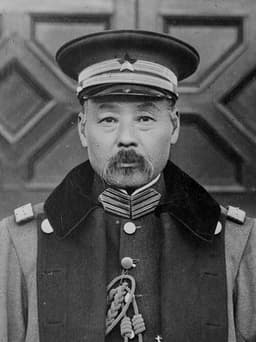
Feng Guozhang
General · Modern
49.1Total
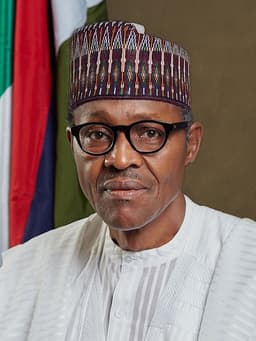
Muhammadu Buhari
General · Modern
51.5Total
Basic Information
Born
1859
1942
Died
1919
—
Era
Modern
Modern
Nationality
China
Nigeria
Occupation
General
General
Civilization
Eastern
Other
Score Comparison
Military (10%)
30.0
22.6
Political (20%)
61.3
68.0
Influence (20%)
54.9
53.3
Legacy (20%)
45.8
43.3
Leadership (15%)
40.0
72.0
Strategy (15%)
57.5
41.0
TOTAL
49.1
51.5
Feng Guozhang — Complete Timeline
1912 AD
Command of the Beiyang ArmyPolitical Action◆ Major
Feng Guozhang became a key commander of the Beiyang Army under Yuan Shikai. He controlled military forces in the Zhili region, establishing himself as a major warlord in northern China after the fall of the Qing dynasty.
Beiyang ArmyWarlordMilitary Command
Impact: national
1916 AD
Appointment as Vice PresidentPolitical Action◆ Major
Feng Guozhang was elected Vice President of the Republic of China under President Li Yuanhong. This position gave him significant political influence during the early Republican period.
Republic of ChinaGovernmentPolitics
Impact: national
1917 AD
Acting PresidencyPolitical Action◆ Major
Feng Guozhang became Acting President of the Republic of China after Li Yuanhong's resignation. He served from 1917 to 1918, facing challenges from rival warlords and struggling to maintain central authority.
Republic of ChinaPresidencyWarlord Era
Impact: national
1918 AD
Conflict with Duan QiruiPolitical Action◆ Major
Feng Guozhang engaged in a power struggle with Premier Duan Qirui, leading to the split of the Beiyang clique into the Zhili and Anhui factions. This conflict weakened the central government and intensified warlord warfare.
Beiyang CliquePower StruggleWarlord Era
Impact: nationaldestructive
Muhammadu Buhari — Complete Timeline
1983 AD
1983 Nigerian coup d'étatPolitical Action
Major General Muhammadu Buhari led a military coup that overthrew the civilian government of President Shehu Shagari. Buhari cited corruption and economic mismanagement as justifications, and he became the head of state.
CoupMilitary RuleCorruption
Impact: nationaldestructive
1984 AD
War Against Indiscipline (WAI)Reform◆ Major
Buhari launched the War Against Indiscipline, a campaign to enforce discipline and order in Nigerian society. It included harsh penalties for minor offenses, such as queue-jumping, and was criticized for human rights abuses.
DisciplineSocial PolicyHuman Rights
Impact: nationaldestructive
1985 AD
Overthrow by Ibrahim BabangidaPolitical Action◆ Major
Buhari was overthrown in a palace coup led by his Chief of Army Staff, Ibrahim Babangida. Babangida cited Buhari's authoritarian style and failure to address the economy as reasons for the coup.
CoupOverthrowBabangida
Impact: national
2015 AD
Anti-corruption campaignReform◆ Major
Buhari launched a high-profile anti-corruption campaign, targeting government officials and recovering stolen assets. The campaign was praised internationally but criticized for being selective and politically motivated.
Anti-CorruptionReformGovernance
Impact: nationalconstructive
Election as President of NigeriaPolitical Action
Buhari won the 2015 Nigerian presidential election, defeating incumbent Goodluck Jonathan. This was the first time an opposition candidate had defeated a sitting president in Nigeria's history, marking a democratic milestone.
ElectionDemocracyOpposition Victory
Impact: nationalprogressive
Expert Analysis
Muhammadu Buhari vs Feng Guozhang
# The General's Two Lives: Feng Guozhang and Muhammadu Buhari
In the winter of 1918, Feng Guozhang sat in the presidential palace in Beijing, a man caught between the weight of a crumbling republic and the ambitions of rival warlords. Nearly a century later, in the spring of 2015, Muhammadu Buhari stood before a crowd in Abuja, having just won a democratic election that would make him the first opposition candidate to defeat a sitting Nigerian president. Both men were generals. Both seized power in times of national crisis. Yet one ended his days as a fading relic of a failed state, while the other became a symbol of democratic renewal. What explains the difference?
Origins
Feng Guozhang was born in 1859, the son of a minor landowner in Hebei province. China was then reeling from the Opium Wars, its ancient order shattered by foreign cannon. Feng entered the military academy at Baoding, one of the first Chinese officers trained in modern warfare. He rose through the ranks of the Beiyang Army, the most powerful military force in late Qing China, under the patronage of Yuan Shikai. His world was one of dynastic collapse and warlord competition—a Darwinian arena where loyalty was transactional and power came from the barrel of a gun.
Muhammadu Buhari was born in 1942 in Daura, northern Nigeria, into a Fulani Muslim family. His father was a farmer, his mother a homemaker. Nigeria was still a British colony, but independence was only eighteen years away. Buhari attended the Nigerian Military Training College and later trained in India and the United Kingdom. He served in the civil war that kept Biafra from seceding, and by the 1980s, he had become a seasoned officer in a military that saw itself as the nation's last bulwark against chaos. His formative experiences were not the collapse of an empire, but the birth of a nation—and its immediate struggle to survive.
Rise to Power
Feng Guozhang's path to power was paved by Yuan Shikai. In 1912, after the fall of the Qing dynasty, Yuan appointed Feng a key commander of the Beiyang Army, placing him in control of forces in the Zhili region. When Yuan declared himself emperor in 1915, Feng quietly opposed him, sensing the winds of change. After Yuan's death in 1916, Feng was elected Vice President under Li Yuanhong, and when Li resigned during the chaos of the Manchu Restoration in 1917, Feng became Acting President. He had risen not through popular acclaim, but through the machinations of a military clique.
Buhari came to power through a different door. On December 31, 1983, he led a military coup that overthrew President Shehu Shagari, whom he accused of corruption and economic mismanagement. The coup was bloodless, and Buhari was hailed as a savior. He was forty-one years old, a stern-faced soldier with a reputation for honesty. His rise was swift, decisive, and driven by a genuine belief that only the military could save Nigeria from itself.
Leadership and Governance
As president, Feng Guozhang governed from weakness. The Beiyang Army had fractured into factions, and his rival Duan Qirui controlled the premier's office. Their power struggle in 1918 split the Beiyang clique into the Zhili and Anhui cliques, with Feng leading the former. He tried to balance northern and southern interests, negotiating with the rival Guangzhou government, but his authority was hollow. He was a president without an army he fully commanded, a general without a unified force. His political score of 81.7 reflects his skill at maneuvering in a broken system, but his military score of 62.6 reveals the limits of his power.
Buhari's first rule was defined by the War Against Indiscipline, launched in 1984. It was a campaign of enforced order: public servants who arrived late were forced to do frog jumps; queue-jumpers were publicly shamed. The policy was popular among those tired of chaos, but it was also authoritarian. Buhari jailed journalists, suppressed dissent, and ruled by decree. His strategy score of 62.4 suggests a man who believed in discipline as a cure for all ills—but who lacked the political flexibility to build lasting institutions. In 1985, his own Chief of Army Staff, Ibrahim Babangida, overthrew him, citing his "rigidity."
Triumph and Tragedy
Feng Guozhang's greatest moment was his ascension to the presidency—a triumph of political survival in a world where warlords ate each other. His greatest failure was his inability to hold the republic together. By 1918, he had lost the power struggle with Duan Qirui, and he resigned the presidency later that year. He died in 1919, a retired general in a country sliding into warlord chaos.
Buhari's tragedy was his first rule: a noble vision that curdled into repression. But his triumph came decades later. After losing three elections, he won the presidency in 2015 at the age of seventy-two, campaigning as a reformed democrat. He launched an anti-corruption campaign that recovered stolen assets and prosecuted officials. For a man once overthrown for being too authoritarian, his return through the ballot box was a profound vindication.
Character and Destiny
Feng Guozhang was a survivor, not a visionary. He played the game of warlord politics with skill but without a larger purpose. His leadership score of 87.3 suggests he commanded respect, but his legacy score of 64.4 indicates that respect did not endure. He was a product of his era—a time when Chinese generals saw the republic as a bargaining chip, not a sacred trust.
Buhari was a man of conviction, for better and worse. His rigidity cost him power in 1985, but it also sustained him through years of electoral defeat. He believed in Nigeria, even when Nigeria did not believe in him. His influence score of 70.3 reflects a figure who shaped his nation twice—first as a disciplinarian, then as a democrat.
Legacy
Feng Guozhang is remembered, if at all, as a footnote in the story of China's republican failure. His name appears in histories of the Beiyang warlords, a cautionary tale of military power without political vision. His total score of 74.2 places him above average, but his influence was ephemeral.
Buhari's legacy is more complex. His first rule is criticized as a dark age of repression; his second, as a flawed but genuine attempt at democratic governance. He is a symbol of Nigeria's struggle to reconcile military discipline with democratic freedom. His total score of 60.7 is lower than Feng's, but his story is still being written.
Conclusion
Two generals, two nations, two centuries. Feng Guozhang rose and fell within the crumbling walls of a dying empire; Muhammadu Buhari rose, fell, and rose again in a young democracy still learning to stand. One was a creature of his time, shaped by collapse; the other, a man who defied his time, shaped by hope. Their lives remind us that the same uniform can serve very different destinies—and that the true measure of a leader is not how they seize power, but what they do with it when it slips through their fingers.
Rankings
🥇
Muhammadu BuhariLeader
Mil: 22.6Pol: 68.0Inf: 53.3
51.5
🥈
Feng Guozhang
Mil: 30.0Pol: 61.3Inf: 54.9
49.1
+2.4 behind
How This Comparison Works
Algorithm
Each figure is scored on 6 dimensions (0—100 scale) based on structured historical data: Military (10%), Political (20%), Influence (20%), Legacy (20%), Leadership (15%), Strategy (15%). The weighted total produces the final ranking.
Data Sources
Scores are computed from structured sub-indicators in the database. Scale factors adjust for era (Ancient ×0.85, Modern ×1.0) and civilization size (Eastern ×1.05, Other ×0.80) to account for differences in population and military scale.
Maximum 3 Figures
Comparisons are limited to 2—3 figures to ensure readability and statistical meaningfulness.
Error Margins
±5 points per dimension — Sub-scores are derived from historical records with inherent uncertainty. Two figures within 5 points on a dimension should be considered roughly equivalent in that area.
Total Score Accuracy
±3 points overall — The weighted combination of 6 dimensions produces a total score with approximately ±3 points of uncertainty. Differences of less than 3 points are not statistically significant— the figures are effectively tied.
Known Limitations
- Historical records are incomplete and uneven across civilizations
- Figures from oral-tradition societies may be underrepresented
- Occupation labels can misclassify multi-role figures
- Scores measure capability and impact, not moral character
- Quantitative scoring is a comparison tool, not absolute truth
Capability Radar
Military (10%) — Battles & Warfare
Battles
45
10
Win Rate
40
10
Expansion
35
5
Political (20%) — Governance & Reform
Reform
30
30
Diplomacy
45
25
Economy
25
20
Influence (20%) — Cultural & Global Reach
Cultural
30
25
Global
20
25
Legacy (20%) — Historical Impact
Historical
40
30
Longevity
25
20
Leadership (15%) — Power & Stability
Tenure
55
45
Stability
20
15
Strategy (15%) — Tactics & Innovation
Strategy
55
15
Tactics
50
15
Reform
40
20
Similar Comparisons
Comments & Discussion
GUNPOWDER_GUANXI6/16/2026
Feng’s Beiyiang clique was a protection racket in uniform, and Buhari’s 1983 coup was no better—just two generals cosplaying as patriots. The real difference isn’t “democratic renewal,” it’s that Buhari got a second act because Nigeria’s elites needed a clean face after Goodluck Jonathan’s oil money circus. Feng died in obscurity because warlord politics has no sequel. Power isn’t redeemed by winning an election once; it’s about whether the system lets you lose one permanently. Buhari did, barel
教条统计员6/16/2026
“民主复兴”纯粹是标题党。Buhari 2015年赢下大选是靠南北穆斯林-基督徒联盟和石油产区叛逃,不是儒家道德。Feng Guozhang 1918年在总统府里连北京城都控制不了,北洋军饷都发不出。一个靠选区投币机赢票,另一个连投币机都没有。所谓的“转型差异”只是选举程序的幻术,底层逻辑都是枪杆子和地头蛇的博弈。
BEIYANG_REFORMER6/16/2026
Feng Guozhang was a tragic modernizer—he founded China’s first modern staff college at Baoding, trained a generation of officers who later fought the Japanese, and still got called a “warlord” for his pains. Buhari shut down universities and jailed journalists in the 1980s, then rode a “change” slogan thirty years later. Feng never got a rebrand because his country was too shattered for narrative spin. Buhari got redemption because Nigeria’s democracy, for all its flaws, allowed a second chapter
北方军阀史痴6/16/2026
别扯什么民主,Buhari 1983年政变上台后关押左派、纵容北部警察杀人,跟Feng Guozhang 1918年下令枪决马厂起义学生没区别。唯一不同是Feng输掉了直皖战争,被段祺瑞赶出北京后郁郁而终。Buhari却活到了油元时代,靠北方选票回锅。历史给将军的第二次机会,从来不看道德,只看他死的时候有没有石油可卖。
JONATHANISTA_TROLL6/16/2026
Actually, the real parallel is that both men were the “safe” choice after civilian chaos—Feng after Yuan Shikai’s monarchy fiasco, Buhari after Jonathan’s insurgency mismanagement. But Feng was smart enough to know his Beiyiang army couldn’t hold China together. Buhari thought his Daura village networks would beat Boko Haram. Look at 2021: Feng’s old bases became Japanese collaborators; Buhari’s northern strongholds