Loading...
Feng Guozhang vs Tadeusz Kosciuszko
Tadeusz Kosciuszko leads by 15.0 pts · 2 figures compared
…
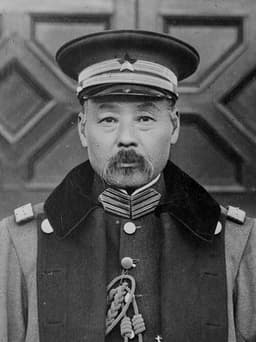
Feng Guozhang
General · Modern
49.1Total
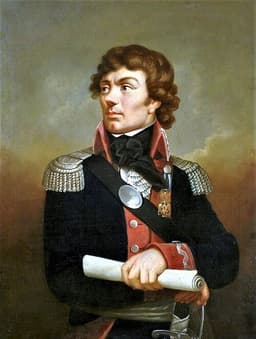
Tadeusz Kosciuszko
General · Modern
64.1Total
Basic Information
Born
1859
1746
Died
1919
1817
Era
Modern
Modern
Nationality
China
Poland
Occupation
General
General
Civilization
Eastern
Western
Score Comparison
Military (10%)
30.0
47.5
Political (20%)
61.3
68.0
Influence (20%)
54.9
68.0
Legacy (20%)
45.8
68.0
Leadership (15%)
40.0
64.5
Strategy (15%)
57.5
55.0
TOTAL
49.1
64.1
Feng Guozhang — Complete Timeline
1912 AD
Command of the Beiyang ArmyPolitical Action◆ Major
Feng Guozhang became a key commander of the Beiyang Army under Yuan Shikai. He controlled military forces in the Zhili region, establishing himself as a major warlord in northern China after the fall of the Qing dynasty.
Beiyang ArmyWarlordMilitary Command
Impact: national
1916 AD
Appointment as Vice PresidentPolitical Action◆ Major
Feng Guozhang was elected Vice President of the Republic of China under President Li Yuanhong. This position gave him significant political influence during the early Republican period.
Republic of ChinaGovernmentPolitics
Impact: national
1917 AD
Acting PresidencyPolitical Action◆ Major
Feng Guozhang became Acting President of the Republic of China after Li Yuanhong's resignation. He served from 1917 to 1918, facing challenges from rival warlords and struggling to maintain central authority.
Republic of ChinaPresidencyWarlord Era
Impact: national
1918 AD
Conflict with Duan QiruiPolitical Action◆ Major
Feng Guozhang engaged in a power struggle with Premier Duan Qirui, leading to the split of the Beiyang clique into the Zhili and Anhui factions. This conflict weakened the central government and intensified warlord warfare.
Beiyang CliquePower StruggleWarlord Era
Impact: nationaldestructive
Tadeusz Kosciuszko — Complete Timeline
1777 AD
Battle of Saratoga (engineering contributions)War◆ Major
Kosciuszko designed fortifications and selected defensive positions for the American army at Saratoga. His work contributed to the American victory, a turning point in the Revolutionary War.
American RevolutionSaratogaEngineering
Impact: regional
1778 AD
Fortification of West PointWar◆ Major
Kosciuszko was assigned to fortify West Point on the Hudson River. He designed and supervised the construction of fortifications that made the site a key American stronghold for the remainder of the war.
American RevolutionWest PointFortifications
Impact: regionalconstructive
1794 AD
Kosciuszko UprisingWar
Kosciuszko led a national uprising in Poland against Russian and Prussian occupation. He proclaimed the Act of Insurrection and won the Battle of Rac
Polish UprisingIndependenceDefeat
Impact: nationaltragic
Battle of RacławiceWar◆ Major
Kosciuszko led Polish forces, including peasant scythemen, to victory over a larger Russian army at Rac
Kosciuszko UprisingBattlePeasants
Impact: national
Capture and imprisonment at the Battle of MaciejowiceWar◆ Major
Kosciuszko was wounded and captured by Russian forces at the Battle of Maciejowice. His capture effectively ended the uprising, and he was imprisoned in St. Petersburg until 1796.
Kosciuszko UprisingCaptureImprisonment
Impact: nationaltragic
Expert Analysis
Feng Guozhang vs Tadeusz Kosciuszko
# The General Who Dreamed of Freedom, and the General Who Served Power
In the autumn of 1794, a wounded Polish commander lay in a Russian prison, his uprising crushed, his nation erased from the map. Twenty-three years later, in a Swiss village, he died in exile, a man who had fought for two continents and lost both. Across the world and a century apart, another general sat in the presidential palace in Beijing, having navigated the treacherous currents of warlord politics to become the nominal head of a fractured republic. Tadeusz Kosciuszko and Feng Guozhang never met, never knew each other's names. But their lives pose a haunting question: What separates a hero from a survivor, a dreamer from a pragmatist?
Origins
Tadeusz Kosciuszko was born in 1746 into the minor Polish nobility, a class proud but impoverished, clinging to ideals of liberty in a kingdom already bleeding from the partitions that would soon devour it. He studied at the Royal Corps of Cadets in Warsaw, then sailed to France to study military engineering. The Enlightenment was in full bloom, and Kosciuszko drank deeply from its wells: Rousseau, Montesquieu, the belief that men could remake their world through reason and courage. When he arrived in America in 1776, he carried not just a soldier's skills but a revolutionary's heart.
Feng Guozhang was born in 1859, as the Qing Empire staggered toward collapse. He came from a modest farming family in Hebei, and his path to power ran through the military academies that China's modernizers had built after its humiliation in the Opium Wars. He studied at the Beiyang Military Academy, where he learned not just tactics but the art of bureaucratic survival. The old Confucian order was dying, and a new world of warlords, foreign concessions, and fragile republics was being born. Feng learned early that in such a world, loyalty was a currency to be spent, not a creed to be kept.
Rise to Power
Kosciuszko's rise was the rise of a technician of war who became a symbol of freedom. At the Battle of Saratoga in 1777, he did not lead a charge or command an army. He chose the ground—the hills and defiles where the American soldiers would stand, the angles of fire that would break the British advance. His fortifications at West Point, built in 1778, were called the "Gibraltar of America," a testament to his engineering genius. He fought for a cause he believed in, and when the war ended, he returned to Poland to fight for another.
Feng Guozhang's rise was the rise of a man who understood that in the chaos of early republican China, the gun was the only argument that mattered. He became a key commander of the Beiyang Army under Yuan Shikai, the strongman who had forced the Qing to abdicate and then tried to make himself emperor. When Yuan died in 1916, Feng was elected Vice President—a position that meant little until the crisis came. In 1917, when President Li Yuanhong resigned amid the chaos of a monarchist restoration attempt, Feng stepped into the vacuum as Acting President. He had not seized power; he had inherited it, the way a man inherits a house that is already burning.
Leadership & Governance
Kosciuszko's leadership was forged in the crucible of the 1794 Uprising, when he returned to a Poland that had been partitioned out of existence by Russia, Prussia, and Austria. He proclaimed the Act of Insurrection in Krakow, calling not just on nobles and soldiers but on peasants—the scythemen who had been little more than serfs. At the Battle of Racławice, he led these farmers in their white linen coats against a larger Russian army. They won, and for a moment, Poland lived again. Kosciuszko's genius was not just military but political: he understood that a nation could not be free if its people were not free. He decreed the emancipation of the peasants, abolished serfdom, and promised land reform. He was a general who wanted to change the world.
Feng Guozhang's rule was the rule of a man trying to hold a collapsing house together. As Acting President from 1917 to 1918, he faced a China divided between the Beiyang warlords in the north, the remnants of the republican government in the south, and the shadow of Japan looming over everything. His power struggle with Premier Duan Qirui, which split the Beiyang clique into the Zhili and Anhui factions, was not a clash of ideologies but of ambitions. Feng governed through negotiation, compromise, and the careful distribution of patronage. He did not dream of a new China; he tried to keep the old one from shattering completely.
Triumph & Tragedy
Kosciuszko's greatest triumph was also his greatest tragedy. The victory at Racławice was real, but it was fleeting. The uprising spread, but the great powers—Russia, Prussia, Austria—had no intention of letting Poland rise again. In October 1794, at the Battle of Maciejowice, Kosciuszko was wounded and captured. As he fell from his horse, he is said to have cried, "Finis Poloniae!"—the end of Poland. The uprising collapsed, the partitions were completed, and Poland vanished from the map for 123 years. Kosciuszko was imprisoned in St. Petersburg, then exiled. He lived to see Napoleon betray the Polish cause, and he died in 1817, a man who had given everything and lost.
Feng Guozhang's triumph was survival itself. He served as Acting President, weathered the storms of factional conflict, and when his term ended in 1918, he did not die in battle or prison. He retired to his home in Tianjin, where he died in 1919 of natural causes. But his tragedy was the tragedy of all who serve power without purpose. He left behind no great reforms, no enduring institutions, no nation reborn. He had governed a republic that was a republic in name only, and when he died, the warlord era only grew darker.
Character & Destiny
Kosciuszko was a man of conviction in an age of cynicism. He believed that liberty was universal, that the Polish peasant and the American farmer were brothers in the same struggle. He freed the serfs on his own estates before the uprising began, and he spent his American pension to free slaves. His character was his destiny: he could not compromise, could not bargain with tyranny, could not accept half-measures. And so he was defeated, but he was never diminished.
Feng Guozhang was a man of calculation in an age of chaos. He understood that in warlord China, principles were luxuries and survival was the only virtue. He balanced factions, hedged his bets, and kept his head down. His character was also his destiny: he survived, but he did not transcend. He was a general who became president, but he never became a leader.
Legacy
Kosciuszko's legacy is written in stone and memory. There is a Kosciuszko Bridge in New York, a Kosciuszko National Park in Australia, a Mount Kosciuszko—the highest peak on the continent. In Poland, he is a national saint, his name a symbol of the unbreakable will to be free. His engineering works at West Point and Saratoga still stand, and his ideals—of emancipation, of equality, of a nation that belongs to all its people—outlived the partitions that tried to destroy them.
Feng Guozhang's legacy is written in footnotes. He is remembered, if at all, as one of the many warlords who stumbled across the stage of early republican China, a man who held power without purpose. The Zhili clique he led would be crushed by other warlords, and the republic he served would fall to Chiang Kai-shek's Nationalists, and then to Mao's Communists. His name appears in history books, but it inspires no songs, no monuments, no pilgrimages.
Conclusion
Two generals, two worlds, two destinies. Kosciuszko fought for a nation that did not exist and made it eternal. Feng Guozhang governed a nation that did exist and left it unchanged. One believed that the purpose of power was to set men free; the other believed that the purpose of power was to hold it. In the end, the question is not who was more successful. It is who we choose to remember, and why. Kosciuszko lost everything and became immortal. Feng Guozhang kept everything and became forgotten. That, perhaps, is the truest measure of a life.
Rankings
🥇
Tadeusz KosciuszkoLeader
Mil: 47.5Pol: 68.0Inf: 68.0
64.1
🥈
Feng Guozhang
Mil: 30.0Pol: 61.3Inf: 54.9
49.1
+15.0 behind
How This Comparison Works
Algorithm
Each figure is scored on 6 dimensions (0—100 scale) based on structured historical data: Military (10%), Political (20%), Influence (20%), Legacy (20%), Leadership (15%), Strategy (15%). The weighted total produces the final ranking.
Data Sources
Scores are computed from structured sub-indicators in the database. Scale factors adjust for era (Ancient ×0.85, Modern ×1.0) and civilization size (Eastern ×1.05, Other ×0.80) to account for differences in population and military scale.
Maximum 3 Figures
Comparisons are limited to 2—3 figures to ensure readability and statistical meaningfulness.
Error Margins
±5 points per dimension — Sub-scores are derived from historical records with inherent uncertainty. Two figures within 5 points on a dimension should be considered roughly equivalent in that area.
Total Score Accuracy
±3 points overall — The weighted combination of 6 dimensions produces a total score with approximately ±3 points of uncertainty. Differences of less than 3 points are not statistically significant— the figures are effectively tied.
Known Limitations
- Historical records are incomplete and uneven across civilizations
- Figures from oral-tradition societies may be underrepresented
- Occupation labels can misclassify multi-role figures
- Scores measure capability and impact, not moral character
- Quantitative scoring is a comparison tool, not absolute truth
Capability Radar
Military (10%) — Battles & Warfare
Battles
45
55
Win Rate
40
60
Expansion
35
30
Political (20%) — Governance & Reform
Reform
30
45
Diplomacy
45
55
Economy
25
35
Influence (20%) — Cultural & Global Reach
Cultural
30
65
Global
20
55
Legacy (20%) — Historical Impact
Historical
40
70
Longevity
25
60
Leadership (15%) — Power & Stability
Tenure
55
40
Stability
20
30
Strategy (15%) — Tactics & Innovation
Strategy
55
65
Tactics
50
70
Reform
40
50
Similar Comparisons
Comments & Discussion
渤海铁柱子6/16/2026
老冯就是个体制内的职业经理人,北洋系统里混到总统位子,本质上跟今天大厂打工人没啥区别。他能攀上袁世凯这棵大树,靠的是揣摩上意和当和事佬的本事,不是靠什么革命理想。柯斯丘什科才是真正的理想主义者,为了波兰自由甘愿蹲俄国大牢。冯国璋这种人唯一信奉的就是"适者生存",活下来比什么都强。俩人的境界差着银河系。