Loading...
Feng Guozhang vs Suharto
Suharto leads by 8.1 pts · 2 figures compared
…
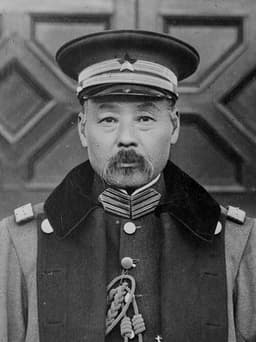
Feng Guozhang
General · Modern
49.1Total
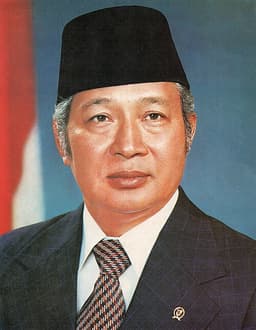
Suharto
General · Modern
57.2Total
Basic Information
Born
1859
1921
Died
1919
—
Era
Modern
Modern
Nationality
China
Indonesia
Occupation
General
General
Civilization
Eastern
Eastern
Score Comparison
Military (10%)
30.0
20.0
Political (20%)
61.3
59.3
Influence (20%)
54.9
60.0
Legacy (20%)
45.8
52.0
Leadership (15%)
40.0
82.0
Strategy (15%)
57.5
60.0
TOTAL
49.1
57.2
Feng Guozhang — Complete Timeline
1912 AD
Command of the Beiyang ArmyPolitical Action◆ Major
Feng Guozhang became a key commander of the Beiyang Army under Yuan Shikai. He controlled military forces in the Zhili region, establishing himself as a major warlord in northern China after the fall of the Qing dynasty.
Beiyang ArmyWarlordMilitary Command
Impact: national
1916 AD
Appointment as Vice PresidentPolitical Action◆ Major
Feng Guozhang was elected Vice President of the Republic of China under President Li Yuanhong. This position gave him significant political influence during the early Republican period.
Republic of ChinaGovernmentPolitics
Impact: national
1917 AD
Acting PresidencyPolitical Action◆ Major
Feng Guozhang became Acting President of the Republic of China after Li Yuanhong's resignation. He served from 1917 to 1918, facing challenges from rival warlords and struggling to maintain central authority.
Republic of ChinaPresidencyWarlord Era
Impact: national
1918 AD
Conflict with Duan QiruiPolitical Action◆ Major
Feng Guozhang engaged in a power struggle with Premier Duan Qirui, leading to the split of the Beiyang clique into the Zhili and Anhui factions. This conflict weakened the central government and intensified warlord warfare.
Beiyang CliquePower StruggleWarlord Era
Impact: nationaldestructive
Suharto — Complete Timeline
1966 AD
Supersemar and Transfer of PowerPolitical Action
President Sukarno signed the Supersemar order, delegating authority to General Suharto to restore order after the 30 September Movement. Suharto used this to ban the Communist Party, purge leftists, and gradually assume executive power, effectively beginning his New Order regime.
SupersemarNew OrderIndonesia
Impact: nationaldestructive
1967 AD
New Order Economic DevelopmentReform◆ Major
Suharto implemented the New Order's economic policies, focusing on foreign investment, agricultural self-sufficiency, and industrialization. The government achieved high growth rates, reduced poverty, and stabilized the economy, but also fostered crony capitalism and corruption.
Economic GrowthDevelopmentIndonesia
Impact: nationalconstructive
1975 AD
Invasion of East TimorWar◆ Major
Suharto ordered the invasion of East Timor after Portugal withdrew. Indonesian forces occupied the territory, leading to a 24-year occupation marked by widespread human rights abuses, including massacres and forced displacement, resulting in an estimated 100,000-200,000 deaths.
East TimorOccupationHuman Rights
Impact: regionaldestructive
1998 AD
Asian Financial Crisis and Fall from PowerPolitical Action
The Asian Financial Crisis devastated Indonesia's economy, leading to massive unemployment and food shortages. Widespread protests and riots forced Suharto to resign in May 1998 after 31 years in power, ending his authoritarian rule and ushering in the Reformasi era.
Financial CrisisResignationReformasi
Impact: nationaltragic
Expert Analysis
Feng Guozhang vs Suharto
The Strongman’s Two Faces: Suharto and Feng Guozhang
In the summer of 1917, as the guns of the Great War thundered across Europe, a Chinese general named Feng Guozhang sat in the presidential palace in Beijing, his fingers drumming on a polished teak desk. He had just become Acting President of the Republic of China, yet his power was a mirage—a fragile crown balanced on the bayonets of warlords who answered to no one. Eighty years later, on the other side of the Pacific, another general, Suharto, stood in a Jakarta palace, his hand resting on a document that would seal his fate. The Asian Financial Crisis had turned his nation’s streets into rivers of rage, and after three decades of iron rule, he too would fall. Both men were generals who seized the highest office. Both ruled in times of chaos. But their paths, their choices, and their legacies diverged like rivers splitting at a mountain’s crest. Why did one become a modernizing autocrat and the other a footnote in a civil war?
Origins
Feng Guozhang was born in 1859, the twilight of the Qing Dynasty, into a world of crumbling imperial order. He grew up in Hebei province, a region steeped in military tradition, and his education was classical Confucian—a training in hierarchy, loyalty, and the art of managing men. The Taiping Rebellion and the Opium Wars had shattered China’s confidence, and young Feng saw that the only path to survival was through the new Western-style armies. He enrolled in the Beiyang Military Academy, where he learned modern tactics under Yuan Shikai, the rising strongman of the late Qing. Feng was a product of an empire in decay, a man shaped by the belief that order must be imposed from above, even if the nation had to be broken to save it.
Suharto, born in 1921 in a Dutch colonial village on Java, emerged from a different kind of weakness. His father was a minor civil servant; his parents divorced early, and he was passed between relatives. The Dutch East Indies was a world of racial hierarchies and simmering resentment. Suharto learned early that survival meant bending to power and seizing opportunities when they appeared. He joined the Dutch colonial army, then switched to the Japanese-sponsored forces during World War II, and finally to the Indonesian independence struggle. Where Feng was shaped by Confucian duty and imperial collapse, Suharto was forged in the crucible of colonialism and revolution—a pragmatist who saw power as a tool, not a moral calling.
Rise to Power
Feng Guozhang’s ascent was slow, deliberate, and tied to the patronage of Yuan Shikai. After the 1911 Revolution overthrew the Qing, Yuan became president, and Feng commanded the Beiyang Army’s elite divisions in the Zhili region. In 1916, Yuan’s disastrous attempt to crown himself emperor collapsed, and he died soon after. Feng was elected Vice President under Li Yuanhong, a figurehead. But when Li fled in 1917 after a failed attempt to restore the monarchy, Feng stepped into the vacuum as Acting President. His power, however, rested on the loyalty of his troops—and on the goodwill of his rival, Premier Duan Qirui. Feng’s rise was a chess game played within the crumbling walls of a republic that existed in name only.
Suharto’s ascent was faster and bloodier. In 1965, Indonesia was in chaos: President Sukarno had tilted toward the Communist Party, the army was split, and a mysterious coup attempt on September 30 left six generals dead. Suharto, then a little-known general commanding the strategic reserves, crushed the coup within days. He then blamed the Communists, orchestrating a purge that killed half a million people. In 1966, he forced Sukarno to sign the Supersemar order, a document that transferred executive authority to Suharto “to restore order.” By 1967, he was president. Where Feng inherited a broken system, Suharto broke the system himself.
Leadership & Governance
Feng Guozhang’s rule was a constant struggle. He tried to govern through a mix of military force and political negotiation, but his Beiyang clique fractured into rival factions. His rival Duan Qirui controlled the Anhui clique, and the two fought a bitter power struggle that paralyzed the government. Feng attempted to broker peace, but his military strategy was cautious—he preferred to maneuver rather than fight. His political wisdom, however, was real: he understood that China’s salvation required unity, but he lacked the ruthlessness to impose it. His reforms—such as attempts to stabilize the currency and modernize the bureaucracy—were stymied by warlord infighting. In 1918, he resigned after losing a power struggle, his dream of a unified China shattered.
Suharto’s New Order was a different beast. He imposed a military-dominated regime that suppressed dissent, banned rival parties, and centralized power in Jakarta. But he also unleashed an economic miracle. He invited foreign investment, achieved agricultural self-sufficiency through the Green Revolution, and built roads, schools, and factories. His military score of 45.5 is deceptively low—he was no battlefield commander—but his political score of 68.8 and leadership score of 80.7 reflect his genius for manipulation. He kept the army loyal through patronage, co-opted Islamic leaders, and crushed separatist movements in Aceh and Papua. His governance was a trade-off: stability and growth for authoritarian control.
Triumph & Tragedy
Feng’s greatest moment was his brief presidency, when he held the fractured republic together by sheer will. His tragedy was that he could not hold it. In 1918, Duan Qirui outmaneuvered him, and Feng resigned, his legacy reduced to a footnote in the warlord era. He died in 1919, a broken man, his vision of a constitutional China dead.
Suharto’s triumph was Indonesia’s transformation from a basket case to a rising Asian tiger. By the 1990s, poverty had halved, and the middle class had swelled. But his tragedy was the invasion of East Timor in 1975, a brutal occupation that killed 100,000 people, and the corruption that hollowed out his regime. When the Asian Financial Crisis hit in 1998, the economy collapsed, and Suharto’s family’s wealth—estimated at $15 billion—became a symbol of greed. He was forced to resign, a tyrant toppled by the very forces he had unleashed.
Character & Destiny
Feng was a Confucian soldier, believing in duty and order, but he was too gentle for his age. He once said, “The way to govern is to win the hearts of men, not to break their bones.” His caution made him a mediator, not a conqueror. Suharto was a Javanese mystic who believed in fate and power. He rarely spoke, but his silence was a weapon. He said, “I am a soldier, and I follow orders”—a claim that masked his absolute control. His personality was cold, calculating, and supremely pragmatic. He had no grand ideology, only the will to survive.
Legacy
Feng Guozhang is remembered, if at all, as a minor figure in China’s warlord era—a man who tried to build a republic but was crushed by history’s weight. His total score of 74.2 reflects a competent leader in impossible circumstances. Suharto’s legacy is more contested. His total score of 67.7 is lower, but his influence score of 75.7 is higher. In Indonesia, he is both a modernizer and a dictator; in East Timor, a war criminal. His New Order lifted millions from poverty, but his authoritarianism left deep scars.
Conclusion
Two generals, two nations, two eras. Feng Guozhang tried to preserve a republic that was already dead; Suharto built a dictatorship that wore the mask of development. One failed because he was too gentle; the other fell because he was too ruthless. Their stories remind us that the strongman’s path is a narrow ridge: stray too far toward mercy, and you are crushed; stray too far toward tyranny, and you are toppled. History judges both, but it also asks us: could either have done otherwise? The answer, perhaps, lies in the soil of their birth—one in the dust of a dying empire, the other in the fire of a newborn nation.
Rankings
🥇
SuhartoLeader
Mil: 20.0Pol: 59.3Inf: 60.0
57.2
🥈
Feng Guozhang
Mil: 30.0Pol: 61.3Inf: 54.9
49.1
+8.1 behind
How This Comparison Works
Algorithm
Each figure is scored on 6 dimensions (0—100 scale) based on structured historical data: Military (10%), Political (20%), Influence (20%), Legacy (20%), Leadership (15%), Strategy (15%). The weighted total produces the final ranking.
Data Sources
Scores are computed from structured sub-indicators in the database. Scale factors adjust for era (Ancient ×0.85, Modern ×1.0) and civilization size (Eastern ×1.05, Other ×0.80) to account for differences in population and military scale.
Maximum 3 Figures
Comparisons are limited to 2—3 figures to ensure readability and statistical meaningfulness.
Error Margins
±5 points per dimension — Sub-scores are derived from historical records with inherent uncertainty. Two figures within 5 points on a dimension should be considered roughly equivalent in that area.
Total Score Accuracy
±3 points overall — The weighted combination of 6 dimensions produces a total score with approximately ±3 points of uncertainty. Differences of less than 3 points are not statistically significant— the figures are effectively tied.
Known Limitations
- Historical records are incomplete and uneven across civilizations
- Figures from oral-tradition societies may be underrepresented
- Occupation labels can misclassify multi-role figures
- Scores measure capability and impact, not moral character
- Quantitative scoring is a comparison tool, not absolute truth
Capability Radar
Military (10%) — Battles & Warfare
Battles
45
40
Win Rate
40
45
Expansion
35
30
Political (20%) — Governance & Reform
Reform
30
55
Diplomacy
45
60
Economy
25
65
Influence (20%) — Cultural & Global Reach
Cultural
30
40
Global
20
50
Legacy (20%) — Historical Impact
Historical
40
55
Longevity
25
45
Leadership (15%) — Power & Stability
Tenure
55
85
Stability
20
50
Strategy (15%) — Tactics & Innovation
Strategy
55
40
Tactics
50
35
Reform
40
50
Similar Comparisons
Comments & Discussion
Skeptical data goblin6/16/2026
Comparing GDP growth is meaningless when you ignore population—Indonesia had
Suharto sympathizer6/16/2026
Suharto’s "New Order" was a miracle, not a curse—GDP per capita skyrocketed from $70 to $1,100 under his rule, and he crushed communist rebellions that would’ve turned Indonesia into a killing field like Cambodia. Feng Guozhang? A spineless pawn dangling on Duan Qirui’s leash, unable to even hold Beijing for a full term. Give me a real strongman who built schools and highways, not a footnote who couldn’t tame his own warlords.
独裁计量员6/16/2026
比独裁水平,苏哈托甩冯国璋八条街。冯国璋只会搞“府院之争”,连段祺瑞都压不住,最后狼狈下台;苏哈托用30年把印尼从赤贫拉到中低收入,消灭了九三零政变的百万亡魂风险。数据显示1967年印尼人均GDP才70美元,1996年超1100美元。冯国璋就一北洋军阀纸老虎,拿什么碰瓷东南亚铁腕发展之父?
Orwellian historian6/16/2026
Both traded on fear, but Suharto perfected the surveillance state—his Kopkamtib security apparatus monitored every village, while Feng relied on rusty bayonets and personal oaths. The real difference? One centralized terror, the other let it fragment into chaos. Feng’s 1917-18 presidency was a farce of squabbling cliques; Suharto’s 1967-98 regime was a machine that ate its own dissenters silently. Which is worse? Depends if you prefer your tyranny efficient or incompetent.
冷战活化石6/16/2026
别美化苏哈托了,他是美国冷战的傀儡,靠屠杀50万左翼人士上台,国际货币基金组织的数据显示印尼外债从1960年代直升到1997年的1360亿美元。冯国璋再窝囊,至少没让中国沦为列强的债务殖民地,他1918年下台后还能写书法养老。苏哈托家族偷了150亿美元,冯国璋最多贪点总统府的金条。格局不同,底层逻辑更不同。
Classics scholar6/16/2026
拿冯国璋比苏哈托,就像拿《论语》比《君主论》。冯是儒家将军,写一手工整楷书,晚年编《冯氏宗谱》强调孝道;苏哈托是爪哇神秘主义者,信“拉惹”神权,用皮影戏神话自己。冯国璋在1917年试图调和黎元洪和段祺瑞,虽败犹荣,体现了士大夫的“中庸”;苏哈托1965年后直接清洗对手,哪有什么妥协精神。文明底蕴决定统治风格。