Loading...
Feng Guozhang vs Sengge Rinchen
Sengge Rinchen leads by 7.8 pts · 2 figures compared
…
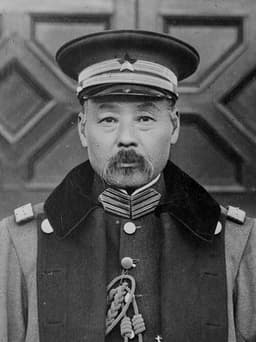
Feng Guozhang
General · Modern
49.1Total
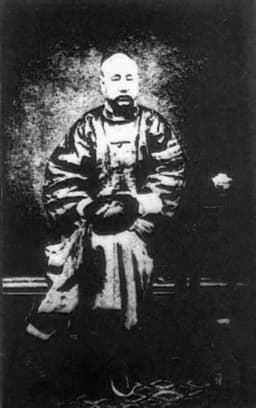
Sengge Rinchen
General · Modern
56.9Total
Basic Information
Born
1859
1811
Died
1919
1865
Era
Modern
Modern
Nationality
China
China
Occupation
General
General
Civilization
Eastern
Eastern
Score Comparison
Military (10%)
30.0
70.0
Political (20%)
61.3
43.7
Influence (20%)
54.9
55.0
Legacy (20%)
45.8
54.0
Leadership (15%)
40.0
67.0
Strategy (15%)
57.5
60.7
TOTAL
49.1
56.9
Feng Guozhang — Complete Timeline
1912 AD
Command of the Beiyang ArmyPolitical Action◆ Major
Feng Guozhang became a key commander of the Beiyang Army under Yuan Shikai. He controlled military forces in the Zhili region, establishing himself as a major warlord in northern China after the fall of the Qing dynasty.
Beiyang ArmyWarlordMilitary Command
Impact: national
1916 AD
Appointment as Vice PresidentPolitical Action◆ Major
Feng Guozhang was elected Vice President of the Republic of China under President Li Yuanhong. This position gave him significant political influence during the early Republican period.
Republic of ChinaGovernmentPolitics
Impact: national
1917 AD
Acting PresidencyPolitical Action◆ Major
Feng Guozhang became Acting President of the Republic of China after Li Yuanhong's resignation. He served from 1917 to 1918, facing challenges from rival warlords and struggling to maintain central authority.
Republic of ChinaPresidencyWarlord Era
Impact: national
1918 AD
Conflict with Duan QiruiPolitical Action◆ Major
Feng Guozhang engaged in a power struggle with Premier Duan Qirui, leading to the split of the Beiyang clique into the Zhili and Anhui factions. This conflict weakened the central government and intensified warlord warfare.
Beiyang CliquePower StruggleWarlord Era
Impact: nationaldestructive
Sengge Rinchen — Complete Timeline
1859 AD
Battle of Dagu FortsWar◆ Major
Sengge Rinchen commanded Qing forces defending the Dagu Forts against a British and French naval attack. His forces repelled the assault, sinking several enemy ships and inflicting heavy casualties, a rare Qing victory in the Second Opium War.
Second Opium WarBattleVictory
Impact: regional
1860 AD
Battle of PalikaoWar◆ Major
Sengge Rinchen commanded Qing cavalry at the Battle of Palikao against Anglo-French forces. His forces were decisively defeated by superior firepower, leading to the fall of Beijing and the burning of the Old Summer Palace.
Second Opium WarBattleDefeat
Impact: regionaltragic
1863 AD
Suppression of the Nian RebellionWar◆ Major
Sengge Rinchen led Qing forces against the Nian rebels in northern China. He achieved several victories but was ultimately killed in battle against the Nian in 1865, marking a turning point in the rebellion.
Nian RebellionCampaignDeath
Impact: regionaltragic
Expert Analysis
Feng Guozhang vs Sengge Rinchen
### The Mongol Prince and the Beiyang General: Two Paths Through China’s Collapse
In the summer of 1859, a Mongol prince named Sengge Rinchen stood atop the earthen ramparts of the Dagu Forts, watching British and French gunboats churn the muddy waters of the Hai River. Cannons roared, and the invading fleet, confident from its victories in the First Opium War, found itself trapped in a killing field. Sengge Rinchen’s victory that day was one of the last great triumphs of the old Qing order. Fifty-eight years later, in the summer of 1917, a Beiyang general named Feng Guozhang sat in the presidential palace in Beijing, trying to hold together a republic that was already a ghost. Both men were soldiers of China. Both fought to preserve a crumbling edifice. Yet one died in the saddle, cut down by rebels he could not suppress, while the other died in bed, a former head of state. Their lives reveal the chasm between defending an empire and managing its ruins.
### Origins
Sengge Rinchen was born in 1811 into the Mongol aristocracy of the Horqin Banner, a world of horsemen, lances, and loyalty to the Manchu emperor. The Qing dynasty was still intact, but its foundations were cracking. The Taiping Rebellion would soon convulse the south, and the British were battering at the gates. Sengge Rinchen was raised in a tradition where honor meant fighting for the Son of Heaven, and the only politics was the politics of the battlefield.
Feng Guozhang, born in 1859, entered a different China. The Taiping Rebellion had been crushed, but the Qing was terminally wounded. Feng was a Han Chinese from Hebei, educated in the new military academies that the dynasty itself had created in a desperate attempt to modernize. He studied at the Baoding Military Academy, where the curriculum was German drill and Japanese tactics, not Confucian classics. By the time he came of age, the emperor was a puppet, and power flowed not from the throne but from the barrels of Western-style rifles.
### Rise to Power
Sengge Rinchen rose through the traditional military hierarchy of the Qing, proving himself in the endless campaigns against the Taiping. His great moment came in 1859 at the Dagu Forts. The British and French, fresh from burning the Summer Palace in 1860, had not yet learned to respect Chinese cannons. Sengge Rinchen’s defenders sank four gunboats and killed over 400 invaders. For a brief, shining moment, he was the hero of the empire.
Feng Guozhang’s rise was more bureaucratic. He became a key commander in the Beiyang Army, the modernized force created by Yuan Shikai. In 1912, when the Qing fell and Yuan became president, Feng controlled the vital Zhili region. He was not a conqueror; he was a manager of violence, a warlord in a suit. His power came from his ability to balance factions, not to charge at the head of cavalry.
### Leadership & Governance
Sengge Rinchen was a cavalry commander in the Mongol tradition, leading charges with lance and saber. His strategy was direct: seek the enemy, break his formation, and trust in the courage of your horsemen. At Palikao in 1860, this approach failed catastrophically. Anglo-French forces, armed with rifled muskets and artillery, mowed down his charging squadrons. The Mongol prince learned the hard way that bravery could not bridge the gap between horse and Minie ball.
Feng Guozhang never commanded a battle in the field. His leadership was political. As Vice President in 1916 and Acting President in 1917, he navigated the snake pit of warlord politics. He was a moderate, trying to preserve the fragile republic against radicals like Duan Qirui. His strength was patience; his weakness was indecision. He could hold power but not wield it.
### Triumph & Tragedy
Sengge Rinchen’s triumph was Dagu in 1859. His tragedy was Palikao in 1860, where his cavalry was annihilated. But his greatest tragedy came later. In 1863, he was tasked with suppressing the Nian Rebellion, a peasant uprising in the north. He won victories but could not end the war. In 1865, he was ambushed and killed in battle. The empire that had lionized him could not save him.
Feng Guozhang’s triumph was becoming Acting President in 1917, the highest office in the land. His tragedy was that the office meant nothing. He was caught between Duan Qirui’s militarism and Sun Yat-sen’s revolutionaries. In 1918, the power struggle with Duan ended his presidency. He retired to Tianjin, a wealthy man in a broken country, and died in 1919, his republic already dead.
### Character & Destiny
Sengge Rinchen was a man of the old world: loyal, brave, and inflexible. He believed in the Qing and died for it. His destiny was to be the last great Mongol general of the empire, a figure from a vanishing age. Feng Guozhang was a man of the new world: pragmatic, cautious, and adaptable. He believed in nothing but survival. His destiny was to be a placeholder in a failed republic, a man who held the keys to a house that was already burning.
### Legacy
Sengge Rinchen is remembered in China as a national hero, a defender against foreign aggression. His victory at Dagu is celebrated, his death mourned. He is a symbol of resistance, even in defeat. Feng Guozhang is barely remembered. He is a footnote in the chaotic history of the early republic, a warlord who tried to be a statesman and failed. His legacy is the lesson that in a time of collapse, even the highest office is just a chair on a sinking ship.
### Conclusion
The Mongol prince and the Beiyang general both fought for China, but they fought in different wars. Sengge Rinchen’s war was against the West and the rebels who would destroy the old order. Feng Guozhang’s war was against the emptiness left when that order fell. One died with a sword in his hand; the other with a pen in his pocket. Their stories remind us that history is not just about who wins or loses, but about what kind of world they were fighting for—and what kind of world they were forced to inherit.
Rankings
🥇
Sengge RinchenLeader
Mil: 70.0Pol: 43.7Inf: 55.0
56.9
🥈
Feng Guozhang
Mil: 30.0Pol: 61.3Inf: 54.9
49.1
+7.8 behind
How This Comparison Works
Algorithm
Each figure is scored on 6 dimensions (0—100 scale) based on structured historical data: Military (10%), Political (20%), Influence (20%), Legacy (20%), Leadership (15%), Strategy (15%). The weighted total produces the final ranking.
Data Sources
Scores are computed from structured sub-indicators in the database. Scale factors adjust for era (Ancient ×0.85, Modern ×1.0) and civilization size (Eastern ×1.05, Other ×0.80) to account for differences in population and military scale.
Maximum 3 Figures
Comparisons are limited to 2—3 figures to ensure readability and statistical meaningfulness.
Error Margins
±5 points per dimension — Sub-scores are derived from historical records with inherent uncertainty. Two figures within 5 points on a dimension should be considered roughly equivalent in that area.
Total Score Accuracy
±3 points overall — The weighted combination of 6 dimensions produces a total score with approximately ±3 points of uncertainty. Differences of less than 3 points are not statistically significant— the figures are effectively tied.
Known Limitations
- Historical records are incomplete and uneven across civilizations
- Figures from oral-tradition societies may be underrepresented
- Occupation labels can misclassify multi-role figures
- Scores measure capability and impact, not moral character
- Quantitative scoring is a comparison tool, not absolute truth
Capability Radar
Military (10%) — Battles & Warfare
Battles
45
75
Win Rate
40
60
Expansion
35
20
Political (20%) — Governance & Reform
Reform
30
20
Diplomacy
45
50
Economy
25
20
Influence (20%) — Cultural & Global Reach
Cultural
30
40
Global
20
35
Legacy (20%) — Historical Impact
Historical
40
55
Longevity
25
30
Leadership (15%) — Power & Stability
Tenure
55
40
Stability
20
30
Strategy (15%) — Tactics & Innovation
Strategy
55
70
Tactics
50
80
Reform
40
30
Similar Comparisons
Comments & Discussion
SaddleBuster_686/16/2026
Sengge Rinchen was the last real Mongol cavalry commander who actually won a battle against Western forces at Dagu in 1859—something no other Qing general could claim. Feng Guozhang? Just another Beiyang politician in uniform. One fought with sabers and cannon; the other fought with telegrams and backroom deals. Give me the man who made the British bleed any day.
战马孤魂6/16/2026
僧格林沁是清朝最后的骄傲,他的蒙古骑兵在1859年大沽口用土炮和血肉打退英法联军。冯国璋呢?不过是北洋军阀里最会坐办公室的一个。一个在马背上为国战死,一个在总统府里等死。论气节,僧王完胜。
DataSkeptic_996/16/2026
Let’s be real here: Sengge Rinchen’s 1859 win was a tactical fluke—the British got stuck on mudflats with bad tides, not martial genius. Feng Guozhong actually managed the Republic’s finances and military reorganization for years without total collapse. Numbers don’t lie: the Qing lost the war anyway in 1860, while Feng helped stabilize the post-1911 transition. Modern warfare is logistics, not heroics.
局座观察员6/16/2026
别被演义骗了。僧格林沁打赢大沽口只是占了地利和洋人轻敌的便宜,1860年北京城还不是被人烧了?冯国璋虽然争议大,但他起码在1910年代平衡了北洋派系,没让国家立马碎成渣。会打仗不如会治理,这就是差距。
GunpowderGhost6/16/2026
Here’s the history that matters: Sengge Rinchen died fighting the Nian rebels in 1865, hacked to pieces because his obsolete cavalry tactics couldn’t handle guerrilla warfare. Feng Guozhong retired rich and died of natural causes in 1919. One was a medieval knight thrown into industrial-age chaos; the other was a modern operator who knew when to fold. Adaptability beats bravery every time.
翰林掌眼6/16/2026
僧格林沁之死是旧时代的殡葬——同治四年(1865年)高楼寨一战,他带的蒙古铁骑被捻军火枪队围歼,自己也身首异处。冯国璋呢?他出身北洋武备学堂,写《军机处档案》时已经明白枪炮比马刀管用。一个为注定灭亡的帝国殉葬,一个在废墟上建新军阀体系。历史从不同情落后者。