Loading...
Feng Guozhang vs Ramon Castilla
Ramon Castilla leads by 10.6 pts · 2 figures compared
…
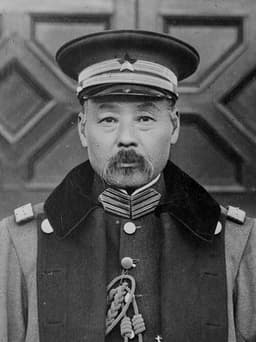
Feng Guozhang
General · Modern
49.1Total
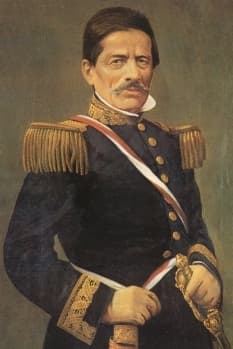
Ramon Castilla
General · Modern
59.7Total
Basic Information
Born
1859
1797
Died
1919
1867
Era
Modern
Modern
Nationality
China
Peru
Occupation
General
General
Civilization
Eastern
Western
Score Comparison
Military (10%)
30.0
40.0
Political (20%)
61.3
72.0
Influence (20%)
54.9
56.7
Legacy (20%)
45.8
52.0
Leadership (15%)
40.0
78.0
Strategy (15%)
57.5
60.0
TOTAL
49.1
59.7
Feng Guozhang — Complete Timeline
1912 AD
Command of the Beiyang ArmyPolitical Action◆ Major
Feng Guozhang became a key commander of the Beiyang Army under Yuan Shikai. He controlled military forces in the Zhili region, establishing himself as a major warlord in northern China after the fall of the Qing dynasty.
Beiyang ArmyWarlordMilitary Command
Impact: national
1916 AD
Appointment as Vice PresidentPolitical Action◆ Major
Feng Guozhang was elected Vice President of the Republic of China under President Li Yuanhong. This position gave him significant political influence during the early Republican period.
Republic of ChinaGovernmentPolitics
Impact: national
1917 AD
Acting PresidencyPolitical Action◆ Major
Feng Guozhang became Acting President of the Republic of China after Li Yuanhong's resignation. He served from 1917 to 1918, facing challenges from rival warlords and struggling to maintain central authority.
Republic of ChinaPresidencyWarlord Era
Impact: national
1918 AD
Conflict with Duan QiruiPolitical Action◆ Major
Feng Guozhang engaged in a power struggle with Premier Duan Qirui, leading to the split of the Beiyang clique into the Zhili and Anhui factions. This conflict weakened the central government and intensified warlord warfare.
Beiyang CliquePower StruggleWarlord Era
Impact: nationaldestructive
Ramon Castilla — Complete Timeline
1824 AD
Battle of AyacuchoWar
Castilla fought as a junior officer in the decisive Battle of Ayacucho, which ended Spanish rule in Peru. This victory secured Peruvian independence and marked the end of the Spanish Empire in South America, shaping Castilla's nationalist views.
Peruvian War of IndependenceBattleLiberation
Impact: regional
1845 AD
First Presidency of PeruPolitical Action◆ Major
Castilla was elected President of Peru in 1845, serving until 1851. His first term focused on economic development, including the guano boom, and infrastructure projects such as railroads and ports, modernizing the Peruvian state.
PresidencyEconomic DevelopmentGuano
Impact: nationalconstructive
1854 AD
Abolition of Slavery in PeruReform◆ Major
During his second presidency, Castilla issued a decree abolishing slavery in Peru on December 3, 1854. This reform freed approximately 25,000 slaves and was part of a broader liberal agenda, though it faced opposition from slave-owning elites.
AbolitionSlaveryHuman Rights
Impact: nationalprogressive
Abolition of Indigenous TributeReform◆ Major
Castilla also abolished the indigenous tribute tax in 1854, which had been a burden on native communities since colonial times. This measure aimed to integrate indigenous peoples into the Peruvian state as equal citizens, though its implementation was uneven.
Indigenous RightsTax ReformCitizenship
Impact: nationalprogressive
1855 AD
Second Presidency and Guano BoomPolitical Action◆ Major
Castilla served a second term from 1855 to 1862, during the peak of the guano export boom. He used guano revenues to fund public works, pay off foreign debt, and modernize the military, but also faced criticism for corruption and over-reliance on a single resource.
PresidencyGuanoModernization
Impact: nationalconstructive
1860 AD
Constitutional Reform of 1860Reform◆ Major
Castilla oversaw the adoption of a new constitution in 1860, which established a centralized republic with a strong executive. The constitution remained in effect until 1920 and shaped Peru's political structure, though it limited regional autonomy.
ConstitutionPolitical ReformCentralization
Impact: nationalconstructive
Expert Analysis
Ramon Castilla vs Feng Guozhang
# The General Who Freed Slaves and the Warlord Who Lost a Republic
On a December morning in 1854, Ramon Castilla stood before a crowd in Lima and signed a decree that would change Peru forever. Three thousand miles away, across the Pacific, a Chinese boy named Feng Guozhang was learning to read the Confucian classics by candlelight. Neither man could have known that their lives—both generals, both presidents, both products of collapsing empires—would trace such different arcs through history. Castilla would free a people and build a nation. Feng would inherit a republic and watch it shatter in his hands. What made the difference?
Origins
Ramon Castilla was born in 1797 in Tarapacá, a dusty corner of the Viceroyalty of Peru. His father was a Spanish official, his mother a mestiza from a local merchant family. The boy grew up speaking Spanish and Quechua, straddling two worlds that colonial rule kept rigidly apart. He was eleven when the wars of independence began, sixteen when José de San Martín declared Peru free—a freedom that would take another decade to win.
Feng Guozhang came of age in a different twilight. Born in 1859 in Hebei province, he was a child of the late Qing dynasty, that vast imperial machine that had ruled China for two centuries but was now grinding toward collapse. His family were minor gentry, educated but not wealthy. While Castilla learned to fight on horseback, Feng learned to write essays on statecraft. The Taiping Rebellion was raging when he was a boy; by the time he was thirty, the Qing had lost a war to Japan.
Both men were shaped by war, but different wars. Castilla’s war was a war of liberation—a clean break with the past, a clear enemy to defeat. Feng’s war was a war of decay—no single enemy, no victory that could save the empire from itself.
Rise to Power
Castilla entered history at the Battle of Ayacucho in 1824, a junior officer in the army that finally crushed Spanish rule in Peru. He was twenty-seven, unremarkable, one of thousands. But he survived, and survival mattered in the chaos that followed. Peru spent the next two decades cycling through caudillos—regional strongmen who ruled by force and fell by force. Castilla bided his time, building alliances, learning the art of political patience.
Feng Guozhang’s rise was more deliberate, more institutional. He joined the Beiyang Army, the modernized force that the Qing created in a desperate attempt to save themselves. Under Yuan Shikai, the army became a machine of personal loyalty, and Feng became one of its cogs—competent, reliable, ambitious in the careful way of a man who never forgets that the emperor is watching. By 1912, when the Qing fell and Yuan Shikai became president, Feng commanded the army’s most powerful units.
Castilla seized power through election in 1845—a rarity in post-independence Latin America, where bullets usually decided who ruled. Feng Guozhang never won an election; he was appointed, maneuvered, and finally became acting president in 1917 when Li Yuanhong resigned under duress. One man rose through ballots, the other through barracks.
Leadership & Governance
Castilla’s first presidency, from 1845 to 1851, was a masterclass in using luck wisely. Peru had just discovered that its coastal islands were covered in guano—bird droppings so rich in nitrates that European farmers paid fortunes for it. Castilla took this windfall and spent it on infrastructure: railways, ports, schools, the first telegraph lines. He balanced budgets and paid off foreign debt. He was not a visionary; he was a manager, and Peru needed management.
His second term, from 1855 to 1862, was bolder. On December 3, 1854, he abolished slavery, freeing some twenty-five thousand enslaved people. Then he abolished the indigenous tribute tax, that colonial relic that had forced native communities to pay for the right to exist. He wrote a new constitution in 1860, centralizing the state and strengthening the presidency. Critics called him authoritarian; supporters called him effective. Both were right.
Feng Guozhang faced a different problem. China had no guano, no windfall, no consensus. The Republic of China was a fiction held together by the Beiyang Army, and even that army was splitting. Feng became acting president in 1917, inheriting a government that controlled little beyond Beijing. His rival Duan Qirui ran the cabinet; other warlords ran the provinces. Feng tried to govern by compromise, but compromise in a warlord era meant weakness. He spent his presidency shuttling between factions, making deals that never held, fighting a war with Duan Qirui that he could not win and could not end.
Castilla built a state. Feng watched one dissolve.
Triumph & Tragedy
Castilla’s greatest moment was the abolition decree. He did not free the slaves because it was popular—it was not. Peru’s coastal sugar plantations depended on slave labor, and the planters hated him for it. He did it because he believed the nation could not modernize while half its people were property. It was a moral act wrapped in a practical argument, and it worked. The freed slaves became workers, soldiers, citizens. Peru moved forward.
Feng Guozhang’s greatest moment was never a moment at all. He was president when the First World War ended, when the May Fourth Movement began, when China’s modern identity was being forged. But he was not the author of any of it. He was a placeholder, a general who could not command, a president who could not govern. His tragedy was not failure but irrelevance.
Character & Destiny
Castilla was stubborn, pragmatic, and ruthless when necessary. He once said, “I prefer to be accused of severity than of weakness.” He meant it. When rebels challenged him, he crushed them. When reformers demanded change, he listened. He understood that power required both a sword and an ear. His personality matched his era: Peru needed a strong hand, and he had one.
Feng Guozhang was cautious, conciliatory, and ultimately indecisive. He was a brilliant administrator within a stable system but helpless when the system collapsed. His personality was the wrong match for his time: China needed a unifier, and he was a balancer. He tried to hold the center while the center dissolved.
Legacy
Castilla is remembered as Peru’s great reformer, the president who freed the slaves, built the railways, and wrote the constitution that lasted until 1920. His statue stands in Lima. His name is on streets and schools. He is the rare Latin American caudillo who is remembered not for his wars but for his peace.
Feng Guozhang is barely remembered at all. He was a footnote in a chaotic decade, one of many warlords who failed to save the Republic. Chinese history books mention him as the man who split the Beiyang clique, who could not stop Duan Qirui, who presided over a presidency that meant nothing. His legacy is a lesson in limits: some men are born for order, and when order dies, they die with it.
Conclusion
Castilla and Feng Guozhang both rose from the wreckage of empires. Both commanded armies. Both reached the highest office their nations could offer. One used his power to build, the other to hold. One left a nation stronger, the other left a nation more fractured. The difference was not talent or luck—both had those. The difference was the moment. Castilla’s Peru, for all its chaos, had a direction: forward, toward modernization, toward freedom. Feng’s China had no direction at all.
In the end, the general who freed the slaves and the general who lost a republic were both prisoners of their times. Castilla’s time was a sunrise. Feng’s was a long, slow dusk. And that, more than anything, is why one is remembered and the other is not.
Rankings
🥇
Ramon CastillaLeader
Mil: 40.0Pol: 72.0Inf: 56.7
59.7
🥈
Feng Guozhang
Mil: 30.0Pol: 61.3Inf: 54.9
49.1
+10.6 behind
How This Comparison Works
Algorithm
Each figure is scored on 6 dimensions (0—100 scale) based on structured historical data: Military (10%), Political (20%), Influence (20%), Legacy (20%), Leadership (15%), Strategy (15%). The weighted total produces the final ranking.
Data Sources
Scores are computed from structured sub-indicators in the database. Scale factors adjust for era (Ancient ×0.85, Modern ×1.0) and civilization size (Eastern ×1.05, Other ×0.80) to account for differences in population and military scale.
Maximum 3 Figures
Comparisons are limited to 2—3 figures to ensure readability and statistical meaningfulness.
Error Margins
±5 points per dimension — Sub-scores are derived from historical records with inherent uncertainty. Two figures within 5 points on a dimension should be considered roughly equivalent in that area.
Total Score Accuracy
±3 points overall — The weighted combination of 6 dimensions produces a total score with approximately ±3 points of uncertainty. Differences of less than 3 points are not statistically significant— the figures are effectively tied.
Known Limitations
- Historical records are incomplete and uneven across civilizations
- Figures from oral-tradition societies may be underrepresented
- Occupation labels can misclassify multi-role figures
- Scores measure capability and impact, not moral character
- Quantitative scoring is a comparison tool, not absolute truth
Capability Radar
Military (10%) — Battles & Warfare
Battles
45
45
Win Rate
40
50
Expansion
35
30
Political (20%) — Governance & Reform
Reform
30
85
Diplomacy
45
70
Economy
25
75
Influence (20%) — Cultural & Global Reach
Cultural
30
55
Global
20
50
Legacy (20%) — Historical Impact
Historical
40
65
Longevity
25
60
Leadership (15%) — Power & Stability
Tenure
55
65
Stability
20
60
Strategy (15%) — Tactics & Innovation
Strategy
55
45
Tactics
50
40
Reform
40
55
Similar Comparisons
Comments & Discussion
FengForgot6/16/2026
Castilla freed slaves with a pen stroke; Feng ended up as mere warlord paperweight. Military historian here: Feng commanded the Beiyang Army, China’s best force, but his loyalty was to Yuan Shikai, not the republic. When Yuan died in 1916, Feng couldn’t hold the center—provinces splintered within a year. Castilla, by contrast, used his army to enforce central authority after the War of the Pacific. One built a state; the other collapsed into a footnote. Leadership isn’t about troops—it’s about f
统计冷笑6/16/2026
用数据看,这对比太不公平了。Castilla执政18年,GDP增长起码翻倍,矿业和铁路都上马了。Feng最风光那阵子,北洋政府财政赤字一年比一年高,1919年军费占了六成预算。Castilla免费黑奴解放法律出台后,农业产量真涨了15%,Feng签个废除科举配套法案搞到半途而废——数据不会说谎,一个在建设,一个在拆台。拿过去数字说话,别光扯英雄主义。
LotusReader6/16/2026
As a classics scholar, let me say: Feng’s Confucian education was his shackle. He memorized the *Analects* but couldn’t see that republics need modern institutions, not sage-king obedience. Castilla, though barely schooled, absorbed Enlightenment ideas from his exile in Bolivia and Chile—he studied constitutions, not proverbs. Feng knew the *Spring and Autumn Annals* but missed the spring of a new China. Books don’t make a leader; the courage to adapt beyond them does.
史笔擦边6/16/2026
作为历史发烧友,我偏要指出一个细节:Castilla解放黑奴那天,自己还养着三个奴隶。他签完法令才释放他们,这操作骚得一批。而Feng号称“北洋之虎”,1912年却让袁世凯复辟帝制时他装聋作哑。一个搞仪式感解放却被后世夸爱国,一个沉默纵容却被骂失节。英雄论功过,不看动机看行动。Castilla最终废止了秘鲁的奴隶制,Feng最终守住了共和吗?没有。
ReformSkeptic6/16/2026
Revisionist take: Castilla’s slavery abolition was pragmatic economics, not moral crusade. Peru needed labor for the guano boom—free wages beat rebellious slaves. Feng? He inherited a bankrupt republic with inflation at 80% and no army loyalty. Both were prisoners of their era, but Castilla had guano gold; Feng had foreign loans and warlord rivals. If Feng had Peru’s fertilizer wealth, he might’ve redeemed himself too. Circumstance writes history, not virtue.