Loading...
Feng Guozhang vs Plutarco Elias Calles
Plutarco Elias Calles leads by 9.4 pts · 2 figures compared
…
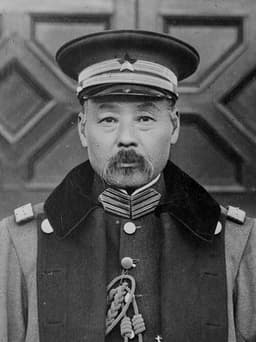
Feng Guozhang
General · Modern
49.1Total
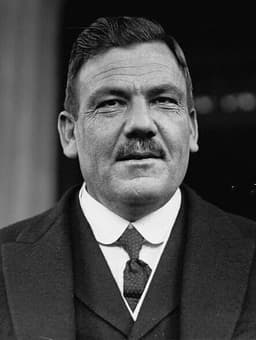
Plutarco Elias Calles
General · Modern
58.5Total
Basic Information
Born
1859
1877
Died
1919
1945
Era
Modern
Modern
Nationality
China
Mexico
Occupation
General
General
Civilization
Eastern
Western
Score Comparison
Military (10%)
30.0
40.0
Political (20%)
61.3
70.3
Influence (20%)
54.9
68.0
Legacy (20%)
45.8
40.0
Leadership (15%)
40.0
78.0
Strategy (15%)
57.5
52.5
TOTAL
49.1
58.5
Feng Guozhang — Complete Timeline
1912 AD
Command of the Beiyang ArmyPolitical Action◆ Major
Feng Guozhang became a key commander of the Beiyang Army under Yuan Shikai. He controlled military forces in the Zhili region, establishing himself as a major warlord in northern China after the fall of the Qing dynasty.
Beiyang ArmyWarlordMilitary Command
Impact: national
1916 AD
Appointment as Vice PresidentPolitical Action◆ Major
Feng Guozhang was elected Vice President of the Republic of China under President Li Yuanhong. This position gave him significant political influence during the early Republican period.
Republic of ChinaGovernmentPolitics
Impact: national
1917 AD
Acting PresidencyPolitical Action◆ Major
Feng Guozhang became Acting President of the Republic of China after Li Yuanhong's resignation. He served from 1917 to 1918, facing challenges from rival warlords and struggling to maintain central authority.
Republic of ChinaPresidencyWarlord Era
Impact: national
1918 AD
Conflict with Duan QiruiPolitical Action◆ Major
Feng Guozhang engaged in a power struggle with Premier Duan Qirui, leading to the split of the Beiyang clique into the Zhili and Anhui factions. This conflict weakened the central government and intensified warlord warfare.
Beiyang CliquePower StruggleWarlord Era
Impact: nationaldestructive
Plutarco Elias Calles — Complete Timeline
1915 AD
Governorship of SonoraPolitical Action
Calles served as Governor of Sonora from 1915 to 1919, implementing radical reforms including land redistribution, anti-clerical laws, and labor rights. His governorship established him as a key figure in the Sonoran dynasty and a proponent of revolutionary change.
GovernorshipSonoraReforms
Impact: regionalconstructive
1924 AD
Presidency of MexicoPolitical Action◆ Major
Calles was elected President of Mexico in 1924, serving until 1928. His administration continued revolutionary reforms, including land reform, labor rights, and secularization, but also faced opposition from the Catholic Church and conservative groups.
PresidencyMexican RevolutionReforms
Impact: nationalconstructive
1926 AD
Cristero WarWar◆ Major
Calles enforced anti-clerical laws, including the Calles Law, which restricted the Catholic Church's role in society. This sparked the Cristero War (1926-1929), a violent rebellion by Catholic peasants against the state, resulting in tens of thousands of deaths.
Cristero WarAnti-clericalismReligious Conflict
Impact: nationaldestructive
1928 AD
MaximatoPolitical Action◆ Major
After his presidency, Calles remained the de facto ruler of Mexico during the Maximato (1928-1934), controlling puppet presidents. He continued to influence policy, but his power waned as President L
MaximatoPolitical ControlCárdenas
Impact: national
1929 AD
Founding of the National Revolutionary Party (PNR)Political Action
Calles founded the National Revolutionary Party (PNR) in 1929, which later became the Institutional Revolutionary Party (PRI). This party dominated Mexican politics for over 70 years, institutionalizing the revolution's legacy and centralizing power.
Political PartyPRIInstitutionalization
Impact: nationalconstructive
Expert Analysis
Plutarco Elias Calles vs Feng Guozhang
### The Iron Hand and the Warlord’s Dilemma
In the dim dawn of 1926, Plutarco Elías Calles stood in the National Palace in Mexico City, signing into law a decree that would strip the Catholic Church of its property, ban monastic orders, and restrict clerical dress. Across the Pacific, a decade earlier, Feng Guozhang sat in a Beijing study, penning a telegram that would split the Beiyang Army into rival factions. Both men were generals turned presidents, products of violent revolutions that had shattered old orders. Yet Calles built a party that ruled for seventy years, while Feng Guozhang’s name faded into the footnotes of a broken republic. What drove this divergence? The answer lies not in their scores—nearly identical in leadership and political acumen—but in the soil of their nations and the shape of their ambitions.
### Origins: Two Worlds, One Crisis
Calles was born in 1877 in Guaymas, Sonora, a son of a failed businessman and a schoolteacher. Mexico’s Porfiriato—a rigid dictatorship disguised as progress—crushed his early life. He taught school, ran a bakery, and watched the rich hoard land while the poor starved. The Mexican Revolution of 1910 was his forge. He joined the Constitutionalist Army under Venustiano Carranza, learning that power came not from birth but from the barrel of a gun and the promise of reform. Feng Guozhang, born in 1859 in Hebei, China, emerged from the twilight of the Qing Dynasty. He studied at the Tianjin Military Academy, a Western-style institution, and rose through the Beiyang Army—a personal army of Yuan Shikai, the strongman who crushed the Boxer Rebellion and later tried to make himself emperor. Feng was a creature of the old order, a loyalist who believed in hierarchy and regional control. Calles saw revolution as a tool to remake society; Feng saw it as a threat to stability.
### Rise to Power: From Governor to Godfather
Calles’ ascent was meteoric. In 1915, as Governor of Sonora, he seized haciendas, expelled Chinese immigrants, and built a secular state within a state. He was a radical, but a calculating one. By 1924, when he won the presidency, he had already mastered the art of balancing military force with political patronage. His key turning point came in 1926: the Cristero War. When he enforced the Calles Law—banning religious processions, closing church schools—millions of peasants rose in arms. Calles did not flinch. He sent the army, but also opened negotiations, splitting the Catholic hierarchy. He understood that repression must be paired with co-optation. Feng Guozhang’s rise was slower and more fragile. After Yuan Shikai’s death in 1916, the Beiyang Army fractured. Feng, as Vice President under Li Yuanhong, was a figurehead. In 1917, when Li fled a coup, Feng became Acting President—but he was a hostage of circumstance. His power rested on the loyalty of the Zhili clique, a faction of generals who followed him only as long as he paid them. His turning point came in 1918, when he clashed with Premier Duan Qirui over a campaign to reunify China by force. Feng wanted peace; Duan wanted war. The split doomed China to a decade of warlord chaos.
### Leadership & Governance: The Party vs. The Clique
Calles governed like a master mechanic, building a machine that could run without him. He founded the National Revolutionary Party (PNR) in 1929, a coalition of generals, labor unions, and peasants. The party was not a democracy—it was a cartel of power, where every faction got a seat at the table in exchange for loyalty. Calles used the Maximato (1928–1934) to rule through puppet presidents, but he also let them govern. He knew that the party’s survival depended on institutionalizing the revolution, not personal rule. His military strategy was pragmatic: he crushed the Cristero rebels with 50,000 troops, then offered amnesty. He was ruthless but not cruel. Feng Guozhang, by contrast, tried to rule as a Confucian gentleman general. As Acting President, he attempted to mediate between the warring cliques, but he lacked a party, a ideology, or a national vision. He relied on the Zhili clique, a network of personal loyalties that dissolved when he ran out of silver. His military strategy was defensive: he fortified Beijing, but refused to march south to crush Duan’s Anhui clique. He believed in negotiation, but in a world of guns, words were useless. His leadership score of 87.3 reflects his personal integrity, not his political effectiveness.
### Triumph & Tragedy: The Calles Law and the Warlord’s End
Calles’ greatest moment was the Cristero War’s end in 1929. He had broken the Church’s political power, but at a cost: 90,000 dead. Yet he turned tragedy into triumph by signing the *arreglos*—a truce that let the Church operate quietly. He was a dictator who knew when to bend. His greatest failure was the Maximato’s corruption; by 1934, his handpicked successor, Lázaro Cárdenas, exiled him. Feng Guozhang’s tragedy was his indecision. In 1918, he had a chance to reunify China: he controlled Beijing, the treasury, and the foreign legations. But he hesitated, fearing a civil war. Duan Qirui raised an army, and Feng resigned in 1919, dying of illness months later. His triumph was minor: he kept the Zhili clique alive for a few years, but it collapsed after his death. He was a bridge, not a builder.
### Character & Destiny: The Architect and the Bystander
Calles was a man of iron will. He once said, “The revolution is not a banquet; it is a struggle to the death.” He believed in progress, even if it required blood. His personality—cold, calculating, visionary—drove him to create the PRI, a party that outlived him by decades. Feng Guozhang was a man of contradictions. He was a skilled administrator, but he lacked the killer instinct. He wrote poetry, collected antiques, and mourned the Qing Dynasty. He wanted to be a statesman, but he was born into an age of warlords. His character was his destiny: he tried to hold the center, but the center would not hold.
### Legacy: The PRI’s Shadow and the Warlord’s Ghost
Calles is remembered as the “Jefe Máximo” of Mexico, the architect of a one-party state that brought stability but also corruption. His legacy is mixed: he secularized Mexico, but he also created a system that stifled dissent. The PRI ruled until 2000, a testament to his institutional genius. Feng Guozhang is barely remembered. In Chinese history, he is a footnote—a warlord who tried to be a president, a man who failed to unite his country. His legacy is a warning: that power without a party is a house of cards.
### Conclusion: The Soil of Nations
Why did Calles succeed where Feng failed? Because Mexico had a revolution that gave birth to a nation, while China had a dynasty that collapsed into fragments. Calles built a party that embodied the revolution’s promises—land, education, nationalism—even if it betrayed them. Feng inherited a regime that had no promises, only debts. One man forged a machine; the other tried to patch a leaky boat. In the end, Calles’ iron hand shaped a century, while Feng’s gentle hand slipped into the dust. The difference was not in their scores, but in the soil they cultivated.
Rankings
🥇
Plutarco Elias CallesLeader
Mil: 40.0Pol: 70.3Inf: 68.0
58.5
🥈
Feng Guozhang
Mil: 30.0Pol: 61.3Inf: 54.9
49.1
+9.4 behind
How This Comparison Works
Algorithm
Each figure is scored on 6 dimensions (0—100 scale) based on structured historical data: Military (10%), Political (20%), Influence (20%), Legacy (20%), Leadership (15%), Strategy (15%). The weighted total produces the final ranking.
Data Sources
Scores are computed from structured sub-indicators in the database. Scale factors adjust for era (Ancient ×0.85, Modern ×1.0) and civilization size (Eastern ×1.05, Other ×0.80) to account for differences in population and military scale.
Maximum 3 Figures
Comparisons are limited to 2—3 figures to ensure readability and statistical meaningfulness.
Error Margins
±5 points per dimension — Sub-scores are derived from historical records with inherent uncertainty. Two figures within 5 points on a dimension should be considered roughly equivalent in that area.
Total Score Accuracy
±3 points overall — The weighted combination of 6 dimensions produces a total score with approximately ±3 points of uncertainty. Differences of less than 3 points are not statistically significant— the figures are effectively tied.
Known Limitations
- Historical records are incomplete and uneven across civilizations
- Figures from oral-tradition societies may be underrepresented
- Occupation labels can misclassify multi-role figures
- Scores measure capability and impact, not moral character
- Quantitative scoring is a comparison tool, not absolute truth
Capability Radar
Military (10%) — Battles & Warfare
Battles
45
45
Win Rate
40
50
Expansion
35
30
Political (20%) — Governance & Reform
Reform
30
85
Diplomacy
45
65
Economy
25
60
Influence (20%) — Cultural & Global Reach
Cultural
30
70
Global
20
60
Legacy (20%) — Historical Impact
Historical
40
75
Longevity
25
70
Leadership (15%) — Power & Stability
Tenure
55
70
Stability
20
55
Strategy (15%) — Tactics & Innovation
Strategy
55
55
Tactics
50
40
Reform
40
60
Similar Comparisons
Comments & Discussion
No comments yet. Be the first to share your thoughts!