Loading...
Feng Guozhang vs Oscar Mejia Victores
Oscar Mejia Victores leads by 2.8 pts · 2 figures compared
…
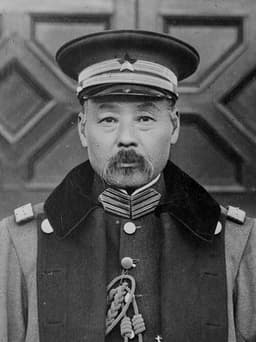
Feng Guozhang
General · Modern
49.1Total

Oscar Mejia Victores
General · Modern
51.9Total
Basic Information
Born
1859
1930
Died
1919
—
Era
Modern
Modern
Nationality
China
Guatemala
Occupation
General
General
Civilization
Eastern
Western
Score Comparison
Military (10%)
30.0
22.6
Political (20%)
61.3
68.0
Influence (20%)
54.9
50.2
Legacy (20%)
45.8
43.3
Leadership (15%)
40.0
80.0
Strategy (15%)
57.5
41.0
TOTAL
49.1
51.9
Feng Guozhang — Complete Timeline
1912 AD
Command of the Beiyang ArmyPolitical Action◆ Major
Feng Guozhang became a key commander of the Beiyang Army under Yuan Shikai. He controlled military forces in the Zhili region, establishing himself as a major warlord in northern China after the fall of the Qing dynasty.
Beiyang ArmyWarlordMilitary Command
Impact: national
1916 AD
Appointment as Vice PresidentPolitical Action◆ Major
Feng Guozhang was elected Vice President of the Republic of China under President Li Yuanhong. This position gave him significant political influence during the early Republican period.
Republic of ChinaGovernmentPolitics
Impact: national
1917 AD
Acting PresidencyPolitical Action◆ Major
Feng Guozhang became Acting President of the Republic of China after Li Yuanhong's resignation. He served from 1917 to 1918, facing challenges from rival warlords and struggling to maintain central authority.
Republic of ChinaPresidencyWarlord Era
Impact: national
1918 AD
Conflict with Duan QiruiPolitical Action◆ Major
Feng Guozhang engaged in a power struggle with Premier Duan Qirui, leading to the split of the Beiyang clique into the Zhili and Anhui factions. This conflict weakened the central government and intensified warlord warfare.
Beiyang CliquePower StruggleWarlord Era
Impact: nationaldestructive
Oscar Mejia Victores — Complete Timeline
1983 AD
1983 Guatemalan coup d'étatPolitical Action◆ Major
Mejia Victores, then Defense Minister, led a coup that ousted President Efrain Rios Montt. He assumed the presidency, becoming the last military ruler of Guatemala.
CoupMilitary RuleGuatemala
Impact: nationaldestructive
1984 AD
Human rights abuses during his ruleOther◆ Major
During his presidency, Mejia Victores' government continued counterinsurgency operations that resulted in forced disappearances and massacres of indigenous Maya communities, as documented by truth commissions.
Human RightsCivil WarAtrocities
Impact: nationaltragic
1985 AD
Transition to civilian rulePolitical Action
Under pressure, Mejia Victores oversaw the drafting of a new constitution and called for democratic elections. He transferred power to civilian President Vinicio Cerezo in 1986, ending decades of military rule.
DemocratizationConstitutionElection
Impact: nationalconstructive
Expert Analysis
Feng Guozhang vs Oscar Mejia Victores
### The General and the President
In the winter of 1918, Feng Guozhang sat in the presidential palace in Beijing, a man caught between the weight of a crumbling empire and the chaos of a republic that had never quite been born. Half a world away, in the highlands of Guatemala, a young officer named Oscar Mejia Victores was just beginning his military career, unaware that he would one day face a similar choice: cling to power and risk destruction, or surrender it and hope for peace. These two men, separated by culture, continent, and a century of change, both rose to lead their nations from the barrel of a gun. Yet their paths diverged in one critical way—one held on until he was broken, the other let go and walked away.
### Origins
Feng Guozhang was born in 1859, in the twilight of the Qing Dynasty, a world of Confucian hierarchies, foreign humiliation, and simmering rebellion. His family belonged to the scholar-official class, and he was educated in the classics, but the times demanded more than poetry. The old order was dying, and a new kind of warrior was needed. Feng enrolled in the new-style military academy at Baoding, where he learned modern warfare under German instructors. There, he met Yuan Shikai, the man who would become the strongman of the late Qing and early Republic. Feng was not a visionary; he was a loyalist, a man who believed in order, hierarchy, and the power of the army to hold a fractious nation together.
Oscar Mejia Victores was born in 1930, in a Guatemala still reeling from the end of a brutal dictatorship and the dawn of the Cold War. His family was modest, and he entered the military as a career, rising through the ranks of an institution that saw itself as the guardian of the nation against communism, chaos, and civilian corruption. By the 1980s, Guatemala was in the grip of a savage civil war, with leftist guerrillas fighting a state that answered with death squads and scorched-earth campaigns. Mejia was a product of this world—a professional soldier in a dirty war, where the line between order and atrocity blurred.
### Rise to Power
Feng’s rise was steady and institutional. In 1912, when Yuan Shikai became president of the new Republic of China, Feng was given command of the Beiyang Army’s Zhili forces. He was a trusted lieutenant, a man who could be counted on to enforce Yuan’s will. When Yuan died in 1916, the fragile republic fragmented. Feng was elected Vice President under Li Yuanhong, a figurehead president with no army. In 1917, when Li fled after a failed attempt to restore the monarchy, Feng became Acting President. He did not seize power; it fell into his lap. But he held it only because he controlled troops in the north, and only as long as his rival, Premier Duan Qirui, allowed it.
Mejia’s rise was sharper and bloodier. In 1983, as Defense Minister under General Efrain Rios Montt, he watched his boss become a pariah—accused of genocide for massacring Mayan villages. On August 8, 1983, Mejia led a coup, ousting Rios Montt in a swift, nearly bloodless operation. He claimed he was restoring the military’s honor. In truth, he was taking power because the old general had become a liability. Mejia was not a revolutionary; he was a caretaker, a man who knew the army was losing legitimacy and that the war could not be won.
### Leadership & Governance
Feng Guozhang governed as a warlord in a suit. His presidency, from 1917 to 1918, was a balancing act between the parliament in Beijing and the warlords in the provinces. He tried to mediate between the rival cliques of the Beiyang Army, but his own Zhili faction was weak. He had no grand reforms, no vision for China. His only achievement was survival—until it wasn’t. In 1918, his power struggle with Duan Qirui exploded. Duan, backed by Japan and a more disciplined army, forced Feng to resign. He fled to Tianjin, a retired general in a country that no longer needed him.
Mejia Victores governed as a reluctant reformer. He continued the counterinsurgency war, and human rights abuses persisted—forced disappearances, torture, and killings. In 1984, his government was condemned internationally. But Mejia saw the writing on the wall: the war was unwinnable, and the military’s reputation was toxic. In 1985, he surprised everyone. He oversaw the drafting of a new constitution, called for democratic elections, and handed power to a civilian president, Vinicio Cerezo, in 1986. It was not a clean transition—the military retained veto power over many policies—but it was a transition nonetheless.
### Triumph & Tragedy
Feng’s greatest moment was his presidency itself—a brief, flickering triumph in the chaos of early republican China. His tragedy was that he could not hold it. He was a man of the old order, unable to adapt to the new. He died in 1919, a year after his fall, bitter and forgotten, his legacy swallowed by the warlord era he had helped create.
Mejia’s greatest moment was his decision to step down. It was not heroic—he was driven by pragmatism, not principle—but it was historic. Guatemala’s civil war would drag on for another decade, but the return to civilian rule broke the cycle of military coups. His tragedy was the blood on his hands. He never faced justice for the abuses under his watch, and many Guatemalans remember him not as a democratizer, but as another general who got away.
### Character & Destiny
Feng Guozhang was a conservative, a man who believed in loyalty and hierarchy. He was cautious, indecisive, and ultimately, a follower. His destiny was to be a bridge between two eras—the imperial past and the republican future—but he could not hold the weight. He lacked the ruthlessness to crush his rivals and the vision to build something new. He was a good general in a bad time.
Mejia Victores was a pragmatist, cold and calculating. He saw that the military’s grip was slipping and chose to let go rather than be dragged down. His character was not noble, but it was shrewd. His destiny was to be the last of a dying breed—the Latin American military dictator—and to prove that even such men could, under pressure, choose peace over power.
### Legacy
Feng Guozhang is a footnote in Chinese history. He is remembered, if at all, as one of the many warlords who tore China apart before the rise of Chiang Kai-shek and Mao Zedong. His legacy score of 64.4 reflects his obscurity. He was a player, not a shaper.
Mejia Victores is remembered differently. His legacy score of 59.5 is lower, but his impact is sharper. In Guatemala, he is a controversial figure—some see him as the man who ended the worst of the violence, others as a butcher who escaped justice. But his decision to step down set a precedent. Guatemala’s democracy is fragile, but it survived. That is his monument.
### Conclusion
Both Feng Guozhang and Oscar Mejia Victores were soldiers who became rulers in times of fracture. One tried to hold a collapsing empire together and failed. One tried to end a brutal war and succeeded, at least in part. Their stories remind us that leadership is not always about greatness. Sometimes, it is about knowing when to let go. Feng held on too long and was destroyed. Mejia let go and walked away. History does not judge them by their intentions, but by their outcomes. And in the end, the general who surrendered power left a deeper mark than the one who clung to it.
Rankings
🥇
Oscar Mejia VictoresLeader
Mil: 22.6Pol: 68.0Inf: 50.2
51.9
🥈
Feng Guozhang
Mil: 30.0Pol: 61.3Inf: 54.9
49.1
+2.8 behind
How This Comparison Works
Algorithm
Each figure is scored on 6 dimensions (0—100 scale) based on structured historical data: Military (10%), Political (20%), Influence (20%), Legacy (20%), Leadership (15%), Strategy (15%). The weighted total produces the final ranking.
Data Sources
Scores are computed from structured sub-indicators in the database. Scale factors adjust for era (Ancient ×0.85, Modern ×1.0) and civilization size (Eastern ×1.05, Other ×0.80) to account for differences in population and military scale.
Maximum 3 Figures
Comparisons are limited to 2—3 figures to ensure readability and statistical meaningfulness.
Error Margins
±5 points per dimension — Sub-scores are derived from historical records with inherent uncertainty. Two figures within 5 points on a dimension should be considered roughly equivalent in that area.
Total Score Accuracy
±3 points overall — The weighted combination of 6 dimensions produces a total score with approximately ±3 points of uncertainty. Differences of less than 3 points are not statistically significant— the figures are effectively tied.
Known Limitations
- Historical records are incomplete and uneven across civilizations
- Figures from oral-tradition societies may be underrepresented
- Occupation labels can misclassify multi-role figures
- Scores measure capability and impact, not moral character
- Quantitative scoring is a comparison tool, not absolute truth
Capability Radar
Military (10%) — Battles & Warfare
Battles
45
10
Win Rate
40
10
Expansion
35
5
Political (20%) — Governance & Reform
Reform
30
55
Diplomacy
45
50
Economy
25
30
Influence (20%) — Cultural & Global Reach
Cultural
30
15
Global
20
15
Legacy (20%) — Historical Impact
Historical
40
30
Longevity
25
20
Leadership (15%) — Power & Stability
Tenure
55
40
Stability
20
35
Strategy (15%) — Tactics & Innovation
Strategy
55
15
Tactics
50
15
Reform
40
20
Similar Comparisons
Comments & Discussion
田野铁腕6/16/2026
冯国璋是北洋之犬,乱世中的保守派,一生忠于体制却无力回天;而梅希亚不过是中美洲的一个小军阀,靠政变上位,贪恋权力却不敢独裁。两人唯一的共同点是——都知道枪杆子能出政权,但一个守旧求稳,一个投机取巧,境界高下立判。说到底,军人的本质不在杀伐,而在格局。
DataDrillDown6/16/2026
The comparison romanticizes these men too much. Feng never won a decisive victory against anyone—he lost to the revolutionary south in 1917 and was basically a puppet in Beijing. Mejia Victores at least held power for three years and oversaw a peaceful transition. But the key statistical fact? Feng ruled a country of 400 million while Mejia governed Guatemala's 8 million. The scale difference alone makes most comparisons meaningless.
午夜经典6/16/2026
冯国璋是北洋三杰之一,历史上被称为“北洋之狗”,忠于袁世凯却最终背叛共和,堪称军阀政治的典型悲剧。而梅希亚是个名不见经传的危地马拉少将,1983年靠政变上台,三年后灰溜溜下台,连独裁都玩不彻底。两人都出身行伍,都当过名义上的国家元首,但冯国璋好歹参与了近代中国的大转折,梅希亚只配做个地方史脚注。
RevisionistCut6/16/2026
Let's stop pretending these are two peas in a pod. Feng Guozhang was a transitional figure in China's collapse from empire to chaos—he represented the old guard trying to manage an impossible situation. Mejia Victores was a Cold War relic, a byproduct of CIA interventions and banana republic politics. Feng wrestled with real philosophical questions about governance; Mejia just wanted to keep his seat warm. The comparison is an insult to the complexity of Chinese history.
Historian9496/16/2026
Feng Guozhang was a trained general who actually led troops in battle; Mejia Victores was a political opportunist who staged a coup against his own brother-in-law. Feng fought the Japanese, defended the Beiyang government, and understood military strategy. Mejia just knew how to drop bombs on his own people. Give me the scholar-official with backbone over the tin-pot dictator every time.