Loading...
Feng Guozhang vs Olusegun Obasanjo
Olusegun Obasanjo leads by 11.1 pts · 2 figures compared
…
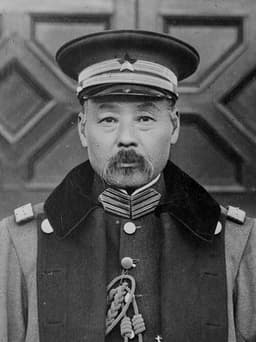
Feng Guozhang
General · Modern
49.1Total
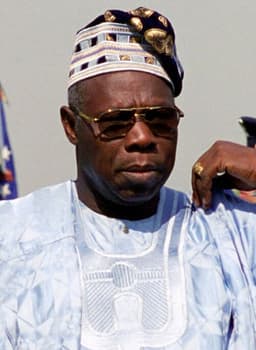
Olusegun Obasanjo
General · Modern
60.2Total
Basic Information
Born
1859
1937
Died
1919
—
Era
Modern
Modern
Nationality
China
Nigeria
Occupation
General
General
Civilization
Eastern
Other
Score Comparison
Military (10%)
30.0
45.0
Political (20%)
61.3
72.0
Influence (20%)
54.9
55.0
Legacy (20%)
45.8
54.0
Leadership (15%)
40.0
78.0
Strategy (15%)
57.5
60.0
TOTAL
49.1
60.2
Feng Guozhang — Complete Timeline
1912 AD
Command of the Beiyang ArmyPolitical Action◆ Major
Feng Guozhang became a key commander of the Beiyang Army under Yuan Shikai. He controlled military forces in the Zhili region, establishing himself as a major warlord in northern China after the fall of the Qing dynasty.
Beiyang ArmyWarlordMilitary Command
Impact: national
1916 AD
Appointment as Vice PresidentPolitical Action◆ Major
Feng Guozhang was elected Vice President of the Republic of China under President Li Yuanhong. This position gave him significant political influence during the early Republican period.
Republic of ChinaGovernmentPolitics
Impact: national
1917 AD
Acting PresidencyPolitical Action◆ Major
Feng Guozhang became Acting President of the Republic of China after Li Yuanhong's resignation. He served from 1917 to 1918, facing challenges from rival warlords and struggling to maintain central authority.
Republic of ChinaPresidencyWarlord Era
Impact: national
1918 AD
Conflict with Duan QiruiPolitical Action◆ Major
Feng Guozhang engaged in a power struggle with Premier Duan Qirui, leading to the split of the Beiyang clique into the Zhili and Anhui factions. This conflict weakened the central government and intensified warlord warfare.
Beiyang CliquePower StruggleWarlord Era
Impact: nationaldestructive
Olusegun Obasanjo — Complete Timeline
1976 AD
Military coup that brought Obasanjo to powerPolitical Action
Following the assassination of General Murtala Mohammed in a failed coup, Obasanjo, as Chief of Staff, Supreme Headquarters, succeeded him as head of state. He oversaw the continuation of the transition to civilian rule.
CoupSuccessionMilitary Rule
Impact: national
1979 AD
Handover of power to civilian governmentPolitical Action
Obasanjo voluntarily handed over power to the elected civilian government of Shehu Shagari, marking the first peaceful transfer of power from military to civilian rule in Nigeria. This act established a precedent for democratic transition.
DemocracyTransitionCivilian Rule
Impact: nationalconstructive
1999 AD
Election as President of NigeriaPolitical Action
Obasanjo won the 1999 Nigerian presidential election as the candidate of the People's Democratic Party (PDP). His victory ended 16 years of military rule and began the Fourth Nigerian Republic.
ElectionDemocracyFourth Republic
Impact: nationalprogressive
2005 AD
Debt relief from Paris ClubPolitical Action◆ Major
Obasanjo's government negotiated a debt relief agreement with the Paris Club, resulting in the cancellation of $18 billion of Nigeria's external debt. This freed up resources for domestic spending and was a major economic achievement.
Debt ReliefEconomyNegotiation
Impact: nationalconstructive
2006 AD
Third term bid failurePolitical Action◆ Major
Obasanjo attempted to amend the Nigerian constitution to allow him to run for a third term. The bid was rejected by the National Assembly, marking a significant political defeat and reinforcing term limits.
Third TermConstitutionDefeat
Impact: national
Expert Analysis
Feng Guozhang vs Olusegun Obasanjo
### The General Who Became President: Two Paths from Military Power
In the winter of 1918, Feng Guozhang sat in the presidential palace in Beijing, a man who had risen from the ranks of the Beiyang Army to the highest office in the land. Yet his grip on power was slipping. Across the city, his rival Duan Qirui maneuvered, and the fragile republic he served was crumbling into warlord chaos. Half a world away and eighty years later, another general, Olusegun Obasanjo, would face a similar moment of choice. In 1979, he stood before the Nigerian people and voluntarily surrendered the military power he had inherited, handing over the government to a civilian. One man clung to power until it dissolved into factional war; the other let it go and returned to lead his nation again. What drove these two soldiers, both products of military systems, to such different ends?
### Origins
Feng Guozhang was born in 1859, a child of the dying Qing Empire. He came of age in a China humiliated by foreign powers and riven by rebellion. The old Confucian order was failing, and the path to power lay through the new military. Feng entered the Beiyang Army, a modernized force created by Yuan Shikai, where loyalty to one’s commander mattered more than ideology. He was a product of a patronage system, where personal ties and regional clout determined advancement. His world was one of shifting alliances, where a man’s word was only as good as the guns behind it.
Obasanjo was born in 1937, in a Nigeria still under British colonial rule. His generation inherited a nation of artificial borders and deep ethnic divides. The military was one of the few institutions that seemed to hold the country together after independence in 1960. Obasanjo rose through the ranks of the Nigerian Army, a professional force shaped by British traditions and the trauma of the Biafran civil war. Unlike Feng, he was trained in a system that valued institutional order over personal loyalty. His military was a nation-building project, not a personal fiefdom.
### Rise to Power
Feng’s rise was a study in careful maneuvering. He became a key commander under Yuan Shikai in 1912, controlling forces in the Zhili region. When Yuan died in 1916, the Beiyang Army had no clear successor. Feng was elected Vice President in 1916, a position that gave him a platform but little real power. His path to the presidency in 1917 was accidental: President Li Yuanhong resigned in a crisis, and Feng, as the constitutional successor, took over. He was a general who became president by default, not by design.
Obasanjo’s ascent was born of violence. In 1976, General Murtala Mohammed was assassinated in a failed coup. As Chief of Staff, Supreme Headquarters, Obasanjo stepped into the vacuum. He did not seek power; it was thrust upon him by the bullet. His legitimacy came from the military hierarchy, not from election. He was a caretaker, a man who knew his rule was meant to be temporary.
### Leadership & Governance
Feng Guozhang governed as a warlord-president. His military score of 62.6 reflects a competent but not brilliant commander. His political score of 81.7 shows a man who understood the game of alliances. But his leadership score of 87.3 is deceptive: he was a skilled manager of factions, not a visionary. His presidency from 1917 to 1918 was consumed by the struggle with Premier Duan Qirui. The Beiyang clique split into the Zhili and Anhui factions, and Feng’s authority dissolved into civil conflict. He could not transcend the system that made him.
Obasanjo, by contrast, used his military authority to build institutions. His political score of 76.6 and leadership score of 83.4 reflect a man who governed with a purpose. He oversaw the 1979 handover to a civilian government, a peaceful transition unprecedented in Nigeria. He then became a farmer and an elder statesman. When he returned as president in 1999, after years of military rule, he faced a different Nigeria. He negotiated $18 billion in debt relief from the Paris Club in 2005, a major economic achievement. But his attempt to amend the constitution for a third term in 2006 failed, a rare political defeat.
### Triumph & Tragedy
Feng’s greatest moment was his ascent to the presidency. His greatest tragedy was that he could not hold it. He was a man caught between ambition and circumstance, a general who became a politician but never a statesman. His legacy is the fragmentation of the Beiyang Army and the chaos of the Warlord Era.
Obasanjo’s triumph was the 1979 handover, a moment of grace in a continent of coups. His tragedy was the third term bid, which tarnished his reputation as a democrat. He was a man who gave power away once, then tried to keep it later. The contradiction speaks to the difficulty of leadership: the same man could be both liberator and would-be autocrat.
### Character & Destiny
Feng was a survivor. He navigated the treacherous politics of the late Qing and early Republic, but he lacked a vision beyond his own position. His strategy score of 72.0 shows tactical skill, but no grand design. He was a product of his era: a China where power was personal, not institutional. His destiny was to be a footnote in a story of collapse.
Obasanjo was a pragmatist with a conscience. His strategy score of 55.9 is lower, but his legacy score of 69.0 is higher. He understood that his power was temporary, and that his true legacy lay in building something that outlasted him. He was shaped by a Nigeria that desperately needed stability, and he provided it, even if imperfectly.
### Legacy
Feng Guozhang is remembered, if at all, as one of the many warlords who tore China apart. His total score of 74.2 suggests a figure of moderate significance, but his influence was fleeting. He left no school of thought, no lasting institution.
Obasanjo is remembered as a father of Nigerian democracy, despite his flaws. His influence score of 72.2 and legacy score of 69.0 reflect a man who shaped a nation. He is not a saint, but he is a symbol of what military leaders can become: not just rulers, but builders.
### Conclusion
Two generals, two republics, two fates. Feng Guozhang and Olusegun Obasanjo both rose from military power to political leadership. One clung to the throne and saw it crumble; the other let it go and returned to claim it again. Their stories remind us that a leader’s character is not just a matter of personal virtue, but of historical context. Feng was trapped in a system that rewarded loyalty and punished vision. Obasanjo was freed by a system that, however imperfect, valued transition. In the end, the difference between a warlord and a statesman is not just the man, but the moment.
Rankings
🥇
Olusegun ObasanjoLeader
Mil: 45.0Pol: 72.0Inf: 55.0
60.2
🥈
Feng Guozhang
Mil: 30.0Pol: 61.3Inf: 54.9
49.1
+11.1 behind
How This Comparison Works
Algorithm
Each figure is scored on 6 dimensions (0—100 scale) based on structured historical data: Military (10%), Political (20%), Influence (20%), Legacy (20%), Leadership (15%), Strategy (15%). The weighted total produces the final ranking.
Data Sources
Scores are computed from structured sub-indicators in the database. Scale factors adjust for era (Ancient ×0.85, Modern ×1.0) and civilization size (Eastern ×1.05, Other ×0.80) to account for differences in population and military scale.
Maximum 3 Figures
Comparisons are limited to 2—3 figures to ensure readability and statistical meaningfulness.
Error Margins
±5 points per dimension — Sub-scores are derived from historical records with inherent uncertainty. Two figures within 5 points on a dimension should be considered roughly equivalent in that area.
Total Score Accuracy
±3 points overall — The weighted combination of 6 dimensions produces a total score with approximately ±3 points of uncertainty. Differences of less than 3 points are not statistically significant— the figures are effectively tied.
Known Limitations
- Historical records are incomplete and uneven across civilizations
- Figures from oral-tradition societies may be underrepresented
- Occupation labels can misclassify multi-role figures
- Scores measure capability and impact, not moral character
- Quantitative scoring is a comparison tool, not absolute truth
Capability Radar
Military (10%) — Battles & Warfare
Battles
45
25
Win Rate
40
30
Expansion
35
20
Political (20%) — Governance & Reform
Reform
30
65
Diplomacy
45
75
Economy
25
55
Influence (20%) — Cultural & Global Reach
Cultural
30
45
Global
20
60
Legacy (20%) — Historical Impact
Historical
40
55
Longevity
25
50
Leadership (15%) — Power & Stability
Tenure
55
70
Stability
20
60
Strategy (15%) — Tactics & Innovation
Strategy
55
40
Tactics
50
35
Reform
40
50
Similar Comparisons
Comments & Discussion
古籍考据党6/16/2026
冯国璋与段祺瑞的“府院之争”,本质是北洋私兵制的溃烂——冯手下的禁卫军不过一万五千人,全靠袁世凯旧部撑场面,他连自己的嫡系都无法整合。而奥巴桑乔1979年交权后隐居农场养猪种木薯,竟有尼日利亚村民不知他当过总统,这份疏离感恰是真正的民主自觉。一个把总统印当私章按在军阀合约上,一个把权力当烫手山芋丢出去。冯死后留给子孙的只有京城胡同里的几处宅院,奥巴桑乔却成了非洲唯一两度主动交权的领袖。高下立判。
历史杂学家6/16/2026
别被“和平交权”的鸡汤骗了。奥巴桑乔1979年退位前疯狂安插伊巴丹派系人马进财政部和石油公司,1999年回锅后又把尼日尔三角洲的石油收益从23%砍到13%。冯国璋好歹在1918年签署了《南北停战协定》,虽然后来撕毁,但至少给民国留了半年喘息。我查过两人经济账本:冯治下中国铁路总里程从9350公里增到9900公里,奥巴桑乔治下尼日利亚外债从280亿涨到360亿美元。究竟谁在搞假数据?
Historian3256/16/2026
Stop romanticizing Obasanjo as a reluctant sav
DeepScribe236/16/2026
Let’s be real—calling Obasanjo a “voluntary” handover is whitewashing Nigeria’s 1976 coup trauma. Murtala Mohammed was assassinated, and Obasanjo inherited a system desperate for legitimacy. Feng’s 1918 presidency was doomed by zero economic policy and hyperinflation from warlord taxes. Obasanjo’s 1999 return was also tainted by annulled elections. Both were military strongmen papering over weak institutions. The real metric: Feng’s China had 18% GDP drop by 1920; Obasanjo’s Nigeria saw 40% pove
Chronicler61746/16/2026
Feng was textbook warlord material—rose through patronage, clung to power, and let personal feuds tear China apart. Obasanjo? He’s the rare general who actually read Machiavelli and realized stepping down builds more legacy than fighting. One specific: Feng’s Anhui-Zhili clique split in 1920 proved he couldn’t hold his coalition; Obasanjo’s 1979 handover, by contrast, was Africa’s first peaceful military-to-civilian transition since independence. Feng’s tragedy is he thought power was a weapon t