Loading...
Feng Guozhang vs Nicolas Soult
Nicolas Soult leads by 13.6 pts · 2 figures compared
…
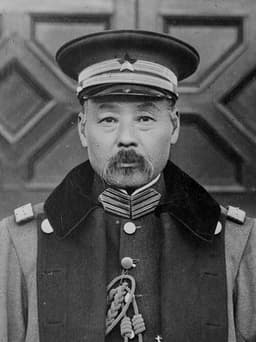
Feng Guozhang
General · Modern
49.1Total
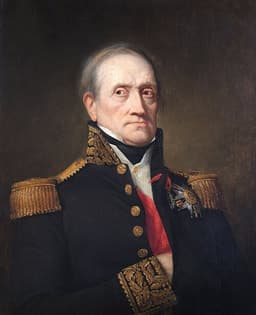
Nicolas Soult
General · Modern
62.7Total
Basic Information
Born
1859
1769
Died
1919
1851
Era
Modern
Modern
Nationality
China
France
Occupation
General
General
Civilization
Eastern
Western
Score Comparison
Military (10%)
30.0
74.7
Political (20%)
61.3
55.0
Influence (20%)
54.9
61.0
Legacy (20%)
45.8
54.0
Leadership (15%)
40.0
78.0
Strategy (15%)
57.5
65.4
TOTAL
49.1
62.7
Feng Guozhang — Complete Timeline
1912 AD
Command of the Beiyang ArmyPolitical Action◆ Major
Feng Guozhang became a key commander of the Beiyang Army under Yuan Shikai. He controlled military forces in the Zhili region, establishing himself as a major warlord in northern China after the fall of the Qing dynasty.
Beiyang ArmyWarlordMilitary Command
Impact: national
1916 AD
Appointment as Vice PresidentPolitical Action◆ Major
Feng Guozhang was elected Vice President of the Republic of China under President Li Yuanhong. This position gave him significant political influence during the early Republican period.
Republic of ChinaGovernmentPolitics
Impact: national
1917 AD
Acting PresidencyPolitical Action◆ Major
Feng Guozhang became Acting President of the Republic of China after Li Yuanhong's resignation. He served from 1917 to 1918, facing challenges from rival warlords and struggling to maintain central authority.
Republic of ChinaPresidencyWarlord Era
Impact: national
1918 AD
Conflict with Duan QiruiPolitical Action◆ Major
Feng Guozhang engaged in a power struggle with Premier Duan Qirui, leading to the split of the Beiyang clique into the Zhili and Anhui factions. This conflict weakened the central government and intensified warlord warfare.
Beiyang CliquePower StruggleWarlord Era
Impact: nationaldestructive
Nicolas Soult — Complete Timeline
1805 AD
Battle of AusterlitzWar◆ Major
Soult commanded the IV Corps at Austerlitz. He led the assault on the Pratzen Heights, breaking the Allied center and securing the decisive French victory.
Napoleonic WarsBattleCorps Command
Impact: global
1806 AD
Battle of Jena-AuerstedtWar◆ Major
Soult commanded the IV Corps at Jena. His forces pursued the retreating Prussian army, capturing thousands of prisoners and contributing to the collapse of the Prussian state.
Napoleonic WarsBattlePursuit
Impact: regional
1811 AD
Battle of AlbueraWar◆ Major
Soult commanded the French army at Albuera in Spain. His forces fought a bloody battle against the Anglo-Spanish army, resulting in a tactical stalemate but strategic French withdrawal.
Peninsular WarBattleStalemate
Impact: regional
1814 AD
Battle of ToulouseWar◆ Major
Soult commanded the French army at Toulouse against Wellington. The battle occurred after Napoleon's abdication, and Soult surrendered the city, ending the Peninsular War.
Peninsular WarBattleDefeat
Impact: regional
1830 AD
Minister of WarPolitical Action◆ Major
Soult served as Minister of War under King Louis-Philippe. He reorganized the French army, introduced conscription reforms, and prepared for colonial campaigns in Algeria.
MinistryReformsJuly Monarchy
Impact: nationalconstructive
1832 AD
Prime Minister of FrancePolitical Action◆ Major
Soult served as Prime Minister of France under Louis-Philippe. His government focused on maintaining order, suppressing republican uprisings, and consolidating the July Monarchy.
Prime MinisterJuly MonarchyGovernment
Impact: national
Expert Analysis
Feng Guozhang vs Nicolas Soult
# The General Who Became President, and the Marshal Who Became Premier
On a crisp autumn morning in 1917, Feng Guozhang stepped into the presidential palace in Beijing, a man who had spent his career commanding armies now tasked with governing a fractured republic. Across the globe, a century earlier, Nicolas Soult had stood on the Pratzen Heights, watching the sun rise over Austerlitz as Napoleon’s grandest victory unfolded below. One would end his days remembered as a footnote in China’s chaotic Warlord Era; the other would die a Marshal of France and Prime Minister. Both were generals who reached for political power, but their paths diverged like rivers flowing from the same mountain. Why did Soult’s ambition lead to lasting institutional influence, while Feng’s vanished into the dust of civil war?
Origins
Feng Guozhang was born in 1859, the twilight of the Qing Dynasty, into a world of crumbling Confucian order. His family was modest, but education opened doors: he passed the military examinations and joined the Beiyang Army, that modernizing force created by Yuan Shikai. The old empire was gasping its last breaths, and Feng learned early that loyalty to a strongman mattered more than loyalty to a dynasty. He was a product of China’s painful transition, where traditional hierarchies dissolved and warlords filled the vacuum.
Nicolas Soult, born a decade later in 1769, came from a different world entirely. The son of a notary in southern France, he enlisted in the royal army as a private. Then came the Revolution. It shattered the old order, and for a man of talent, the chaos was opportunity. Soult rose through the ranks not by birth but by sheer competence, surviving the purges and wars that followed. Where Feng inherited a decaying system, Soult was forged in the furnace of revolutionary transformation.
Rise to Power
Feng’s ascent was methodical, bureaucratic, and dependent. In 1912, Yuan Shikai appointed him a key commander of the Beiyang Army, controlling forces in the Zhili region. He was a cog in a machine built by another man. When Yuan died in 1916, the machine broke apart, and Feng was elected Vice President under Li Yuanhong—a position that gave him proximity to power, but not its substance. He was a placeholder, a compromise candidate.
Soult’s rise was explosive and earned on battlefields. At Austerlitz in 1805, he commanded the IV Corps and led the decisive assault on the Pratzen Heights, crushing the Allied center. Napoleon himself praised the maneuver. At Jena in 1806, Soult pursued the fleeing Prussian army, capturing thousands. He was not merely a loyal subordinate; he was a creator of victories. The difference is stark: Feng inherited command; Soult seized it.
Leadership & Governance
As Acting President from 1917 to 1918, Feng faced an impossible task. China was a republic in name only, torn between Parliament, regional warlords, and the ambitions of Premier Duan Qirui. Feng’s political score of 81.7 reflects his skill at maneuvering within this chaos, but his military score of 62.6 reveals his weakness: he was a general who could not command armies effectively when his own Beiyang clique split. The Zhili and Anhui factions emerged from this fracture, and Feng found himself trapped between rivals. He governed by negotiation, not force—and in warlord China, force was the only language that mattered.
Soult, by contrast, governed with the iron hand of a marshal. As Minister of War in 1830 under Louis-Philippe, he reorganized the French army and introduced conscription reforms that shaped France’s military for decades. As Prime Minister from 1832, he focused on suppressing uprisings and maintaining order. His political score of 69.3 is lower than Feng’s, but it translated into real power because Soult understood that in France, institutions—the army, the bureaucracy—were stronger than any individual. He worked within them; Feng tried to hold them together with his bare hands.
Triumph & Tragedy
Feng’s greatest moment was his presidency itself—the pinnacle of a career that began in the shadow of Yuan Shikai. But his tragedy was that the presidency was hollow. The 1918 conflict with Duan Qirui was his downfall: a power struggle that split the Beiyang clique and plunged northern China into years of civil war. Feng resigned in 1918 and died the following year, a broken man watching his nation disintegrate.
Soult’s triumph was Austerlitz, a victory that secured his reputation forever. But his tragedy came at Albuera in 1811, where he commanded the French army in Spain against an Anglo-Spanish force. The battle was a bloody stalemate, and Soult’s failure to destroy Wellington’s army haunted his Peninsular War campaign. Yet even in defeat, Soult survived. He fought at Toulouse in 1814, after Napoleon’s abdication, and later served the restored Bourbon monarchy. He adapted; Feng could not.
Character & Destiny
Feng was cautious, pragmatic, and ultimately passive. His leadership score of 87.3 suggests he could inspire loyalty, but he lacked the ruthlessness to crush his enemies. He believed in order, but the Warlord Era rewarded chaos. Soult was ambitious, calculating, and resilient. His leadership score of 84.0 is slightly lower, but his strategy score of 75.0 shows he understood the long game. He served Napoleon, then the Bourbons, then Louis-Philippe—each time bending without breaking. Feng broke because he could not bend; his identity was tied to the Beiyang system, and when it collapsed, so did he.
Legacy
Feng Guozhang is remembered, if at all, as a transitional figure—a general who briefly held the presidency but could not stem the tide of warlordism. His legacy score of 64.4 reflects this obscurity. In China’s historical memory, he is a footnote, a symbol of the republic’s fragility.
Soult’s legacy is more complex. His score of 67.6 is only slightly higher, but his name endures in French military history—a marshal who served a dozen masters, who helped modernize the army, who lived to be 82 and died a Duke. He represents the survival instinct of the Napoleonic era, a man who outlasted empires.
Conclusion
Standing at their respective ends, Feng Guozhang and Nicolas Soult reveal a profound truth about power. Feng had the title of president but no army he could truly command; Soult had no title for much of his life, but he had the army. In the end, institutions outlast individuals. Soult served France; Feng served a faction. One left a legacy embedded in a nation’s military structure; the other left a memory of what might have been. For the general who would be president, the lesson is harsh: without an institution to anchor your ambition, even the highest office is only borrowed time.
Rankings
🥇
Nicolas SoultLeader
Mil: 74.7Pol: 55.0Inf: 61.0
62.7
🥈
Feng Guozhang
Mil: 30.0Pol: 61.3Inf: 54.9
49.1
+13.6 behind
How This Comparison Works
Algorithm
Each figure is scored on 6 dimensions (0—100 scale) based on structured historical data: Military (10%), Political (20%), Influence (20%), Legacy (20%), Leadership (15%), Strategy (15%). The weighted total produces the final ranking.
Data Sources
Scores are computed from structured sub-indicators in the database. Scale factors adjust for era (Ancient ×0.85, Modern ×1.0) and civilization size (Eastern ×1.05, Other ×0.80) to account for differences in population and military scale.
Maximum 3 Figures
Comparisons are limited to 2—3 figures to ensure readability and statistical meaningfulness.
Error Margins
±5 points per dimension — Sub-scores are derived from historical records with inherent uncertainty. Two figures within 5 points on a dimension should be considered roughly equivalent in that area.
Total Score Accuracy
±3 points overall — The weighted combination of 6 dimensions produces a total score with approximately ±3 points of uncertainty. Differences of less than 3 points are not statistically significant— the figures are effectively tied.
Known Limitations
- Historical records are incomplete and uneven across civilizations
- Figures from oral-tradition societies may be underrepresented
- Occupation labels can misclassify multi-role figures
- Scores measure capability and impact, not moral character
- Quantitative scoring is a comparison tool, not absolute truth
Capability Radar
Military (10%) — Battles & Warfare
Battles
45
75
Win Rate
40
70
Expansion
35
65
Political (20%) — Governance & Reform
Reform
30
55
Diplomacy
45
65
Economy
25
50
Influence (20%) — Cultural & Global Reach
Cultural
30
45
Global
20
50
Legacy (20%) — Historical Impact
Historical
40
55
Longevity
25
50
Leadership (15%) — Power & Stability
Tenure
55
70
Stability
20
55
Strategy (15%) — Tactics & Innovation
Strategy
55
72
Tactics
50
78
Reform
40
60
Similar Comparisons
Comments & Discussion
No comments yet. Be the first to share your thoughts!