Loading...
Feng Guozhang vs Mohammad Fahim
Mohammad Fahim leads by 0.6 pts · 2 figures compared
…
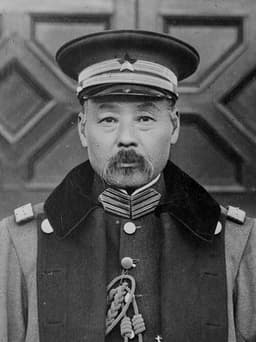
Feng Guozhang
General · Modern
49.1Total
Mohammad Fahim
General · Modern
49.7Total
Basic Information
Born
1859
1957
Died
1919
—
Era
Modern
Modern
Nationality
China
Afghanistan
Occupation
General
General
Civilization
Eastern
Middle Eastern
Score Comparison
Military (10%)
30.0
40.0
Political (20%)
61.3
43.7
Influence (20%)
54.9
51.0
Legacy (20%)
45.8
43.3
Leadership (15%)
40.0
74.0
Strategy (15%)
57.5
45.0
TOTAL
49.1
49.7
Feng Guozhang — Complete Timeline
1912 AD
Command of the Beiyang ArmyPolitical Action◆ Major
Feng Guozhang became a key commander of the Beiyang Army under Yuan Shikai. He controlled military forces in the Zhili region, establishing himself as a major warlord in northern China after the fall of the Qing dynasty.
Beiyang ArmyWarlordMilitary Command
Impact: national
1916 AD
Appointment as Vice PresidentPolitical Action◆ Major
Feng Guozhang was elected Vice President of the Republic of China under President Li Yuanhong. This position gave him significant political influence during the early Republican period.
Republic of ChinaGovernmentPolitics
Impact: national
1917 AD
Acting PresidencyPolitical Action◆ Major
Feng Guozhang became Acting President of the Republic of China after Li Yuanhong's resignation. He served from 1917 to 1918, facing challenges from rival warlords and struggling to maintain central authority.
Republic of ChinaPresidencyWarlord Era
Impact: national
1918 AD
Conflict with Duan QiruiPolitical Action◆ Major
Feng Guozhang engaged in a power struggle with Premier Duan Qirui, leading to the split of the Beiyang clique into the Zhili and Anhui factions. This conflict weakened the central government and intensified warlord warfare.
Beiyang CliquePower StruggleWarlord Era
Impact: nationaldestructive
Mohammad Fahim — Complete Timeline
2001 AD
Led Northern Alliance Forces in Fall of KabulWar
Mohammad Fahim, as a senior Northern Alliance commander, led forces that captured Kabul from the Taliban in November 2001. This victory followed the US invasion and was a turning point in the war, leading to the collapse of Taliban rule.
AfghanistanWarTaliban
Impact: national
Appointed Vice President of AfghanistanPolitical Action◆ Major
Mohammad Fahim was appointed Vice President of Afghanistan under Hamid Karzai in 2001, serving until 2004. He was a key Northern Alliance commander and his appointment was part of the post-Taliban power-sharing arrangement.
AfghanistanVice PresidencyNorthern Alliance
Impact: nationalconstructive
Served as Minister of DefensePolitical Action◆ Major
Mohammad Fahim served as Afghanistan's Minister of Defense from 2001 to 2004. He oversaw the formation of the new Afghan National Army and security forces, integrating former mujahideen and Northern Alliance fighters.
AfghanistanDefenseMilitary
Impact: nationalconstructive
2009 AD
Appointed First Vice President in 2009Political Action◆ Major
Mohammad Fahim was appointed First Vice President of Afghanistan under President Hamid Karzai in 2009. He served until his death in 2014, playing a key role in security and political affairs.
AfghanistanVice PresidencyGovernment
Impact: nationalconstructive
Expert Analysis
Feng Guozhang vs Mohammad Fahim
# The Warlord and the Commander: Two Paths from Chaos
On a winter morning in 1918, Feng Guozhang sat in the presidential palace in Beijing, a man caught between the weight of a collapsing empire and the ambitions of rivals who once called him comrade. Half a world away and eighty-three years later, Mohammad Fahim stood in the ruins of Kabul, watching his Northern Alliance fighters sweep into a capital freed from Taliban rule. Both men rose from the chaos of failed states. Both held the title of vice president before reaching for supreme power. But their stories diverged in ways that reveal the stark difference between a warlord navigating the end of an empire and a commander fighting to build a nation from ashes.
Origins
Feng Guozhang was born in 1859, the twilight of the Qing Dynasty, into a world where the old Confucian order was crumbling under the weight of foreign humiliation and internal rebellion. He was a product of the Beiyang military system, a modernizing force created by Yuan Shikai that blended Western military techniques with Chinese patronage networks. His education was in the art of war and the science of power, not in the ideals of democracy or nationalism. He learned that loyalty was a currency, and that the man who controlled the guns controlled the future.
Mohammad Fahim entered the world in 1957, in a Afghanistan still peaceful under King Zahir Shah, but destined for decades of war. He was a Tajik from the Panjshir Valley, a region that would become a crucible of resistance against Soviet invasion. His teacher was Ahmad Shah Massoud, the Lion of Panjshir, who taught him that guerrilla warfare was a moral as well as a military struggle. Fahim’s rise came through blood and ideology, not through bureaucratic maneuvering. He learned that survival meant trust among a small band of brothers, and that the enemy was not another faction but an occupying power.
Rise to Power
Feng’s path was paved by the collapse of the Qing. In 1912, when Yuan Shikai became president of the new Republic, Feng was rewarded with command of the Beiyang Army in Zhili province. He was a key cog in Yuan’s machine, a general who understood that military power was the only real authority in a country where the emperor had vanished and no new order had yet emerged. When Yuan died in 1916, Feng was elected Vice President under Li Yuanhong, a figurehead with no army. The real power lay with Feng and his rival, Premier Duan Qirui.
Fahim’s rise was forged in the mountains. Throughout the 1990s, he fought alongside Massoud against the Taliban, watching his comrades fall and his homeland shrink to a sliver of resistance. When Massoud was assassinated on September 9, 2001, Fahim inherited command of the Northern Alliance. Two months later, with American airpower clearing the way, he led his forces into Kabul. In December 2001, he was appointed Vice President and Minister of Defense under Hamid Karzai. He had gone from guerrilla commander to national leader in a single season.
Leadership & Governance
Feng Guozhang governed as a Beiyang warlord, not as a statesman. His acting presidency from 1917 to 1918 was a balancing act between his own Zhili clique and Duan’s Anhui faction. He tried to mediate the power struggle, but his military score of 62.6 and political score of 81.7 reveal a man who understood politics better than war. He was a compromiser in an era that rewarded ruthlessness. His attempt to reconcile with the southern separatists failed, and his inability to control Duan’s ambitions led to open conflict in 1918. He was, in the end, a general who could not win the war for peace.
Fahim’s leadership was that of a battlefield commander thrust into governance. His military score of 57.3 and political score of 56.5 suggest a man more comfortable with a Kalashnikov than a budget report. As Minister of Defense, he oversaw the creation of a new Afghan army, but his tenure was marked by accusations of corruption and factionalism. He was a Tajik leader in a country where ethnic balance was everything. Yet his influence score of 67.1 reflects his role as a symbol of the Northern Alliance’s triumph, a living reminder that the Taliban could be beaten.
Triumph & Tragedy
Feng’s greatest moment was his election as Vice President in 1916, a position that made him the heir to Yuan Shikai’s legacy. His tragedy came in 1918, when his rivalry with Duan Qirui split the Beiyang clique and plunged northern China into the Zhili–Anhui War. He lost the struggle and retired, dying in 1919 at the age of sixty, a man who had held the presidency but never the power.
Fahim’s triumph was the fall of Kabul in November 2001, a victory that ended five years of Taliban rule and gave Afghanistan a chance at democracy. His tragedy was that he could not secure that chance. He served as First Vice President again from 2009 until his death, but the government he helped build was riddled with the same corruption and ethnic divisions that had plagued the country for decades. He died a statesman, but the Taliban would return.
Character & Destiny
Feng was a man of the old world, a Confucian general who believed in hierarchy and negotiation. His leadership score of 87.3 suggests a natural commander, but his strategy score of 72.0 reveals a lack of vision. He was reactive, not proactive, a caretaker in a time that demanded a builder. His destiny was to be a footnote, a bridge between the Qing and the warlord era that he could not control.
Fahim was a man of the resistance, forged in war and defined by loyalty to Massoud’s legacy. His leadership score of 75.8 reflects his ability to inspire men in battle, but his strategy score of 48.9 shows he was a tactician, not a grand strategist. He trusted his inner circle, but that trust did not extend to building institutions. His destiny was to be a symbol of a moment, not a founder of a future.
Legacy
Feng Guozhang is remembered as a minor warlord in a chaotic era, a man who held power but never wielded it. His total score of 74.2 places him among the competent but forgettable figures of Chinese history. His name appears in textbooks as a footnote to the story of Yuan Shikai and the rise of Chiang Kai-shek.
Mohammad Fahim is remembered as a hero of the anti-Taliban resistance, a commander who helped liberate his country. His total score of 60.5 is lower, but his legacy is more emotionally charged. He is honored by those who fought alongside him and criticized by those who saw his factionalism as a seed of future failure. In Afghanistan, his name is spoken with both gratitude and regret.
Conclusion
Feng Guozhang and Mohammad Fahim were men of their times, shaped by the collapse of old orders and the brutal logic of power. Feng tried to preserve a system that was already dead; Fahim tried to build one that was not yet born. Both failed, but their failures teach us something essential: that leadership in chaos requires not just military strength or political cunning, but a vision strong enough to outlast the guns. In the end, the warlord and the commander both discovered that holding the capital is not the same as holding the country.
Rankings
🥇
Mohammad FahimLeader
Mil: 40.0Pol: 43.7Inf: 51.0
49.7
🥈
Feng Guozhang
Mil: 30.0Pol: 61.3Inf: 54.9
49.1
+0.6 behind
How This Comparison Works
Algorithm
Each figure is scored on 6 dimensions (0—100 scale) based on structured historical data: Military (10%), Political (20%), Influence (20%), Legacy (20%), Leadership (15%), Strategy (15%). The weighted total produces the final ranking.
Data Sources
Scores are computed from structured sub-indicators in the database. Scale factors adjust for era (Ancient ×0.85, Modern ×1.0) and civilization size (Eastern ×1.05, Other ×0.80) to account for differences in population and military scale.
Maximum 3 Figures
Comparisons are limited to 2—3 figures to ensure readability and statistical meaningfulness.
Error Margins
±5 points per dimension — Sub-scores are derived from historical records with inherent uncertainty. Two figures within 5 points on a dimension should be considered roughly equivalent in that area.
Total Score Accuracy
±3 points overall — The weighted combination of 6 dimensions produces a total score with approximately ±3 points of uncertainty. Differences of less than 3 points are not statistically significant— the figures are effectively tied.
Known Limitations
- Historical records are incomplete and uneven across civilizations
- Figures from oral-tradition societies may be underrepresented
- Occupation labels can misclassify multi-role figures
- Scores measure capability and impact, not moral character
- Quantitative scoring is a comparison tool, not absolute truth
Capability Radar
Military (10%) — Battles & Warfare
Battles
45
35
Win Rate
40
40
Expansion
35
25
Political (20%) — Governance & Reform
Reform
30
20
Diplomacy
45
40
Economy
25
15
Influence (20%) — Cultural & Global Reach
Cultural
30
15
Global
20
20
Legacy (20%) — Historical Impact
Historical
40
30
Longevity
25
20
Leadership (15%) — Power & Stability
Tenure
55
45
Stability
20
20
Strategy (15%) — Tactics & Innovation
Strategy
55
35
Tactics
50
30
Reform
40
20
Similar Comparisons
Comments & Discussion
数据拆台师6/16/2026
说Fahim是"民族英雄"?他1996年从喀布尔卷走数百万美元军饷,2001年北方联盟全靠美军空投才进城。Feng好歹在保定军校教过正经军事理论,Fahim连个像样的后勤体系都没建立。数字不会骗人:Feng控制过中国最富庶的省份,Fahim一辈子依赖外国武器和毒品贸易。
Octavian's Ghost6/16/2026
If we're comparing client-state commanders, Fahim is the lesser Caesar. Feng never needed foreign troops to hold Beijing—he bribed, purged, and outmaneuvered rivals within a coherent state framework. Fahim's Panjshir loyalty was real, but his "national" vision stopped at Tajik interests. Feng's fatal flaw was factionalism, not ethnic chauvinism. The Beiyang system was rotten, but it wasn't a tribal coalition.
史海沉钩6/16/2026
两人都是"乱世枭雄",但Feng活在帝国崩塌的余晖里,还懂得用《临时约法》装点门面;Fahim干脆连共和国假牙都懒得戴——1992年他支持拉巴尼炸毁宪法,2001年直接兼任国防部长、副总统和情报头子三职。Feng至少知道权力要裹层法治糖衣,Fahim是赤裸裸的军阀封建。
Skeptic Sue6/16/2026
Let's get real: both are glorified drug lords with better PR. Feng milked the Beiyang treasury dry for his "pacification campaigns," while Fahim's Northern Alliance ran heroin routes through the Panjshir. The difference? One died in office, the other died rich. Neither built a lasting institution. History's just picking which corpse to dress in national costume.
Historian6466/16/2026
Feng Guozhang was a classic warlord who never met a treaty he wouldn't break when the guns got cold. Look at 1918—he was "acting president" while secretly negotiating with the Anhui clique to ditch the constitution. Fahim at least fought a coherent enemy: the Taliban. Feng fought everyone for Beijing real estate. One's a tactician, the other's a crony capitalist with a sword.