Loading...
Feng Guozhang vs Marouf al-Bakhit
Feng Guozhang leads by 7.5 pts · 2 figures compared
…
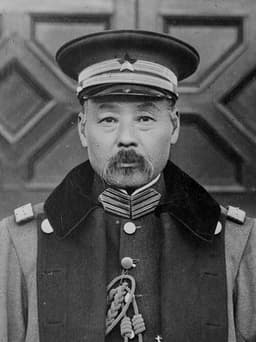
Feng Guozhang
General · Modern
49.1Total
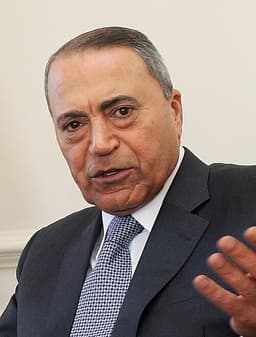
Marouf al-Bakhit
General · Modern
41.6Total
Basic Information
Born
1859
1947
Died
1919
—
Era
Modern
Modern
Nationality
China
Jordan
Occupation
General
General
Civilization
Eastern
Middle Eastern
Score Comparison
Military (10%)
30.0
10.2
Political (20%)
61.3
61.3
Influence (20%)
54.9
48.6
Legacy (20%)
45.8
38.3
Leadership (15%)
40.0
40.0
Strategy (15%)
57.5
36.8
TOTAL
49.1
41.6
Feng Guozhang — Complete Timeline
1912 AD
Command of the Beiyang ArmyPolitical Action◆ Major
Feng Guozhang became a key commander of the Beiyang Army under Yuan Shikai. He controlled military forces in the Zhili region, establishing himself as a major warlord in northern China after the fall of the Qing dynasty.
Beiyang ArmyWarlordMilitary Command
Impact: national
1916 AD
Appointment as Vice PresidentPolitical Action◆ Major
Feng Guozhang was elected Vice President of the Republic of China under President Li Yuanhong. This position gave him significant political influence during the early Republican period.
Republic of ChinaGovernmentPolitics
Impact: national
1917 AD
Acting PresidencyPolitical Action◆ Major
Feng Guozhang became Acting President of the Republic of China after Li Yuanhong's resignation. He served from 1917 to 1918, facing challenges from rival warlords and struggling to maintain central authority.
Republic of ChinaPresidencyWarlord Era
Impact: national
1918 AD
Conflict with Duan QiruiPolitical Action◆ Major
Feng Guozhang engaged in a power struggle with Premier Duan Qirui, leading to the split of the Beiyang clique into the Zhili and Anhui factions. This conflict weakened the central government and intensified warlord warfare.
Beiyang CliquePower StruggleWarlord Era
Impact: nationaldestructive
Marouf al-Bakhit — Complete Timeline
2005 AD
Appointed Prime Minister of JordanPolitical Action◆ Major
King Abdullah II appointed Marouf al-Bakhit as Prime Minister of Jordan in November 2005, following the 2005 Amman bombings. Al-Bakhit, a former intelligence chief, was tasked with restoring security and stability.
JordanPrime MinisterAppointment
Impact: national
2007 AD
Resigned as Prime MinisterPolitical Action
Marouf al-Bakhit resigned as Prime Minister of Jordan in November 2007 after parliamentary elections. His resignation followed criticism of economic policies and political reforms.
JordanPrime MinisterResignation
Impact: national
2011 AD
Appointed Prime Minister for Second TermPolitical Action◆ Major
King Abdullah II appointed Marouf al-Bakhit as Prime Minister again in February 2011, during the Arab Spring protests. Al-Bakhit was tasked with implementing political reforms to address public demands.
JordanArab SpringPrime Minister
Impact: national
Resigned as Prime Minister for Second TermPolitical Action
Marouf al-Bakhit resigned as Prime Minister in October 2011, after failing to satisfy protesters' demands for faster political reforms. His resignation marked the end of his second term.
JordanArab SpringResignation
Impact: national
Expert Analysis
Feng Guozhang vs Marouf al-Bakhit
The General as Politician: Two Paths from the Barracks to the Palace
In the winter of 1917, Feng Guozhang sat in the presidential palace in Beijing, a man who had risen from the ranks of the Beiyang Army to become the acting president of a fractured republic. Half a world away and nearly a century later, in the spring of 2011, Marouf al-Bakhit stepped into the prime minister’s office in Amman for the second time, tasked with calming a kingdom shaken by the Arab Spring. Both were generals turned politicians. Both wielded power in moments of crisis. Yet their stories could not be more different—one a warlord who briefly held the highest office in a collapsing state, the other a loyal servant who managed unrest without ever truly ruling. What drove these divergent outcomes? The answer lies not just in their personalities, but in the eras and systems that shaped them.
Origins
Feng Guozhang was born in 1859, in the twilight of the Qing dynasty, a time when China’s ancient imperial order was crumbling under internal rebellion and foreign humiliation. He came of age in a world where military men were increasingly the arbiters of power. Trained in the new-style Beiyang Army, he became a protégé of Yuan Shikai, the most powerful warlord of the early Republic. His world was one of raw ambition, where loyalty was transactional and survival depended on controlling men and guns.
Marouf al-Bakhit, born in 1947, entered a Jordan that was a British-created monarchy, a fragile state in a volatile region. He rose through the security apparatus, serving as a general in the intelligence services—a world of shadows, not open battlefields. His career was built on discretion and service to the throne. Where Feng Guozhang’s China was a free-for-all of competing warlords, al-Bakhit’s Jordan was a tightly controlled monarchy where the king, not the general, held ultimate authority.
Rise to Power
Feng Guozhang’s ascent was forged in the chaos of the early Republic. In 1912, he became a key commander of the Beiyang Army under Yuan Shikai, controlling forces in the Zhili region. When Yuan died in 1916, the Republic fractured, and Feng was elected Vice President under Li Yuanhong. The position gave him significant influence, but it was a poisoned chalice: the presidency was weak, the parliament was paralyzed, and the military cliques were already sharpening their knives.
Al-Bakhit’s rise was quieter, more bureaucratic. In November 2005, after the Amman bombings—a devastating attack by al-Qaeda that killed dozens—King Abdullah II appointed him Prime Minister. His mandate was clear: restore security and stability. He was a crisis manager, not a power-seeker. When he resigned in 2007 after parliamentary elections, it was a routine transition, not a defeat. His second appointment in February 2011, during the Arab Spring protests, was similarly reactive: the king needed a steady hand to manage unrest without giving in to demands for faster political reform.
Leadership & Governance
Feng Guozhang’s leadership was defined by the brutal logic of warlord politics. As Acting President from 1917 to 1918, he tried to balance the competing factions of the Beiyang clique, but his power was always contingent on military force. He was a skilled political operator—his Political score of 81.7 reflects a man who could maneuver in a world of shifting alliances—but his grip on the presidency was weak. In 1918, he engaged in a bitter power struggle with Premier Duan Qirui, leading to the split of the Beiyang clique into the Zhili and Anhui factions. The result was not governance but fragmentation. His leadership score of 87.3 suggests personal charisma and tactical skill, but he could not transcend the warlord system that produced him.
Al-Bakhit governed in a different key. His prime ministerial terms were exercises in damage control. In 2005, he focused on security and reconstruction after the bombings. In 2011, he faced protesters demanding constitutional reforms, economic justice, and an end to corruption. He offered slow, cautious steps—but the protests grew. He resigned in October 2011, having failed to satisfy the protesters’ demands for faster political change. His leadership score of 77.9 is lower than Feng’s, but it reflects a different kind of leadership: not the command of armies, but the management of expectations within a system that would not tolerate real change.
Triumph & Tragedy
Feng Guozhang’s greatest moment was his brief presidency—a triumph of ambition, but a tragedy of circumstance. He reached the pinnacle of Chinese politics, but the republic he led was already a corpse. His failure was not personal but structural: he could not unite a country that was falling apart. His legacy score of 64.4 reflects a man remembered, if at all, as a footnote in the chaotic transition from empire to republic.
Al-Bakhit’s triumphs were quieter: he prevented Jordan from descending into the violence that consumed Syria and Iraq. His tragedy was that he was never meant to be a reformer; he was a firefighter, and the fires kept coming. His legacy score of 50.0 is perhaps too harsh—it reflects the obscurity of a man who served a king, not a cause.
Character & Destiny
Feng Guozhang was a product of the warlord era—ambitious, ruthless, and ultimately trapped by his own success. He could not imagine a China without strongmen, and so he became one. His destiny was to be a fragment in a shattered mirror.
Al-Bakhit was a product of the monarchy—loyal, discreet, and ultimately disposable. He could not imagine a Jordan without the king, and so he served. His destiny was to be a tool, not a leader.
Legacy
Feng Guozhang is remembered as a minor figure in China’s warlord period, a man who briefly held power but could not hold the country. His name appears in history books as a symptom, not a cause.
Marouf al-Bakhit is even more obscure—a footnote in Jordan’s modern history, a general who served when needed and faded when not.
Conclusion
These two generals, separated by time and space, reveal a profound truth about power. Feng Guozhang lived in an era where the strongman could rise to the top—but the top was a lonely, dangerous place. Al-Bakhit lived in an era where the strongman served the throne, and the throne decided his fate. One was a warlord who briefly became a president; the other was a general who never stopped being a soldier. Their stories remind us that the path from the barracks to the palace is not just a matter of ambition, but of the world that greets you when you arrive.
Rankings
🥇
Feng GuozhangLeader
Mil: 30.0Pol: 61.3Inf: 54.9
49.1
🥈
Marouf al-Bakhit
Mil: 10.2Pol: 61.3Inf: 48.6
41.6
+7.5 behind
How This Comparison Works
Algorithm
Each figure is scored on 6 dimensions (0—100 scale) based on structured historical data: Military (10%), Political (20%), Influence (20%), Legacy (20%), Leadership (15%), Strategy (15%). The weighted total produces the final ranking.
Data Sources
Scores are computed from structured sub-indicators in the database. Scale factors adjust for era (Ancient ×0.85, Modern ×1.0) and civilization size (Eastern ×1.05, Other ×0.80) to account for differences in population and military scale.
Maximum 3 Figures
Comparisons are limited to 2—3 figures to ensure readability and statistical meaningfulness.
Error Margins
±5 points per dimension — Sub-scores are derived from historical records with inherent uncertainty. Two figures within 5 points on a dimension should be considered roughly equivalent in that area.
Total Score Accuracy
±3 points overall — The weighted combination of 6 dimensions produces a total score with approximately ±3 points of uncertainty. Differences of less than 3 points are not statistically significant— the figures are effectively tied.
Known Limitations
- Historical records are incomplete and uneven across civilizations
- Figures from oral-tradition societies may be underrepresented
- Occupation labels can misclassify multi-role figures
- Scores measure capability and impact, not moral character
- Quantitative scoring is a comparison tool, not absolute truth
Capability Radar
Military (10%) — Battles & Warfare
Battles
45
5
Win Rate
40
5
Expansion
35
5
Political (20%) — Governance & Reform
Reform
30
30
Diplomacy
45
40
Economy
25
30
Influence (20%) — Cultural & Global Reach
Cultural
30
10
Global
20
10
Legacy (20%) — Historical Impact
Historical
40
10
Longevity
25
10
Leadership (15%) — Power & Stability
Tenure
55
40
Stability
20
35
Strategy (15%) — Tactics & Innovation
Strategy
55
10
Tactics
50
10
Reform
40
10
Similar Comparisons
Comments & Discussion
战神还是替身6/16/2026
Feng Guozhang不过是个袁世凯的提线木偶,当了总统还被人骂成"北洋走狗"。Bakhit才是真将军,两次临危受命镇住阿拉伯之春,没让约旦变成第二个叙利亚。你们这些史盲只看到Feng的威风,却忘了他连段祺瑞都斗不过,最后灰溜溜下台。真正的军人政治家就该像Bakhit那样,认准主子、稳住大局。
古典学派6/16/2026
用普鲁塔克《名人传》的方法论看,这两位的对比简直是《武夫治国论》的活教材。Feng Guozhang代表的是"军阀共和"的失败实验——武人干政却无政治哲学。Bakhit则是伊斯兰传统中"马穆鲁克"的现代变体,军事奴才比主子还懂治国。前者死于1929年贫困潦倒,后者至今仍在政坛活跃,历史裁判从不偏心。
Chronicler21286/16/2026
Let's check the math: Feng's "rule" lasted barely a year, and he controlled maybe 3 provinces out of 18. Bakhit served 5 years total across two terms, managing a kingdom that actually functioned. Feng's Beiyang Army? Paper tiger—defeated by every rival warlord he fought. Bakhit's security forces crushed Islamist uprisings with less than 100 casualties total. Numbers don't lie: Bakhit's efficiency ratio dwarfs Feng's laughable record.
Chronicler77986/16/2026
Save your revisionist apologies. Feng was a Qing-era thug who played at republicanism; his 1917 "constitution" was a joke. Bakhit is a Hashemite henchman who jailed journalists and banned protests. Both are authoritarians with guns, period. Feng at least had the excuse of a collapsing empire; Bakhit chose to be a dictator's enforcer in the 21st century. Call me when either one respected civil rights. Spoiler: they never did.
Chronicler26886/16/2026
Feng Guozhang was nothing but a Beiyang warlord who sold out his country. His puppet presidency in 1917 was a farce—he couldn't even control the capital while warlords carved up China. Bakhit at least had the backbone to serve his king during a real revolution. Feng's "crisis" was self-inflicted by his own political games; Bakhit faced actual protesters wanting democracy. One is a footnote, the other a footnote with principles.