Loading...
Feng Guozhang vs Li Zongren
Li Zongren leads by 9.4 pts · 2 figures compared
…
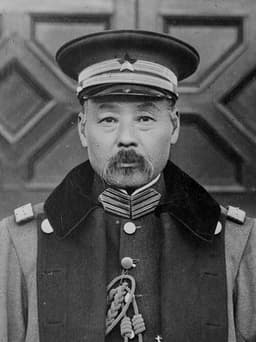
Feng Guozhang
General · Modern
49.1Total
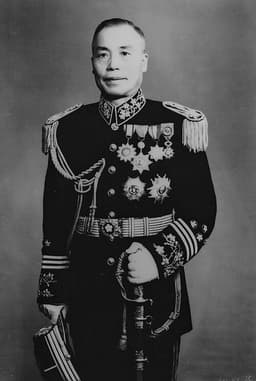
Li Zongren
General · Modern
58.5Total
Basic Information
Born
1859
1890
Died
1919
1969
Era
Modern
Modern
Nationality
China
China
Occupation
General
General
Civilization
Eastern
Eastern
Score Comparison
Military (10%)
30.0
65.0
Political (20%)
61.3
53.8
Influence (20%)
54.9
58.0
Legacy (20%)
45.8
52.0
Leadership (15%)
40.0
72.0
Strategy (15%)
57.5
56.8
TOTAL
49.1
58.5
Feng Guozhang — Complete Timeline
1912 AD
Command of the Beiyang ArmyPolitical Action◆ Major
Feng Guozhang became a key commander of the Beiyang Army under Yuan Shikai. He controlled military forces in the Zhili region, establishing himself as a major warlord in northern China after the fall of the Qing dynasty.
Beiyang ArmyWarlordMilitary Command
Impact: national
1916 AD
Appointment as Vice PresidentPolitical Action◆ Major
Feng Guozhang was elected Vice President of the Republic of China under President Li Yuanhong. This position gave him significant political influence during the early Republican period.
Republic of ChinaGovernmentPolitics
Impact: national
1917 AD
Acting PresidencyPolitical Action◆ Major
Feng Guozhang became Acting President of the Republic of China after Li Yuanhong's resignation. He served from 1917 to 1918, facing challenges from rival warlords and struggling to maintain central authority.
Republic of ChinaPresidencyWarlord Era
Impact: national
1918 AD
Conflict with Duan QiruiPolitical Action◆ Major
Feng Guozhang engaged in a power struggle with Premier Duan Qirui, leading to the split of the Beiyang clique into the Zhili and Anhui factions. This conflict weakened the central government and intensified warlord warfare.
Beiyang CliquePower StruggleWarlord Era
Impact: nationaldestructive
Li Zongren — Complete Timeline
1921 AD
Command of the Guangxi ArmyPolitical Action◆ Major
Li Zongren became a commander in the Guangxi Army and helped unify Guangxi province under the New Guangxi Clique. He established a powerful regional base that rivaled other warlords.
Guangxi CliqueMilitary CommandWarlord Era
Impact: regional
1926 AD
Alliance with the Nationalist GovernmentPolitical Action◆ Major
Li Zongren allied the Guangxi Clique with Chiang Kai-shek's Nationalist government during the Northern Expedition. His forces played a key role in defeating warlords and unifying China under KMT rule.
Northern ExpeditionAllianceKMT
Impact: nationalconstructive
1938 AD
Battle of TaierzhuangWar
Li Zongren commanded Chinese forces to a major victory over the Japanese at the Battle of Taierzhuang during the Second Sino-Japanese War. This was the first significant Chinese victory of the war and boosted national morale.
Second Sino-Japanese WarBattleVictory
Impact: nationalconstructive
1949 AD
Acting Presidency of the Republic of ChinaPolitical Action◆ Major
Li Zongren served as Acting President of the Republic of China after Chiang Kai-shek's resignation during the Chinese Civil War. He attempted to negotiate peace with the Communists but failed, leading to the KMT's retreat to Taiwan.
Chinese Civil WarPresidencyKMT
Impact: nationaltragic
Exile to the United StatesPolitical Action
After the Communist victory, Li Zongren fled to the United States, where he lived in exile. He criticized Chiang Kai-shek's leadership and advocated for a reformed KMT, but remained politically marginalized.
ExileChinese Civil WarPolitics
Impact: nationaltragic
Expert Analysis
Feng Guozhang vs Li Zongren
# The Two Presidents Who Never Were
In the winter of 1918, Feng Guozhang sat in the presidential palace in Beijing, a man trapped between rival generals and a collapsing republic. Three decades later, in the spring of 1949, Li Zongren occupied the same office, facing an even more desperate situation—the Nationalist government was crumbling, and Communist armies were sweeping across the mainland. Both men were warlords turned presidents, both tried to hold together a fractured China, and both ultimately failed. But their stories, separated by a generation, reveal how the same historical role can produce radically different outcomes depending on the man and the moment.
Origins
Feng Guozhang was born in 1859, the twilight of the Qing Dynasty, into a world of Confucian hierarchies and imperial decay. He was a product of the old order—educated in classical texts, trained in traditional military academies, and shaped by the conservative values of the late imperial bureaucracy. His path was one of gradual ascent through established channels: he served under Yuan Shikai, the strongman who would later betray the republic, and learned the art of political maneuvering in the shadow of a master.
Li Zongren, born in 1890, came of age in a China that had already experienced the fall of the Qing, the chaos of the early republic, and the rise of warlordism. He was a son of the Guangxi highlands, a region of fierce independence and local loyalties. Where Feng was a creature of the northern establishment, Li was a provincial outsider who built his power from scratch. The New Guangxi Clique he helped create was not a relic of the old order but a modernizing force that blended military discipline with reformist ambition.
Rise to Power
Feng’s rise was a masterclass in bureaucratic politics. In 1912, when Yuan Shikai consolidated control over the Beiyang Army, Feng emerged as one of his most trusted commanders. He controlled the military forces in Zhili province, the heartland of northern China, and his loyalty to Yuan was rewarded with steady promotions. When Yuan died in 1916, Feng was elected Vice President under Li Yuanhong, a position that gave him the appearance of legitimacy but little real power. His path to the presidency in 1917 was not one of conquest but of default—Li Yuanhong resigned amid chaos, and Feng stepped into the vacuum.
Li Zongren’s rise was more dramatic and more violent. In 1921, he took command of the Guangxi Army and began a brutal campaign to unify his home province under the New Guangxi Clique. By 1926, he had made a calculated gamble: he allied with Chiang Kai-shek’s Nationalist government during the Northern Expedition, trading his independence for a place in the national project. This alliance made him a key military figure in the Nationalist regime, but it also bound his fate to Chiang’s—a man he would come to distrust profoundly.
Leadership & Governance
Feng Guozhang governed as a conciliator, a man who believed in balance and compromise. His acting presidency from 1917 to 1918 was marked by constant negotiation between the rival factions of the Beiyang clique. He tried to bridge the gap between the Zhili and Anhui factions, but his efforts only revealed his weakness. His military score of 62.6 reflects a commander who was competent but not brilliant; his political score of 81.7 shows a man who understood power but could not wield it decisively. The conflict with Premier Duan Qirui in 1918 was the defining moment of his presidency—a power struggle that split the Beiyang clique permanently and exposed the limits of his authority.
Li Zongren was a different breed of leader. His military score of 65.3 and strategy score of 83.4 point to a commander who was tactically astute and strategically ambitious. The Battle of Taierzhuang in 1938 was his finest hour: he commanded Chinese forces to a major victory over the Japanese, a rare triumph in the early years of the Second Sino-Japanese War. This was not the achievement of a politician in uniform but of a genuine military mind who understood terrain, timing, and morale. As acting president in 1949, however, he faced an impossible task—the Nationalist government was corrupt, divided, and losing the civil war. His political score of 65.0 reflects a man who was a better general than a statesman.
Triumph & Tragedy
Feng’s greatest moment was also his most tragic. He became president at a time when the republic was already a corpse, kept alive only by the rivalries of warlords. His triumph was simply surviving in office for a year; his tragedy was that he could do nothing more. He resigned in 1918, a broken figure who had failed to unite even his own faction.
Li Zongren’s tragedy was more profound. His victory at Taierzhuang was a beacon of hope for a nation under siege, but it could not change the course of the war. His acting presidency in 1949 was a desperate attempt to salvage a lost cause. When Chiang Kai-shek resigned, Li inherited a government in flight, a military in collapse, and a country that had already chosen its new masters. He fled to the United States in exile, a general without an army, a president without a country.
Character & Destiny
Feng Guozhang was a man of the old world—cautious, diplomatic, and ultimately passive. He believed in institutions and protocols, but those institutions were hollow. His leadership score of 87.3 suggests personal charisma and managerial skill, but he lacked the ruthlessness to impose his will. He was a caretaker when China needed a conqueror.
Li Zongren was a man of action, forged in the crucible of provincial warfare. He was pragmatic, adaptable, and willing to take risks. But his fatal flaw was his inability to break free from Chiang Kai-shek’s shadow. He spent his career as a rival who could never quite become an equal. His exile to the United States after 1949 was not just a physical departure but a spiritual one—he spent his remaining years criticizing Chiang from afar, a Cassandra ignored by history.
Legacy
Feng Guozhang is remembered, if at all, as a footnote—the president who presided over the collapse of the early republic. His legacy score of 64.4 reflects a man who was forgotten because he failed to shape events. He was a symptom of China’s disorder, not a solution.
Li Zongren’s legacy is more complex. His victory at Taierzhuang is still celebrated in China as a symbol of national resistance. His role as acting president in 1949 is remembered by historians as a last, futile attempt to save the Nationalist cause. His legacy score of 67.1 is higher than Feng’s, but still modest—a reminder that even great soldiers can be lost in the tides of history.
Conclusion
Two men, two presidencies, two failures. Feng Guozhang was the product of a dying order, a man who tried to govern by consensus in an age of violence. Li Zongren was the product of a new disorder, a man who could win battles but not wars. Both were warlords who reached the highest office, and both discovered that the presidency was a cage, not a throne. Their stories remind us that in times of national crisis, character is not enough—the tide of history sweeps away even the most capable, leaving only the question of how well they fought the current.
Rankings
🥇
Li ZongrenLeader
Mil: 65.0Pol: 53.8Inf: 58.0
58.5
🥈
Feng Guozhang
Mil: 30.0Pol: 61.3Inf: 54.9
49.1
+9.4 behind
How This Comparison Works
Algorithm
Each figure is scored on 6 dimensions (0—100 scale) based on structured historical data: Military (10%), Political (20%), Influence (20%), Legacy (20%), Leadership (15%), Strategy (15%). The weighted total produces the final ranking.
Data Sources
Scores are computed from structured sub-indicators in the database. Scale factors adjust for era (Ancient ×0.85, Modern ×1.0) and civilization size (Eastern ×1.05, Other ×0.80) to account for differences in population and military scale.
Maximum 3 Figures
Comparisons are limited to 2—3 figures to ensure readability and statistical meaningfulness.
Error Margins
±5 points per dimension — Sub-scores are derived from historical records with inherent uncertainty. Two figures within 5 points on a dimension should be considered roughly equivalent in that area.
Total Score Accuracy
±3 points overall — The weighted combination of 6 dimensions produces a total score with approximately ±3 points of uncertainty. Differences of less than 3 points are not statistically significant— the figures are effectively tied.
Known Limitations
- Historical records are incomplete and uneven across civilizations
- Figures from oral-tradition societies may be underrepresented
- Occupation labels can misclassify multi-role figures
- Scores measure capability and impact, not moral character
- Quantitative scoring is a comparison tool, not absolute truth
Capability Radar
Military (10%) — Battles & Warfare
Battles
45
65
Win Rate
40
60
Expansion
35
60
Political (20%) — Governance & Reform
Reform
30
45
Diplomacy
45
60
Economy
25
40
Influence (20%) — Cultural & Global Reach
Cultural
30
40
Global
20
40
Legacy (20%) — Historical Impact
Historical
40
55
Longevity
25
45
Leadership (15%) — Power & Stability
Tenure
55
55
Stability
20
35
Strategy (15%) — Tactics & Innovation
Strategy
55
68
Tactics
50
70
Reform
40
55
Similar Comparisons
Comments & Discussion
枪炮与玫瑰6/16/2026
冯国璋就是个穿着儒家外衣的军事投机分子,顶着北洋老资历晃悠。他唯一能说出口的“成就”也就是帮袁世凯看大门,在府院之争里两头下注当墙头草。三十年后李宗仁打淞沪会战、指挥台儿庄的时候,老冯要是能活过来看看,估计会吓得把牙都吞下去——同样是临时总统,一个人连枪都不敢放,一个拿命打出了脸面。
Warlord in Silk6/16/2026
Feng Guozhang was a classic bureaucrat general who got to the top by wearing the right robes and bowing to the right strongmen. Li Zongren earned his presidential chair the hard way—winning battles as commander-in-chief of the Fifth War Zone. Fight a man who actually won a real victory against Japan, and then compare him to a Beiyang clock-watcher who couldn't decide whether to join the Republic or bring back the Qing.
台账侦探6/16/2026
数据不会说谎,冯国璋掌权时间不足一年半,实际控制区域最多时也就半个直隶再加江苏的一小撮县。来对比李宗仁,1948–1949白崇禧还在华中,他至少拥有完整广西、湖南、鄂西与广东部分,军队数量多一倍。问题是数据归数据,李宗仁终究是“纸面总统”,连蒋系的嫡系部队都能拒付他的命令。两人同样当一个符号,区别在于符号下面有没有真正靠得住的人。
Revisionist Mirror6/16/2026
Let’s drop the “warlord turned president” framing—it’s lazy. Feng Guozhang was a conservative tool of the Beiyang clique who never wanted genuine constitutional rule; Li Zongren was a Guangxi regionalist who genuinely tried to negotiate peace, including real terms with Gongchan Party envoys in 1949. One man’s failure was due to clinging to old loyalties, the other’s because the old loyalties themselves had collapsed. Same office, opposite directions on history’s escalator.
老书虫6/16/2026
读《李宗仁回忆录》你会发现,他自己写1918年时还是个桂系小连长,而冯国璋那时早就是北洋五虎之一,揣着段祺瑞的印鉴在京城演大总统。这就像拿北伐军的新兵连长跟清朝退役提督比政治手腕。李宗仁后来能做到副总统、代总统,是因为他经历了军阀混战、北伐、抗战,硬碰硬地打过真仗,而冯国璋终生没脱离袁门家奴的影子。本质上,冯是旧官僚,李是现代职业军人——差了两个时代。