Loading...
Feng Guozhang vs Justo Rufino Barrios
Justo Rufino Barrios leads by 9.5 pts · 2 figures compared
…
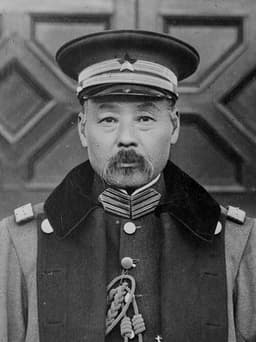
Feng Guozhang
General · Modern
49.1Total
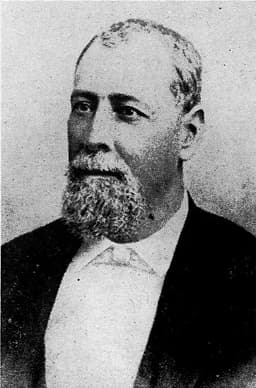
Justo Rufino Barrios
General · Modern
58.6Total
Basic Information
Born
1859
1835
Died
1919
1885
Era
Modern
Modern
Nationality
China
Guatemala
Occupation
General
General
Civilization
Eastern
Western
Score Comparison
Military (10%)
30.0
52.5
Political (20%)
61.3
72.0
Influence (20%)
54.9
60.0
Legacy (20%)
45.8
49.2
Leadership (15%)
40.0
65.0
Strategy (15%)
57.5
55.0
TOTAL
49.1
58.6
Feng Guozhang — Complete Timeline
1912 AD
Command of the Beiyang ArmyPolitical Action◆ Major
Feng Guozhang became a key commander of the Beiyang Army under Yuan Shikai. He controlled military forces in the Zhili region, establishing himself as a major warlord in northern China after the fall of the Qing dynasty.
Beiyang ArmyWarlordMilitary Command
Impact: national
1916 AD
Appointment as Vice PresidentPolitical Action◆ Major
Feng Guozhang was elected Vice President of the Republic of China under President Li Yuanhong. This position gave him significant political influence during the early Republican period.
Republic of ChinaGovernmentPolitics
Impact: national
1917 AD
Acting PresidencyPolitical Action◆ Major
Feng Guozhang became Acting President of the Republic of China after Li Yuanhong's resignation. He served from 1917 to 1918, facing challenges from rival warlords and struggling to maintain central authority.
Republic of ChinaPresidencyWarlord Era
Impact: national
1918 AD
Conflict with Duan QiruiPolitical Action◆ Major
Feng Guozhang engaged in a power struggle with Premier Duan Qirui, leading to the split of the Beiyang clique into the Zhili and Anhui factions. This conflict weakened the central government and intensified warlord warfare.
Beiyang CliquePower StruggleWarlord Era
Impact: nationaldestructive
Justo Rufino Barrios — Complete Timeline
1871 AD
Enacted the Liberal Reforms of 1871Reform
Justo Rufino Barrios, after coming to power, implemented sweeping liberal reforms. These included the separation of church and state, confiscation of church lands, establishment of secular education, and promotion of coffee cultivation for export.
GuatemalaLiberal ReformSecularization
Impact: nationalprogressive
1873 AD
Modernized Guatemala's InfrastructureReform◆ Major
Barrios oversaw the construction of roads, telegraph lines, and railways, particularly to support coffee exports. He also promoted immigration and foreign investment, transforming Guatemala's economy.
GuatemalaInfrastructureEconomic Development
Impact: nationalconstructive
1885 AD
Killed at the Battle of ChalchuapaWar
Barrios was killed in battle at Chalchuapa, El Salvador, while leading an invasion to forcibly reunify Central America. His death ended the unification attempt and preserved the sovereignty of the individual Central American states.
Central AmericaBattleDeath
Impact: regionaltragic
Declared the Unification of Central AmericaPolitical Action◆ Major
Barrios unilaterally declared the reunification of the Central American republics by force. He issued a decree proclaiming himself supreme military commander of a unified Central America, leading to war with neighboring states.
Central AmericaUnificationWar
Impact: regionaldestructive
Expert Analysis
Feng Guozhang vs Justo Rufino Barrios
# The Warlord and the Reformer: Two Paths from Chaos
On a sweltering July morning in 1917, Feng Guozhang stood in the presidential palace in Beijing, a man who had spent his entire life climbing the ladder of power only to find himself grasping at shadows. Half a world away and thirty-two years earlier, Justo Rufino Barrios had fallen on a battlefield in El Salvador, his dream of a united Central America dying with him in a hail of bullets. Both were generals. Both seized power in turbulent times. Both failed to build what they envisioned. Yet their stories reveal profoundly different answers to the same question: what does a military man do when the old order crumbles?
Origins
Feng Guozhang was born in 1859, a child of the twilight of the Qing Dynasty. He came from a modest landowning family in Hebei Province, and his path to prominence was forged in the crucible of the Tongwen Guan, the imperial academy where he studied military science and foreign languages. He was a product of the self-strengthening movement—a man who believed that China could modernize its army without abandoning its soul. By contrast, Justo Rufino Barrios, born in 1835 in San Lorenzo, Guatemala, was a creature of the coffee finca and the liberal revolution. His father was a farmer, and Barrios himself grew up in a world where the Catholic Church and conservative landowners held near-absolute sway. Where Feng learned to navigate bureaucracy, Barrios learned to hate the old regime.
These backgrounds shaped everything that followed. Feng’s China was an empire in its death throes, a civilization so vast and ancient that reform felt like a betrayal. Barrios’s Guatemala was a small, fractured republic where a determined man could seize the state and reshape it overnight. One man’s caution was the other’s ruthlessness.
Rise to Power
Feng Guozhang rose through the ranks of the Beiyang Army, the most modern military force in late-Qing China, under the patronage of Yuan Shikai. He was a loyal subordinate, a skilled administrator, and a competent commander—but never a revolutionary. His key turning point came in 1912, when Yuan Shikai made him a key commander of the Beiyang forces in Zhili Province. He was a pillar of the old system, not its destroyer.
Barrios, in contrast, seized power through rebellion. In 1871, he joined the liberal uprising against President Vicente Cerna, and when the revolution succeeded, he emerged as the strongman who would dominate Guatemala for fourteen years. He did not wait for promotion; he took the presidency through force and held it through will. Where Feng inherited a position, Barrios conquered one.
Leadership & Governance
As a leader, Feng Guozhang was a master of balance—perhaps too much so. His political score of 81.7 reflects a man who understood the game of alliances, patronage, and negotiation. When he became Vice President in 1916 under Li Yuanhong, and then Acting President in 1917, he tried to govern a fractured China by mediating between the warlords of the Beiyang clique. He was a Zhili man in a world of Anhui and Fengtian rivals, and his strategy was to hold the center by playing factions against each other. He reformed little and risked less.
Barrios governed with fire. His Liberal Reforms of 1871 separated church and state, confiscated church lands, expelled religious orders, and promoted coffee as the cash crop that would modernize Guatemala. He built roads, railways, and telegraph lines—not for their own sake, but to bind the country to the global coffee market. His military score of 65.4 and strategy of 55.6 suggest a man who was brave but not brilliant on the battlefield; his true genius was in the ruthless application of state power. He was a modernizer who believed that progress required breaking eggs—and he broke them without hesitation.
Triumph & Tragedy
Feng’s greatest moment was perhaps his brief presidency itself—a triumph of survival in a world where warlords devoured each other. But his tragedy was the same: he was a man who wanted to hold China together, yet his rivalry with Premier Duan Qirui from 1917 to 1918 shattered the Beiyang clique into the Zhili and Anhui factions. He did not start the warlord era, but he deepened it. By 1918, he was forced out of power, a president without an army, a general without a war.
Barrios’s triumph was Guatemala’s transformation: coffee exports boomed, infrastructure expanded, and the old conservative order crumbled. But his tragedy was hubris. In 1885, he declared the unification of Central America by force and marched into El Salvador. At the Battle of Chalchuapa, he was killed—a single bullet ending a dream that no one else wanted. His Central American federation died with him, and Guatemala was left with a legacy of authoritarianism dressed in liberal clothes.
Character & Destiny
Feng Guozhang was cautious, calculating, and ultimately conservative. He believed in hierarchy, in the careful management of power, and in the survival of the system that had raised him. His leadership score of 87.3 suggests a man who could command loyalty, but his total score of 74.2 reflects a life of missed opportunities. He was not a visionary; he was a caretaker in an age that demanded revolutionaries.
Barrios was impulsive, ideological, and unafraid of destruction. He saw the world in black and white—liberal versus conservative, progress versus backwardness—and he was willing to kill and die for his vision. His total score of 68.9 is lower than Feng’s, but his impact was arguably greater. He changed Guatemala forever, for better and for worse.
Legacy
Feng Guozhang is remembered, if at all, as a footnote in the chaos of early Republican China—a general who could not prevent the fragmentation he inherited. His legacy score of 64.4 reflects a man who faded into the background of history. Barrios, by contrast, is a monument in Guatemala—a man whose face appears on currency, whose name adorns streets, and whose reforms still shape the country’s land and economy. His legacy score of 67.7 is only slightly higher, but it burns with controversy: he is either a national hero or a dictator who sold Guatemala to coffee barons.
Conclusion
Standing at the intersection of empire and republic, Feng Guozhang tried to hold the door open for a China that was already falling apart. Barrios, charging through the ruins of colonial Guatemala, tried to build a nation by smashing the past. One failed through inaction; the other through overreach. In the end, both remind us that the hardest task for a general is not winning a war, but knowing what to do with the peace. Their stories are mirrors held up to two worlds in crisis—and the reflection is never comfortable.
Rankings
🥇
Justo Rufino BarriosLeader
Mil: 52.5Pol: 72.0Inf: 60.0
58.6
🥈
Feng Guozhang
Mil: 30.0Pol: 61.3Inf: 54.9
49.1
+9.5 behind
How This Comparison Works
Algorithm
Each figure is scored on 6 dimensions (0—100 scale) based on structured historical data: Military (10%), Political (20%), Influence (20%), Legacy (20%), Leadership (15%), Strategy (15%). The weighted total produces the final ranking.
Data Sources
Scores are computed from structured sub-indicators in the database. Scale factors adjust for era (Ancient ×0.85, Modern ×1.0) and civilization size (Eastern ×1.05, Other ×0.80) to account for differences in population and military scale.
Maximum 3 Figures
Comparisons are limited to 2—3 figures to ensure readability and statistical meaningfulness.
Error Margins
±5 points per dimension — Sub-scores are derived from historical records with inherent uncertainty. Two figures within 5 points on a dimension should be considered roughly equivalent in that area.
Total Score Accuracy
±3 points overall — The weighted combination of 6 dimensions produces a total score with approximately ±3 points of uncertainty. Differences of less than 3 points are not statistically significant— the figures are effectively tied.
Known Limitations
- Historical records are incomplete and uneven across civilizations
- Figures from oral-tradition societies may be underrepresented
- Occupation labels can misclassify multi-role figures
- Scores measure capability and impact, not moral character
- Quantitative scoring is a comparison tool, not absolute truth
Capability Radar
Military (10%) — Battles & Warfare
Battles
45
45
Win Rate
40
55
Expansion
35
55
Political (20%) — Governance & Reform
Reform
30
70
Diplomacy
45
45
Economy
25
55
Influence (20%) — Cultural & Global Reach
Cultural
30
40
Global
20
30
Legacy (20%) — Historical Impact
Historical
40
50
Longevity
25
35
Leadership (15%) — Power & Stability
Tenure
55
50
Stability
20
30
Strategy (15%) — Tactics & Innovation
Strategy
55
50
Tactics
50
40
Reform
40
60
Similar Comparisons
Comments & Discussion
数据怀疑论者6/16/2026
这对比纯属牵强附会!冯国璋是北洋体系内部的温和改良派,而巴里奥斯是武装推翻旧秩序的激进总统,两人除了都是军人处境,根本没有可比性。冯在1917年还想跟南方和谈,巴里奥斯1885年就敢直接率军入侵萨尔瓦多。拿中国内战跟中美洲统一战争类比?数据样本量不足,结论站不住脚。
历史爱好者6/16/2026
我更喜欢冯国璋,他至少懂得节制的价值。1918年他主动退位,避免了更大规模的内战,这在军阀混战年代简直是清流!巴里奥斯虽然理想高远,但他在位期间镇压危地马拉土著、穷兵黩武追求中美洲统一,最后白白送死。冯国璋是个有底线的旧军人,而巴里奥斯就是个被自由主义口号冲昏头脑的军事狂人。
Historian2566/16/2026
Both men embody Machiavelli's distinction between the lion and the fox. Barrios was all lion—he died on a Salvadoran battlefield trying to force unification at gunpoint. Feng was the consummate fox, maneuvering through the treacherous currents of Yuan Shikai's court before inheriting a hollow presidency. Yet neither understood that legitimacy requires more than force; Barrios needed persuasion, Feng needed decisiveness. Both failed the ultimate test of leadership.
Historian3786/16/2026
Barrios wasn't a reformer—he was a coffee oligarch who co-opted liberalism to justify land grabs. His 1870s confiscation of indigenous communal lands created the very peasant armies that later tormented Guatemala for a century. Feng Guozhang, despite his failures, never forcibly displaced millions to grow exports. The contrast isn't between "warlord vs reformer" but between an old-school pragmatist and a dogmatic ideologue with blood on his hands.
Chronicler53936/16/2026
Feng Guozhang was a tragic bureaucratic pawn in Beiyang politics, while Barrios was a genuine revolutionary. Feng's claim to power rested on being a "compromise candidate" between cliques—he was never truly in control, unlike Barrios who personally led troops into El Salvador. Feng studied military science at Tongwen Guan but never reformed China's army divisions; Barrios actually modernized Guatemala's coffee economy and abolished monopolies. One was a caretaker; the other was an architect.