Loading...
Feng Guozhang vs John Lambert
John Lambert leads by 7.6 pts · 2 figures compared
…
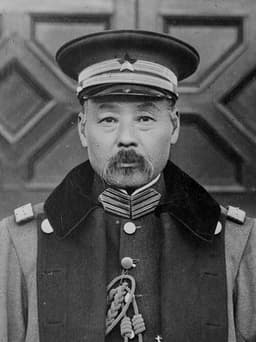
Feng Guozhang
General · Modern
49.1Total
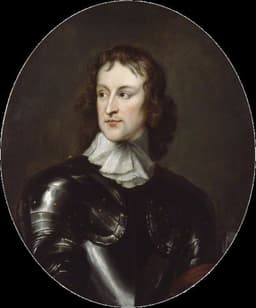
John Lambert
General · Modern
56.7Total
Basic Information
Born
1859
1619
Died
1919
1684
Era
Modern
Modern
Nationality
China
England
Occupation
General
General
Civilization
Eastern
Western
Score Comparison
Military (10%)
30.0
70.0
Political (20%)
61.3
45.0
Influence (20%)
54.9
59.0
Legacy (20%)
45.8
50.0
Leadership (15%)
40.0
68.0
Strategy (15%)
57.5
55.0
TOTAL
49.1
56.7
Feng Guozhang — Complete Timeline
1912 AD
Command of the Beiyang ArmyPolitical Action◆ Major
Feng Guozhang became a key commander of the Beiyang Army under Yuan Shikai. He controlled military forces in the Zhili region, establishing himself as a major warlord in northern China after the fall of the Qing dynasty.
Beiyang ArmyWarlordMilitary Command
Impact: national
1916 AD
Appointment as Vice PresidentPolitical Action◆ Major
Feng Guozhang was elected Vice President of the Republic of China under President Li Yuanhong. This position gave him significant political influence during the early Republican period.
Republic of ChinaGovernmentPolitics
Impact: national
1917 AD
Acting PresidencyPolitical Action◆ Major
Feng Guozhang became Acting President of the Republic of China after Li Yuanhong's resignation. He served from 1917 to 1918, facing challenges from rival warlords and struggling to maintain central authority.
Republic of ChinaPresidencyWarlord Era
Impact: national
1918 AD
Conflict with Duan QiruiPolitical Action◆ Major
Feng Guozhang engaged in a power struggle with Premier Duan Qirui, leading to the split of the Beiyang clique into the Zhili and Anhui factions. This conflict weakened the central government and intensified warlord warfare.
Beiyang CliquePower StruggleWarlord Era
Impact: nationaldestructive
John Lambert — Complete Timeline
1648 AD
Battle of PrestonWar◆ Major
John Lambert commanded parliamentary forces at the Battle of Preston, defeating a Scottish royalist army. The victory helped secure the parliamentary cause in the Second English Civil War.
BattleEnglish Civil WarParliament
Impact: national
1653 AD
Drafted the Instrument of GovernmentPolitical Action◆ Major
John Lambert was the principal author of the Instrument of Government, the written constitution that established the Protectorate under Oliver Cromwell. The document created a Lord Protector and a Council of State, but was never fully implemented.
ConstitutionProtectorateCromwell
Impact: nationalconstructive
1662 AD
Exiled to GuernseyPolitical Action◆ Major
After the Restoration, John Lambert was tried for treason and exiled to the island of Guernsey. He spent the remainder of his life in captivity, never regaining political influence.
ExileRestorationPunishment
Impact: nationaltragic
Expert Analysis
John Lambert vs Feng Guozhang
### The General Who Wrote a Constitution, and the General Who Became President
In the long, bloody corridors of history, two generals stand at opposite ends of a single, recurring question: what happens when a soldier seizes the pen? One was John Lambert, the architect of England’s first written constitution, who ended his days a forgotten prisoner on a windswept island. The other was Feng Guozhang, a Beiyang warlord who briefly held the presidency of China, only to die in ignominy, his name synonymous with the era’s chaos. Both were men of the sword who reached for the state—yet their fates diverged as sharply as the civilizations that shaped them. Why did one general fail to build a lasting republic, while the other could not even hold his own clique together?
### Origins
John Lambert was born in 1619, into a world of Puritan faith and parliamentary grievance. The son of a Yorkshire gentleman, he was raised on the conviction that authority—whether of king or bishop—must answer to law. England’s civil wars were not merely dynastic; they were a struggle over sovereignty itself. Lambert, educated in the common law and the Bible, absorbed the radical idea that a nation could be remade by contract.
Feng Guozhang, born in 1859, came of age in a very different storm. The Qing dynasty, ancient and brittle, was collapsing under the weight of foreign humiliation and internal rebellion. Feng was a product of the Beiyang Military Academy, where the curriculum taught not constitutional theory but the art of personal loyalty. In China, the state was not a contract; it was a web of obligations, and the highest virtue was not liberty but *guanxi*—relationships. Where Lambert saw a nation to be reformed, Feng saw a game to be played.
### Rise to Power
Lambert’s ascent was meteoric, forged in fire. At the Battle of Preston in 1648, he commanded the parliamentary forces that crushed a Scottish royalist army. The victory was decisive, and it made him Oliver Cromwell’s most trusted lieutenant. But Lambert was no mere soldier; he was a thinker. When the Rump Parliament proved corrupt, he helped purge it. When Cromwell became Lord Protector, Lambert wrote the Instrument of Government in 1653—the first written constitution in English history, a document that sought to balance executive power with an elected parliament.
Feng Guozhang rose through patronage. Under Yuan Shikai, the strongman of the early Republic, Feng commanded the Beiyang Army’s elite divisions. In 1912, he controlled the Zhili region through a mix of military muscle and political cunning. When Yuan died in 1916, the Republic fractured, and Feng was elected Vice President—a title that meant little without an army. His real power came from his troops, not from any constitutional mandate.
### Leadership & Governance
As a ruler, Lambert was a visionary trapped in a revolutionary’s dilemma. He believed in a “godly republic” governed by law, not by the whim of a single man. The Instrument of Government was his masterpiece: it created a Protector with limited veto power, a council of state, and a triennial parliament. Yet when Cromwell grew impatient with parliaments, Lambert could not stop him. He lacked the ruthlessness to seize absolute power himself, and the idealism that had driven the revolution now seemed a weakness. When the Protectorate collapsed, Lambert tried to restore the Rump Parliament—a fatal error.
Feng Guozhang governed as a warlord, not a statesman. As Acting President from 1917 to 1918, he presided over a phantom republic. Real power lay with Premier Duan Qirui, who controlled the Anhui clique. Feng’s Zhili clique was a rival, not a government. He tried to balance factions, but his “presidency” was a theater of paper and ink, with no army of his own to enforce his will. In 1918, his conflict with Duan Qirui turned open, and the Beiyang clique split into warring camps. Feng had won the title, but lost the nation.
### Triumph & Tragedy
Lambert’s greatest moment was also his most tragic. At the Battle of Preston, he had saved the Commonwealth. At the drafting of the Instrument of Government, he had given England a blueprint for a modern state. But his tragedy was that he could not make it stick. After Cromwell’s death, the army and the radicals turned on each other. In 1660, the monarchy was restored. Lambert, tried for treason in 1662, was exiled to Guernsey. He spent his final years in a stone cell, writing treatises that no one read.
Feng Guozhang’s triumph was the presidency itself—a symbol that a Beiyang general could wear the robes of state. But his tragedy was that the robes were empty. In 1919, when he died, the Republic was already a corpse, dismembered by warlords. His own son squandered the family fortune, and Feng’s name became a footnote in the chaos that led to the rise of the Communists.
### Character & Destiny
Lambert was a man of principle, and that was his undoing. He believed that a constitution could bind the ambitions of men. He was too honorable to become a dictator, yet too rigid to compromise with the royalists. His character was that of a Puritan saint: disciplined, learned, but utterly unable to navigate the dirty compromises of politics.
Feng Guozhang was a survivor, and that was his limit. He knew how to play the game of factions, how to smile at rivals while sharpening his sword. But he had no vision beyond personal power. When the game turned brutal, he had no principles to fall back on. His character was that of a Confucian gentleman turned cynical: polished, pragmatic, but hollow.
### Legacy
John Lambert’s legacy is a ghost that haunts English history. The Instrument of Government was abandoned, but its ideas—a written constitution, a separation of powers—would resurface in America and France. He is remembered by historians as the “forgotten architect” of modern democracy, a man whose failure was more instructive than many victories.
Feng Guozhang’s legacy is a warning. He represents the failure of the Chinese Republic, the moment when military power devoured political order. His name is not honored; it is studied as a symptom of a deeper disease. In China, the general who tries to rule without a vision is soon forgotten.
### Conclusion
What drives the different outcomes? Lambert lived in a world where ideas mattered—where men believed that a constitution could remake the world. Feng Guozhang lived in a world where only power mattered—where the state was a prize to be seized, not a covenant to be upheld. Both were generals; both reached for the highest office. But one wrote a constitution, and the other became a footnote in the collapse of a dynasty. In the end, the difference is not in their swords, but in what they believed a sword could build. Lambert built a dream that would outlive him. Feng Guozhang built only a tombstone.
Rankings
🥇
John LambertLeader
Mil: 70.0Pol: 45.0Inf: 59.0
56.7
🥈
Feng Guozhang
Mil: 30.0Pol: 61.3Inf: 54.9
49.1
+7.6 behind
How This Comparison Works
Algorithm
Each figure is scored on 6 dimensions (0—100 scale) based on structured historical data: Military (10%), Political (20%), Influence (20%), Legacy (20%), Leadership (15%), Strategy (15%). The weighted total produces the final ranking.
Data Sources
Scores are computed from structured sub-indicators in the database. Scale factors adjust for era (Ancient ×0.85, Modern ×1.0) and civilization size (Eastern ×1.05, Other ×0.80) to account for differences in population and military scale.
Maximum 3 Figures
Comparisons are limited to 2—3 figures to ensure readability and statistical meaningfulness.
Error Margins
±5 points per dimension — Sub-scores are derived from historical records with inherent uncertainty. Two figures within 5 points on a dimension should be considered roughly equivalent in that area.
Total Score Accuracy
±3 points overall — The weighted combination of 6 dimensions produces a total score with approximately ±3 points of uncertainty. Differences of less than 3 points are not statistically significant— the figures are effectively tied.
Known Limitations
- Historical records are incomplete and uneven across civilizations
- Figures from oral-tradition societies may be underrepresented
- Occupation labels can misclassify multi-role figures
- Scores measure capability and impact, not moral character
- Quantitative scoring is a comparison tool, not absolute truth
Capability Radar
Military (10%) — Battles & Warfare
Battles
45
65
Win Rate
40
60
Expansion
35
40
Political (20%) — Governance & Reform
Reform
30
55
Diplomacy
45
50
Economy
25
45
Influence (20%) — Cultural & Global Reach
Cultural
30
35
Global
20
30
Legacy (20%) — Historical Impact
Historical
40
50
Longevity
25
40
Leadership (15%) — Power & Stability
Tenure
55
60
Stability
20
40
Strategy (15%) — Tactics & Innovation
Strategy
55
65
Tactics
50
70
Reform
40
55
Similar Comparisons
Comments & Discussion
The Weapon-Maker6/16/2026
Lambert actually understood that constitutions need teeth—he made the Instrument of Government binding on Cromwell himself. Feng Guozhang was a paper tiger who let his own Beiyang clique devour him. You can't compare a man who drafted England's first written constitution to a warlord who couldn't even control his own generals. Lambert lost his freedom but kept his ideas; Feng lost everything and left nothing but chaos.
历史如烟6/16/2026
冯国璋当总统时,北洋军阀已经烂到根了。他签的《中华民国约法》根本没人当回事,段祺瑞随便就能架空他。而约翰·兰伯特至少让克伦威尔老老实实遵守《政府约法》三年,这叫军人的政治底线。冯国璋连这个底线都没有,北洋系在他手里散架,纯属活该。
The Numbers Guy6/16/2026
Here's the real story: Feng Guozhang's presidency lasted exactly 1 year and 17 days. Lambert's constitution governed England for 4 years. That's not a debate—that's a bloodless statistic. One general actually ran a republic, however flawed. The other couldn't even hold a coalition together through one election cycle. Feng's legacy is a cautionary tale about warlords who play dress-up in presidential robes.
半瓶醋史家6/16/2026
别被西方史观带跑了。兰伯特写的《政府约法》本质上是个军事独裁文件,把权力全塞给护国公。冯国璋好歹在1917年拒绝解散国会,维护了形式上的共和。两人都是枪杆子里的政治家,但冯至少没像兰伯特那样想搞世袭制。非要比较,兰伯特更像个理论家,冯国璋反而更懂现实政治。