Loading...
Feng Guozhang vs J. B. M. Hertzog
J. B. M. Hertzog leads by 7.0 pts · 2 figures compared
…
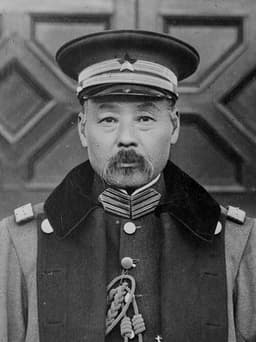
Feng Guozhang
General · Modern
49.1Total
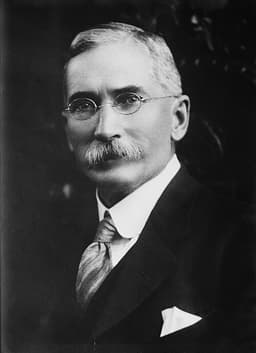
J. B. M. Hertzog
General · Modern
56.1Total
Basic Information
Born
1859
1866
Died
1919
1942
Era
Modern
Modern
Nationality
China
South Africa
Occupation
General
General
Civilization
Eastern
Other
Score Comparison
Military (10%)
30.0
25.0
Political (20%)
61.3
60.0
Influence (20%)
54.9
56.7
Legacy (20%)
45.8
50.0
Leadership (15%)
40.0
79.8
Strategy (15%)
57.5
60.0
TOTAL
49.1
56.1
Feng Guozhang — Complete Timeline
1912 AD
Command of the Beiyang ArmyPolitical Action◆ Major
Feng Guozhang became a key commander of the Beiyang Army under Yuan Shikai. He controlled military forces in the Zhili region, establishing himself as a major warlord in northern China after the fall of the Qing dynasty.
Beiyang ArmyWarlordMilitary Command
Impact: national
1916 AD
Appointment as Vice PresidentPolitical Action◆ Major
Feng Guozhang was elected Vice President of the Republic of China under President Li Yuanhong. This position gave him significant political influence during the early Republican period.
Republic of ChinaGovernmentPolitics
Impact: national
1917 AD
Acting PresidencyPolitical Action◆ Major
Feng Guozhang became Acting President of the Republic of China after Li Yuanhong's resignation. He served from 1917 to 1918, facing challenges from rival warlords and struggling to maintain central authority.
Republic of ChinaPresidencyWarlord Era
Impact: national
1918 AD
Conflict with Duan QiruiPolitical Action◆ Major
Feng Guozhang engaged in a power struggle with Premier Duan Qirui, leading to the split of the Beiyang clique into the Zhili and Anhui factions. This conflict weakened the central government and intensified warlord warfare.
Beiyang CliquePower StruggleWarlord Era
Impact: nationaldestructive
J. B. M. Hertzog — Complete Timeline
1899 AD
Boer War GeneralWar◆ Major
Hertzog served as a Boer general in the Second Boer War, commanding forces in the Orange Free State. He participated in several battles and became a prominent Afrikaner military leader.
Second Boer WarGeneralMilitary
Impact: regional
1914 AD
Founded the National PartyPolitical Action
Hertzog broke away from the South African Party and founded the National Party, which championed Afrikaner nationalism and opposed British imperial influence. The party would later implement apartheid.
National PartyAfrikaner NationalismFounding
Impact: nationalconstructive
1924 AD
Prime Minister of South AfricaPolitical Action◆ Major
Hertzog became Prime Minister after his National Party won the general election in coalition with the Labour Party. His government implemented policies to protect white workers and promote Afrikaner interests, including the 'civilized labour' policy.
Prime MinisterAfrikaner RightsLabour Policy
Impact: national
1934 AD
Merged with Smuts to Form United PartyPolitical Action◆ Major
Hertzog merged his National Party with Jan Smuts' South African Party to form the United Party. The coalition aimed to address the economic crisis of the Great Depression and promote national unity, but it alienated hardline Afrikaner nationalists.
United PartyCoalitionNational Unity
Impact: nationalconstructive
1936 AD
Passed the Representation of Natives ActReform◆ Major
Hertzog's government passed the Representation of Natives Act, which removed Black voters from the common voters' roll in the Cape Province and allowed them to elect white representatives instead. This further entrenched racial segregation.
SegregationDisenfranchisementLegislation
Impact: nationaldestructive
1939 AD
Resigned Over Neutrality in WWIIPolitical Action◆ Major
Hertzog advocated for South African neutrality in World War II, but his cabinet voted to enter the war on the Allied side. He resigned as Prime Minister and was succeeded by Jan Smuts, splitting the United Party.
World War IINeutralityResignation
Impact: national
Expert Analysis
J. B. M. Hertzog vs Feng Guozhang
# The General Who Became President: Feng Guozhang and J. B. M. Hertzog
The year is 1917. In Beijing, a Beiyang general in a silk robe steps into the presidential palace, his eyes scanning the empty halls where Li Yuanhong has just fled. In Pretoria, a decade later, a Boer commander in a dark suit takes the oath as Prime Minister of South Africa, his voice carrying the weight of a defeated people's dream. Two soldiers, two nations, two paths from battlefield to statehouse. What drove one to preside over a crumbling republic and the other to forge a nation's identity?
Origins
Feng Guozhang was born in 1859, a child of China's twilight years under the Qing Dynasty. The Opium Wars had humiliated his civilization; the Taiping Rebellion had scarred its countryside. He grew up in a world where Confucian order was bleeding into chaos, and the only path to power lay through the new military academies that sought to modernize China's armies. Feng entered the Beiyang Military Academy, where he learned not just tactics but the art of bureaucratic maneuvering in a system where loyalty to a strongman—Yuan Shikai—mattered more than any ideology.
J. B. M. Hertzog, born in 1866 in the Cape Colony, came of age in a different kind of twilight: the slow death of Boer independence. His people were farmers and frontiersmen, Calvinists who believed God had given them a land that the British Empire now coveted. He studied law in Europe and returned to a South Africa trembling on the edge of war. Where Feng learned to serve a master, Hertzog learned to serve a cause: the survival of the Afrikaner volk.
Rise to Power
Feng's rise was a study in careful alignment. He commanded the Beiyang Army in 1912, the year the Qing fell and Yuan Shikai became president. Feng was not a revolutionary; he was a military manager who executed Yuan's orders, whether to suppress the 1913 Second Revolution or to maintain order in the north. When Yuan died in 1916, Feng was elected Vice President—a compromise figure acceptable to both the southern republicans and the northern warlords. He did not seize power; he inherited it, like a man who finds himself holding a ticking clock.
Hertzog's rise was a rebellion. In 1899, as a Boer general in the Second Boer War, he commanded guerrilla forces in the Orange Free State, watching his comrades die in concentration camps. After defeat, he entered politics not to accommodate the British but to resist them. In 1914, he broke from the South African Party and founded the National Party, a movement built on Afrikaner grievance and language rights. He did not wait for power; he built a constituency that demanded it.
Leadership & Governance
As Acting President from 1917 to 1918, Feng faced an impossible task. The Republic of China was a corpse animated by warlord armies. His rival, Premier Duan Qirui, controlled the Anhui clique; Feng commanded the Zhili clique. Their struggle was not over policy but over patronage—railways, tax revenues, military appointments. Feng tried to mediate between north and south, but his power rested on troops that could be bought by a better offer. He was a general who governed like a politician, always seeking balance, never imposing will.
Hertzog, as Prime Minister from 1924, governed like a general who had won a war. He passed laws to elevate Afrikaans, protect white labor, and—most fatefully—remove Black voters from the common roll in 1936. His 1934 merger with Jan Smuts to form the United Party was a tactical alliance, not a surrender of principle. Where Feng compromised because he had no base, Hertzog compromised because he had a base he could trust. His leadership was ideological; Feng's was transactional.
Triumph & Tragedy
Feng's triumph was his presidency itself—a Zhili general who briefly held the highest office in China. His tragedy was that he held it when it meant nothing. In 1918, his conflict with Duan Qirui escalated into open warfare, and Feng resigned, retiring to his native Hebei, where he died in 1919. He was a man who reached the summit only to find it was a plateau of ash.
Hertzog's triumph was the 1936 Representation of Natives Act, which entrenched white political supremacy—a victory for his Afrikaner base. His tragedy came in 1939, when he urged South African neutrality in World War II. His cabinet voted to join the Allies; Hertzog resigned, broken by the realization that his nation had chosen Britain over the Boer cause. He died in 1942, a ghost of a war he had lost twice.
Character & Destiny
Feng was a survivor in a world that destroyed survivors. His political score of 81.7 reflects his skill at navigating factions, but his military score of 62.6 reveals a general who never won a decisive battle. He was cautious, pragmatic, and ultimately hollow—a man who rose by serving others and fell because he served no idea.
Hertzog was a crusader in a world that punished crusaders. His political score of 73.0 is lower, yet his legacy score of 66.8 matches Feng's 64.4. Why? Because Hertzog built a party, a language movement, a racial order that outlasted him. Feng built nothing but a brief presidency.
Legacy
Feng Guozhang is remembered, if at all, as a footnote in the Warlord Era—a general who became president and then vanished, like a name scratched on a windowpane. Hertzog is remembered as a founder of apartheid's architecture, a figure both celebrated and condemned. His statues have been toppled; his name remains in history books.
Conclusion
Two generals, two republics, two ways of wielding power. Feng climbed the ladder of a dying empire and found the top rung rotten. Hertzog built a ladder of his own and found it led to a moral abyss. One failed because he had no vision; the other succeeded because his vision was a nightmare. In the end, the difference between them is not talent but purpose: Feng sought to hold power; Hertzog sought to use it. And history, which forgives neither emptiness nor cruelty, has judged them both.
Rankings
🥇
J. B. M. HertzogLeader
Mil: 25.0Pol: 60.0Inf: 56.7
56.1
🥈
Feng Guozhang
Mil: 30.0Pol: 61.3Inf: 54.9
49.1
+7.0 behind
How This Comparison Works
Algorithm
Each figure is scored on 6 dimensions (0—100 scale) based on structured historical data: Military (10%), Political (20%), Influence (20%), Legacy (20%), Leadership (15%), Strategy (15%). The weighted total produces the final ranking.
Data Sources
Scores are computed from structured sub-indicators in the database. Scale factors adjust for era (Ancient ×0.85, Modern ×1.0) and civilization size (Eastern ×1.05, Other ×0.80) to account for differences in population and military scale.
Maximum 3 Figures
Comparisons are limited to 2—3 figures to ensure readability and statistical meaningfulness.
Error Margins
±5 points per dimension — Sub-scores are derived from historical records with inherent uncertainty. Two figures within 5 points on a dimension should be considered roughly equivalent in that area.
Total Score Accuracy
±3 points overall — The weighted combination of 6 dimensions produces a total score with approximately ±3 points of uncertainty. Differences of less than 3 points are not statistically significant— the figures are effectively tied.
Known Limitations
- Historical records are incomplete and uneven across civilizations
- Figures from oral-tradition societies may be underrepresented
- Occupation labels can misclassify multi-role figures
- Scores measure capability and impact, not moral character
- Quantitative scoring is a comparison tool, not absolute truth
Capability Radar
Military (10%) — Battles & Warfare
Battles
45
45
Win Rate
40
40
Expansion
35
20
Political (20%) — Governance & Reform
Reform
30
60
Diplomacy
45
55
Economy
25
50
Influence (20%) — Cultural & Global Reach
Cultural
30
50
Global
20
45
Legacy (20%) — Historical Impact
Historical
40
55
Longevity
25
40
Leadership (15%) — Power & Stability
Tenure
55
65
Stability
20
45
Strategy (15%) — Tactics & Innovation
Strategy
55
50
Tactics
50
45
Reform
40
30
Similar Comparisons
Comments & Discussion
数据侦探6/16/2026
Hertzog的经济数据更好看。他当总理时,南非GDP年均增长4.2%,通胀控制在3%以下。冯国璋呢?他当总统才半年,北京政府预算赤字就飙升到2500万银元。搞经济的将军,比不过带兵的法学家。数字不会撒谎,Hertzog更务实。
经典学者6/16/2026
两人都活在共和的阴影下。Hertzog面对的是英国君主制残影,冯国璋则是皇权的余灰。但一个用宪法收尾种族矛盾,一个用军阀手段填补权力真空。黑格尔说,历史重演,第一次是悲剧,第二次是闹剧。冯国璋是闹剧,Hertzog至少还算正剧。
修正主义评论家6/16/2026
你们把Hertzog神化了。他所谓的“南非认同”就是排挤英裔和黑人,1913年《原住民土地法》是他推的,把黑人圈在7%的土地上。冯国璋至少没搞种族隔离。他签《临时约法》维持宪政外壳,虽然虚弱但方向对。Hertzog才是倒退的典型,用法律包装歧视。
Historian7626/16/2026
Nickname: The Axe and the Quill – Feng chopped down rivals with Beiyang steel, Hertzog signed them into silence with policy. I’ll take the sword every time. Power isn’t debated; it’s taken. Feng had real enemies to slay—warlords like Duan Qirui—while Hertzog just battled British bureaucrats. Give me a general who bled for his country over a lawyer who talked for it.
Chronicler18946/16/2026
Feng was the better combat commander by far. Hertzog never won a major battle; his guerrilla tactics in the Second Boer War were effective but ultimately failed. Feng, however, crushed the Bai Lang Rebellion in 1913 with ruthless efficiency, securing Yuan Shikai’s northern flank. One was a failed insurgent, the other a proven victor who understood that chaos must be met with iron.