Loading...
Feng Guozhang vs Huang Xing
Huang Xing leads by 8.4 pts · 2 figures compared
…
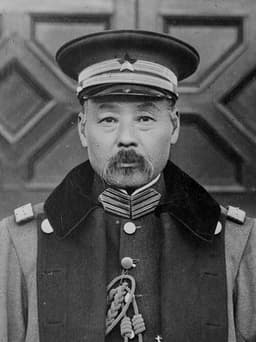
Feng Guozhang
General · Modern
49.1Total
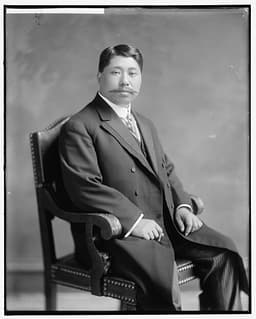
Huang Xing
General · Modern
57.5Total
Basic Information
Born
1859
1874
Died
1919
1916
Era
Modern
Modern
Nationality
China
China
Occupation
General
General
Civilization
Eastern
Eastern
Score Comparison
Military (10%)
30.0
46.7
Political (20%)
61.3
53.8
Influence (20%)
54.9
62.0
Legacy (20%)
45.8
56.0
Leadership (15%)
40.0
62.0
Strategy (15%)
57.5
60.0
TOTAL
49.1
57.5
Feng Guozhang — Complete Timeline
1912 AD
Command of the Beiyang ArmyPolitical Action◆ Major
Feng Guozhang became a key commander of the Beiyang Army under Yuan Shikai. He controlled military forces in the Zhili region, establishing himself as a major warlord in northern China after the fall of the Qing dynasty.
Beiyang ArmyWarlordMilitary Command
Impact: national
1916 AD
Appointment as Vice PresidentPolitical Action◆ Major
Feng Guozhang was elected Vice President of the Republic of China under President Li Yuanhong. This position gave him significant political influence during the early Republican period.
Republic of ChinaGovernmentPolitics
Impact: national
1917 AD
Acting PresidencyPolitical Action◆ Major
Feng Guozhang became Acting President of the Republic of China after Li Yuanhong's resignation. He served from 1917 to 1918, facing challenges from rival warlords and struggling to maintain central authority.
Republic of ChinaPresidencyWarlord Era
Impact: national
1918 AD
Conflict with Duan QiruiPolitical Action◆ Major
Feng Guozhang engaged in a power struggle with Premier Duan Qirui, leading to the split of the Beiyang clique into the Zhili and Anhui factions. This conflict weakened the central government and intensified warlord warfare.
Beiyang CliquePower StruggleWarlord Era
Impact: nationaldestructive
Huang Xing — Complete Timeline
1905 AD
Co-founded the TongmenghuiPolitical Action◆ Major
Huang Xing co-founded the Tongmenghui (Revolutionary Alliance) in Tokyo with Sun Yat-sen. He became its military leader, organizing armed uprisings against the Qing dynasty.
TongmenghuiRevolutionMilitary
Impact: nationalconstructive
1911 AD
Led the Wuchang UprisingWar
Huang Xing led the Wuchang Uprising, which sparked the Xinhai Revolution. He commanded revolutionary forces against Qing troops, securing initial victories that led to the dynasty's collapse.
Xinhai RevolutionUprisingMilitary
Impact: nationalconstructive
1912 AD
Served as Minister of War in the RepublicPolitical Action◆ Major
Huang Xing served as Minister of War in the provisional government of the Republic of China. He worked to organize a national army and defend the republic against counter-revolutionary forces.
GovernmentMilitaryRepublic
Impact: nationalconstructive
1913 AD
Led the Second Revolution Against Yuan ShikaiWar◆ Major
Huang Xing led the Second Revolution, an armed uprising against President Yuan Shikai's authoritarian rule. The rebellion failed due to lack of coordination and military inferiority, forcing Huang into exile.
Second RevolutionYuan ShikaiExile
Impact: nationaltragic
1916 AD
Died in Exile in ShanghaiPolitical Action
Huang Xing died in Shanghai after returning from exile in Japan and the United States. His death marked the loss of a key military leader of the Chinese revolution, though his legacy endured.
DeathExileRevolution
Impact: nationaltragic
Expert Analysis
Huang Xing vs Feng Guozhang
# The Warlord and the Revolutionary
On a sweltering July morning in 1917, Feng Guozhang stepped into the presidential palace in Beijing, a man who had never sought the highest office but now found himself occupying it. Half a continent away, in a modest Shanghai apartment, Huang Xing lay dying at forty-two, his revolutionary dreams crumbling around him. Two men, both generals, both Chinese, both shaped by the same collapsing empire—yet their paths could not have diverged more dramatically. One would become a symbol of warlord pragmatism, the other a martyr to republican ideals. Why did one die in power and the other in exile?
Origins
Feng Guozhang was born in 1859, a child of the old order. His family belonged to the scholar-gentry class in Hebei province, and young Feng was raised on Confucian classics and the expectation of civil service. But the Taiping Rebellion had ravaged China, and the Qing dynasty was gasping its last breaths. Feng chose a different path: he entered the newly modernized Beiyang Military Academy, where discipline replaced poetry and strategy replaced philosophy. By the time he graduated, he understood that China’s future belonged to men who could command armies, not compose verses.
Huang Xing arrived fifteen years later, in 1874, born into a scholarly family in Hunan. Unlike Feng, Huang grew up in the aftermath of China’s humiliation in the Sino-Japanese War of 1894–95. He saw his nation carved up by foreign powers, and the old Confucian order seemed not just obsolete but treacherous. While Feng learned to serve the system, Huang learned to hate it. He traveled to Japan, where he absorbed radical ideas about revolution, democracy, and national salvation. Where Feng saw a ladder to climb, Huang saw a prison to demolish.
Rise to Power
Feng’s ascent was methodical, almost bureaucratic. He rose through the ranks of the Beiyang Army under Yuan Shikai, the strongman who held China together after the 1911 revolution. In 1912, when Yuan became president, Feng was rewarded with command of key military forces in Zhili province. He was not a battlefield genius—his military score of 62.6 reflects competence rather than brilliance—but he was loyal, reliable, and politically astute. When Yuan died in 1916, Feng was elected Vice President under Li Yuanhong, and by 1917 he was Acting President, a position he held until 1918.
Huang Xing’s rise was explosive and dangerous. In 1905, he co-founded the Tongmenghui (Revolutionary Alliance) with Sun Yat-sen in Tokyo, becoming the movement’s military commander. His leadership score of 75.5 outshone Feng’s in purely martial terms. In October 1911, he led the Wuchang Uprising, the spark that ignited the Xinhai Revolution. For a few breathless weeks, Huang commanded revolutionary forces against Qing troops, and when the dynasty fell, he became Minister of War in the new provisional government. But his victory was fragile: Yuan Shikai, not Huang, became president, and the revolution began to curdle.
Leadership & Governance
Feng Guozhang governed as a pragmatist, not an idealist. As president, he faced a fractured China: the Beiyang Army was splitting into cliques, regional warlords were asserting autonomy, and Premier Duan Qirui openly challenged his authority. Feng’s political score of 81.7 reflects his skill in navigating these treacherous waters. He tried to balance factions, negotiate compromises, and hold the center together. But in 1918, his conflict with Duan Qirui became open war—not of bullets, but of patronage and power. The Beiyang clique split into the Zhili and Anhui factions, and Feng found himself outmaneuvered. He resigned, his presidency a brief interlude between stronger men.
Huang Xing’s governance was more ambitious and more catastrophic. As Minister of War in 1912, he tried to build a national army loyal to the republic, not to any warlord. But Yuan Shikai’s authoritarianism crushed these efforts. In 1913, Huang led the Second Revolution, an armed uprising against Yuan. It failed miserably. Huang’s strategy score of 57.6 suggests he was a better revolutionary than tactician; he could inspire men to fight but not to win. He fled into exile in Japan and the United States, his dream of a democratic China slipping away.
Triumph & Tragedy
Feng’s greatest moment was also his most hollow: becoming Acting President in 1917. He had reached the pinnacle of Chinese politics, but the pinnacle was made of sand. His tragedy was that he held power without the will or vision to use it for lasting change. He was a caretaker in an era that demanded revolutionaries.
Huang Xing’s triumph was the Wuchang Uprising of 1911, which toppled a dynasty that had ruled for 268 years. But his tragedy was that he could not consolidate what he had won. He died in 1916 in Shanghai, returning from exile only to succumb to illness. His death at forty-two, like his life, was premature—a revolution that never reached its destination.
Character & Destiny
Feng Guozhang was cautious, calculating, and comfortable with compromise. His total leadership score of 87.3 suggests a man who could command loyalty through patience rather than passion. He believed in order above all, and this made him a servant of the system rather than its master. Destiny gave him power but not purpose.
Huang Xing was passionate, principled, and impatient. His influence score of 70.6 and legacy score of 66.6 show a man who inspired devotion but also made enemies. He believed in justice above all, and this made him a martyr rather than a ruler. Destiny gave him purpose but not power.
Legacy
Feng Guozhang is remembered, if at all, as a footnote in the warlord era—a man who tried to hold together what was already broken. His legacy score of 64.4 reflects this ambiguity: not a villain, not a hero, just a general who happened to become president.
Huang Xing is remembered as a co-founder of the Chinese republic, alongside Sun Yat-sen. His legacy score of 66.6 is slightly higher, but more importantly, he symbolizes the revolutionary spirit that would eventually triumph. Mao Zedong would later call the Xinhai Revolution a "bourgeois" failure, but Huang Xing’s sacrifice was not forgotten. He died believing in a China that did not yet exist.
Conclusion
Standing at the crossroads of history, Feng Guozhang and Huang Xing represent two faces of modern China: the pragmatist who seeks to manage decay, and the idealist who tries to build anew. One died in office, the other in exile; one is barely remembered, the other is honored. But perhaps the truest measure of a life is not where it ends, but what it leaves behind. Feng held power; Huang held a dream. In the long arc of history, dreams outlast power, and the man who dies for tomorrow may yet live longer than the man who ruled today.
Rankings
🥇
Huang XingLeader
Mil: 46.7Pol: 53.8Inf: 62.0
57.5
🥈
Feng Guozhang
Mil: 30.0Pol: 61.3Inf: 54.9
49.1
+8.4 behind
How This Comparison Works
Algorithm
Each figure is scored on 6 dimensions (0—100 scale) based on structured historical data: Military (10%), Political (20%), Influence (20%), Legacy (20%), Leadership (15%), Strategy (15%). The weighted total produces the final ranking.
Data Sources
Scores are computed from structured sub-indicators in the database. Scale factors adjust for era (Ancient ×0.85, Modern ×1.0) and civilization size (Eastern ×1.05, Other ×0.80) to account for differences in population and military scale.
Maximum 3 Figures
Comparisons are limited to 2—3 figures to ensure readability and statistical meaningfulness.
Error Margins
±5 points per dimension — Sub-scores are derived from historical records with inherent uncertainty. Two figures within 5 points on a dimension should be considered roughly equivalent in that area.
Total Score Accuracy
±3 points overall — The weighted combination of 6 dimensions produces a total score with approximately ±3 points of uncertainty. Differences of less than 3 points are not statistically significant— the figures are effectively tied.
Known Limitations
- Historical records are incomplete and uneven across civilizations
- Figures from oral-tradition societies may be underrepresented
- Occupation labels can misclassify multi-role figures
- Scores measure capability and impact, not moral character
- Quantitative scoring is a comparison tool, not absolute truth
Capability Radar
Military (10%) — Battles & Warfare
Battles
45
35
Win Rate
40
30
Expansion
35
20
Political (20%) — Governance & Reform
Reform
30
60
Diplomacy
45
55
Economy
25
30
Influence (20%) — Cultural & Global Reach
Cultural
30
40
Global
20
40
Legacy (20%) — Historical Impact
Historical
40
55
Longevity
25
45
Leadership (15%) — Power & Stability
Tenure
55
40
Stability
20
25
Strategy (15%) — Tactics & Innovation
Strategy
55
45
Tactics
50
40
Reform
40
50
Similar Comparisons
Comments & Discussion
Trench-and-Treatise6/16/2026
Feng Guozhang’s Beiyiang training made him a master of positional warfare—Huang Xing’s Second Revolution was a tactical disaster. At Nanking in 1913, Huang abandoned the city without a fight, leaving his poorly supplied troops to scatter. That’s not a martyr, that’s a commander who couldn’t hold ground. Feng, by contrast, held Jiangsu for years by rotating troops and stockpiling rifles. Armies need logistics, not speeches.
数字拆解者6/16/2026
说黄兴是“烈士”?他1913年丢掉南京时只撤出三千人,而冯国璋接收了光步枪就两万支。数据不撒谎:黄兴的二次革命坚持了两个月,冯国璋当总统撑了整整十八个月——不是因为他们谁更崇高,而是因为冯有北洋二十六镇的真金白银,黄只有湖南老乡的空头支票。统计上,权力靠现金流,不是理想。|
Herodotus-Hustler6/16/2026
Let’s be honest: this comparison is Confucian theatrics. Feng was a Qing loyalist playing republic dress-up—he never even abolished the imperial examination system, just aged out of it. Huang at least tried to smash the civil service hierarchy with Sun Yat-sen. Feng’s real legacy is the dysfunctional provincial army cliques that balkanized China into the 1920s. Huang died poor, yes, but his Hunan revolutionaries later birthed the Kuomintang military. Feng’s “success” was just slower decay.
孤证狙击手6/16/2026
“冯国璋没追求权力”?他1917年当总统时,直接解散了国会——这叫不追求?黄兴至少写出《军务手册》十八条,冯国璋能拿出的文件只有袁世凯封的“宣武上将军”委任状。历史课本总把北洋系写成务实者,但务实就是见风使舵:冯一个月内两次通电站队,从拥袁到反袁。忠诚是零,投机是满。|
Peacekeeper-Peddler6/16/2026
You’re both missing the real contrast: Huang Xing’s internationalism vs. Feng’s isolationism. Huang studied Japanese military tactics in Tokyo, recruited Japanese advisors, and even tried to buy arms from American dealers in 1912. Feng kept China small—his “Federalism” was just a euphemism for letting provinces arm themselves alone. One wanted to plug China into global republicanism; the other wanted to wall it in with warlord fences. Who actually understood modernity? The man in Shanghai exile.