Loading...
Feng Guozhang vs Hideki Tojo
Hideki Tojo leads by 4.8 pts · 2 figures compared
…
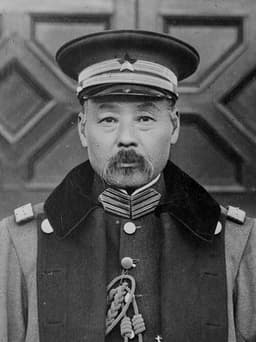
Feng Guozhang
General · Modern
49.1Total
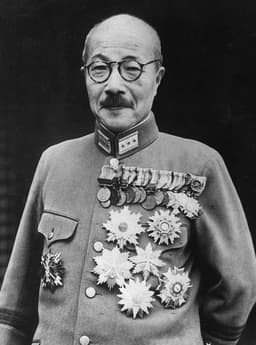
Hideki Tojo
General · Modern
53.9Total
Basic Information
Born
1859
1884
Died
1919
1948
Era
Modern
Modern
Nationality
China
Japan
Occupation
General
General
Civilization
Eastern
Eastern
Score Comparison
Military (10%)
30.0
70.0
Political (20%)
61.3
48.0
Influence (20%)
54.9
55.0
Legacy (20%)
45.8
50.0
Leadership (15%)
40.0
53.2
Strategy (15%)
57.5
55.0
TOTAL
49.1
53.9
Feng Guozhang — Complete Timeline
1912 AD
Command of the Beiyang ArmyPolitical Action◆ Major
Feng Guozhang became a key commander of the Beiyang Army under Yuan Shikai. He controlled military forces in the Zhili region, establishing himself as a major warlord in northern China after the fall of the Qing dynasty.
Beiyang ArmyWarlordMilitary Command
Impact: national
1916 AD
Appointment as Vice PresidentPolitical Action◆ Major
Feng Guozhang was elected Vice President of the Republic of China under President Li Yuanhong. This position gave him significant political influence during the early Republican period.
Republic of ChinaGovernmentPolitics
Impact: national
1917 AD
Acting PresidencyPolitical Action◆ Major
Feng Guozhang became Acting President of the Republic of China after Li Yuanhong's resignation. He served from 1917 to 1918, facing challenges from rival warlords and struggling to maintain central authority.
Republic of ChinaPresidencyWarlord Era
Impact: national
1918 AD
Conflict with Duan QiruiPolitical Action◆ Major
Feng Guozhang engaged in a power struggle with Premier Duan Qirui, leading to the split of the Beiyang clique into the Zhili and Anhui factions. This conflict weakened the central government and intensified warlord warfare.
Beiyang CliquePower StruggleWarlord Era
Impact: nationaldestructive
Hideki Tojo — Complete Timeline
1941 AD
Attack on Pearl HarborWar
As Prime Minister, Hideki Tojo authorized the attack on the US naval base at Pearl Harbor, Hawaii. The surprise attack brought the United States into World War II. Tojo's decision was based on the belief that war with the US was inevitable due to resource embargoes and diplomatic failures.
World War IIPearl HarborUS-Japan War
Impact: globaldestructive
Appointment as Prime MinisterPolitical Action◆ Major
Hideki Tojo was appointed Prime Minister of Japan, replacing Fumimaro Konoe. He retained his position as Army Minister and later took on other portfolios, consolidating power. His appointment marked the ascendancy of the military faction in the Japanese government and the shift towards total war.
Prime MinisterMilitary GovernmentWorld War II
Impact: national
1942 AD
Fall of SingaporeWar◆ Major
Under Tojo's leadership, Japanese forces captured Singapore from the British in a swift campaign. The fall of Singapore was one of the worst British military defeats in history. It demonstrated Japanese military prowess and led to the occupation of a key strategic location in Southeast Asia.
World War IISingaporeJapanese Victory
Impact: global
1948 AD
Execution by the International Military Tribunal for the Far EastPolitical Action◆ Major
Hideki Tojo was found guilty of war crimes by the International Military Tribunal for the Far East and sentenced to death. He was executed by hanging on December 23, 1948. His trial and execution symbolized the Allied effort to hold Japanese leaders accountable for wartime atrocities.
War CrimesExecutionTokyo Trials
Impact: globaltragic
Expert Analysis
Hideki Tojo vs Feng Guozhang
# The General as Statesman: Two Paths to Power in a Fractured Asia
In December 1941, Hideki Tojo stood before the Japanese Diet and declared that the nation had entered a "holy war" to liberate Asia from Western domination. Half a world away and three decades earlier, Feng Guozhang sat in Beijing, watching the ancient imperial order crumble around him, uncertain whether the new republic he served would survive the year. One man led his nation to catastrophic defeat, the other presided over a fractured state that would soon spiral into warlord chaos. Both were generals who became political leaders in times of national crisis. Their divergent fates reveal much about the relationship between military power and political legitimacy in modern Asia.
Origins
Feng Guozhang was born in 1859, the twilight of the Qing Dynasty, into a world where Confucian scholarship still defined the path to advancement. He entered the military through the newly established Beiyang Army, an institution that blended traditional hierarchy with modern training. His rise came under Yuan Shikai, the man who would briefly declare himself emperor after the 1911 revolution. Feng belonged to the generation that witnessed China's humiliation by foreign powers and internal rebellion. His military education taught him that the army was not merely a fighting force but a political instrument—a lesson that would define his career.
Hideki Tojo came of age in a very different Japan. Born in 1884, he grew up during the Meiji Restoration, when Japan rapidly industrialized and built a modern military. His father was a samurai-turned-army officer, and young Tojo absorbed the values of absolute loyalty, sacrifice, and imperial reverence. The army was his life. He graduated from the Imperial Japanese Army Academy and later served as a military attaché in Germany, where he admired the Prussian model of militarism. By the 1930s, Tojo embodied the faction that believed Japan's survival depended on military expansion and unquestioning devotion to the emperor.
Rise to Power
Feng Guozhang's ascent was a study in bureaucratic maneuvering. In 1912, he commanded the Beiyang Army under Yuan Shikai, controlling forces in the Zhili region. When Yuan died in 1916, Feng became Vice President under Li Yuanhong. The following year, Li resigned amid political chaos, and Feng assumed the acting presidency of the Republic of China. His power, however, rested on shifting alliances with other warlords, not on popular mandate. He was a caretaker in a collapsing house.
Tojo's rise was more direct. He became Prime Minister in October 1941, replacing Fumimaro Konoe, who had hesitated to commit Japan fully to war. Tojo retained his position as Army Minister, consolidating military and political authority. He did not inherit power through negotiation; he seized it through institutional control. By late 1941, Japan's military had already occupied much of China, and Tojo's cabinet was dominated by generals who believed that diplomacy had failed. For Tojo, the question was not whether to expand the war, but when.
Leadership & Governance
Feng Guozhang governed through compromise and coalition. During his presidency from 1917 to 1918, he struggled to balance the demands of rival factions within the Beiyang clique, particularly Premier Duan Qirui, who controlled the Anhui faction. Feng's Zhili faction represented a more conservative, regionally focused approach. He attempted to mediate between northern warlords and southern revolutionaries, but his authority was limited by the very forces that kept him in power. His military score of 62.6 reflects a general who was competent but not brilliant; his political score of 81.7 shows a man who understood the art of negotiation but lacked the strength to enforce his will.
Tojo ruled through command and control. As Prime Minister, he centralized decision-making, purged dissent, and demanded total mobilization for war. His leadership score of 81.2 indicates a decisive, if rigid, commander. He personally authorized the attack on Pearl Harbor in December 1941, a gamble that he believed would cripple the United States and secure Japan's dominance. Under his direction, Japanese forces captured Singapore in February 1942, a stunning victory that humiliated the British Empire. Yet Tojo's governance was brittle. He could not manage the long-term logistics of a multi-front war, nor could he adapt to the industrial might of the United States. His military strategy was aggressive but inflexible.
Triumph & Tragedy
Feng Guozhang's greatest moment was also his most tragic. He assumed the presidency at a time when the Republic of China was already dissolving into warlord rule. He managed to hold the center for eighteen months, preventing an immediate collapse. But his conflict with Duan Qirui in 1918 split the Beiyang clique permanently, leading to the formation of the Zhili and Anhui factions. His legacy score of 64.4 reflects a leader who could not unite his country. He died in 1919, a year after leaving office, watching the republic he served disintegrate into chaos.
Tojo's triumph was the fall of Singapore, the largest British surrender in history. It seemed to validate his belief in Japanese invincibility. His tragedy was everything that followed. By 1944, Japan was losing on all fronts. Tojo resigned in July 1944 after the fall of Saipan, and in 1948, he was executed by the International Military Tribunal for the Far East. He left behind a devastated nation, an occupied capital, and a legacy stained by war crimes.
Character & Destiny
Feng Guozhang was a pragmatist in an age of ideology. He believed in order, not revolution. His military score of 62.6 and strategy score of 72.0 suggest a competent but cautious commander who preferred negotiation to battle. His personality—conservative, diplomatic, and indecisive—shaped a presidency that preserved stability at the cost of progress. He was a man of his time, unable to imagine a China beyond warlord politics.
Tojo was a fanatic in an age of extremes. He believed in destiny, not compromise. His strategy score of 72.0 matches Feng's, but his leadership score of 81.2 reveals a man who acted decisively on flawed assumptions. Tojo's personality—rigid, authoritarian, and self-righteous—led him to pursue war without understanding its costs. He was a product of militarist Japan, a system that valued loyalty over wisdom.
Legacy
Feng Guozhang is remembered, if at all, as a footnote in China's chaotic transition from empire to republic. His influence score of 73.9 is respectable, but his legacy score of 64.4 reflects a leader who failed to shape the future. He was a caretaker, not a founder.
Tojo's legacy is far darker but far more significant. His influence score of 68.8 and legacy score of 68.3 place him as a pivotal figure in modern history—a symbol of militarism's catastrophic failure. He is remembered not for his victories, but for the destruction he unleashed.
Conclusion
Two generals, two nations, two eras. Feng Guozhang tried to hold together a republic that was already dissolving; Hideki Tojo tried to build an empire that was already overreaching. Neither succeeded. Feng failed because he could not command the loyalty he needed; Tojo failed because he demanded the loyalty he did not deserve. Their stories remind us that military power, without political wisdom, leads only to ruin—whether that ruin comes slowly, through the erosion of a republic, or swiftly, through the fire of a world war.
Rankings
🥇
Hideki TojoLeader
Mil: 70.0Pol: 48.0Inf: 55.0
53.9
🥈
Feng Guozhang
Mil: 30.0Pol: 61.3Inf: 54.9
49.1
+4.8 behind
How This Comparison Works
Algorithm
Each figure is scored on 6 dimensions (0—100 scale) based on structured historical data: Military (10%), Political (20%), Influence (20%), Legacy (20%), Leadership (15%), Strategy (15%). The weighted total produces the final ranking.
Data Sources
Scores are computed from structured sub-indicators in the database. Scale factors adjust for era (Ancient ×0.85, Modern ×1.0) and civilization size (Eastern ×1.05, Other ×0.80) to account for differences in population and military scale.
Maximum 3 Figures
Comparisons are limited to 2—3 figures to ensure readability and statistical meaningfulness.
Error Margins
±5 points per dimension — Sub-scores are derived from historical records with inherent uncertainty. Two figures within 5 points on a dimension should be considered roughly equivalent in that area.
Total Score Accuracy
±3 points overall — The weighted combination of 6 dimensions produces a total score with approximately ±3 points of uncertainty. Differences of less than 3 points are not statistically significant— the figures are effectively tied.
Known Limitations
- Historical records are incomplete and uneven across civilizations
- Figures from oral-tradition societies may be underrepresented
- Occupation labels can misclassify multi-role figures
- Scores measure capability and impact, not moral character
- Quantitative scoring is a comparison tool, not absolute truth
Capability Radar
Military (10%) — Battles & Warfare
Battles
45
65
Win Rate
40
40
Expansion
35
70
Political (20%) — Governance & Reform
Reform
30
30
Diplomacy
45
35
Economy
25
25
Influence (20%) — Cultural & Global Reach
Cultural
30
30
Global
20
55
Legacy (20%) — Historical Impact
Historical
40
55
Longevity
25
40
Leadership (15%) — Power & Stability
Tenure
55
60
Stability
20
20
Strategy (15%) — Tactics & Innovation
Strategy
55
50
Tactics
50
55
Reform
40
45
Similar Comparisons
Comments & Discussion
THE SAMURAI SURGEON6/16/2026
Comparing Tojo to Feng is like contrasting a gangrenous leg with a rusty bayonet. Tojo wasn't just a general; he was a bureaucratic butcher who micromanaged the Imperial Army into logistical ruin. The "holy war" was a fantasy—he knew Japan lacked the oil and steel for a prolonged conflict, yet he backed the Pearl Harbor gamble anyway. Feng, at least, understood power as a chess game, not a suicide charge. Tojo was a death cultist in a uniform.
武运终结者6/16/2026
说东条英机是“战略家”,简直侮辱了战略这个词。他主导的“一号作战”确实打通了大陆交通线,但代价是什么?把本就紧张的兵力像撒豆子一样铺满中国战场,导致关东军成了空壳,最后被苏联一波推平。冯国璋至少知道“北洋三杰”不是靠蛮力混出来的,懂制衡。东条只会用“非国民”的帽子压人,这种暴发户心态注定完蛋。
THE KAISER'S GHOST6/16/2026
Forget the moralizing—compare their strategic depth. Feng Guozhang was trained by the Beiyang system under Yuan Shikai, which emphasized the military as a stabilizing force in a fractured state. Even as President, he tried to balance cliques, not ignite a crusade. Tojo, by contrast, was a product of the Imperial Way Faction—ideologues who thought bushido could substitute for logistics. One tried to hold the state together; the other blew it up for a dream. I know which bet I'd take.
北洋老算盘6/16/2026
别听那些吹“抗日英雄”的鬼话,冯国璋在民国初年就是个墙头草。他当总统时,为了保住直系地盘,偷偷和南方军阀勾搭,还克扣军饷中饱私囊。所谓“政治智慧”,不过是乱世投机。东条再蠢,至少敢背骂名为日本扩张撕破脸——虽然结果惨烈。冯国璋那种精明,最后换来了什么?北洋分裂,他成了历史小丑。选毒药还是酸水?都是死路。
THE SEPOY GENERAL6/16/2026
A key difference: their relationship with the military as an institution. Tojo rose through the Kempeitai and Kwantung Army—his power was rooted in repression and conspiracy (think the 1936 coup attempt). Feng was a product of the Beiyang Army's officer academy system, where professional meritocracy mattered. Tojo couldn't even control his own service branches; Feng, for all his flaws, commanded respect from the Beiyang clique. One was a political gangster; the other, a flawed but institutional