Loading...
Feng Guozhang vs Fuad Chehab
Fuad Chehab leads by 0.8 pts · 2 figures compared
…
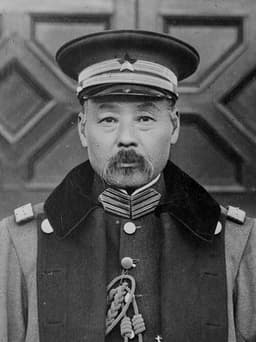
Feng Guozhang
General · Modern
49.1Total
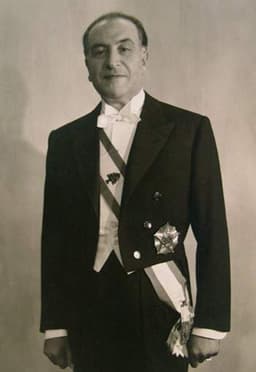
Fuad Chehab
General · Modern
49.9Total
Basic Information
Born
1859
1902
Died
1919
1973
Era
Modern
Modern
Nationality
China
Lebanon
Occupation
General
General
Civilization
Eastern
Middle Eastern
Score Comparison
Military (10%)
30.0
10.2
Political (20%)
61.3
70.0
Influence (20%)
54.9
54.1
Legacy (20%)
45.8
44.2
Leadership (15%)
40.0
72.0
Strategy (15%)
57.5
30.3
TOTAL
49.1
49.9
Feng Guozhang — Complete Timeline
1912 AD
Command of the Beiyang ArmyPolitical Action◆ Major
Feng Guozhang became a key commander of the Beiyang Army under Yuan Shikai. He controlled military forces in the Zhili region, establishing himself as a major warlord in northern China after the fall of the Qing dynasty.
Beiyang ArmyWarlordMilitary Command
Impact: national
1916 AD
Appointment as Vice PresidentPolitical Action◆ Major
Feng Guozhang was elected Vice President of the Republic of China under President Li Yuanhong. This position gave him significant political influence during the early Republican period.
Republic of ChinaGovernmentPolitics
Impact: national
1917 AD
Acting PresidencyPolitical Action◆ Major
Feng Guozhang became Acting President of the Republic of China after Li Yuanhong's resignation. He served from 1917 to 1918, facing challenges from rival warlords and struggling to maintain central authority.
Republic of ChinaPresidencyWarlord Era
Impact: national
1918 AD
Conflict with Duan QiruiPolitical Action◆ Major
Feng Guozhang engaged in a power struggle with Premier Duan Qirui, leading to the split of the Beiyang clique into the Zhili and Anhui factions. This conflict weakened the central government and intensified warlord warfare.
Beiyang CliquePower StruggleWarlord Era
Impact: nationaldestructive
Fuad Chehab — Complete Timeline
1958 AD
Launched Chehabist reforms and modernizationReform◆ Major
President Chehab implemented a series of reforms known as Chehabism, including administrative modernization, economic planning, and strengthening state institutions. He established the Central Bank of Lebanon and the Civil Service Board.
ReformModernizationState Building
Impact: nationalconstructive
Elected President of LebanonPolitical Action◆ Major
Fuad Chehab was elected President of Lebanon on September 23, 1958, succeeding Camille Chamoun. His election ended the 1958 crisis and was supported by both Christian and Muslim factions seeking stability.
PresidencyElectionStabilization
Impact: nationalconstructive
Created the Deuxième Bureau intelligence agencyPolitical Action
Chehab expanded the role of the Deuxi
IntelligenceSecurityAuthoritarianism
Impact: national
1960 AD
Presided over the 1960s economic boomOther
Under Chehab's presidency, Lebanon experienced a period of economic growth and stability, with Beirut becoming a major financial and tourism hub. His policies attracted foreign investment and expanded the middle class.
Economic GrowthBeirutProsperity
Impact: nationalconstructive
1964 AD
Refused to amend constitution for a second termPolitical Action
Chehab declined to seek a second term as president, respecting the constitutional limit. He retired from politics in 1964, setting a precedent for peaceful transitions of power in Lebanon.
ConstitutionTerm LimitRetirement
Impact: nationalconstructive
Expert Analysis
Fuad Chehab vs Feng Guozhang
### The General Who Would Be President: Feng Guozhang and Fuad Chehab
In the summer of 1918, the acting president of the Republic of China, Feng Guozhang, sat in his Beijing office, a man besieged. His own Beiyang Army was splitting apart, his premier, Duan Qirui, was openly defying him, and the fragile republic he nominally led was collapsing into warlord chaos. Four decades later, in September 1958, another general, Fuad Chehab, was elected president of Lebanon. He entered the presidential palace in Beirut not as a conqueror, but as a mediator, a man chosen to end a civil war and rebuild a nation. Both were generals thrust into politics; one presided over disintegration, the other over reconstruction. What explains the difference?
### Origins: The Son of the Qing and the Officer of the Mandate
Feng Guozhang was born in 1859, the twilight of the Qing Dynasty, into a world of Confucian hierarchies and imperial decay. He was a product of the old order, a scholar-official who pivoted to military modernization. His early career was forged in the Beiyang Army, the personal creation of the strongman Yuan Shikai. Feng learned that loyalty was owed to a man, not a nation; power came from the barrel of a gun, and politics was a brutal game of survival. The era of the Qing collapse and the early Republic was one of zero-sum conflict, where every alliance was temporary and every rival a future enemy.
Fuad Chehab, born in 1902, came of age in a different world: the French Mandate of Lebanon. He was a Maronite Christian from a prominent family, but his formative years were spent in the French military academy. He learned not just the art of war, but the art of administration. The French system, for all its colonial flaws, emphasized a professional, non-political officer corps. When Lebanon gained independence in 1943, Chehab saw the army not as a warlord’s private force, but as a national institution—the only truly neutral body in a country riven by sectarian divisions. His era was defined by the post-colonial struggle for nation-building, not imperial collapse.
### Rise to Power: The Warlord’s Ladder and the Nation’s Plea
Feng Guozhang’s rise was a classic warlord’s ascent. In 1912, he became a key commander of the Beiyang Army, a position of brute force. When Yuan Shikai died in 1916, the political vacuum was filled by military men. Feng was elected Vice President—a title that meant little without an army. In 1917, after President Li Yuanhong fled a coup, Feng became Acting President. He did not seize power in a glorious revolution; he inherited it in a moment of chaos, a placeholder for the real power brokers. His authority was a fiction, sustained only by the fragile balance of force among the Beiyang generals.
Chehab’s rise was the opposite. In 1958, Lebanon was in the grip of a sectarian civil war. President Camille Chamoun, a Christian, had tried to amend the constitution to stay in power, sparking a Muslim-led rebellion. The army, under Chehab, refused to take sides. It protected civilians, not politicians. When the crisis ended, Chehab was the only man both sides could trust. He was elected president on September 23, 1958, not as a conqueror, but as a referee. His power came not from his troops, but from his reputation for impartiality.
### Leadership & Governance: The Strongman’s Schism and the Reformer’s Vision
Feng Guozhang’s presidency was a slow-motion tragedy. He was a skilled politician—his political score of 81.7 reflects real acumen—but he governed in a system without rules. His leadership score of 87.3 suggests personal charisma, but it was wasted on a losing hand. In 1918, his conflict with Premier Duan Qirui led to the formal split of the Beiyang clique into the Zhili and Anhui factions. Feng’s “rule” was a constant negotiation with his own subordinates. He could not impose order; he could only try to survive. His reforms were nonexistent; the republic was a shell, and he was its ghost.
Chehab, by contrast, had a vision: Chehabism. He believed that Lebanon’s sectarian system could be stabilized only by a strong, neutral state. He launched administrative modernization, created the Deuxième Bureau intelligence agency to monitor extremists, and oversaw an economic boom in the 1960s that made Beirut the “Paris of the Middle East.” His leadership score of 75.4 is slightly lower than Feng’s, but it was far more effective. He did not command armies; he commanded institutions. He understood that in a divided society, the state must be the arbiter, not the combatant.
### Triumph & Tragedy: The Hollow Victory and the Unfinished Dream
Feng Guozhang’s greatest moment was also his most tragic. He became Acting President, the highest office in the land. But it was a poisoned chalice. His failure to unite the Beiyang clique or resist Duan Qirui led to the Warlord Era, a decade of chaos that killed millions. His legacy score of 64.4 is a testament to a man who was a symptom, not a cause, of China’s agony.
Chehab’s triumph was the 1958 election itself—a peaceful transition that ended a civil war. His tragedy was that his reforms were incomplete. He refused to amend the constitution for a second term in 1964, a principled act that preserved democracy but left his Chehabist project unfinished. The Deuxième Bureau he created would later become a tool of repression. His legacy score of 57.9 reflects a man who was respected but not transformative.
### Character & Destiny: The Pragmatist and the Idealist
Feng Guozhang was a pragmatist in a world that demanded ruthlessness. He tried to balance factions, but in the Warlord Era, balance was weakness. He was trapped by his own origins: a general of the old school, unable to imagine a nation beyond personal loyalty. His destiny was to be a footnote in China’s long march to unity under Chiang Kai-shek and Mao Zedong.
Chehab was an idealist in a world of cynics. He believed that a neutral army and a technocratic state could transcend sectarianism. He refused to seize power for himself, even when he could have. His destiny was to be remembered as the “father of modern Lebanon,” a man who tried to build a nation on a foundation of sand.
### Legacy: The Warlord and the Statesman
Feng Guozhang is remembered, if at all, as one of the many warlords who tore China apart. His name appears in history books as a cautionary tale: the general who became president but could not become a statesman. Chehab is remembered as a rare moment of hope in Lebanon’s tragic history. His image adorns stamps and streets, a symbol of what might have been.
The difference is not in their scores—both were capable men—but in their eras and their choices. Feng was a product of a dying empire, a man who played a game with no rules. Chehab was a product of a nascent nation, a man who tried to write the rules. One presided over collapse; the other tried to prevent it. History judges them not by their intentions, but by their outcomes.
### Conclusion: The General’s Dilemma
In the end, both men faced the same question: Can a general lead a democracy? Feng answered with force, and failed. Chehab answered with restraint, and failed in a different way. Their stories remind us that leadership is not just about power, but about the system in which power is exercised. Feng Guozhang and Fuad Chehab were both prisoners of their time, but one chose to be a warlord, and the other chose to be a statesman. The choice made all the difference.
Rankings
🥇
Fuad ChehabLeader
Mil: 10.2Pol: 70.0Inf: 54.1
49.9
🥈
Feng Guozhang
Mil: 30.0Pol: 61.3Inf: 54.9
49.1
+0.8 behind
How This Comparison Works
Algorithm
Each figure is scored on 6 dimensions (0—100 scale) based on structured historical data: Military (10%), Political (20%), Influence (20%), Legacy (20%), Leadership (15%), Strategy (15%). The weighted total produces the final ranking.
Data Sources
Scores are computed from structured sub-indicators in the database. Scale factors adjust for era (Ancient ×0.85, Modern ×1.0) and civilization size (Eastern ×1.05, Other ×0.80) to account for differences in population and military scale.
Maximum 3 Figures
Comparisons are limited to 2—3 figures to ensure readability and statistical meaningfulness.
Error Margins
±5 points per dimension — Sub-scores are derived from historical records with inherent uncertainty. Two figures within 5 points on a dimension should be considered roughly equivalent in that area.
Total Score Accuracy
±3 points overall — The weighted combination of 6 dimensions produces a total score with approximately ±3 points of uncertainty. Differences of less than 3 points are not statistically significant— the figures are effectively tied.
Known Limitations
- Historical records are incomplete and uneven across civilizations
- Figures from oral-tradition societies may be underrepresented
- Occupation labels can misclassify multi-role figures
- Scores measure capability and impact, not moral character
- Quantitative scoring is a comparison tool, not absolute truth
Capability Radar
Military (10%) — Battles & Warfare
Battles
45
5
Win Rate
40
5
Expansion
35
5
Political (20%) — Governance & Reform
Reform
30
65
Diplomacy
45
60
Economy
25
50
Influence (20%) — Cultural & Global Reach
Cultural
30
30
Global
20
25
Legacy (20%) — Historical Impact
Historical
40
35
Longevity
25
30
Leadership (15%) — Power & Stability
Tenure
55
55
Stability
20
45
Strategy (15%) — Tactics & Innovation
Strategy
55
10
Tactics
50
10
Reform
40
20
Similar Comparisons
Comments & Discussion
毛瑟枪与橄榄枝6/16/2026
冯国璋是典型的旧式军阀,效忠的不是国家而是个人。他1917年代理总统时,北洋军早已分裂,段祺瑞的皖系和冯的直系明争暗斗。这不是偶然——他的权力根基是袁世凯留下的私人军队,而非民国制度。相比之下,谢赫1958年上台时,黎巴嫩刚经历内战,他选择不依赖军队镇压,而是建立调解机制。一个将军若只会用枪杆子统治,必然走向分裂。冯国璋的历史证明,旧军阀无法转型为现代政治家。
Phoenix From Ashes6/16/2026
Chehab's approach was a masterclass in military statesmanship. When he took office in 1958, Lebanon was literally burning—the 1958 crisis had seen U.S. Marines land on Beirut beaches. Yet Chehab didn't double down on martial law. Instead, he pioneered the "Chehabist" doctrine: using the military as a nation-building tool. His Deuxième Bureau intelligence agency became the backbone of state authority, but he balanced it with social reforms like the Social Security Law of 1963. Feng Guozhang? He c
北疆刀客6/16/2026
数据上更值得玩味:冯国璋掌权时,北洋政府实际控制区域不足三分之一的民国领土,各省督军各行其是。而谢赫执政的1958-1964年,黎巴嫩虽小,但中央政府税收增长了40%,行政效率显著提升。这不是偶然——冯国璋的“总统”头衔是空壳,背后是直系与皖系的零和博弈;谢赫却巧妙利用了黎巴嫩的多教派结构,将总统权力从虚位转变为仲裁者。历史的数据告诉我们:一个将军能否治国,取决于他是强化制度还是强化个人私兵。
Classics Scholar6/16/2026
The comparison reveals a deeper truth about military-civilian transitions. Feng Guozhang was trapped by history—he learned statecraft from Yuan Shikai's tutelage, which was essentially Machiavellian prince-craft without the republican virtues. Chehab, by contrast, was a product of the French École Supérieure de Guerre, where Clausewitz's dictum that "war is politics by other means" was inverted: he used political means to avoid war. Feng commanded loyalty through patronage; Chehab through consti
城头变幻大王旗6/16/2026
别被表面相似性骗了!冯国璋1918年下台时,中国军阀混战死了数百万人;谢赫卸任后,黎巴