Loading...
Feng Fengshi vs Sun Tzu
Sun Tzu leads by 19.4 pts · 2 figures compared
…

Feng Fengshi
General · Ancient
41.4Total
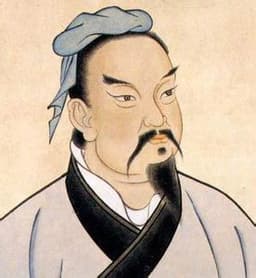
Sun Tzu
General · Ancient
60.8Total
Basic Information
Born
-100
-544
Died
-40
-496
Era
Ancient
Ancient
Nationality
China
China
Occupation
General
General
Civilization
Eastern
Eastern
Score Comparison
Military (10%)
47.5
50.0
Political (20%)
35.0
35.0
Influence (20%)
46.3
85.0
Legacy (20%)
37.5
65.0
Leadership (15%)
40.9
30.0
Strategy (15%)
43.3
85.0
TOTAL
41.4
60.8
Feng Fengshi — Complete Timeline
60 BC
Appointment as Protector General of the Western RegionsPolitical Action◆ Major
Feng Fengshi was appointed as the first Protector General of the Western Regions (Xiyu Duhu). This position was established to oversee Han interests in the Tarim Basin and maintain control over the city-states.
Western RegionsDiplomacyHan Empire
Impact: regionalconstructive
59 BC
Stabilization of the Western RegionsPolitical Action◆ Major
Feng Fengshi successfully negotiated with the city-states of the Western Regions, securing their allegiance to the Han Empire. He established a system of alliances and military garrisons that maintained peace and facilitated trade along the Silk Road.
Western RegionsDiplomacySilk Road
Impact: regionalconstructive
57 BC
Campaign Against the Xiongnu in the Western RegionsWar◆ Major
Feng Fengshi led Han forces against Xiongnu incursions into the Western Regions. He defeated the Xiongnu forces and expelled them from the region, securing Han dominance over the Silk Road trade routes.
Han-Xiongnu WarWestern RegionsMilitary Campaign
Impact: regional
Sun Tzu — Complete Timeline
512 BC
Service as General for King Helü of WuWar◆ Major
Sun Tzu served as a general under King Hel
GeneralWuWar
Impact: regional
506 BC
Battle of BojuWar◆ Major
Sun Tzu is traditionally credited with contributing to the Wu victory at the Battle of Boju, where Wu forces defeated the larger Chu army. The battle demonstrated the application of strategic principles from The Art of War.
BattleWuChu
Impact: regional
500 BC
Composition of The Art of WarCultural
Sun Tzu authored The Art of War, a treatise on military strategy and tactics. The text covers planning, deception, terrain, and leadership, and has been studied for centuries in both military and civilian contexts worldwide.
Military StrategyClassicPhilosophy
Impact: globalconstructive
Expert Analysis
Origins
Feng Fengshi (dates unknown, active 1st century BCE) was a Han dynasty general who rose from relative obscurity. His early life is poorly documented, but he likely came from a military family and gained experience in frontier campaigns. He was appointed as the first Protector General of the Western Regions (Xiyu Duhu) around 59 BCE, a position created to manage Han interests in Central Asia. His background was practical, focused on diplomacy and military command in the complex environment of the Silk Road city-states.
Sun Tzu (c. 544–496 BCE) is traditionally said to have been born in the state of Qi during the Spring and Autumn period. His family was of minor nobility, and he received education in military and statecraft. He later served King Helü of Wu as a general and strategist. Sun Tzu's origins are shrouded in legend, with accounts of his life coming from later sources like Sima Qian's Records of the Grand Historian. He is best known for authoring *The Art of War*, a text that emerged from his experience and study of warfare.
Rise to Power
Feng Fengshi's rise came through his appointment as Protector General of the Western Regions, a role that combined military command with diplomatic authority. This position was established after the Han dynasty's expansion under Emperor Xuan. Feng Fengshi successfully negotiated with dozens of city-states, securing their allegiance and establishing a system of tribute and protection. His ability to manage both Han forces and local allies was key to his rise. He led campaigns against the Xiongnu, defeating their incursions and expelling them from the region, which solidified his reputation.
Sun Tzu's rise is tied to his literary and strategic work. According to tradition, he presented *The Art of War* to King Helü, who then appointed him as a general. Sun Tzu's military successes, including the Battle of Boju (c. 506 BCE), where Wu forces defeated the larger Chu army, demonstrated his strategic acumen. His rise was not through bureaucratic appointment but through personal influence and the power of his ideas. The exact historicity of his generalship is debated, but his legacy as a strategist is undeniable.
Leadership & Governance
Feng Fengshi's leadership was characterized by pragmatic diplomacy and military restraint. He focused on building alliances with local rulers, offering protection in exchange for loyalty. He established a system of governance that allowed the Western Regions to maintain autonomy while recognizing Han suzerainty. His governance was effective but limited to a specific region and period. He scored 40.9 in leadership, reflecting his competent but not transformative command.
Sun Tzu's leadership, as described in *The Art of War*, emphasizes strategic planning, deception, and the importance of knowing oneself and the enemy. He advocated for minimal conflict, winning without fighting when possible. His leadership score of 30.0 is lower, partly because his ideas were more theoretical than applied. However, his influence on leadership concepts across cultures is immense. Sun Tzu's governance approach was indirect, shaping how leaders think about conflict rather than ruling directly.
Triumph & Tragedy
Feng Fengshi's greatest triumph was stabilizing the Western Regions for the Han dynasty, securing trade routes and preventing Xiongnu domination. His system of protectorates lasted for decades. His tragedy is that his achievements were largely forgotten outside of specialist history. He scored 46.3 in influence and 37.5 in legacy, indicating a localized impact. His failure to leave a lasting personal mark contrasts with his success in the moment.
Sun Tzu's triumph is the enduring relevance of *The Art of War*, which has been studied for over two millennia. His strategic principles have been applied in military, business, and politics. His tragedy is the lack of verifiable historical details about his life; much of his biography is legendary. He scored 85.0 in strategy and 85.0 in influence, reflecting his profound impact. However, his military score of 50.0 is modest, as his direct battlefield successes are not well-documented.
Character & Destiny
Feng Fengshi was a capable administrator and commander, but his character remains shadowy due to scarce records. He likely possessed patience and diplomatic skill, necessary for managing diverse city-states. His destiny was tied to the Han empire's expansion, and he faded into obscurity as the dynasty declined. He scored 41.4 total, reflecting a competent but not exceptional figure.
Sun Tzu is portrayed as a wise and calculating strategist, with a personality focused on efficiency and victory. His decision-making patterns emphasize preparation and flexibility. His destiny was to become a symbol of strategic wisdom, with his name synonymous with military theory. He scored 60.8 total, significantly higher than Feng Fengshi.
Legacy
Feng Fengshi's legacy is limited to his role in Han history. He is remembered by scholars of the Western Regions but not by the general public. His system of protectorates influenced later Chinese policy in Central Asia, but his personal contribution is often overlooked. He scored 37.5 in legacy.
Sun Tzu's legacy is global and enduring. *The Art of War* is one of the most translated and studied texts on strategy. It has influenced military leaders from Napoleon to Mao, and its concepts are used in business and sports. Sun Tzu scored 65.0 in legacy, reflecting his lasting impact. His work remains a cornerstone of strategic thought.
Conclusion
Sun Tzu had greater impact than Feng Fengshi. While Feng Fengshi successfully stabilized a region for a dynasty, Sun Tzu's ideas transcended time and culture. The score gap of 19.4 points (Sun Tzu 60.8 vs Feng Fengshi 41.4) underlines this. Feng Fengshi's achievements were concrete but ephemeral; Sun Tzu's were abstract but eternal. In terms of influence, strategy, and legacy, Sun Tzu is superior. Feng Fengshi was a competent general; Sun Tzu was a foundational thinker.
Rankings
🥇
Sun TzuLeader
Mil: 50.0Pol: 35.0Inf: 85.0
60.8
🥈
Feng Fengshi
Mil: 47.5Pol: 35.0Inf: 46.3
41.4
+19.4 behind
How This Comparison Works
Algorithm
Each figure is scored on 6 dimensions (0—100 scale) based on structured historical data: Military (10%), Political (20%), Influence (20%), Legacy (20%), Leadership (15%), Strategy (15%). The weighted total produces the final ranking.
Data Sources
Scores are computed from structured sub-indicators in the database. Scale factors adjust for era (Ancient ×0.85, Modern ×1.0) and civilization size (Eastern ×1.05, Other ×0.80) to account for differences in population and military scale.
Maximum 3 Figures
Comparisons are limited to 2—3 figures to ensure readability and statistical meaningfulness.
Error Margins
±5 points per dimension — Sub-scores are derived from historical records with inherent uncertainty. Two figures within 5 points on a dimension should be considered roughly equivalent in that area.
Total Score Accuracy
±3 points overall — The weighted combination of 6 dimensions produces a total score with approximately ±3 points of uncertainty. Differences of less than 3 points are not statistically significant— the figures are effectively tied.
Known Limitations
- Historical records are incomplete and uneven across civilizations
- Figures from oral-tradition societies may be underrepresented
- Occupation labels can misclassify multi-role figures
- Scores measure capability and impact, not moral character
- Quantitative scoring is a comparison tool, not absolute truth
Capability Radar
Military (10%) — Battles & Warfare
Battles
35
30
Win Rate
40
40
Expansion
30
20
Political (20%) — Governance & Reform
Reform
10
10
Diplomacy
30
30
Economy
15
10
Influence (20%) — Cultural & Global Reach
Cultural
15
95
Global
10
95
Legacy (20%) — Historical Impact
Historical
20
98
Longevity
15
99
Leadership (15%) — Power & Stability
Tenure
25
20
Stability
25
10
Strategy (15%) — Tactics & Innovation
Strategy
35
98
Tactics
30
95
Reform
10
85
Similar Comparisons
Comments & Discussion
No comments yet. Be the first to share your thoughts!