Loading...
Enomoto Takeaki vs Sitiveni Rabuka
Sitiveni Rabuka leads by 0.1 pts · 2 figures compared
…
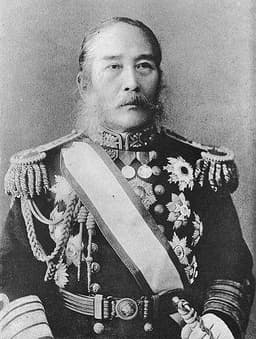
Enomoto Takeaki
General · Modern
51.6Total
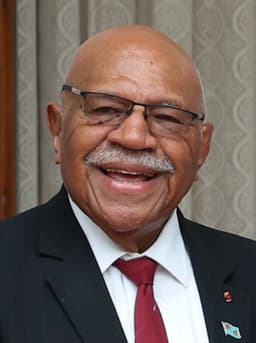
Sitiveni Rabuka
General · Modern
51.7Total
Basic Information
Born
1836
1948
Died
1908
—
Era
Modern
Modern
Nationality
Japan
Fiji
Occupation
General
General
Civilization
Eastern
Other
Score Comparison
Military (10%)
25.0
10.2
Political (20%)
54.7
60.0
Influence (20%)
54.1
53.3
Legacy (20%)
46.7
46.7
Leadership (15%)
68.0
85.0
Strategy (15%)
55.0
39.6
TOTAL
51.6
51.7
Enomoto Takeaki — Complete Timeline
1868 AD
Led the Shogunate Fleet to HokkaidoWar
Enomoto commanded the shogunate's remaining naval forces, including eight warships, and sailed to Hokkaido. This fleet formed the core of the Republic of Ezo's military and allowed the loyalists to establish a base.
Naval CommandBoshin WarShogunate Loyalist
Impact: regional
Founded the Republic of EzoPolitical Action
After the shogunate's defeat, Enomoto led loyalist forces to Hokkaido and established the Republic of Ezo, an independent state with a Western-style government. He was elected president and organized a defense against imperial forces.
Boshin WarSeparatist StateShogunate Loyalist
Impact: national
1869 AD
Surrendered at the Battle of HakodateWar◆ Major
Enomoto's forces were defeated by the imperial army at the Battle of Hakodate. He surrendered the Republic of Ezo and was taken prisoner, ending the last organized resistance to the Meiji Restoration.
Boshin WarDefeatEnd of Resistance
Impact: nationaltragic
1885 AD
Served as Minister of Foreign Affairs in the Meiji GovernmentPolitical Action◆ Major
After being pardoned, Enomoto served as Japan's Minister of Foreign Affairs. He negotiated treaties with Western powers and worked to revise the unequal treaties imposed on Japan, contributing to Japan's diplomatic modernization.
DiplomacyTreaty RevisionMeiji Government
Impact: nationalconstructive
Sitiveni Rabuka — Complete Timeline
1987 AD
1987 Fijian Coup d'étatPolitical Action
Rabuka, as a colonel in the Fijian military, led a coup overthrowing the elected government of Timoci Bavadra. The coup was motivated by ethnic Fijian opposition to Indo-Fijian political influence. Rabuka declared Fiji a republic.
CoupMilitary InterventionEthnic Tension
Impact: nationaldestructive
1992 AD
1992 Election as Prime MinisterPolitical Action◆ Major
Rabuka transitioned from military leader to civilian politician, winning the 1992 general election as leader of the Fijian Political Party. He became Prime Minister, serving until 1999.
ElectionCivilian GovernmentPolitical Transition
Impact: national
1997 AD
1997 Constitution ReformReform◆ Major
Rabuka's government oversaw the adoption of a new constitution that removed ethnic-based voting and provided for a multi-ethnic government. The constitution aimed to reduce ethnic tensions and promote national unity.
ConstitutionReformEthnic Reconciliation
Impact: nationalconstructive
1999 AD
1999 General Election DefeatPolitical Action◆ Major
Rabuka's government was defeated in the general election by the Labour Party led by Mahendra Chaudhry. Rabuka stepped down as Prime Minister, marking the end of his first period in power.
Election DefeatGovernment ChangeChaudhry
Impact: national
2022 AD
2022 Return as Prime MinisterPolitical Action◆ Major
Rabuka led the People's Alliance to victory in the 2022 general election, forming a coalition government. He became Prime Minister again, 23 years after his previous tenure, promising democratic reforms.
ElectionReturn to PowerCoalition Government
Impact: national
Expert Analysis
Sitiveni Rabuka vs Enomoto Takeaki
### The Rebel Who Returned: Enomoto Takeaki and Sitiveni Rabuka
In the winter of 1869, a defeated samurai admiral surrendered his sword on the frozen shores of Hokkaido, ending the last stand of Japan’s shogunate. A century and a half later, on a balmy Pacific island, a Methodist lay preacher who had once led a military coup stood before his nation’s parliament, raised his hand, and was sworn in as prime minister—for the second time. Enomoto Takeaki and Sitiveni Rabuka are two men who defied the arc of history by first breaking it, then rebuilding it. They began as enemies of the established order, committed acts that could have defined them as traitors, and yet ended their careers as statesmen. What drives a rebel to become a ruler, and what separates a fleeting insurrection from a lasting political transformation?
### Origins: Two Worlds, One Imperative
Enomoto Takeaki was born in 1836 into a world of rigid hierarchy. A samurai of the Tokugawa shogunate, he was trained in the martial arts and the Confucian classics, but the arrival of Commodore Perry’s black ships in 1853 had already cracked the foundations of his universe. Enomoto was sent to study Dutch naval science in Nagasaki, then to the Netherlands itself—a rare exposure to the West that made him a modernizer within a conservative system. His loyalty was not to Japan as an abstract nation, but to the shogun, the living embodiment of order.
Sitiveni Rabuka, born in 1948, entered a world in flux for different reasons. Fiji was a British colony, a mosaic of indigenous Fijians and Indo-Fijian descendants of indentured laborers. Rabuka grew up in a village on Vanua Levu, steeped in chiefly traditions and Methodist piety. He joined the military, rising through the ranks of a small, ethnically Fijian-dominated army. His loyalty was to the indigenous Fijian community, whose political dominance he saw as a sacred trust—one that an elected government, led by Indo-Fijians, seemed ready to break.
Both men were shaped by a crisis of legitimacy. For Enomoto, it was the collapse of the shogunate in the Meiji Restoration of 1868; for Rabuka, it was the electoral victory of Timoci Bavadra’s multiracial coalition in 1987. Each saw the old order—their order—as the only legitimate one, and each was willing to take up arms to defend it.
### Rise to Power: From Fleet to Coup
Enomoto’s path was that of a commander in retreat. After the shogun’s forces were crushed in the Boshin War, he refused to surrender. In 1868, he gathered eight warships and 2,000 loyalists and sailed north to Hokkaido, the last frontier. There, he founded the Republic of Ezo, a curious hybrid: a samurai-run state with a French-trained general, a democratic assembly, and an elected president—Enomoto himself. It was the first republic in Japanese history, born from desperation, not ideology.
Rabuka’s rise was swifter and more violent. On May 14, 1987, as a colonel, he led a squad of masked soldiers into Fiji’s parliament, arrested the prime minister, and declared martial law. The coup was bloodless, but its message was stark: the indigenous Fijian majority would not tolerate a government that, in Rabuka’s view, threatened their land rights and political supremacy. He justified the act as a “preemptive strike” against racial subjugation. Where Enomoto had fled to the wilderness, Rabuka seized the capital.
### Leadership & Governance: The Art of Adaptation
Enomoto’s Republic of Ezo lasted only eight months. In the spring of 1869, imperial forces landed on Hokkaido, and after the brutal Battle of Hakodate, Enomoto surrendered. He was imprisoned, but his life was spared. Remarkably, the new Meiji government saw his talent. After his pardon, Enomoto was given a role in the very regime he had fought. He became Minister of Foreign Affairs in 1885, negotiating treaties with Western powers, and later served as Minister of Education and Agriculture. His political score of 72.4 reflects this transformation from rebel to bureaucrat.
Rabuka’s trajectory was more dramatic. After the 1987 coup, he handed power to a civilian government, then took it back in a second coup when that government proved too conciliatory. In 1992, he won election as prime minister. His leadership score of 77.4 is a testament to his ability to hold together a fractured society. His greatest achievement was the 1997 Constitution, which removed ethnic-based voting and created a multiracial democracy. It was a stunning reversal: the man who had staged a coup to preserve ethnic supremacy now enshrined equality.
### Triumph & Tragedy: The Weight of Choice
Enomoto’s triumph was his survival and reintegration—a rare grace in a culture that demanded seppuku for failure. His tragedy was that his republic, the first of its kind in Asia, was crushed and forgotten. He left no monument to his rebellion, only a quiet career of service.
Rabuka’s triumph was the 1997 Constitution, a document that earned him international respect. His tragedy was the 1999 election, when his government was voted out, and his successor, Mahendra Chaudhry, was deposed in another coup—this time by a nationalist who made Rabuka look moderate. Rabuka spent two decades in the wilderness, a cautionary tale of how power can be won and lost. Then, in 2022, at age 74, he returned to lead a coalition government, a democratic phoenix.
### Character & Destiny: The Mirror of History
Enomoto was a pragmatist. He fought for a lost cause, then accepted the new world. His strategy score of 72.0 and military score of 28.1 reveal a man who was a better diplomat than a warrior. Rabuka, with a military score of 19.9 and strategy of 44.6, was similarly no great general. Both were politicians in uniform, men who used force as a lever, not a philosophy.
Their destinies diverged because of their societies. Enomoto’s Japan was modernizing under a centralizing emperor; there was no room for a separate republic. Rabuka’s Fiji was a fragile post-colonial state where ethnic tensions could be managed but never erased. Enomoto’s rebellion was absorbed; Rabuka’s was institutionalized.
### Legacy: The Rebel’s Paradox
Enomoto is remembered in Japan as a footnote—a loyal samurai who chose honor over wisdom, then wisdom over honor. His legacy score of 65.6 reflects a figure respected but not celebrated. Rabuka, with a legacy of 61.2, is more controversial. To some, he is a liberator of indigenous rights; to others, a coup leader who set back democracy. Yet his return in 2022 suggests a nation that has forgiven him, or at least accepted his transformation.
### Conclusion: The Long Arc
Both men began as enemies of democracy—one of the Meiji state, one of multiracial rule—and ended as its servants. Enomoto surrendered his sword; Rabuka surrendered his gun. Their stories remind us that history is not a straight line but a spiral, where rebels can become rulers, and rulers can become reformers. The question they leave us is not whether a rebel can change, but whether a nation can let them. In Japan, the answer was yes, but only after defeat. In Fiji, the answer is still being written—one election at a time.
Rankings
🥇
Sitiveni RabukaLeader
Mil: 10.2Pol: 60.0Inf: 53.3
51.7
🥈
Enomoto Takeaki
Mil: 25.0Pol: 54.7Inf: 54.1
51.6
+0.1 behind
How This Comparison Works
Algorithm
Each figure is scored on 6 dimensions (0—100 scale) based on structured historical data: Military (10%), Political (20%), Influence (20%), Legacy (20%), Leadership (15%), Strategy (15%). The weighted total produces the final ranking.
Data Sources
Scores are computed from structured sub-indicators in the database. Scale factors adjust for era (Ancient ×0.85, Modern ×1.0) and civilization size (Eastern ×1.05, Other ×0.80) to account for differences in population and military scale.
Maximum 3 Figures
Comparisons are limited to 2—3 figures to ensure readability and statistical meaningfulness.
Error Margins
±5 points per dimension — Sub-scores are derived from historical records with inherent uncertainty. Two figures within 5 points on a dimension should be considered roughly equivalent in that area.
Total Score Accuracy
±3 points overall — The weighted combination of 6 dimensions produces a total score with approximately ±3 points of uncertainty. Differences of less than 3 points are not statistically significant— the figures are effectively tied.
Known Limitations
- Historical records are incomplete and uneven across civilizations
- Figures from oral-tradition societies may be underrepresented
- Occupation labels can misclassify multi-role figures
- Scores measure capability and impact, not moral character
- Quantitative scoring is a comparison tool, not absolute truth
Capability Radar
Military (10%) — Battles & Warfare
Battles
40
5
Win Rate
35
5
Expansion
30
5
Political (20%) — Governance & Reform
Reform
30
50
Diplomacy
40
45
Economy
25
40
Influence (20%) — Cultural & Global Reach
Cultural
25
30
Global
20
20
Legacy (20%) — Historical Impact
Historical
40
40
Longevity
30
30
Leadership (15%) — Power & Stability
Tenure
35
55
Stability
20
35
Strategy (15%) — Tactics & Innovation
Strategy
50
10
Tactics
55
10
Reform
45
5
Similar Comparisons
Comments & Discussion
海舟后继6/16/2026
恩诺姆·塔克亚基的选择比拉布卡更痛苦——他在函馆投降时就知道自己会被视为叛徒,但为了日本统一,他咽下了所有屈辱。拉布卡2018年再任总理时,民众还欢呼他“民主转型”,可别忘了,1987年那场政变推翻的是民选政府,背后还有种族矛盾。塔克亚基从没这种虚假的光环,他输得堂堂正正,赢得低调务实。
Chronicler67246/16/2026
Rabuka pulled off what Takeaki couldn't: turned armed rebellion into democratic legitimacy without exile. Takeaki surrendered, became a bureaucrat—impressive, but he bowed to the Meiji order. Rabuka? He overthrew a government, then won an election years later. That's a genuine conversion from sword to ballot box, not just trading uniforms. History needs more men who prove rebellion can govern. The empire-builder kneels; the islander stands.