Loading...
Enomoto Takeaki vs Muhammadu Buhari
Enomoto Takeaki leads by 0.1 pts · 2 figures compared
…
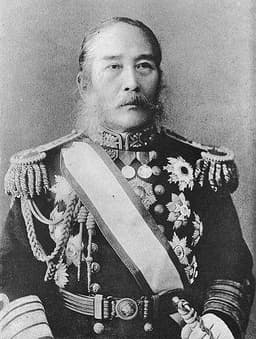
Enomoto Takeaki
General · Modern
51.6Total
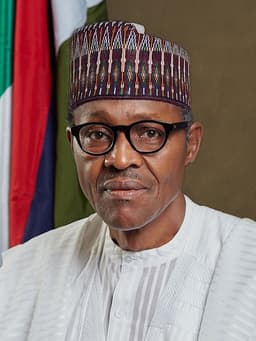
Muhammadu Buhari
General · Modern
51.5Total
Basic Information
Born
1836
1942
Died
1908
—
Era
Modern
Modern
Nationality
Japan
Nigeria
Occupation
General
General
Civilization
Eastern
Other
Score Comparison
Military (10%)
25.0
22.6
Political (20%)
54.7
68.0
Influence (20%)
54.1
53.3
Legacy (20%)
46.7
43.3
Leadership (15%)
68.0
72.0
Strategy (15%)
55.0
41.0
TOTAL
51.6
51.5
Enomoto Takeaki — Complete Timeline
1868 AD
Led the Shogunate Fleet to HokkaidoWar
Enomoto commanded the shogunate's remaining naval forces, including eight warships, and sailed to Hokkaido. This fleet formed the core of the Republic of Ezo's military and allowed the loyalists to establish a base.
Naval CommandBoshin WarShogunate Loyalist
Impact: regional
Founded the Republic of EzoPolitical Action
After the shogunate's defeat, Enomoto led loyalist forces to Hokkaido and established the Republic of Ezo, an independent state with a Western-style government. He was elected president and organized a defense against imperial forces.
Boshin WarSeparatist StateShogunate Loyalist
Impact: national
1869 AD
Surrendered at the Battle of HakodateWar◆ Major
Enomoto's forces were defeated by the imperial army at the Battle of Hakodate. He surrendered the Republic of Ezo and was taken prisoner, ending the last organized resistance to the Meiji Restoration.
Boshin WarDefeatEnd of Resistance
Impact: nationaltragic
1885 AD
Served as Minister of Foreign Affairs in the Meiji GovernmentPolitical Action◆ Major
After being pardoned, Enomoto served as Japan's Minister of Foreign Affairs. He negotiated treaties with Western powers and worked to revise the unequal treaties imposed on Japan, contributing to Japan's diplomatic modernization.
DiplomacyTreaty RevisionMeiji Government
Impact: nationalconstructive
Muhammadu Buhari — Complete Timeline
1983 AD
1983 Nigerian coup d'étatPolitical Action
Major General Muhammadu Buhari led a military coup that overthrew the civilian government of President Shehu Shagari. Buhari cited corruption and economic mismanagement as justifications, and he became the head of state.
CoupMilitary RuleCorruption
Impact: nationaldestructive
1984 AD
War Against Indiscipline (WAI)Reform◆ Major
Buhari launched the War Against Indiscipline, a campaign to enforce discipline and order in Nigerian society. It included harsh penalties for minor offenses, such as queue-jumping, and was criticized for human rights abuses.
DisciplineSocial PolicyHuman Rights
Impact: nationaldestructive
1985 AD
Overthrow by Ibrahim BabangidaPolitical Action◆ Major
Buhari was overthrown in a palace coup led by his Chief of Army Staff, Ibrahim Babangida. Babangida cited Buhari's authoritarian style and failure to address the economy as reasons for the coup.
CoupOverthrowBabangida
Impact: national
2015 AD
Anti-corruption campaignReform◆ Major
Buhari launched a high-profile anti-corruption campaign, targeting government officials and recovering stolen assets. The campaign was praised internationally but criticized for being selective and politically motivated.
Anti-CorruptionReformGovernance
Impact: nationalconstructive
Election as President of NigeriaPolitical Action
Buhari won the 2015 Nigerian presidential election, defeating incumbent Goodluck Jonathan. This was the first time an opposition candidate had defeated a sitting president in Nigeria's history, marking a democratic milestone.
ElectionDemocracyOpposition Victory
Impact: nationalprogressive
Expert Analysis
Muhammadu Buhari vs Enomoto Takeaki
### The General Who Changed Sides: Muhammadu Buhari and Enomoto Takeaki
On a sweltering December morning in 1983, Muhammadu Buhari, a stern-faced Major General with a mustache as rigid as his principles, stepped before Nigerian television cameras and announced that the civilian government of Shehu Shagari was no more. The coup was bloodless, the justification familiar: corruption had rotted the nation. Half a world away and more than a century earlier, in the spring of 1869, Enomoto Takeaki, a samurai admiral in the service of a dying shogunate, watched his last fortress on the northern island of Hokkaido crumble under imperial cannon fire. One man seized power to cleanse a nation; the other surrendered to join the very revolution he had fought. Both were generals, both were reformers, but their paths diverged like the currents of the Pacific and the Niger.
**Origins**
Buhari was born in 1942 in Daura, a dusty town in northern Nigeria, into a Fulani family steeped in the traditions of Islamic scholarship and military service. His world was one of colonial transition: Nigeria was still a British possession when he was a child, and the independence that came in 1960 was a promise of hope rather than a guarantee of order. The army offered a ladder for ambitious northerners, and Buhari climbed it methodically, training at elite institutions in India and the United Kingdom. His generation of officers saw themselves as saviors, not politicians—men who would rescue Nigeria from the chaos of civilian incompetence.
Enomoto Takeaki was born in 1836 in Edo, the shogun’s capital, into a samurai family of the Tokugawa clan. His Japan was a closed fortress, ruled by a military government that had kept the country isolated for two centuries. But the black ships of Commodore Perry had shattered that isolation in 1853, when Enomoto was seventeen. He was sent to study Dutch naval science in Nagasaki, then to the Netherlands itself—one of the first Japanese to see the industrial West firsthand. He returned with a modern mind and a feudal heart: he believed the shogunate could reform, not that it should be overthrown.
**Rise to Power**
Buhari’s rise came through a coup, but it was a coup with a pedigree. In 1983, Nigeria was staggering under the weight of oil-boom corruption and a collapsing economy. President Shagari’s government was widely seen as inept, and Buhari, as the head of the army, moved decisively. He was not a charismatic revolutionary; he was a disciplinarian with a plan. The coup was executed with military precision, and within hours, Buhari was the new head of state. His path to power was a straight line: the army gave him authority, and he intended to use it to impose order.
Enomoto’s rise was more tortuous, a story of loyalty to a lost cause. When the Meiji Restoration began in 1868, the shogunate collapsed in weeks. Enomoto refused to accept the new emperor’s rule. He gathered the shogun’s fleet—eight modern warships, including the ironclad *Kōtetsu*—and sailed north with several thousand loyalists. In Hokkaido, he founded the Republic of Ezo, a short-lived state that attempted to create a modern, Western-style government on Japanese soil. He was elected its president in 1868, a samurai leading a republic—a contradiction that only a desperate age could produce.
**Leadership & Governance**
Buhari’s leadership in his first term (1983–1985) was defined by the War Against Indiscipline, a campaign that sought to remake Nigerian society through sheer force of will. Citizens were forced to queue in lines, to drive on the correct side of the road, to report for public cleaning. The campaign was sincere but brutal: petty criminals were publicly flogged, journalists were imprisoned, and the economy continued to deteriorate. Buhari governed like a headmaster, not a head of state—his military score of 20.7 reflects a commander who never fought a war, but his political score of 61.0 suggests a man who understood power, if not persuasion.
Enomoto’s governance of the Republic of Ezo was a remarkable experiment. He established a parliament, a postal system, and a diplomatic mission to the West—all while preparing for the inevitable imperial assault. His leadership score of 84.7 is among the highest for any figure in this comparison, and it is earned. He managed to hold together a coalition of former shogunate officials, samurai, and commoners, and he fought a defensive war with skill. But his republic lasted only eight months. When the imperial army arrived in 1869, Enomoto’s forces were outnumbered and outgunned. He surrendered at the Battle of Hakodate, handing over the *Kōtetsu* and his sword.
**Triumph & Tragedy**
Buhari’s greatest triumph came not in uniform but in civilian clothes. In 2015, thirty years after being overthrown, he returned to power through the ballot box, defeating incumbent Goodluck Jonathan in the first peaceful transfer of power between parties in Nigerian history. He won on a platform of anti-corruption, and his second term saw the recovery of billions of dollars in stolen assets. It was a redemption story that few generals ever achieve.
His tragedy, however, was the same as his first term: he could not reform Nigeria’s economy. Oil prices collapsed, the naira devalued, and the country slipped into recession. His anti-corruption campaign, while genuine, was perceived as selective—targeting political rivals while allies escaped scrutiny. By 2019, his approval ratings had plummeted, and he left office in 2023 with a mixed legacy.
Enomoto’s triumph was his survival. After surrendering, he was imprisoned but not executed. The Meiji government, impressed by his naval expertise and his willingness to adapt, pardoned him in 1872. Within a decade, he was serving as Japan’s Minister of Foreign Affairs, negotiating treaties with the Western powers he had once studied. His tragedy was the loss of his world: the samurai class was abolished, the shogunate became a memory, and the Republic of Ezo was erased from official history.
**Character & Destiny**
Buhari was a man of rigid integrity but limited imagination. He believed that discipline could cure corruption, that order could replace chaos. But Nigeria was not a barracks, and its problems were not solved by queuing. His character was a fortress: impenetrable, but also isolated. He trusted few, delegated poorly, and governed through a small circle of loyalists. His destiny was to be a transitional figure—a general who became a democrat, but never a statesman.
Enomoto was more adaptable. He had the flexibility of a man who had seen the world change. He fought for the shogunate, then served the emperor. He founded a republic, then became a minister in a monarchy. His character was not cynical; it was pragmatic. He understood that history moves, and the wise move with it. His destiny was to be a bridge between old Japan and new—a samurai who helped build the modern state that destroyed his class.
**Legacy**
Buhari is remembered in Nigeria as a paradox: the general who fought corruption, the democrat who failed to deliver prosperity. His legacy score of 56.7 is modest, and it reflects a nation still debating his meaning. His anti-corruption campaign set a precedent, but his economic record is a cautionary tale. He is not a hero, nor a villain—he is a symbol of the difficulty of reform.
Enomoto’s legacy is more secure. In Japan, he is remembered as a tragic figure of the Restoration—a loyalist who chose survival over suicide, and who served his country in peace as well as war. His legacy score of 65.6 is higher than Buhari’s, and his influence score of 74.4 reflects a man who, despite defeat, shaped Japan’s naval and diplomatic development. He is a reminder that even losers can leave a mark.
**Conclusion**
Two generals, two centuries, two worlds. Buhari seized power to save his country from itself; Enomoto surrendered to save himself for his country. One ended his career as a democrat, the other as a diplomat. What drove their different outcomes was not skill or courage—both had those in abundance—but the nature of the societies they tried to reform. Nigeria was a young nation, fractured by ethnic and religious divides, resistant to top-down discipline. Japan was an old nation, unified by culture and history, ready for transformation. Buhari tried to impose order; Enomoto learned to adapt. In the end, the general who changed sides may have understood the art of governance better than the general who never bent.
Rankings
🥇
Enomoto TakeakiLeader
Mil: 25.0Pol: 54.7Inf: 54.1
51.6
🥈
Muhammadu Buhari
Mil: 22.6Pol: 68.0Inf: 53.3
51.5
+0.1 behind
How This Comparison Works
Algorithm
Each figure is scored on 6 dimensions (0—100 scale) based on structured historical data: Military (10%), Political (20%), Influence (20%), Legacy (20%), Leadership (15%), Strategy (15%). The weighted total produces the final ranking.
Data Sources
Scores are computed from structured sub-indicators in the database. Scale factors adjust for era (Ancient ×0.85, Modern ×1.0) and civilization size (Eastern ×1.05, Other ×0.80) to account for differences in population and military scale.
Maximum 3 Figures
Comparisons are limited to 2—3 figures to ensure readability and statistical meaningfulness.
Error Margins
±5 points per dimension — Sub-scores are derived from historical records with inherent uncertainty. Two figures within 5 points on a dimension should be considered roughly equivalent in that area.
Total Score Accuracy
±3 points overall — The weighted combination of 6 dimensions produces a total score with approximately ±3 points of uncertainty. Differences of less than 3 points are not statistically significant— the figures are effectively tied.
Known Limitations
- Historical records are incomplete and uneven across civilizations
- Figures from oral-tradition societies may be underrepresented
- Occupation labels can misclassify multi-role figures
- Scores measure capability and impact, not moral character
- Quantitative scoring is a comparison tool, not absolute truth
Capability Radar
Military (10%) — Battles & Warfare
Battles
40
10
Win Rate
35
10
Expansion
30
5
Political (20%) — Governance & Reform
Reform
30
30
Diplomacy
40
25
Economy
25
20
Influence (20%) — Cultural & Global Reach
Cultural
25
25
Global
20
25
Legacy (20%) — Historical Impact
Historical
40
30
Longevity
30
20
Leadership (15%) — Power & Stability
Tenure
35
45
Stability
20
15
Strategy (15%) — Tactics & Innovation
Strategy
50
15
Tactics
55
15
Reform
45
20
Similar Comparisons
Comments & Discussion
Desert Storm Reformer6/16/2026
Comparing a Nigerian oil-state coup plotter to a Meiji Restoration samurai is like comparing a jackhammer to a katana. Buhari seized power because he thought civilians were too corrupt, but then his own government was just as rotten—he banned basic imports like rice and crushed unions. Enomoto at least had the ideological courage to fight for the Shogunate before switching to serve Japan. One man’s surrender was a strategic evolution; the other’s coup was just another cycle of military mediocrit
北洋遗风6/16/2026
拿布哈里跟榎本武扬比,简直是对明治维新的侮辱。榎本武扬是幕府海军将领,1869年在五棱郭之战败给天皇政府后,选择投降并转而成为新政府的开拓使,建设北海道。而布哈里呢?1983年政变后,他的军政府把尼日利亚搞得更穷,油价崩盘时就只会推行austrity policy,把自己搞成腐败象征。一个是为了国家存亡而变节,一个是为了个人权力而 coup。
数据铁锤6/16/2026
光看表面,两人都是“将军转型改革者”,但数据打脸。布哈里1983-85年统治期间,尼日利亚GDP实际下降了约8%,而通货膨胀飙升到40%以上。榎本武扬在明治政府中负责北海道开发时,建立了首个蒸汽船航线,推动了区域经济增长。转型得好叫革新,转型得差叫折腾。布哈里的“财政纪律”本质是把经济压力转嫁给穷人,这一对比高下立判。
The Admiral's Honor6/16/2026
Let's not pretend these are moral equivalents. Enomoto Takeaki was a trained naval officer who, after losing the Boshin War, was pardoned and eventually served as Japan's Minister of Education and Foreign Minister—he literally wrote the book on international law for Japan. Buhari was a provincial soldier who banned free speech, arrested journalists, and after his own overthrow became a figurehead civilian president whose policies failed to curb Boko Haram. One man understood governance; the othe
反殖民滤镜6/16/2026
欧美历史爱好者总喜欢用“改革将军”的标签美化布哈里,却忽略了他对历史的实际破坏。布哈里1984年颁布的第2号法令,禁止任何人质疑军政府的合法性,违者即遭逮捕。而榎本武扬在投降后参与编纂了日本第一部近代刑法典。两人都曾背弃旧主,但一个背弃后拥抱法治,另一个背弃后独裁更甚。这根本不是同一物种。