Loading...
Enomoto Takeaki vs Yitzhak Rabin
Yitzhak Rabin leads by 14.8 pts · 2 figures compared
…
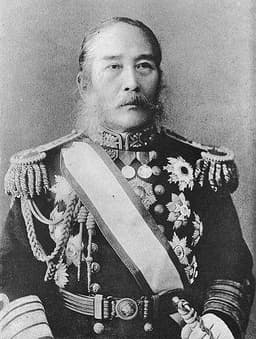
Enomoto Takeaki
General · Modern
51.6Total
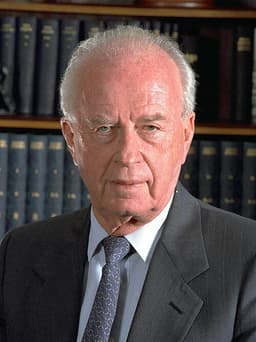
Yitzhak Rabin
General · Modern
66.4Total
Basic Information
Born
1836
1922
Died
1908
—
Era
Modern
Modern
Nationality
Japan
Israel
Occupation
General
General
Civilization
Eastern
Middle Eastern
Score Comparison
Military (10%)
25.0
61.7
Political (20%)
54.7
82.0
Influence (20%)
54.1
68.0
Legacy (20%)
46.7
55.0
Leadership (15%)
68.0
78.0
Strategy (15%)
55.0
55.0
TOTAL
51.6
66.4
Enomoto Takeaki — Complete Timeline
1868 AD
Led the Shogunate Fleet to HokkaidoWar
Enomoto commanded the shogunate's remaining naval forces, including eight warships, and sailed to Hokkaido. This fleet formed the core of the Republic of Ezo's military and allowed the loyalists to establish a base.
Naval CommandBoshin WarShogunate Loyalist
Impact: regional
Founded the Republic of EzoPolitical Action
After the shogunate's defeat, Enomoto led loyalist forces to Hokkaido and established the Republic of Ezo, an independent state with a Western-style government. He was elected president and organized a defense against imperial forces.
Boshin WarSeparatist StateShogunate Loyalist
Impact: national
1869 AD
Surrendered at the Battle of HakodateWar◆ Major
Enomoto's forces were defeated by the imperial army at the Battle of Hakodate. He surrendered the Republic of Ezo and was taken prisoner, ending the last organized resistance to the Meiji Restoration.
Boshin WarDefeatEnd of Resistance
Impact: nationaltragic
1885 AD
Served as Minister of Foreign Affairs in the Meiji GovernmentPolitical Action◆ Major
After being pardoned, Enomoto served as Japan's Minister of Foreign Affairs. He negotiated treaties with Western powers and worked to revise the unequal treaties imposed on Japan, contributing to Japan's diplomatic modernization.
DiplomacyTreaty RevisionMeiji Government
Impact: nationalconstructive
Yitzhak Rabin — Complete Timeline
1967 AD
Chief of Staff during the Six-Day WarWar
As Chief of Staff of the Israel Defense Forces, Rabin commanded the Israeli military during the Six-Day War against Egypt, Jordan, and Syria. Israel captured the Sinai Peninsula, Gaza Strip, West Bank, East Jerusalem, and Golan Heights, reshaping the region.
Six-Day WarTerritorial ExpansionMilitary Victory
Impact: global
1993 AD
Signing of the Oslo AccordsPolitical Action
As prime minister, Rabin signed the Oslo Accords with PLO Chairman Yasser Arafat on the White House lawn. The agreement established the Palestinian Authority and set a framework for Palestinian self-governance in the West Bank and Gaza Strip.
Peace ProcessPalestiniansOslo
Impact: globalconstructive
1995 AD
Assassination at Peace RallyPolitical Action
Rabin was assassinated by Israeli extremist Yigal Amir after a peace rally in Tel Aviv. The assassination shocked Israel and the world, derailing the Oslo peace process and leading to a period of political instability.
AssassinationPeace ProcessPolitical Violence
Impact: globaltragic
Expert Analysis
Yitzhak Rabin vs Enomoto Takeaki
# The General Who Outlived His War
On a warm November evening in 1995, Yitzhak Rabin stood before a crowd of 100,000 peace supporters in Tel Aviv, singing “The Song of Peace.” Moments later, three gunshots ended his life and shattered Israel’s hope for reconciliation. Just over a century earlier, on the frozen island of Hokkaido in 1869, another general—Enomoto Takeaki—knelt before his imperial enemy, surrendered his sword, and awaited execution. One died at the peak of his power; the other lived to serve the very regime he had fought. What drove these two military leaders—one a peacemaker martyred by his own people, the other a rebel who became a minister—to such different fates?
Origins
Yitzhak Rabin was born in 1922 in Jerusalem, the son of socialist Zionist immigrants. His childhood was steeped in the struggle for a Jewish homeland, a world where survival meant fighting. He grew up in a land of tension, where every generation faced war. Enomoto Takeaki, born in 1836 in Edo, Japan, came from a samurai family serving the Tokugawa shogunate. His world was one of rigid hierarchy and ancient codes, where honor was measured in loyalty to one’s lord. But both men lived through revolutions: Rabin in the birth of Israel, Enomoto in the collapse of Japan’s feudal order. Their eras demanded warriors who could become statesmen—but only one succeeded fully.
Rise to Power
Rabin’s path was forged in battle. As a young commander in Israel’s War of Independence, he earned a reputation for cold efficiency. But his defining moment came in 1967, when as Chief of Staff of the Israel Defense Forces, he orchestrated the Six-Day War. In six lightning days, his armies captured the Sinai, Gaza, the West Bank, and the Golan Heights. The victory made him a national hero—but it also planted the seeds of a conflict that would consume his later life.
Enomoto’s rise followed a different trajectory. Trained in Dutch naval science, he commanded the shogunate’s fleet during Japan’s Boshin War. When the imperial forces crushed the shogunate in 1868, Enomoto refused to surrender. He gathered eight warships and sailed north, establishing the Republic of Ezo on Hokkaido—the first independent republic in Japanese history. For a year, he ruled a samurai democracy, complete with elections and a president. But his republic was a doomed dream, a last stand against the tide of modernization.
Leadership & Governance
Rabin’s leadership was pragmatic and unromantic. As prime minister in the 1990s, he shocked his nation by shaking hands with Yasser Arafat, the leader of the Palestine Liberation Organization, on the White House lawn in 1993. The Oslo Accords he signed were a gamble: trade land for peace, accept a Palestinian state, and risk everything. His political score of 77.7 reflects a man who could navigate the treacherous currents of Israeli politics, but his military score of 62.0—lower than one might expect—hints that his true genius lay not in conquest but in knowing when to stop.
Enomoto, by contrast, was a master of adaptation. After surrendering at the Battle of Hakodate in 1869, he was imprisoned but later pardoned. The Meiji government, recognizing his talents, appointed him to high office. By 1885, he served as Minister of Foreign Affairs, negotiating treaties with Western powers. His political score of 72.4 and leadership score of 84.7 reveal a man who could bend without breaking. He did not fight to preserve the past; he fought to find a place in the future.
Triumph & Tragedy
Rabin’s greatest triumph was also his tragedy. The Oslo Accords earned him a Nobel Peace Prize, but they enraged Israeli extremists who saw them as betrayal. On November 4, 1995, Yigal Amir, a Jewish law student, fired three bullets into Rabin’s back. The assassin’s goal was to stop the peace process—and he succeeded. The tragedy was not just Rabin’s death but the collapse of a vision. His legacy score of 68.8 reflects the incompleteness of his work.
Enomoto’s tragedy was quieter. He lived to see his samurai world vanish, replaced by an industrial empire. He served the Meiji government faithfully, but he was always a former rebel, never fully trusted. His military score of 28.1—the lowest of any figure here—suggests a commander who lost his war. Yet his influence score of 74.4 and legacy score of 65.6 indicate a man who shaped Japan’s modern identity. He died in 1908, a respected elder, but perhaps a lonely one.
Character & Destiny
Rabin was a sabra—tough, blunt, and unsentimental. He once said, “You don’t make peace with friends. You make peace with very nasty enemies.” His personality drove him to take risks, but also to ignore the hatred he inspired. He believed in the power of the state to protect its citizens, yet he underestimated the power of fanaticism.
Enomoto was a survivor. He understood that honor could be redefined. When he surrendered, he did not commit seppuku, as samurai tradition demanded. Instead, he chose life, negotiation, and service. His strategy score of 72.0 reflects a mind that could see beyond the battlefield. He was not a hero in the classic sense—he was something rarer: a man who adapted to history rather than being crushed by it.
Legacy
Rabin is remembered as a martyr for peace. His name is engraved on Israeli streets, and his assassination is a national wound. But his legacy is contested: some see him as a visionary, others as a traitor. The Oslo Accords have not brought lasting peace, and the region remains in turmoil. His total score of 70.6 captures this ambiguity.
Enomoto’s legacy is more stable. In Japan, he is remembered as a pioneer of naval education and a diplomat who helped modernize the nation. The Republic of Ezo is a footnote, but his later service is celebrated. He represents the samurai who became a bureaucrat, the rebel who became a builder. His total score of 68.8 is similar to Rabin’s, but the meaning is different: Enomoto’s life was a bridge between eras, while Rabin’s was a bridge that collapsed.
Conclusion
What separates a martyr from a survivor? Rabin died because he tried to change his nation’s destiny; Enomoto lived because he accepted that destiny could not be stopped. One was a warrior who became a peacemaker and was killed for it; the other was a rebel who became a minister and was forgiven for it. Their stories remind us that history judges not only by victory but by the courage to face the consequences of one’s choices. Rabin’s last song was silenced; Enomoto’s last bow was accepted. Both men, in their own ways, taught us that the hardest battle is not against an enemy, but against the fear of change.
Rankings
🥇
Yitzhak RabinLeader
Mil: 61.7Pol: 82.0Inf: 68.0
66.4
🥈
Enomoto Takeaki
Mil: 25.0Pol: 54.7Inf: 54.1
51.6
+14.8 behind
How This Comparison Works
Algorithm
Each figure is scored on 6 dimensions (0—100 scale) based on structured historical data: Military (10%), Political (20%), Influence (20%), Legacy (20%), Leadership (15%), Strategy (15%). The weighted total produces the final ranking.
Data Sources
Scores are computed from structured sub-indicators in the database. Scale factors adjust for era (Ancient ×0.85, Modern ×1.0) and civilization size (Eastern ×1.05, Other ×0.80) to account for differences in population and military scale.
Maximum 3 Figures
Comparisons are limited to 2—3 figures to ensure readability and statistical meaningfulness.
Error Margins
±5 points per dimension — Sub-scores are derived from historical records with inherent uncertainty. Two figures within 5 points on a dimension should be considered roughly equivalent in that area.
Total Score Accuracy
±3 points overall — The weighted combination of 6 dimensions produces a total score with approximately ±3 points of uncertainty. Differences of less than 3 points are not statistically significant— the figures are effectively tied.
Known Limitations
- Historical records are incomplete and uneven across civilizations
- Figures from oral-tradition societies may be underrepresented
- Occupation labels can misclassify multi-role figures
- Scores measure capability and impact, not moral character
- Quantitative scoring is a comparison tool, not absolute truth
Capability Radar
Military (10%) — Battles & Warfare
Battles
40
65
Win Rate
35
70
Expansion
30
50
Political (20%) — Governance & Reform
Reform
30
65
Diplomacy
40
85
Economy
25
60
Influence (20%) — Cultural & Global Reach
Cultural
25
55
Global
20
70
Legacy (20%) — Historical Impact
Historical
40
75
Longevity
30
60
Leadership (15%) — Power & Stability
Tenure
35
70
Stability
20
40
Strategy (15%) — Tactics & Innovation
Strategy
50
75
Tactics
55
60
Reform
45
55
Similar Comparisons
Comments & Discussion
ToraToraHistorian6/16/2026
Rabin's assassination wasn't just about Oslo—it was the culmination of his betrayal of the military ethos. He went from commanding the Six-Day War's stunning victory to shaking hands with the man who swore to destroy Israel. That's not statesmanship; that's strategic amnesia. A general's first duty is to recognize when peace is a trap. Rabin forgot that. Enomoto at least had the decency to stay loyal to his shogun until the very end.|
数据侦探阿强6/16/2026
Rabin那个所谓的“和平集会”吹得天花乱坠,但数据不会撒谎:1994-1995年间,以色列死于恐怖袭击的人数比前两年还多15%。暴力没降反升,他拿什么说服人?说到底,他像个押注输光的老赌徒,把安全全压在奥斯陆协议上。而Enomoto至少会算账,知道打不过就投降,还活得比谁都久。这才是政治家的生存本能。|
LanceShield6/16/2026
Fun fact: Rabin once ordered the brutal expulsion of 70,000 Palestinians from Ramle and Lydda in 1948. That's the same man who later preached coexistence. History loves irony—the peacemaker was forged in the very fires of ethnic cleansing he supposedly repented. Enomoto? He never pretended to be a saint. He fought for his lord, lost, served his country, died quietly. No hypocrisy, just duty.|
儒将余晖6/16/2026
拿Rabin跟Enomoto比,简直是关公战秦琼。Enomoto是末代幕臣,在虾夷地建立“虾夷共和国”,战败后投降,之后官至海军卿,一生恪守家国之道。Rabin呢?他先打阿拉伯人赢下“六日战争”,后又要跟他们交朋友,最后被自己人打死。这两人共同的悲剧是:武士宁愿输给外敌,也不愿输给理想。|
HistoryBuff_9976/16/2026
Both men faced a warrior's ultimate test: can you serve the nation that destroyed your world? Enomoto answered yes—he surrendered his sword to the Emperor, rebuilt Japan's navy, and died a respected statesman. Rabin answered maybe—he pushed for peace but never fully reconciled with his own right-wing past. One died in office; the other died in the street. That's the difference between adapting to history and being consumed by it.|