Loading...
Enomoto Takeaki vs Ramon Castilla
Ramon Castilla leads by 8.1 pts · 2 figures compared
…
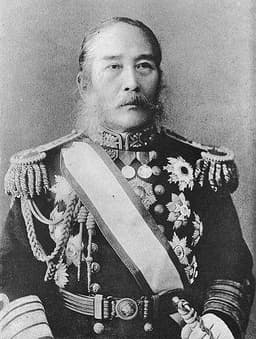
Enomoto Takeaki
General · Modern
51.6Total
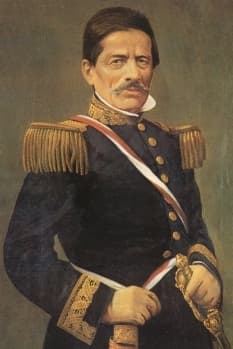
Ramon Castilla
General · Modern
59.7Total
Basic Information
Born
1836
1797
Died
1908
1867
Era
Modern
Modern
Nationality
Japan
Peru
Occupation
General
General
Civilization
Eastern
Western
Score Comparison
Military (10%)
25.0
40.0
Political (20%)
54.7
72.0
Influence (20%)
54.1
56.7
Legacy (20%)
46.7
52.0
Leadership (15%)
68.0
78.0
Strategy (15%)
55.0
60.0
TOTAL
51.6
59.7
Enomoto Takeaki — Complete Timeline
1868 AD
Led the Shogunate Fleet to HokkaidoWar
Enomoto commanded the shogunate's remaining naval forces, including eight warships, and sailed to Hokkaido. This fleet formed the core of the Republic of Ezo's military and allowed the loyalists to establish a base.
Naval CommandBoshin WarShogunate Loyalist
Impact: regional
Founded the Republic of EzoPolitical Action
After the shogunate's defeat, Enomoto led loyalist forces to Hokkaido and established the Republic of Ezo, an independent state with a Western-style government. He was elected president and organized a defense against imperial forces.
Boshin WarSeparatist StateShogunate Loyalist
Impact: national
1869 AD
Surrendered at the Battle of HakodateWar◆ Major
Enomoto's forces were defeated by the imperial army at the Battle of Hakodate. He surrendered the Republic of Ezo and was taken prisoner, ending the last organized resistance to the Meiji Restoration.
Boshin WarDefeatEnd of Resistance
Impact: nationaltragic
1885 AD
Served as Minister of Foreign Affairs in the Meiji GovernmentPolitical Action◆ Major
After being pardoned, Enomoto served as Japan's Minister of Foreign Affairs. He negotiated treaties with Western powers and worked to revise the unequal treaties imposed on Japan, contributing to Japan's diplomatic modernization.
DiplomacyTreaty RevisionMeiji Government
Impact: nationalconstructive
Ramon Castilla — Complete Timeline
1824 AD
Battle of AyacuchoWar
Castilla fought as a junior officer in the decisive Battle of Ayacucho, which ended Spanish rule in Peru. This victory secured Peruvian independence and marked the end of the Spanish Empire in South America, shaping Castilla's nationalist views.
Peruvian War of IndependenceBattleLiberation
Impact: regional
1845 AD
First Presidency of PeruPolitical Action◆ Major
Castilla was elected President of Peru in 1845, serving until 1851. His first term focused on economic development, including the guano boom, and infrastructure projects such as railroads and ports, modernizing the Peruvian state.
PresidencyEconomic DevelopmentGuano
Impact: nationalconstructive
1854 AD
Abolition of Slavery in PeruReform◆ Major
During his second presidency, Castilla issued a decree abolishing slavery in Peru on December 3, 1854. This reform freed approximately 25,000 slaves and was part of a broader liberal agenda, though it faced opposition from slave-owning elites.
AbolitionSlaveryHuman Rights
Impact: nationalprogressive
Abolition of Indigenous TributeReform◆ Major
Castilla also abolished the indigenous tribute tax in 1854, which had been a burden on native communities since colonial times. This measure aimed to integrate indigenous peoples into the Peruvian state as equal citizens, though its implementation was uneven.
Indigenous RightsTax ReformCitizenship
Impact: nationalprogressive
1855 AD
Second Presidency and Guano BoomPolitical Action◆ Major
Castilla served a second term from 1855 to 1862, during the peak of the guano export boom. He used guano revenues to fund public works, pay off foreign debt, and modernize the military, but also faced criticism for corruption and over-reliance on a single resource.
PresidencyGuanoModernization
Impact: nationalconstructive
1860 AD
Constitutional Reform of 1860Reform◆ Major
Castilla oversaw the adoption of a new constitution in 1860, which established a centralized republic with a strong executive. The constitution remained in effect until 1920 and shaped Peru's political structure, though it limited regional autonomy.
ConstitutionPolitical ReformCentralization
Impact: nationalconstructive
Expert Analysis
Ramon Castilla vs Enomoto Takeaki
# The Loyalist and the Reformer: Enomoto Takeaki and Ramon Castilla
On a winter morning in December 1854, Ramon Castilla stood in the Plaza de Armas of Lima and signed a decree that would change Peru forever. Slavery, that centuries-old institution inherited from the Spanish empire, was no more. Two decades later and half a world away, Enomoto Takeaki watched from the deck of his flagship as the last shogunate warships slipped out of Tokyo Bay, bound for the frozen wilderness of Hokkaido. One man was abolishing an ancient wrong; the other was fleeing a revolution. Yet both were naval officers, both fought for their nations in times of upheaval, and both left legacies that still resonate today. What drove them to such different fates?
Origins
Ramon Castilla was born in 1797 in Tarapacá, a remote desert province of Peru, to a Spanish father and a mother of mixed ancestry. The late colonial era was a world of rigid hierarchies, where birth determined destiny. As a young man, Castilla joined the Spanish army, but when the wars of independence erupted across South America, he made a choice that defined his life: he switched sides. By 1824, he was fighting alongside Simón Bolívar’s forces at the Battle of Ayacucho, the final clash that shattered Spanish rule in the Americas. At twenty-seven, Castilla had witnessed the birth of a nation from the barrel of a musket.
Enomoto Takeaki was born in 1836 in Edo, the shogun’s capital, into a samurai family of modest rank. Japan was still a feudal society, sealed off from the outside world by two centuries of isolation. But change was coming. In 1853, when Enomoto was just seventeen, Commodore Matthew Perry’s black ships appeared off the coast, forcing Japan to confront the modern age. Enomoto studied Dutch naval science and became one of the few Japanese officers trained in Western warfare. He was a product of the shogunate’s desperate attempt to modernize without losing control—a contradiction that would consume him.
Rise to Power
Castilla’s path to power was forged in Peru’s chaotic post-independence decades. The country was a battlefield of caudillos—regional strongmen who fought for the presidency with swords and rifles. Castilla rose through the ranks not by birth but by competence. He served as minister of war, negotiated with foreign powers, and built a reputation as a pragmatist in a world of egos. His moment came in 1845, when he was elected president after a period of civil strife. He was forty-eight years old, weathered by war, and ready to govern.
Enomoto’s rise was more dramatic and more tragic. When the Meiji Restoration began in 1868, ending 250 years of shogunate rule, he refused to accept the emperor’s victory. As a naval commander, he gathered eight warships—the core of the shogun’s fleet—and sailed north with thousands of loyalists. In Hokkaido, he founded the Republic of Ezo, a short-lived state that sought to preserve samurai traditions. For a few months, Enomoto was the president of a nation that no one recognized, ruling from the fortress of Hakodate. It was a desperate gamble, born of honor and defiance.
Leadership & Governance
Castilla governed as a modernizer. During his first term from 1845 to 1851, he stabilized Peru’s finances, built railroads, and encouraged immigration. But his greatest achievements came during his second term, from 1855 to 1862, when the guano boom flooded the treasury with cash. Peru’s coastal islands were covered in centuries of bird droppings, which turned out to be the finest fertilizer in the world. Castilla used this windfall to fund public works, expand education, and pay off foreign debt. More importantly, he used political capital to push through reforms that defined the nation.
In 1854, Castilla abolished slavery, freeing some 25,000 enslaved Africans. The decree was not just moral—it was strategic. He needed soldiers for a civil war against a rival caudillo, and emancipation allowed him to recruit Black Peruvians into his army. That same year, he abolished the indigenous tribute tax, a colonial relic that had forced native communities to pay for the right to exist. In 1860, he oversaw a new constitution that centralized power in Lima and established a secular state. Castilla was no democrat by modern standards, but he was a builder.
Enomoto’s leadership was defined by survival. As president of the Republic of Ezo, he organized a government with ministries, a treasury, and even elections. He tried to negotiate with the imperial forces, offering to develop Hokkaido as a frontier territory. But the Meiji government would accept nothing less than unconditional surrender. In the spring of 1869, imperial troops landed on Hokkaido, and Enomoto’s forces fought a desperate rearguard action at the Battle of Hakodate. Outnumbered and outgunned, he surrendered in June 1869, handing over his sword and his fleet.
Triumph & Tragedy
Castilla’s triumph was the abolition of slavery. On December 3, 1854, he declared that “from this day forward, no one shall be born a slave in Peru.” It was a moment of moral clarity that placed Peru ahead of many nations, including the United States. His tragedy was the guano boom itself. The sudden wealth created corruption, inequality, and a dependency on a single resource that would later bankrupt the country. Castilla left office in 1862 as a hero, but the seeds of Peru’s future collapse had been sown.
Enomoto’s tragedy was his defeat. He had staked everything on a lost cause, and he lost. Imprisoned after the surrender, he expected execution. But the Meiji government, showing surprising magnanimity, pardoned him in 1872. His triumph came later, in a way he could never have imagined. He entered the imperial government and rose to become Minister of Foreign Affairs in 1885, negotiating treaties with Western powers that revised the unequal agreements imposed on Japan. The rebel who had fought the emperor became one of his most effective servants.
Character & Destiny
Castilla was a pragmatist with a conscience. He understood that power required legitimacy, and legitimacy required reform. He abolished slavery not as an idealist but as a statesman who saw that Peru could not become a modern nation while holding people in chains. His character was shaped by the chaos of post-colonial Latin America, where the only constant was change. He adapted, survived, and built.
Enomoto was a man of honor in a world that had no place for his code. He fought for the shogunate not because he opposed modernity but because he believed in loyalty. When he surrendered, he did so with dignity, and when he served the Meiji government, he did so with competence. His character was defined by the tension between tradition and progress—a tension that Japan itself was experiencing. He made the journey from rebel to minister, from enemy of the state to servant of the state, without ever betraying his core.
Legacy
Castilla is remembered as Peru’s great reformer. His face appears on the one sol coin, and his name adorns streets and plazas. The abolition of slavery remains his defining act, though historians debate whether it was a genuine moral stand or a political calculation. In truth, it was both—and that is what made it effective. His legacy is a mixed one: a modernizer who used guano wealth to build a nation, but also a caudillo who concentrated power in Lima.
Enomoto is a more complex figure. In Japan, he is remembered as a symbol of the samurai spirit—a man who fought for his lord even when all was lost. But he is also celebrated as a Meiji statesman who helped Japan gain equal footing with the West. The Republic of Ezo has become a romantic footnote in Japanese history, a brief moment when a samurai tried to create a republic in the northern snows. Enomoto’s legacy is that of a loser who won, a rebel who reconciled.
Conclusion
What separates these two men is not ability or vision but the direction of history. Castilla rode the wave of nation-building in a new republic, where the old order had already been swept away. Enomoto fought against the tide in an ancient empire that was remaking itself. One abolished slavery; the other surrendered to the emperor. Yet both ended their lives as respected statesmen, having served their nations in different ways. Castilla built a country; Enomoto built a bridge between two eras. In the end, the loyalist and the reformer remind us that history judges not by victory or defeat, but by what we do with the time we are given.
Rankings
🥇
Ramon CastillaLeader
Mil: 40.0Pol: 72.0Inf: 56.7
59.7
🥈
Enomoto Takeaki
Mil: 25.0Pol: 54.7Inf: 54.1
51.6
+8.1 behind
How This Comparison Works
Algorithm
Each figure is scored on 6 dimensions (0—100 scale) based on structured historical data: Military (10%), Political (20%), Influence (20%), Legacy (20%), Leadership (15%), Strategy (15%). The weighted total produces the final ranking.
Data Sources
Scores are computed from structured sub-indicators in the database. Scale factors adjust for era (Ancient ×0.85, Modern ×1.0) and civilization size (Eastern ×1.05, Other ×0.80) to account for differences in population and military scale.
Maximum 3 Figures
Comparisons are limited to 2—3 figures to ensure readability and statistical meaningfulness.
Error Margins
±5 points per dimension — Sub-scores are derived from historical records with inherent uncertainty. Two figures within 5 points on a dimension should be considered roughly equivalent in that area.
Total Score Accuracy
±3 points overall — The weighted combination of 6 dimensions produces a total score with approximately ±3 points of uncertainty. Differences of less than 3 points are not statistically significant— the figures are effectively tied.
Known Limitations
- Historical records are incomplete and uneven across civilizations
- Figures from oral-tradition societies may be underrepresented
- Occupation labels can misclassify multi-role figures
- Scores measure capability and impact, not moral character
- Quantitative scoring is a comparison tool, not absolute truth
Capability Radar
Military (10%) — Battles & Warfare
Battles
40
45
Win Rate
35
50
Expansion
30
30
Political (20%) — Governance & Reform
Reform
30
85
Diplomacy
40
70
Economy
25
75
Influence (20%) — Cultural & Global Reach
Cultural
25
55
Global
20
50
Legacy (20%) — Historical Impact
Historical
40
65
Longevity
30
60
Leadership (15%) — Power & Stability
Tenure
35
65
Stability
20
60
Strategy (15%) — Tactics & Innovation
Strategy
50
45
Tactics
55
40
Reform
45
55
Similar Comparisons
Comments & Discussion
Magellan's Ghost6/16/2026
Castilla freed slaves while Enomoto helped build Hokkaido with convict labor—that's not just a contrast, it's a moral chasm. The Peruvian knew freedom required action, not just strategic retreat. Enomoto’s "development" argument falls flat when you remember Ainu displacement and penal colonies built on the bones of the poor. Castilla abolished slavery before Brazil or the US; he earned his statue. Enomoto got a 10,000 yen note.
玄武之殇6/16/2026
拿海军出身说事?Castilla在Ayacucho战场真刀真枪打独立,Enomoto在箱馆战争里搞的不过是幕府残余的垂死挣扎。一个为解放奴隶签字,一个为德川家擦屁股。别跟我扯“开发北海道”——那是明治政府塞给他的任务,他年轻时满脑子都是怎么保住封建尾巴。真正的改革者从不背对革命。
Data Diver6/16/2026
The comparison conveniently ignores timelines. Castilla abolished slavery in 1854, when Peru had maybe 25,000 slaves left—a fraction of Brazil’s 2 million. Moral credit, sure, but context matters. Enomoto’s Hokkaido colonization started from scratch in 1869, with zero enslaved population to free. The real difference? One fought a dying empire, the other built a new frontier. Apples and oranges, but the data says both were pragmatists, not saints.
残月侍从6/16/2026
你说他俩都是海军出身,这点我认。但Castilla打完独立战争就转型政客搞废除奴隶制,Enomoto打完箱馆战争还在用幕府旧臣搞“虾夷共和国”——这叫改革?不过是从一个将军换到另一个将军。直到后来被明治招安,他才算真正上了道。说白了,Castilla是主动改写历史的人,Enomoto只是被历史推着走的棋子。
The Last Shogunate6/16/2026
You can't compare a man who abolished slavery with one who literally owned serfs in Hokkaido. Enomoto's government in the Republic of Ezo was practically a feudal holdout—he maintained samurai privileges and used forced labor. Castilla, meanwhile, passed the law ending indigenous tribute and banned slavery in the same year. One dismantled hierarchies; the other fled to preserve them. History’s verdict is clear: Castilla is the reformer; Enomoto, the loyalist who adapted.