Loading...
Enomoto Takeaki vs Plutarco Elias Calles
Plutarco Elias Calles leads by 6.9 pts · 2 figures compared
…
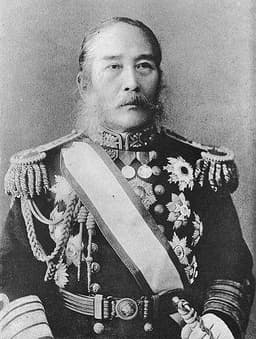
Enomoto Takeaki
General · Modern
51.6Total
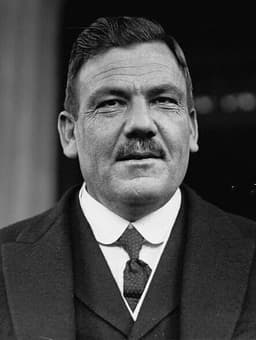
Plutarco Elias Calles
General · Modern
58.5Total
Basic Information
Born
1836
1877
Died
1908
1945
Era
Modern
Modern
Nationality
Japan
Mexico
Occupation
General
General
Civilization
Eastern
Western
Score Comparison
Military (10%)
25.0
40.0
Political (20%)
54.7
70.3
Influence (20%)
54.1
68.0
Legacy (20%)
46.7
40.0
Leadership (15%)
68.0
78.0
Strategy (15%)
55.0
52.5
TOTAL
51.6
58.5
Enomoto Takeaki — Complete Timeline
1868 AD
Led the Shogunate Fleet to HokkaidoWar
Enomoto commanded the shogunate's remaining naval forces, including eight warships, and sailed to Hokkaido. This fleet formed the core of the Republic of Ezo's military and allowed the loyalists to establish a base.
Naval CommandBoshin WarShogunate Loyalist
Impact: regional
Founded the Republic of EzoPolitical Action
After the shogunate's defeat, Enomoto led loyalist forces to Hokkaido and established the Republic of Ezo, an independent state with a Western-style government. He was elected president and organized a defense against imperial forces.
Boshin WarSeparatist StateShogunate Loyalist
Impact: national
1869 AD
Surrendered at the Battle of HakodateWar◆ Major
Enomoto's forces were defeated by the imperial army at the Battle of Hakodate. He surrendered the Republic of Ezo and was taken prisoner, ending the last organized resistance to the Meiji Restoration.
Boshin WarDefeatEnd of Resistance
Impact: nationaltragic
1885 AD
Served as Minister of Foreign Affairs in the Meiji GovernmentPolitical Action◆ Major
After being pardoned, Enomoto served as Japan's Minister of Foreign Affairs. He negotiated treaties with Western powers and worked to revise the unequal treaties imposed on Japan, contributing to Japan's diplomatic modernization.
DiplomacyTreaty RevisionMeiji Government
Impact: nationalconstructive
Plutarco Elias Calles — Complete Timeline
1915 AD
Governorship of SonoraPolitical Action
Calles served as Governor of Sonora from 1915 to 1919, implementing radical reforms including land redistribution, anti-clerical laws, and labor rights. His governorship established him as a key figure in the Sonoran dynasty and a proponent of revolutionary change.
GovernorshipSonoraReforms
Impact: regionalconstructive
1924 AD
Presidency of MexicoPolitical Action◆ Major
Calles was elected President of Mexico in 1924, serving until 1928. His administration continued revolutionary reforms, including land reform, labor rights, and secularization, but also faced opposition from the Catholic Church and conservative groups.
PresidencyMexican RevolutionReforms
Impact: nationalconstructive
1926 AD
Cristero WarWar◆ Major
Calles enforced anti-clerical laws, including the Calles Law, which restricted the Catholic Church's role in society. This sparked the Cristero War (1926-1929), a violent rebellion by Catholic peasants against the state, resulting in tens of thousands of deaths.
Cristero WarAnti-clericalismReligious Conflict
Impact: nationaldestructive
1928 AD
MaximatoPolitical Action◆ Major
After his presidency, Calles remained the de facto ruler of Mexico during the Maximato (1928-1934), controlling puppet presidents. He continued to influence policy, but his power waned as President L
MaximatoPolitical ControlCárdenas
Impact: national
1929 AD
Founding of the National Revolutionary Party (PNR)Political Action
Calles founded the National Revolutionary Party (PNR) in 1929, which later became the Institutional Revolutionary Party (PRI). This party dominated Mexican politics for over 70 years, institutionalizing the revolution's legacy and centralizing power.
Political PartyPRIInstitutionalization
Impact: nationalconstructive
Expert Analysis
Plutarco Elias Calles vs Enomoto Takeaki
# The Revolutionary and the Loyalist: Plutarco Elías Calles and Enomoto Takeaki
On a dusty October morning in 1926, Plutarco Elías Calles stood before the Mexican Congress and signed into law a decree that would ignite a firestorm across the nation—the Calles Law, which stripped the Catholic Church of property rights and banned religious orders. Half a world away and sixty years earlier, another man had faced a different kind of reckoning: Enomoto Takeaki, a samurai admiral of the Tokugawa shogunate, watched as his fleet of eight warships slipped through the waters off Hokkaido, carrying the last embers of a feudal order that was about to be extinguished. One man built a party that would rule Mexico for seven decades; the other founded a republic that lasted barely eight months. What drove these two generals—both products of revolutionary eras, both willing to risk everything for their convictions—to such divergent fates?
Origins
Calles was born in 1877 in the northern state of Sonora, a region of hardscrabble ranches and mining towns where the Mexican Revolution would later find some of its fiercest warriors. His father was a schoolteacher, his mother a devout Catholic, but Calles grew up in poverty after his father’s early death. He worked as a bartender, a mill worker, and a teacher before the revolution gave him a cause. The Porfiriato—the long dictatorship of Porfirio Díaz—had created deep inequalities, and Calles absorbed the anticlerical, land-reform ideologies that were sweeping through Mexico’s intellectual circles.
Enomoto Takeaki, by contrast, was born in 1836 into a samurai family of the Tokugawa shogunate, the feudal military government that had ruled Japan for over two centuries. His world was one of rigid hierarchy, sword-bearing warriors, and a deep reverence for the emperor as a figurehead—until Commodore Perry’s black ships forced Japan open in 1853. Enomoto studied Dutch naval science and later trained in the Netherlands, becoming one of the few Japanese officers to master modern warfare. His loyalty was not to the abstract nation but to the shogun, his master, and the order that had raised him.
Rise to Power
Calles entered the historical stage through the crucible of the Mexican Revolution (1910–1920). He fought alongside Álvaro Obregón and Venustiano Carranza, rising from a local military commander to governor of Sonora in 1915. As governor, he implemented radical reforms: land redistribution, secular education, and attacks on Church power. His governorship was a testing ground for the policies he would later impose on all of Mexico. By 1924, when he was elected president, Calles had become the face of the revolution’s most uncompromising wing—a man who believed that Mexico’s future depended on breaking the Church’s grip and modernizing the state.
Enomoto’s rise was a tragedy of loyalty. When the Meiji Restoration began in 1868, the shogunate collapsed almost overnight. While many former samurai switched sides, Enomoto refused. He gathered the shogunate’s navy—the most modern fleet in Japan—and sailed north to Hokkaido, the island frontier. There, in December 1868, he founded the Republic of Ezo, an independent state modeled on American republican principles, complete with a president and a legislature. It was a desperate, brilliant gambit: a samurai trying to preserve feudal honor through modern political forms.
Leadership & Governance
As president from 1924 to 1928, Calles governed with an iron will. He expanded public education, built roads and irrigation systems, and created the Bank of Mexico. But his defining act was the enforcement of the Calles Law, which triggered the Cristero War (1926–1929)—a brutal conflict between the federal army and Catholic peasant rebels that left an estimated 90,000 dead. Calles saw the Church as a rival power that had to be crushed; his opponents saw him as a tyrant. His military score of 64.3 reflects a competent but not brilliant commander; his true genius was political. In 1929, he founded the National Revolutionary Party (PNR), a coalition of revolutionary factions that would evolve into the Institutional Revolutionary Party (PRI), the machine that ruled Mexico until 2000.
Enomoto’s leadership of the Republic of Ezo was a masterclass in improvisation. He organized a government, printed currency, and even attempted to secure diplomatic recognition from foreign powers. His military score of 28.1 is deceptively low—he was a skilled naval strategist, but his forces were hopelessly outnumbered. In June 1869, imperial troops stormed the fortress of Hakodate. Enomoto surrendered, but his conduct impressed his captors so much that he was pardoned and, within a decade, serving in the Meiji government as Minister of Foreign Affairs. It was an astonishing reversal: the rebel became a diplomat.
Triumph & Tragedy
Calles’s greatest triumph was the creation of the PRI, which gave Mexico political stability after a decade of civil war. His greatest tragedy was the Maximato (1928–1934), the period after his presidency when he ruled through puppet presidents. His paranoia and authoritarianism alienated even his allies, and he was eventually exiled by his own protégé, Lázaro Cárdenas, in 1936. Calles died in 1945, a figure both revered and reviled.
Enomoto’s triumph was his survival and reinvention. After the Battle of Hakodate, he could have been executed; instead, he negotiated treaties with Western powers and helped modernize Japan’s navy. His tragedy was that the world he fought for—the shogunate—was gone forever. He spent his final years as a viscount in the new peerage, a samurai in a top hat.
Character & Destiny
Calles was driven by a cold, ideological certainty. He once said, “The revolution is not a matter of sentiment; it is a matter of necessity.” His personality—ruthless, calculating, and suspicious—shaped Mexico’s destiny, for better and worse. He built a system that brought order but crushed dissent.
Enomoto was driven by loyalty and pragmatism. He fought for a lost cause, then adapted to the new order. His leadership score of 84.7 reveals a man who could inspire devotion even in defeat. He surrendered with dignity, and that dignity saved him.
Legacy
Calles is remembered as the “Jefe Máximo” of the revolution, the architect of the PRI, and the enforcer of secularism. His legacy is mixed: he modernized Mexico but also sowed decades of authoritarian rule and religious conflict.
Enomoto is a more ambiguous figure in Japan—a patriot who fought the emperor’s forces, then served the emperor. His Republic of Ezo is celebrated as a brief experiment in democracy, and his naval reforms helped build Japan’s imperial fleet. He is a symbol of the Meiji Restoration’s capacity to absorb even its enemies.
Conclusion
Two generals, two revolutions, two different paths to power. Calles built a party that outlived him; Enomoto built a republic that died with him. Yet both men understood a profound truth: that the most dangerous moment in any revolution is not the battle itself, but the struggle to build something that lasts. Calles succeeded too well, creating a machine that crushed freedom. Enomoto failed just enough, leaving a memory of what might have been. In the end, their stories remind us that history is not written by victors alone—but by those who, in defeat or triumph, refuse to stop trying to shape the world.
Rankings
🥇
Plutarco Elias CallesLeader
Mil: 40.0Pol: 70.3Inf: 68.0
58.5
🥈
Enomoto Takeaki
Mil: 25.0Pol: 54.7Inf: 54.1
51.6
+6.9 behind
How This Comparison Works
Algorithm
Each figure is scored on 6 dimensions (0—100 scale) based on structured historical data: Military (10%), Political (20%), Influence (20%), Legacy (20%), Leadership (15%), Strategy (15%). The weighted total produces the final ranking.
Data Sources
Scores are computed from structured sub-indicators in the database. Scale factors adjust for era (Ancient ×0.85, Modern ×1.0) and civilization size (Eastern ×1.05, Other ×0.80) to account for differences in population and military scale.
Maximum 3 Figures
Comparisons are limited to 2—3 figures to ensure readability and statistical meaningfulness.
Error Margins
±5 points per dimension — Sub-scores are derived from historical records with inherent uncertainty. Two figures within 5 points on a dimension should be considered roughly equivalent in that area.
Total Score Accuracy
±3 points overall — The weighted combination of 6 dimensions produces a total score with approximately ±3 points of uncertainty. Differences of less than 3 points are not statistically significant— the figures are effectively tied.
Known Limitations
- Historical records are incomplete and uneven across civilizations
- Figures from oral-tradition societies may be underrepresented
- Occupation labels can misclassify multi-role figures
- Scores measure capability and impact, not moral character
- Quantitative scoring is a comparison tool, not absolute truth
Capability Radar
Military (10%) — Battles & Warfare
Battles
40
45
Win Rate
35
50
Expansion
30
30
Political (20%) — Governance & Reform
Reform
30
85
Diplomacy
40
65
Economy
25
60
Influence (20%) — Cultural & Global Reach
Cultural
25
70
Global
20
60
Legacy (20%) — Historical Impact
Historical
40
75
Longevity
30
70
Leadership (15%) — Power & Stability
Tenure
35
70
Stability
20
55
Strategy (15%) — Tactics & Innovation
Strategy
50
55
Tactics
55
40
Reform
45
60
Similar Comparisons
Comments & Discussion
Cristero's Ghost6/16/2026
Calles was a visionary dictator who understood that breaking the Church's stranglehold was the only way to modernize Mexico. The Cristero War's 90,000 dead? A necessary price for secular progress. Enomoto, meanwhile, was a nostalgic failure—his Ezo Republic lasted eight months because he couldn't let go of samurai privilege. One built a lasting institution (the PRI), the other a fleeting fantasy. No contest.
幕府铁骨6/16/2026
胜海舟的副官竟敢对抗明治天皇?Enomoto Takeaki 是日本最后的武士脊梁!他在箱馆战争中以8000兵力对抗3万皇军,用八艘破船撑起虾夷共和国。Calles?一个靠酒精税和暗杀维持权力的投机分子。历史证明:忠诚比胜利更珍贵——Enomoto 后来成了海军卿,而 Calles 的遗产只有鲜血和腐败。
DataGhost6/16/2026
Let's talk numbers: Calles ruled Mexico for 12 years as jefe máximo, but his policies triggered a civil war that killed 1-2% of the population. Enomoto's Hokkaido republic had zero civilian casualties during its 8-month run—even the Battle of Hakodate Bay saw only 300 dead total. One man's "revolution" meant 100,000+ bodies; the other's rebellion was practically a polite disagreement. Scale matters.
书斋考据6/16/2026
别被表面骗了:Calles 其实是 sonorense 的实用主义者,他 1915 年镇压红营工人时比 Enomoto 更残忍。而 Enomoto 的妙处在于——他护送榎本舰队到箱馆时,船上还带着幕府的法典和书籍,这哪是内战,分明是文化流亡。Calles 毁教堂时,Enomoto 却在保护荷兰外科医生。文明 vs. 野蛮,高下立判。
GlobalSouthEye6/16/2026
Calles gets romanticized because Mexico loves its revolutionary myths, but let's be real—he was a secular autocrat who paved the way for the PRI's 71-year kleptocracy. Enomoto? He was an imperialist who served the Emperor after losing, classic collaborationist. Both were elites playing power games: Calles with his agrarian "reforms" that enriched cronies, Enomoto with his "modernization" that meant gunboats for Japan. No heroes here.