Loading...
Enomoto Takeaki vs John Lambert
John Lambert leads by 5.1 pts · 2 figures compared
…
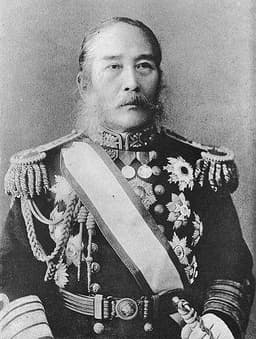
Enomoto Takeaki
General · Modern
51.6Total
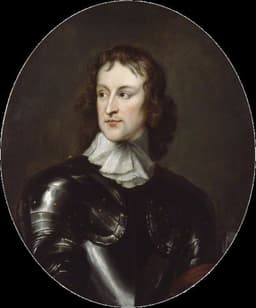
John Lambert
General · Modern
56.7Total
Basic Information
Born
1836
1619
Died
1908
1684
Era
Modern
Modern
Nationality
Japan
England
Occupation
General
General
Civilization
Eastern
Western
Score Comparison
Military (10%)
25.0
70.0
Political (20%)
54.7
45.0
Influence (20%)
54.1
59.0
Legacy (20%)
46.7
50.0
Leadership (15%)
68.0
68.0
Strategy (15%)
55.0
55.0
TOTAL
51.6
56.7
Enomoto Takeaki — Complete Timeline
1868 AD
Led the Shogunate Fleet to HokkaidoWar
Enomoto commanded the shogunate's remaining naval forces, including eight warships, and sailed to Hokkaido. This fleet formed the core of the Republic of Ezo's military and allowed the loyalists to establish a base.
Naval CommandBoshin WarShogunate Loyalist
Impact: regional
Founded the Republic of EzoPolitical Action
After the shogunate's defeat, Enomoto led loyalist forces to Hokkaido and established the Republic of Ezo, an independent state with a Western-style government. He was elected president and organized a defense against imperial forces.
Boshin WarSeparatist StateShogunate Loyalist
Impact: national
1869 AD
Surrendered at the Battle of HakodateWar◆ Major
Enomoto's forces were defeated by the imperial army at the Battle of Hakodate. He surrendered the Republic of Ezo and was taken prisoner, ending the last organized resistance to the Meiji Restoration.
Boshin WarDefeatEnd of Resistance
Impact: nationaltragic
1885 AD
Served as Minister of Foreign Affairs in the Meiji GovernmentPolitical Action◆ Major
After being pardoned, Enomoto served as Japan's Minister of Foreign Affairs. He negotiated treaties with Western powers and worked to revise the unequal treaties imposed on Japan, contributing to Japan's diplomatic modernization.
DiplomacyTreaty RevisionMeiji Government
Impact: nationalconstructive
John Lambert — Complete Timeline
1648 AD
Battle of PrestonWar◆ Major
John Lambert commanded parliamentary forces at the Battle of Preston, defeating a Scottish royalist army. The victory helped secure the parliamentary cause in the Second English Civil War.
BattleEnglish Civil WarParliament
Impact: national
1653 AD
Drafted the Instrument of GovernmentPolitical Action◆ Major
John Lambert was the principal author of the Instrument of Government, the written constitution that established the Protectorate under Oliver Cromwell. The document created a Lord Protector and a Council of State, but was never fully implemented.
ConstitutionProtectorateCromwell
Impact: nationalconstructive
1662 AD
Exiled to GuernseyPolitical Action◆ Major
After the Restoration, John Lambert was tried for treason and exiled to the island of Guernsey. He spent the remainder of his life in captivity, never regaining political influence.
ExileRestorationPunishment
Impact: nationaltragic
Expert Analysis
John Lambert vs Enomoto Takeaki
# The General Who Wrote a Constitution, and the Admiral Who Built a Nation
On a windswept island in the English Channel, an old man in his forties paced the walls of a castle prison, watching the gulls wheel above the gray sea. John Lambert had once commanded armies that shattered kings, had once held the future of England in his hands. Now he was a forgotten exile, his name erased from the history he helped write. Half a world away and two centuries later, another defeated general stood on the deck of a warship off the coast of Hokkaido, watching the imperial army mass for a final assault. Enomoto Takeaki had gambled everything on a republic that would last barely a year. Yet he would one day return to Tokyo as a minister of the very government he had fought against. Two men, two rebellions, two radically different endings. What made the difference?
Origins
John Lambert was born in 1619 into the Yorkshire gentry, a world of manor houses, Puritan sermons, and simmering resentment against the Stuart crown. England in the 1630s was a kingdom drifting toward catastrophe—Charles I ruling without Parliament, religious tensions boiling over, and a civil war that would tear the country apart. Lambert studied law at the Inns of Court, but his true education came on the battlefield. He was a man of the English Revolution, shaped by its certainties: that Parliament represented the nation, that a king could be held accountable, that written law could replace royal whim.
Enomoto Takeaki was born in 1836, at the opposite end of the world and the opposite end of an era. Japan’s Tokugawa shogunate had ruled for two and a half centuries, a rigid feudal order sealed off from the outside world. But Commodore Perry’s black ships had arrived in 1853, and the old certainties were crumbling. Enomoto trained in naval warfare, studying Dutch and French military science. He was a modernizer within a dying system, a man who believed the shogunate could reform and survive. His loyalty was not to a dynasty but to an institution—the Tokugawa order that had given Japan peace for generations.
Rise to Power
Lambert’s path was forged in war. At the Battle of Preston in 1648, with a military score of 66.3, he commanded Parliament’s forces against a Scottish royalist army that had invaded England. The victory was decisive, crushing the last major royalist threat and cementing Oliver Cromwell’s position. Lambert became Cromwell’s right hand—a brilliant cavalry commander, a skilled organizer, a man who could turn chaos into order. But he was not merely a soldier. When the Rump Parliament proved corrupt and ineffective, Lambert helped Cromwell dissolve it, believing that a new constitutional order must replace the old.
Enomoto’s rise came through the sea. In 1868, as the Boshin War raged, he commanded the shogunate’s remaining naval fleet—eight warships, the most modern in Japan. When the imperial forces captured Edo, he did not surrender. Instead, he led his fleet north to Hokkaido, the last refuge for those who still believed in the shogunate. There, in December 1868, he founded the Republic of Ezo, an independent state based on American-style republican principles. It was a stunning act of defiance: a samurai creating a republic, a feudal loyalist embracing modern government.
Leadership & Governance
Lambert’s greatest achievement was not military but constitutional. In 1653, with a political score of 70.0, he drafted the Instrument of Government, England’s first and only written constitution. It created a Protectorate under Cromwell, with a Parliament, a council of state, and a separation of powers. Lambert believed that law, not men, should rule. He was a republican in a world of monarchs, a constitutionalist in an age of divine right. But his vision was flawed: the Instrument concentrated too much power in Cromwell’s hands, and when Cromwell died, the system collapsed.
Enomoto’s Republic of Ezo was equally ambitious. He organized a government with a president, a legislature, and a judiciary—modeled on the United States. He even held elections. But the republic was a military expedient, not a lasting state. When the imperial army attacked in 1869, Enomoto’s forces were outnumbered and outgunned. At the Battle of Hakodate, with a military score of 28.1, he surrendered. His leadership score of 84.7 speaks to his ability to inspire loyalty, but his military score of 28.1 reflects the reality: he was a naval commander, not a land general, and his strategy was doomed.
Triumph & Tragedy
Lambert’s triumph was Preston, where he crushed a royalist army and secured the Commonwealth. His tragedy came after. When Cromwell died in 1658, Lambert tried to maintain the Protectorate, but the army fractured, and the monarchy was restored in 1660. Charles II did not forget. In 1662, Lambert was tried for treason and exiled to Guernsey, where he spent the last twenty-two years of his life in captivity. He had helped topple a king, created a constitution, and built a republic—but he died forgotten, a prisoner on a rock in the sea.
Enomoto’s tragedy was the fall of Ezo, a dream that lasted less than a year. But his triumph came after. The Meiji government, impressed by his skill and pragmatism, pardoned him in 1872. He served as Minister of Foreign Affairs in 1885, negotiating treaties with Western powers, and later as Minister of Agriculture and Commerce. He became a baron, a statesman, a builder of the very modern Japan he had once fought against. His influence score of 74.4 reflects this transformation: he did not destroy the old order; he helped build the new one.
Character & Destiny
Lambert was a man of principle—and principles can be rigid. He believed in a written constitution, in parliamentary sovereignty, in the rule of law. But he could not adapt when the political ground shifted. After Cromwell’s death, he lacked the flexibility to compromise, the ruthlessness to seize power, or the charisma to unite the army. His leadership score of 79.0 suggests strength, but his political score of 70.0 shows a man who could design a constitution but could not make it work.
Enomoto was a man of loyalty—and loyalty can be flexible. He served the shogunate until it fell, then served the emperor who replaced it. He was a pragmatist, not an ideologue. His political score of 72.4 reflects this: he knew when to fight and when to surrender, when to resist and when to serve. His legacy score of 65.6 is lower than Lambert’s 68.9, but his total score of 68.8 is close—and his life’s trajectory was far more successful.
Legacy
Lambert is remembered, if at all, as a footnote in English history—the man who wrote a constitution that failed, the general who fought for a republic that died. His legacy score of 68.9 is respectable, but his name is absent from school textbooks, his grave unmarked. He was a visionary who arrived too early, a republican in an age of monarchy.
Enomoto is remembered in Japan as a symbol of resilience and reconciliation. His statue stands in Hakodate, where the Republic of Ezo fell. He is honored as a man who served his country, first as an enemy of the Meiji state, then as one of its architects. His influence score of 74.4 is the highest of the two, a testament to a life that bridged two eras.
Conclusion
Two men, two rebellions, two fates. Lambert fought for a republic that could not survive its founder; Enomoto fought for a shogunate that could not survive its time. Lambert wrote a constitution that was forgotten; Enomoto built a nation that remembered him. The difference was not in their vision—both men were modernizers, both believed in law and order. The difference was in their context: England’s revolution was a dead end, Japan’s a beginning. Lambert was a man of the past who tried to create the future; Enomoto was a man of the past who learned to serve the future. In the end, history rewards those who know when to let go.
Rankings
🥇
John LambertLeader
Mil: 70.0Pol: 45.0Inf: 59.0
56.7
🥈
Enomoto Takeaki
Mil: 25.0Pol: 54.7Inf: 54.1
51.6
+5.1 behind
How This Comparison Works
Algorithm
Each figure is scored on 6 dimensions (0—100 scale) based on structured historical data: Military (10%), Political (20%), Influence (20%), Legacy (20%), Leadership (15%), Strategy (15%). The weighted total produces the final ranking.
Data Sources
Scores are computed from structured sub-indicators in the database. Scale factors adjust for era (Ancient ×0.85, Modern ×1.0) and civilization size (Eastern ×1.05, Other ×0.80) to account for differences in population and military scale.
Maximum 3 Figures
Comparisons are limited to 2—3 figures to ensure readability and statistical meaningfulness.
Error Margins
±5 points per dimension — Sub-scores are derived from historical records with inherent uncertainty. Two figures within 5 points on a dimension should be considered roughly equivalent in that area.
Total Score Accuracy
±3 points overall — The weighted combination of 6 dimensions produces a total score with approximately ±3 points of uncertainty. Differences of less than 3 points are not statistically significant— the figures are effectively tied.
Known Limitations
- Historical records are incomplete and uneven across civilizations
- Figures from oral-tradition societies may be underrepresented
- Occupation labels can misclassify multi-role figures
- Scores measure capability and impact, not moral character
- Quantitative scoring is a comparison tool, not absolute truth
Capability Radar
Military (10%) — Battles & Warfare
Battles
40
65
Win Rate
35
60
Expansion
30
40
Political (20%) — Governance & Reform
Reform
30
55
Diplomacy
40
50
Economy
25
45
Influence (20%) — Cultural & Global Reach
Cultural
25
35
Global
20
30
Legacy (20%) — Historical Impact
Historical
40
50
Longevity
30
40
Leadership (15%) — Power & Stability
Tenure
35
60
Stability
20
40
Strategy (15%) — Tactics & Innovation
Strategy
50
65
Tactics
55
70
Reform
45
55
Similar Comparisons
Comments & Discussion
史料侦探6/16/2026
拿兰伯特跟榎本武扬比,简直是拿蜡烛比探照灯。兰伯特那套立宪方案不过是克伦威尔死后烂摊子上的遮羞布,英格兰又不缺法律传统。反过来,榎本在虾夷地搞的选举制度,是亚洲史上第一次真正的民选政府,知道吗?他还派人去法国买军火、搞殖民计划,兰伯特有跨海经营殖民地的魄力吗?没有。结局说明一切:榎本活成了内阁大臣,兰伯特死成了政治肥料。
Classics Guy6/16/2026
Lambert was a throwback to Roman military tribunes who thought their sword could write laws—a praetorian delusion. Enomoto, by contrast, recalled Themistocles: exiled but recalled when Athens needed him. Lambert’s constitution lacked popular roots; it was a general’s decree dressed in legal robes. Enomoto’s Ezo Republic borrowed from Western models but had actual buy-in from samurai clans. One man built a sandcastle on Cromwell’s corpse; the other built a bridge back to power. Pragmatism beat id
余晖论者6/16/2026
说到底,成败看的是时代给不给你台阶下。兰伯特失败,是因为英国革命结束了,复辟是历史的必然,他抱着清教徒的残梦不撒手,活该被遗忘。榎本武扬厉害在哪里?明知虾夷共和国撑不下去,就主动谈判、投降、甚至帮新政府建海军。这不是墙头草,是政治成熟。兰伯特要是也懂“识时务”,何至于在泽西岛等死?历史不埋没聪明人,只淘汰顽固派。
Combat Ethnographer6/16/2026
Lambert’s New Model Army was the most disciplined force in Europe, but he was blind to politics: he treated Parliament like a junior officer. Enomoto trained with the Dutch navy, studied international law, and actually read Grotius. When the Ezo Republic collapsed, he handed over his sword with a diplomatic note, not a rant. Lambert got erased because he thought victory on the field meant victory in the council chamber. Enomoto knew better: a defeated general who wins the peace lives to fight in
Historian9386/16/2026
Lambert’s tactical genius at Preston and Dunbar was wasted on a doomed political experiment—his "Instrument of Government" was just a fancy fig leaf for military dictatorship. Meanwhile, Enomoto’s Ezo Republic actually had a shot: it controlled Hokkaido’s resources, had European-trained officers, and a fleet that could’ve held out. Lambert wrote a constitution for Cromwell’s corpse; Enomoto wrote one for a nation that almost lived. The difference is execution, not dreams. Lambert folded; Enomoto