Loading...
Enomoto Takeaki vs J. B. M. Hertzog
J. B. M. Hertzog leads by 4.5 pts · 2 figures compared
…
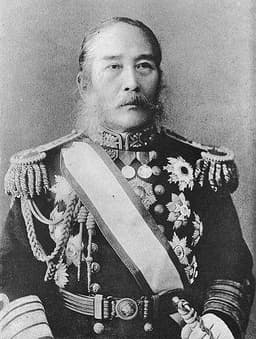
Enomoto Takeaki
General · Modern
51.6Total
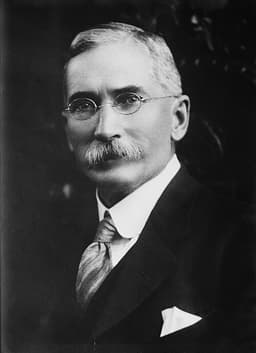
J. B. M. Hertzog
General · Modern
56.1Total
Basic Information
Born
1836
1866
Died
1908
1942
Era
Modern
Modern
Nationality
Japan
South Africa
Occupation
General
General
Civilization
Eastern
Other
Score Comparison
Military (10%)
25.0
25.0
Political (20%)
54.7
60.0
Influence (20%)
54.1
56.7
Legacy (20%)
46.7
50.0
Leadership (15%)
68.0
79.8
Strategy (15%)
55.0
60.0
TOTAL
51.6
56.1
Enomoto Takeaki — Complete Timeline
1868 AD
Led the Shogunate Fleet to HokkaidoWar
Enomoto commanded the shogunate's remaining naval forces, including eight warships, and sailed to Hokkaido. This fleet formed the core of the Republic of Ezo's military and allowed the loyalists to establish a base.
Naval CommandBoshin WarShogunate Loyalist
Impact: regional
Founded the Republic of EzoPolitical Action
After the shogunate's defeat, Enomoto led loyalist forces to Hokkaido and established the Republic of Ezo, an independent state with a Western-style government. He was elected president and organized a defense against imperial forces.
Boshin WarSeparatist StateShogunate Loyalist
Impact: national
1869 AD
Surrendered at the Battle of HakodateWar◆ Major
Enomoto's forces were defeated by the imperial army at the Battle of Hakodate. He surrendered the Republic of Ezo and was taken prisoner, ending the last organized resistance to the Meiji Restoration.
Boshin WarDefeatEnd of Resistance
Impact: nationaltragic
1885 AD
Served as Minister of Foreign Affairs in the Meiji GovernmentPolitical Action◆ Major
After being pardoned, Enomoto served as Japan's Minister of Foreign Affairs. He negotiated treaties with Western powers and worked to revise the unequal treaties imposed on Japan, contributing to Japan's diplomatic modernization.
DiplomacyTreaty RevisionMeiji Government
Impact: nationalconstructive
J. B. M. Hertzog — Complete Timeline
1899 AD
Boer War GeneralWar◆ Major
Hertzog served as a Boer general in the Second Boer War, commanding forces in the Orange Free State. He participated in several battles and became a prominent Afrikaner military leader.
Second Boer WarGeneralMilitary
Impact: regional
1914 AD
Founded the National PartyPolitical Action
Hertzog broke away from the South African Party and founded the National Party, which championed Afrikaner nationalism and opposed British imperial influence. The party would later implement apartheid.
National PartyAfrikaner NationalismFounding
Impact: nationalconstructive
1924 AD
Prime Minister of South AfricaPolitical Action◆ Major
Hertzog became Prime Minister after his National Party won the general election in coalition with the Labour Party. His government implemented policies to protect white workers and promote Afrikaner interests, including the 'civilized labour' policy.
Prime MinisterAfrikaner RightsLabour Policy
Impact: national
1934 AD
Merged with Smuts to Form United PartyPolitical Action◆ Major
Hertzog merged his National Party with Jan Smuts' South African Party to form the United Party. The coalition aimed to address the economic crisis of the Great Depression and promote national unity, but it alienated hardline Afrikaner nationalists.
United PartyCoalitionNational Unity
Impact: nationalconstructive
1936 AD
Passed the Representation of Natives ActReform◆ Major
Hertzog's government passed the Representation of Natives Act, which removed Black voters from the common voters' roll in the Cape Province and allowed them to elect white representatives instead. This further entrenched racial segregation.
SegregationDisenfranchisementLegislation
Impact: nationaldestructive
1939 AD
Resigned Over Neutrality in WWIIPolitical Action◆ Major
Hertzog advocated for South African neutrality in World War II, but his cabinet voted to enter the war on the Allied side. He resigned as Prime Minister and was succeeded by Jan Smuts, splitting the United Party.
World War IINeutralityResignation
Impact: national
Expert Analysis
J. B. M. Hertzog vs Enomoto Takeaki
# The General Who Surrendered Twice: Enomoto Takeaki and J. B. M. Hertzog
In the winter of 1869, a Japanese admiral knelt before his emperor’s general on the snow-covered slopes of Hokkaido, surrendering a rebel republic that had lasted barely eight months. In the autumn of 1939, a South African prime minister walked out of his own cabinet room, resigning because his government chose to fight for the British Empire he had once battled against. Both men were generals who became statesmen; both were defeated warriors who later governed. Yet one is remembered as a visionary who helped build a nation, the other as a tragic figure who codified racial division. What drives such different outcomes from similar beginnings?
Origins
Enomoto Takeaki was born in 1836 into a samurai household serving the Tokugawa shogunate, the military government that had ruled Japan for 250 years. He studied Dutch naval science, and by 1868, at thirty-two, he commanded the shogun’s fleet—a modern, Western-trained officer in a feudal world crumbling around him. His loyalty was to a dying order, not to the young Emperor Meiji whose supporters were sweeping away the old regime.
James Barry Munnik Hertzog, born in 1866 near Wellington, South Africa, grew up on a Boer farm, the son of a Voortrekker family that had fled British rule. He studied law in the Netherlands and became a judge in the Orange Free State. When the Second Boer War erupted in 1899, he was thirty-three—a lawyer turned general, fighting for a republic of farmers against the might of the British Empire. His loyalty was to a people, the Afrikaners, not to the Union of South Africa that would emerge from the war’s ashes.
Both men were shaped by defeat. The samurai class that Enomoto belonged to was abolished; the Boer republics that Hertzog fought for were annexed. For each, the question became: how do you serve a nation that destroyed your world?
Rise to Power
Enomoto’s path was forged in desperation. After the shogunate’s collapse in 1868, he refused to surrender. He gathered eight warships, 2,500 samurai, and sailed north to Hokkaido, where he founded the Republic of Ezo—the first independent republic in Japanese history. He was elected its president, a title that would have been unthinkable in the feudal Japan he had defended. For eight months, he governed, minted coins, and tried to negotiate recognition from foreign powers. Then the imperial army arrived.
Hertzog’s rise was slower, more political. After the Boer War ended in 1902, he entered politics in the new Union of South Africa, formed in 1910. He broke with Prime Minister Louis Botha in 1914 and founded the National Party, which championed Afrikaner rights against British dominance. The party grew steadily, and in 1924, Hertzog became prime minister. Where Enomoto seized power with a fleet, Hertzog seized it with a ballot.
Leadership & Governance
As prime minister from 1924 to 1939, Hertzog governed with a clear vision: protect Afrikaner farmers, promote Afrikaans language and culture, and assert South African sovereignty. He passed laws to shield white workers from black competition, established a national flag independent of the British Union Jack, and in 1934 merged with Jan Smuts to form the United Party, hoping to unite white South Africans. But his greatest failure was the 1936 Representation of Natives Act, which removed Black voters from the common roll in the Cape Province. Hertzog believed he was creating stability; in truth, he was laying bricks for apartheid.
Enomoto’s governance was brief but remarkable. After the Meiji government pardoned him in 1872—impressed by his naval expertise—he entered the very government he had fought. As Minister of Foreign Affairs in 1885, he negotiated treaties with Western powers, revising the unequal treaties that had humiliated Japan. He also served as Minister of Education and Minister of the Navy, helping to build the modern Japanese state. Where Hertzog used power to defend a minority, Enomoto used it to integrate a nation.
Triumph & Tragedy
Hertzog’s triumph was becoming the voice of Afrikaner nationalism, giving his people pride after the humiliation of the Boer War. His tragedy came in 1939 when World War II broke out. Hertzog, who had fought the British, now argued for neutrality. His cabinet voted to join the Allies. He resigned, and his party split. He died in 1942, a bitter man watching the world he had built collapse.
Enomoto’s triumph was survival and transformation. The rebel who surrendered at Hakodate in 1869 became a diplomat who negotiated with the very Western powers that had forced Japan open. His tragedy was more subtle: he lived long enough to see the samurai world he loved become a museum piece. When he died in 1908, Japan was an industrial empire, and he was a relic of a forgotten war.
Character & Destiny
Enomoto was practical. He surrendered when further resistance was futile, then served his conquerors with the same competence he had shown his shogun. His political score of 72.4 reflects a man who could bend without breaking. Hertzog was principled to the point of rigidity. He refused to compromise on Afrikaner identity, even when that meant sacrificing racial justice. His military score of 48.1 is lower than Enomoto’s 28.1, but his political score of 73.0 is nearly identical—suggesting that both were better politicians than warriors.
Yet the difference lies in what they chose to build. Enomoto built a nation that included his former enemies. Hertzog built a nation that excluded his former allies. One surrendered to the future; the other tried to freeze the past.
Legacy
Enomoto is remembered in Japan as a symbol of loyalty and adaptability. His surrender is seen not as a defeat but as a wise transition. The Republic of Ezo is a footnote, but his service to the Meiji state is celebrated. His total score of 68.8 reflects a modest but solid legacy.
Hertzog’s legacy is darker. He is honored by Afrikaner nationalists but condemned by modern South Africans for his racial policies. The 1936 Act he passed was a direct precursor to apartheid. His total score of 68.1 is nearly identical to Enomoto’s, but the moral weight is inverted.
Conclusion
Both men were generals who lost wars and later governed. Both faced the same fundamental choice: how to lead when your side has lost. Enomoto chose to join the victors and build a new Japan. Hertzog chose to defend his people and build a fortress. One became a bridge; the other became a wall. Their scores are almost the same, but their meanings are worlds apart. In the end, history judges not just what you fought for, but what you did after the fighting stopped.
Rankings
🥇
J. B. M. HertzogLeader
Mil: 25.0Pol: 60.0Inf: 56.7
56.1
🥈
Enomoto Takeaki
Mil: 25.0Pol: 54.7Inf: 54.1
51.6
+4.5 behind
How This Comparison Works
Algorithm
Each figure is scored on 6 dimensions (0—100 scale) based on structured historical data: Military (10%), Political (20%), Influence (20%), Legacy (20%), Leadership (15%), Strategy (15%). The weighted total produces the final ranking.
Data Sources
Scores are computed from structured sub-indicators in the database. Scale factors adjust for era (Ancient ×0.85, Modern ×1.0) and civilization size (Eastern ×1.05, Other ×0.80) to account for differences in population and military scale.
Maximum 3 Figures
Comparisons are limited to 2—3 figures to ensure readability and statistical meaningfulness.
Error Margins
±5 points per dimension — Sub-scores are derived from historical records with inherent uncertainty. Two figures within 5 points on a dimension should be considered roughly equivalent in that area.
Total Score Accuracy
±3 points overall — The weighted combination of 6 dimensions produces a total score with approximately ±3 points of uncertainty. Differences of less than 3 points are not statistically significant— the figures are effectively tied.
Known Limitations
- Historical records are incomplete and uneven across civilizations
- Figures from oral-tradition societies may be underrepresented
- Occupation labels can misclassify multi-role figures
- Scores measure capability and impact, not moral character
- Quantitative scoring is a comparison tool, not absolute truth
Capability Radar
Military (10%) — Battles & Warfare
Battles
40
45
Win Rate
35
40
Expansion
30
20
Political (20%) — Governance & Reform
Reform
30
60
Diplomacy
40
55
Economy
25
50
Influence (20%) — Cultural & Global Reach
Cultural
25
50
Global
20
45
Legacy (20%) — Historical Impact
Historical
40
55
Longevity
30
40
Leadership (15%) — Power & Stability
Tenure
35
65
Stability
20
45
Strategy (15%) — Tactics & Innovation
Strategy
50
50
Tactics
55
45
Reform
45
30
Similar Comparisons
Comments & Discussion
No comments yet. Be the first to share your thoughts!