Loading...
Enomoto Takeaki vs Huang Xing
Huang Xing leads by 5.9 pts · 2 figures compared
…
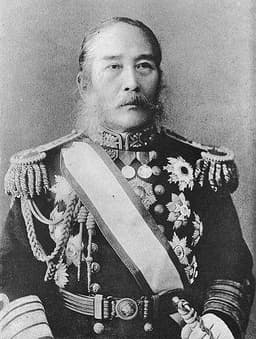
Enomoto Takeaki
General · Modern
51.6Total
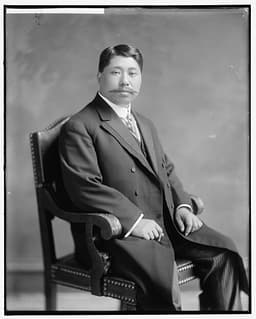
Huang Xing
General · Modern
57.5Total
Basic Information
Born
1836
1874
Died
1908
1916
Era
Modern
Modern
Nationality
Japan
China
Occupation
General
General
Civilization
Eastern
Eastern
Score Comparison
Military (10%)
25.0
46.7
Political (20%)
54.7
53.8
Influence (20%)
54.1
62.0
Legacy (20%)
46.7
56.0
Leadership (15%)
68.0
62.0
Strategy (15%)
55.0
60.0
TOTAL
51.6
57.5
Enomoto Takeaki — Complete Timeline
1868 AD
Led the Shogunate Fleet to HokkaidoWar
Enomoto commanded the shogunate's remaining naval forces, including eight warships, and sailed to Hokkaido. This fleet formed the core of the Republic of Ezo's military and allowed the loyalists to establish a base.
Naval CommandBoshin WarShogunate Loyalist
Impact: regional
Founded the Republic of EzoPolitical Action
After the shogunate's defeat, Enomoto led loyalist forces to Hokkaido and established the Republic of Ezo, an independent state with a Western-style government. He was elected president and organized a defense against imperial forces.
Boshin WarSeparatist StateShogunate Loyalist
Impact: national
1869 AD
Surrendered at the Battle of HakodateWar◆ Major
Enomoto's forces were defeated by the imperial army at the Battle of Hakodate. He surrendered the Republic of Ezo and was taken prisoner, ending the last organized resistance to the Meiji Restoration.
Boshin WarDefeatEnd of Resistance
Impact: nationaltragic
1885 AD
Served as Minister of Foreign Affairs in the Meiji GovernmentPolitical Action◆ Major
After being pardoned, Enomoto served as Japan's Minister of Foreign Affairs. He negotiated treaties with Western powers and worked to revise the unequal treaties imposed on Japan, contributing to Japan's diplomatic modernization.
DiplomacyTreaty RevisionMeiji Government
Impact: nationalconstructive
Huang Xing — Complete Timeline
1905 AD
Co-founded the TongmenghuiPolitical Action◆ Major
Huang Xing co-founded the Tongmenghui (Revolutionary Alliance) in Tokyo with Sun Yat-sen. He became its military leader, organizing armed uprisings against the Qing dynasty.
TongmenghuiRevolutionMilitary
Impact: nationalconstructive
1911 AD
Led the Wuchang UprisingWar
Huang Xing led the Wuchang Uprising, which sparked the Xinhai Revolution. He commanded revolutionary forces against Qing troops, securing initial victories that led to the dynasty's collapse.
Xinhai RevolutionUprisingMilitary
Impact: nationalconstructive
1912 AD
Served as Minister of War in the RepublicPolitical Action◆ Major
Huang Xing served as Minister of War in the provisional government of the Republic of China. He worked to organize a national army and defend the republic against counter-revolutionary forces.
GovernmentMilitaryRepublic
Impact: nationalconstructive
1913 AD
Led the Second Revolution Against Yuan ShikaiWar◆ Major
Huang Xing led the Second Revolution, an armed uprising against President Yuan Shikai's authoritarian rule. The rebellion failed due to lack of coordination and military inferiority, forcing Huang into exile.
Second RevolutionYuan ShikaiExile
Impact: nationaltragic
1916 AD
Died in Exile in ShanghaiPolitical Action
Huang Xing died in Shanghai after returning from exile in Japan and the United States. His death marked the loss of a key military leader of the Chinese revolution, though his legacy endured.
DeathExileRevolution
Impact: nationaltragic
Expert Analysis
Huang Xing vs Enomoto Takeaki
# The Loyalist and the Revolutionary
On a cold December morning in 1868, a samurai fleet carrying the last hopes of Japan's shogunate sailed into the frozen harbor of Hakodate, Hokkaido. Its commander, Enomoto Takeaki, had just led eight warships—the finest vessels of the Tokugawa navy—northward, away from the imperial forces that had crushed his cause. Half a century later and a sea away, another man would die in exile in Shanghai, his body worn out by a lifetime of failed uprisings. Huang Xing, co-founder of China's republic, had spent his final years fleeing from one foreign refuge to another, watching the democracy he helped birth fall to warlords. Two Eastern generals, both dedicated to lost causes, yet their paths reveal starkly different relationships between loyalty, power, and the meaning of defeat.
Origins
Enomoto Takeaki was born in 1836 into a world of rigid hierarchy. As a samurai of the Tokugawa shogunate, he belonged to a warrior class that had governed Japan for 250 years. He studied Dutch naval science and traveled to Europe, absorbing Western military techniques while remaining deeply committed to the shogunate's traditional authority. His Japan was a nation forced open by Commodore Perry's black ships only two decades before his birth—a trauma that shaped every decision of his life.
Huang Xing, born in 1874, came of age in a China that was collapsing. The Qing dynasty, already weakened by the Opium Wars and the Taiping Rebellion, seemed unable to defend itself against foreign powers. Unlike Enomoto, who defended an established order, Huang studied in Japan precisely to learn how to tear his own government down. The difference was generational and philosophical: one man was born to preserve, the other to destroy.
Rise to Power
Enomoto's rise followed the traditional path of a talented samurai. By 1868, he had risen to command the shogunate's navy, earning respect for his competence rather than his revolutionary vision. When the shogunate fell, he did not seek power but rather a place where honor could survive defeat. His founding of the Republic of Ezo that same year was an act of desperation, not ambition—a last stand for a lost world.
Huang Xing's ascent was entirely different. He co-founded the Tongmenghui in Tokyo in 1905 alongside Sun Yat-sen, becoming the military arm of a revolutionary movement. His power came from his ability to organize armed resistance, not from inherited rank. The Wuchang Uprising in 1911, which he led, was the spark that ignited the Xinhai Revolution—a deliberate, calculated act of insurrection. Huang did not inherit authority; he seized it.
Leadership & Governance
As leader of the Ezo Republic, Enomoto governed with the precision of a naval officer. He established a functioning state in Hokkaido with elections, a treasury, and diplomatic overtures to foreign powers. His political score of 72.4 reflects a man who understood governance even as he fought for a lost cause. But his military score of 28.1 tells the story of his ultimate failure: when imperial forces arrived at the Battle of Hakodate in 1869, Enomoto's resistance collapsed. He surrendered, hoping to preserve his men's lives.
Huang Xing's leadership was more volatile. His military score of 42.1 suggests competence without genius, but his political score of 62.7 reveals a man who understood that revolutions require more than bullets. As Minister of War in the provisional government of 1912, he worked to build a national army for the new republic. Yet his Second Revolution against Yuan Shikai in 1913 failed disastrously. Huang could inspire uprisings but could not sustain them—a pattern that would define his career.
Triumph & Tragedy
Enomoto's greatest moment came not on the battlefield but in his surrender. When he handed over the Republic of Ezo to imperial forces in 1869, he did so with dignity, and the Meiji government—remarkably—pardoned him. By 1885, he had become Japan's Minister of Foreign Affairs, negotiating treaties with the Western powers he had once fought. His tragedy was that his greatest loyalty was to a dying order; his triumph was that he lived to serve the new one.
Huang Xing's triumph was the Wuchang Uprising itself, which ended 2,000 years of imperial rule in China. But his tragedy unfolded quickly. The republic he helped found fell to Yuan Shikai's dictatorship within two years. Huang spent his final years in exile, dying in 1916 at only 42, watching from abroad as China descended into warlord chaos. His revolution succeeded; his republic failed.
Character & Destiny
Enomoto's character was defined by pragmatism wrapped in samurai honor. He could surrender, adapt, and serve a new master—not from cowardice, but from a deep understanding that the nation mattered more than the regime. His leadership score of 84.7 suggests a man others would follow, even in defeat. His destiny was to be the bridge between old Japan and new.
Huang Xing was defined by relentless action. He was a man of uprisings and escapes, always fighting, always fleeing. His strategy score of 57.6 reveals a commander who relied more on courage than calculation. His destiny was to be the spark that never became a flame—the revolutionary who could start a fire but not control it. He died in Shanghai, a city that would soon become the heart of a new China he did not live to see.
Legacy
Enomoto Takeaki is remembered today as a figure of tragic nobility—the man who held out the longest, then served the nation he once opposed. His legacy score of 65.6 reflects a complex reputation: he is neither hero nor villain, but a reminder that history rewards those who adapt. The Republic of Ezo is a footnote, but his later diplomatic work helped shape modern Japan.
Huang Xing's legacy score of 66.6 is remarkably similar, yet his memory is far more contested. In mainland China, he is honored as a founding father of the republic, yet often overshadowed by Sun Yat-sen. In Taiwan, he is remembered differently. His influence score of 70.6 suggests a man whose ideas outlived him, even if his military campaigns did not. He is the co-founder who never became the leader.
Conclusion
Standing at the end of their lives, both men looked back on worlds they had tried to shape. Enomoto saw a Japan transformed into a modern power—a nation that had absorbed Western technology while preserving its soul. Huang Xing saw a China still in chaos, his revolution incomplete. The difference was not in their courage or their vision, but in the timing of history. Enomoto's loyalty to the past allowed him to serve the future; Huang's devotion to the future condemned him to die in its waiting room. Both were defeated men who changed their nations. But only one lived to see his defeat become a foundation.
Rankings
🥇
Huang XingLeader
Mil: 46.7Pol: 53.8Inf: 62.0
57.5
🥈
Enomoto Takeaki
Mil: 25.0Pol: 54.7Inf: 54.1
51.6
+5.9 behind
How This Comparison Works
Algorithm
Each figure is scored on 6 dimensions (0—100 scale) based on structured historical data: Military (10%), Political (20%), Influence (20%), Legacy (20%), Leadership (15%), Strategy (15%). The weighted total produces the final ranking.
Data Sources
Scores are computed from structured sub-indicators in the database. Scale factors adjust for era (Ancient ×0.85, Modern ×1.0) and civilization size (Eastern ×1.05, Other ×0.80) to account for differences in population and military scale.
Maximum 3 Figures
Comparisons are limited to 2—3 figures to ensure readability and statistical meaningfulness.
Error Margins
±5 points per dimension — Sub-scores are derived from historical records with inherent uncertainty. Two figures within 5 points on a dimension should be considered roughly equivalent in that area.
Total Score Accuracy
±3 points overall — The weighted combination of 6 dimensions produces a total score with approximately ±3 points of uncertainty. Differences of less than 3 points are not statistically significant— the figures are effectively tied.
Known Limitations
- Historical records are incomplete and uneven across civilizations
- Figures from oral-tradition societies may be underrepresented
- Occupation labels can misclassify multi-role figures
- Scores measure capability and impact, not moral character
- Quantitative scoring is a comparison tool, not absolute truth
Capability Radar
Military (10%) — Battles & Warfare
Battles
40
35
Win Rate
35
30
Expansion
30
20
Political (20%) — Governance & Reform
Reform
30
60
Diplomacy
40
55
Economy
25
30
Influence (20%) — Cultural & Global Reach
Cultural
25
40
Global
20
40
Legacy (20%) — Historical Impact
Historical
40
55
Longevity
30
45
Leadership (15%) — Power & Stability
Tenure
35
40
Stability
20
25
Strategy (15%) — Tactics & Innovation
Strategy
50
45
Tactics
55
40
Reform
45
50
Similar Comparisons
Comments & Discussion
数据幽灵6/16/2026
拿黄兴和榎本武扬比?两张八竿子打不着的牌硬凑一桌。榎本好歹在箱馆搞过三个月稳定统治,有税收有民政,最后投降混到海军卿。黄兴呢?武昌起义后抢位置抢不过袁世凯,二次革命更是三个月凉透。你非要说失败精神相似——那流浪狗和迷路老虎都是找不到家呢。具体事实:榎本带八艘军舰北上时还有三千兵力,黄兴1913年逃日本时身边只剩几个秘书。量级差太多了。
晚清观察家6/16/2026
最讽刺的是这两人都输在"新"与"旧"的夹缝里,打法却完全相反。榎本是旧制度的精英,学了荷兰海军技术,带着当时亚洲最先进的舰队打内战——结果输给更执着的新政府。黄兴是新思想的旗手,留日学军事,搞革命搞暗杀——结果输给更圆滑的旧官僚袁世凯。一个用新武器穿旧盔甲,一个穿新西装拿旧稿纸。历史不评价谁更忠诚,只算谁更懂怎么活着熬到权力变天。
Historian1636/16/2026
What strikes me is how both men's deaths mirrored their lives: Enomoto died in Tokyo at 72, a respected former minister, while Huang Xing died in a Shanghai hospital at 42, exiled and broken. One's defeat became a footnote in a long career of service; the other's defeat was his entire biography. Enomoto's surrender at Hakodate wasn't the end—he was pardoned, served as Japan's navy minister, even became ambassador to China. Huang Xing never got that second act. The Meiji Restoration could forgive
Chronicler54996/16/2026
Everyone's romanticizing "loyalty to a lost cause," but let's be real: Enomoto switched sides within two years and became a Meiji bureaucrat. Huang Xing couldn't adapt and died bitter. The samurai code is just a pretty word for "what happens when you bet on the wrong horse and then refuse to bet again." If Enomoto was truly loyal, he'd have stayed in Hokkaido and died in the snow. Instead
Chronicler54326/16/2026
Enomoto was a competent administrator who built Hokkaido into a functioning state, while Huang Xing was a bomb-thrower who never held power longer than a few weeks. The difference isn't loyalty—it's that one knew how to govern and the other only knew how to rebel. Enomoto's Hokkaido Republic had postal systems, land surveys, and a working treasury. Huang's Nanking government couldn't even pay its own troops. That's not tragic loyalty; that's incompetence romanticized by historians who love loser