Loading...
Enomoto Takeaki vs Hideki Tojo
Hideki Tojo leads by 2.3 pts · 2 figures compared
…
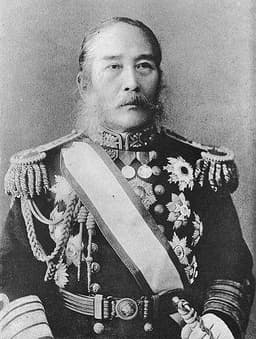
Enomoto Takeaki
General · Modern
51.6Total
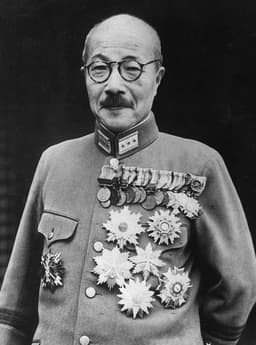
Hideki Tojo
General · Modern
53.9Total
Basic Information
Born
1836
1884
Died
1908
1948
Era
Modern
Modern
Nationality
Japan
Japan
Occupation
General
General
Civilization
Eastern
Eastern
Score Comparison
Military (10%)
25.0
70.0
Political (20%)
54.7
48.0
Influence (20%)
54.1
55.0
Legacy (20%)
46.7
50.0
Leadership (15%)
68.0
53.2
Strategy (15%)
55.0
55.0
TOTAL
51.6
53.9
Enomoto Takeaki — Complete Timeline
1868 AD
Led the Shogunate Fleet to HokkaidoWar
Enomoto commanded the shogunate's remaining naval forces, including eight warships, and sailed to Hokkaido. This fleet formed the core of the Republic of Ezo's military and allowed the loyalists to establish a base.
Naval CommandBoshin WarShogunate Loyalist
Impact: regional
Founded the Republic of EzoPolitical Action
After the shogunate's defeat, Enomoto led loyalist forces to Hokkaido and established the Republic of Ezo, an independent state with a Western-style government. He was elected president and organized a defense against imperial forces.
Boshin WarSeparatist StateShogunate Loyalist
Impact: national
1869 AD
Surrendered at the Battle of HakodateWar◆ Major
Enomoto's forces were defeated by the imperial army at the Battle of Hakodate. He surrendered the Republic of Ezo and was taken prisoner, ending the last organized resistance to the Meiji Restoration.
Boshin WarDefeatEnd of Resistance
Impact: nationaltragic
1885 AD
Served as Minister of Foreign Affairs in the Meiji GovernmentPolitical Action◆ Major
After being pardoned, Enomoto served as Japan's Minister of Foreign Affairs. He negotiated treaties with Western powers and worked to revise the unequal treaties imposed on Japan, contributing to Japan's diplomatic modernization.
DiplomacyTreaty RevisionMeiji Government
Impact: nationalconstructive
Hideki Tojo — Complete Timeline
1941 AD
Attack on Pearl HarborWar
As Prime Minister, Hideki Tojo authorized the attack on the US naval base at Pearl Harbor, Hawaii. The surprise attack brought the United States into World War II. Tojo's decision was based on the belief that war with the US was inevitable due to resource embargoes and diplomatic failures.
World War IIPearl HarborUS-Japan War
Impact: globaldestructive
Appointment as Prime MinisterPolitical Action◆ Major
Hideki Tojo was appointed Prime Minister of Japan, replacing Fumimaro Konoe. He retained his position as Army Minister and later took on other portfolios, consolidating power. His appointment marked the ascendancy of the military faction in the Japanese government and the shift towards total war.
Prime MinisterMilitary GovernmentWorld War II
Impact: national
1942 AD
Fall of SingaporeWar◆ Major
Under Tojo's leadership, Japanese forces captured Singapore from the British in a swift campaign. The fall of Singapore was one of the worst British military defeats in history. It demonstrated Japanese military prowess and led to the occupation of a key strategic location in Southeast Asia.
World War IISingaporeJapanese Victory
Impact: global
1948 AD
Execution by the International Military Tribunal for the Far EastPolitical Action◆ Major
Hideki Tojo was found guilty of war crimes by the International Military Tribunal for the Far East and sentenced to death. He was executed by hanging on December 23, 1948. His trial and execution symbolized the Allied effort to hold Japanese leaders accountable for wartime atrocities.
War CrimesExecutionTokyo Trials
Impact: globaltragic
Expert Analysis
Hideki Tojo vs Enomoto Takeaki
### The General Who Lost Twice: Hideki Tojo and Enomoto Takeaki
On a gray morning in December 1948, Hideki Tojo climbed the thirteen steps of the gallows at Sugamo Prison, his last words a whisper of apology to the Japanese people. Exactly eighty years earlier, in the spring of 1869, another Japanese general, Enomoto Takeaki, had knelt before the victorious imperial army at Hakodate, offering his sword in surrender. Both men were warriors who led their nation into catastrophic defeats. Yet one died a condemned war criminal, the other lived to become a respected diplomat. Why did two men of similar background and ambition meet such different fates? The answer lies not in their character alone, but in the tides of history they tried to ride.
### Origins
Enomoto Takeaki was born in 1836 into a samurai family serving the Tokugawa shogunate, the military government that had ruled Japan for over 250 years. His world was one of rigid hierarchy and feudal loyalty, where the shogun was the supreme authority and the emperor a distant, ceremonial figure. The young Enomoto studied Dutch and Western naval technology at the shogunate’s institute, a sign of the winds of change blowing across Japan. He was a product of an old order that was already crumbling.
Hideki Tojo, born in 1884, came of age in a Japan that had been transformed. The Meiji Restoration of 1868 had swept away the shogunate, centralized power under the emperor, and launched a frantic modernization. Tojo’s father was a samurai-turned-army officer, and young Hideki was raised on a diet of imperial loyalty and military discipline. If Enomoto’s world was one of transition, Tojo’s was one of certainty: Japan was a rising empire, and its destiny was to dominate Asia. The difference in their starting points—a fading shogunate versus a soaring empire—would shape everything that followed.
### Rise to Power
Enomoto’s path to power was forged in defeat. In 1868, when the shogunate collapsed, he refused to accept the new imperial government. He gathered loyalist forces, commandeered eight warships, and sailed north to Hokkaido, the wild frontier of Japan. There, in December 1868, he founded the Republic of Ezo—the first and only attempt at a republic in Japanese history. It was a desperate gamble, a last stand of the old order against the new. Enomoto was elected president by his men, a curious mix of samurai tradition and Western-style governance.
Tojo’s rise was the opposite: a steady climb within the imperial system. He served as a military attaché in Germany, commanded troops in Manchuria, and became head of the Kwantung Army’s secret police. In 1941, with Japan locked in an increasingly desperate war in China and facing American oil sanctions, Emperor Hirohito appointed him Prime Minister. Tojo was the logical choice: a hawk who would not waver. Unlike Enomoto, who seized power in a moment of chaos, Tojo inherited it from a system that had already chosen war.
### Leadership & Governance
As a leader, Enomoto was pragmatic and cautious. The Republic of Ezo lasted only six months, but during that time he tried to build a functioning state: he established a postal system, opened schools, and sought recognition from foreign powers. When the imperial army arrived in force in 1869, he chose to fight, but when defeat became inevitable, he surrendered. His strategy was not to die gloriously, but to survive for another day.
Tojo’s leadership was rigid and uncompromising. He micromanaged the war effort, holding simultaneous posts as Prime Minister, Army Minister, and later Chief of the General Staff. He authorized the attack on Pearl Harbor in December 1941, a brilliant tactical victory that he failed to follow up with strategic wisdom. Under his command, Japanese forces swept through Southeast Asia, capturing Singapore in February 1942—the greatest humiliation in British military history. But Tojo had no plan for victory. He believed that willpower could overcome material inferiority, a fatal miscalculation.
### Triumph & Tragedy
For Enomoto, his greatest moment was paradoxically his surrender. After the Battle of Hakodate in 1869, he expected execution. Instead, the new Meiji government pardoned him. He later served as Minister of Foreign Affairs, negotiating treaties with Western powers and even becoming Japan’s ambassador to Russia. The man who had fought to preserve the shogunate ended up serving the emperor who destroyed it. His tragedy was that he was never able to choose his own side; history chose it for him.
Tojo’s triumph was the fall of Singapore, a victory that seemed to confirm Japan’s invincibility. But it was a poisoned fruit. The easy conquests only deepened Japan’s overextension, and Tojo lacked the flexibility to adjust. By 1944, with American forces closing in, he was forced to resign. In 1948, after a trial that he knew would end in death, he was hanged for war crimes. His tragedy was that he never doubted himself, even when his country was burning.
### Character & Destiny
Enomoto was a survivor. He understood that loyalty to a lost cause was not the same as loyalty to one’s country. When the shogunate fell, he fought, but when the fight was hopeless, he adapted. This flexibility saved his life and allowed him to serve Japan in a new era.
Tojo was a believer. He was utterly convinced of Japan’s divine mission and the righteousness of its cause. He could not compromise because he saw compromise as betrayal. This rigidity made him a powerful leader in war, but a disastrous one in peace. His character, forged in the imperial cult of the Meiji era, left no room for doubt—and doubt was what Japan needed most.
### Legacy
Enomoto Takeaki is largely forgotten outside Japan, but within the country he is remembered as a symbol of reconciliation. His story shows that even the most bitter enemies can become servants of a common nation. The Republic of Ezo, once a rebellion, is now a footnote in the story of Japan’s unification.
Hideki Tojo is remembered as one of history’s great villains. His name is synonymous with Japanese militarism, and his execution is seen as a just punishment for war. Yet his legacy is more complex: he was not a madman, but a product of a system that valued obedience over reason. The same system that elevated him also destroyed him.
### Conclusion
Standing at the gallows in 1948, Tojo might have thought of Enomoto, the rebel who surrendered and lived. But Tojo could not have chosen Enomoto’s path. He was trapped not just by his enemies, but by his own beliefs. Enomoto, born into a dying order, learned to let go. Tojo, born into a rising empire, could never release his grip. In the end, both men were swept away by the same force: the relentless, indifferent current of history. The difference was that Enomoto learned to swim, while Tojo drowned clutching his sword.
Rankings
🥇
Hideki TojoLeader
Mil: 70.0Pol: 48.0Inf: 55.0
53.9
🥈
Enomoto Takeaki
Mil: 25.0Pol: 54.7Inf: 54.1
51.6
+2.3 behind
How This Comparison Works
Algorithm
Each figure is scored on 6 dimensions (0—100 scale) based on structured historical data: Military (10%), Political (20%), Influence (20%), Legacy (20%), Leadership (15%), Strategy (15%). The weighted total produces the final ranking.
Data Sources
Scores are computed from structured sub-indicators in the database. Scale factors adjust for era (Ancient ×0.85, Modern ×1.0) and civilization size (Eastern ×1.05, Other ×0.80) to account for differences in population and military scale.
Maximum 3 Figures
Comparisons are limited to 2—3 figures to ensure readability and statistical meaningfulness.
Error Margins
±5 points per dimension — Sub-scores are derived from historical records with inherent uncertainty. Two figures within 5 points on a dimension should be considered roughly equivalent in that area.
Total Score Accuracy
±3 points overall — The weighted combination of 6 dimensions produces a total score with approximately ±3 points of uncertainty. Differences of less than 3 points are not statistically significant— the figures are effectively tied.
Known Limitations
- Historical records are incomplete and uneven across civilizations
- Figures from oral-tradition societies may be underrepresented
- Occupation labels can misclassify multi-role figures
- Scores measure capability and impact, not moral character
- Quantitative scoring is a comparison tool, not absolute truth
Capability Radar
Military (10%) — Battles & Warfare
Battles
40
65
Win Rate
35
40
Expansion
30
70
Political (20%) — Governance & Reform
Reform
30
30
Diplomacy
40
35
Economy
25
25
Influence (20%) — Cultural & Global Reach
Cultural
25
30
Global
20
55
Legacy (20%) — Historical Impact
Historical
40
55
Longevity
30
40
Leadership (15%) — Power & Stability
Tenure
35
60
Stability
20
20
Strategy (15%) — Tactics & Innovation
Strategy
50
50
Tactics
55
55
Reform
45
45
Similar Comparisons
Comments & Discussion
数据拆解师6/16/2026
数据是不会说谎的:东条指挥的战役,比如1944年的因帕尔,日军伤亡超过五万,粮食弹药全断,简直把士兵当耗材。而榎本在箱馆战争里,兵力只有三千多,战死不过五百,输得干净利落。东条的问题是战略上总以为人多就能赢,榎本至少算过账,知道什么时候该认输。数据摆在这儿,谁的指挥更烂一目了然。
历史纠正者6/16/2026
别把榎本洗成什么悲剧英雄了——他根本就是个投机分子。1868年他偷了幕府舰队逃到北海道,成立虾夷共和国,结果几个月就撑不住投降了。后来又跪舔新政府,当上高官,这哪是什么忠心武士?东条至少为他的信仰一条路走到黑,哪怕那是条死路。榎本出卖旧主换前程,说白了就是见风使舵。
Historian8526/16/2026
Scipio Africanus would recognize Enomoto as a man who knew defeat was a chapter, not the book—he surrendered at Hakodate, but later served as Japan’s naval minister and envoy to Russia, building the very navy that sank Chinese ships in 1894. Tojo, by contrast, is like a lesser Hannibal, obsessed with crushing the enemy until Carthage was ash. Enomoto lost a battle but saved his legacy; Tojo won early battles but damned everything else.
Historian1596/16/2026
Between these two men, I see the lesson of when to surrender—Enomoto, the pragmatist, understood that survival meant bowing to the Meiji emperor and reinventing himself; Tojo, the ideologue, doubled down on militarist dogma until the noose tightened. Enomoto’s study of Dutch naval texts shows he learned from the West, while Tojo relied on the phantom of spiritual superiority. One read the room, the other read the wrong script.
Chronicler29206/16/2026
Give me a break—Tojo was a glorified desk general who micromanaged from Tokyo while his starving troops in Guadalcanal ate roots and leather! Enomoto at least had the guts to lead from the front: in 1869, he personally commanded the last stand at Goryokaku fortress, surrounded and outgunned, and only surrendered when water ran out. Tojo hid in a bunker and cried when the nukes fell. That’s your “similar background”? Hardly.