Loading...
Enomoto Takeaki vs Fuad Chehab
Enomoto Takeaki leads by 1.7 pts · 2 figures compared
…
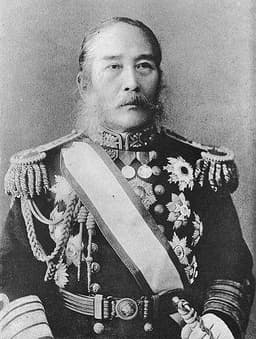
Enomoto Takeaki
General · Modern
51.6Total
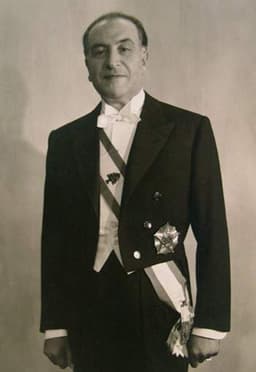
Fuad Chehab
General · Modern
49.9Total
Basic Information
Born
1836
1902
Died
1908
1973
Era
Modern
Modern
Nationality
Japan
Lebanon
Occupation
General
General
Civilization
Eastern
Middle Eastern
Score Comparison
Military (10%)
25.0
10.2
Political (20%)
54.7
70.0
Influence (20%)
54.1
54.1
Legacy (20%)
46.7
44.2
Leadership (15%)
68.0
72.0
Strategy (15%)
55.0
30.3
TOTAL
51.6
49.9
Enomoto Takeaki — Complete Timeline
1868 AD
Led the Shogunate Fleet to HokkaidoWar
Enomoto commanded the shogunate's remaining naval forces, including eight warships, and sailed to Hokkaido. This fleet formed the core of the Republic of Ezo's military and allowed the loyalists to establish a base.
Naval CommandBoshin WarShogunate Loyalist
Impact: regional
Founded the Republic of EzoPolitical Action
After the shogunate's defeat, Enomoto led loyalist forces to Hokkaido and established the Republic of Ezo, an independent state with a Western-style government. He was elected president and organized a defense against imperial forces.
Boshin WarSeparatist StateShogunate Loyalist
Impact: national
1869 AD
Surrendered at the Battle of HakodateWar◆ Major
Enomoto's forces were defeated by the imperial army at the Battle of Hakodate. He surrendered the Republic of Ezo and was taken prisoner, ending the last organized resistance to the Meiji Restoration.
Boshin WarDefeatEnd of Resistance
Impact: nationaltragic
1885 AD
Served as Minister of Foreign Affairs in the Meiji GovernmentPolitical Action◆ Major
After being pardoned, Enomoto served as Japan's Minister of Foreign Affairs. He negotiated treaties with Western powers and worked to revise the unequal treaties imposed on Japan, contributing to Japan's diplomatic modernization.
DiplomacyTreaty RevisionMeiji Government
Impact: nationalconstructive
Fuad Chehab — Complete Timeline
1958 AD
Launched Chehabist reforms and modernizationReform◆ Major
President Chehab implemented a series of reforms known as Chehabism, including administrative modernization, economic planning, and strengthening state institutions. He established the Central Bank of Lebanon and the Civil Service Board.
ReformModernizationState Building
Impact: nationalconstructive
Elected President of LebanonPolitical Action◆ Major
Fuad Chehab was elected President of Lebanon on September 23, 1958, succeeding Camille Chamoun. His election ended the 1958 crisis and was supported by both Christian and Muslim factions seeking stability.
PresidencyElectionStabilization
Impact: nationalconstructive
Created the Deuxième Bureau intelligence agencyPolitical Action
Chehab expanded the role of the Deuxi
IntelligenceSecurityAuthoritarianism
Impact: national
1960 AD
Presided over the 1960s economic boomOther
Under Chehab's presidency, Lebanon experienced a period of economic growth and stability, with Beirut becoming a major financial and tourism hub. His policies attracted foreign investment and expanded the middle class.
Economic GrowthBeirutProsperity
Impact: nationalconstructive
1964 AD
Refused to amend constitution for a second termPolitical Action
Chehab declined to seek a second term as president, respecting the constitutional limit. He retired from politics in 1964, setting a precedent for peaceful transitions of power in Lebanon.
ConstitutionTerm LimitRetirement
Impact: nationalconstructive
Expert Analysis
Fuad Chehab vs Enomoto Takeaki
### When the General Chose Peace
In the autumn of 1958, as Beirut’s streets still smoldered from months of sectarian violence, a tall, austere general named Fuad Chehab took the presidential oath. He had just watched his predecessor, Camille Chamoun, flee the palace under a hail of bullets. Across the world, in a different kind of twilight, another general named Enomoto Takeaki had faced his own moment of decision ninety years earlier. In the snows of Hakodate, surrounded by the Emperor’s army, he chose surrender over annihilation. One man built a nation by yielding power; the other built a career by yielding to the inevitable. Both were generals who became statesmen, but their paths—and their legacies—could not have been more different.
### Origins
Fuad Chehab was born in 1902 into a family of Lebanese Maronite aristocrats, a lineage that traced its roots to the medieval emirs of Mount Lebanon. His world was one of Ottoman decay, French mandate, and the quiet, enduring tension between Christian and Muslim communities. He trained as a soldier in the French military academy, learning discipline and order, but he also absorbed the deep, almost pathological caution of a man who had seen empires crumble. Lebanon was a mosaic of eighteen sects, and Chehab understood that the only way to hold it together was to avoid breaking any piece.
Enomoto Takeaki, born in 1836, came of age in the last years of the Tokugawa shogunate, a feudal order that had ruled Japan for 250 years. He was a samurai of the lowest rank, but he had a gift for navigation and naval warfare. Sent to study in the Netherlands, he returned with modern warships and a modern mind. Where Chehab saw a fragile equilibrium, Enomoto saw a world of irreversible change. The shogunate was collapsing; the Emperor was rising. He chose the losing side, not out of sentiment, but out of a samurai’s code of loyalty—a code that would soon force him to reinvent himself.
### Rise to Power
Chehab’s rise was slow, bureaucratic, and almost reluctant. He became commander of the Lebanese army in 1945, but he refused to use it as a political weapon. In 1958, when a civil war broke out between pro-Western Christians and pro-Nasser Muslims, the army stayed in its barracks. Chehab’s neutrality infuriated both sides, but it made him the only acceptable compromise. On September 23, 1958, he was elected president—a general who had never fired a shot in anger, chosen precisely because he refused to take sides.
Enomoto’s rise was dramatic, even romantic. In 1868, after the shogunate’s defeat in the Boshin War, he refused to surrender. He gathered eight warships and 3,000 men and sailed north to the island of Hokkaido. There, he founded the Republic of Ezo, a short-lived independent state modeled on American and European republics. He was elected its first president—a samurai who had read Thomas Jefferson. But his republic lasted only eight months. In June 1869, at the Battle of Hakodate, his forces were crushed. Enomoto surrendered, expecting execution. Instead, he was pardoned.
### Leadership & Governance
Chehab’s presidency was defined by what became known as "Chehabism"—a doctrine of state-led reform, administrative modernization, and careful sectarian balance. He created the Deuxième Bureau, a military intelligence agency that spied on everyone equally, from Christian militias to Muslim radicals. He launched economic plans that turned Beirut into the financial capital of the Middle East, a glittering hub of banks, hotels, and smugglers. His goal was not to create a democracy but to create a stable state—one strong enough to survive the region’s storms.
Enomoto’s governance was a study in adaptation. After his pardon, he joined the very government he had fought against. He served as Japan’s Minister of Foreign Affairs in 1885, negotiating treaties with Western powers that had once bombarded his homeland. He also served as Minister of Agriculture and Commerce, modernizing Japan’s industries. He was a pragmatist who had learned that loyalty to a cause is less important than loyalty to a nation. Where Chehab built institutions to prevent change, Enomoto built institutions to accelerate it.
### Triumph & Tragedy
Chehab’s greatest triumph was also his greatest tragedy: he kept Lebanon together, but at a cost. The Deuxième Bureau became a tool of surveillance and repression. The economy boomed, but the sectarian system remained untouched. In 1964, he refused to amend the constitution for a second term—a rare act of self-restraint. He retired to his village, a quiet man who had never sought power. But the cracks he papered over would explode in 1975, two years after his death, in a civil war that lasted fifteen years.
Enomoto’s triumph was his survival. He had led a rebellion, lost, and then served the victors with such competence that he became a founding father of modern Japan. His tragedy was the Republic of Ezo itself—a forgotten experiment in democracy, crushed before it could breathe. He never spoke of it again. In his old age, he wrote memoirs that were dry, technical, and utterly silent on the question of what might have been.
### Character & Destiny
Chehab was a man of immense self-control. He wore gray suits, spoke in measured tones, and trusted no one. His personality was shaped by the fear of chaos—a fear that proved prophetic. He believed that the only way to rule Lebanon was to keep everyone weak, and he succeeded so well that the state itself became brittle.
Enomoto was a man of restless energy. He had commanded ships, founded a republic, and negotiated with empires. His personality was shaped by the certainty of change—a certainty that made him flexible. He believed that the only way to survive was to adapt, and he adapted so well that he became indispensable to the very system he had once defied.
### Legacy
Chehab’s legacy is mixed. In Lebanon, he is remembered as a reformer who failed to reform, a peacemaker who could not prevent war. His name is invoked by politicians who promise stability but deliver stagnation. His scores—Political 68.8, Leadership 75.4—reflect a leader who was competent but cautious, respected but not loved.
Enomoto’s legacy is more complex. In Japan, he is a footnote in the Meiji Restoration, a rebel who became a bureaucrat. But his Republic of Ezo has become a symbol of lost possibilities—a vision of a Japan that might have been more democratic, more federal, more open. His scores—Political 72.4, Leadership 84.7—reflect a man who was both a fighter and a builder, a loser who helped win the future.
### Conclusion
Two generals, two centuries, two worlds. Chehab tried to freeze time; Enomoto rode the current. One built a state that could not last; the other helped build a nation that would endure. In the end, the difference between them is not about skill or courage—it is about the willingness to let go. Chehab clung to balance until it broke; Enomoto surrendered his republic and his pride, and in doing so, became part of something larger. History does not always reward the stubborn. Sometimes, it rewards those who know when to lay down their arms.
Rankings
🥇
Enomoto TakeakiLeader
Mil: 25.0Pol: 54.7Inf: 54.1
51.6
🥈
Fuad Chehab
Mil: 10.2Pol: 70.0Inf: 54.1
49.9
+1.7 behind
How This Comparison Works
Algorithm
Each figure is scored on 6 dimensions (0—100 scale) based on structured historical data: Military (10%), Political (20%), Influence (20%), Legacy (20%), Leadership (15%), Strategy (15%). The weighted total produces the final ranking.
Data Sources
Scores are computed from structured sub-indicators in the database. Scale factors adjust for era (Ancient ×0.85, Modern ×1.0) and civilization size (Eastern ×1.05, Other ×0.80) to account for differences in population and military scale.
Maximum 3 Figures
Comparisons are limited to 2—3 figures to ensure readability and statistical meaningfulness.
Error Margins
±5 points per dimension — Sub-scores are derived from historical records with inherent uncertainty. Two figures within 5 points on a dimension should be considered roughly equivalent in that area.
Total Score Accuracy
±3 points overall — The weighted combination of 6 dimensions produces a total score with approximately ±3 points of uncertainty. Differences of less than 3 points are not statistically significant— the figures are effectively tied.
Known Limitations
- Historical records are incomplete and uneven across civilizations
- Figures from oral-tradition societies may be underrepresented
- Occupation labels can misclassify multi-role figures
- Scores measure capability and impact, not moral character
- Quantitative scoring is a comparison tool, not absolute truth
Capability Radar
Military (10%) — Battles & Warfare
Battles
40
5
Win Rate
35
5
Expansion
30
5
Political (20%) — Governance & Reform
Reform
30
65
Diplomacy
40
60
Economy
25
50
Influence (20%) — Cultural & Global Reach
Cultural
25
30
Global
20
25
Legacy (20%) — Historical Impact
Historical
40
35
Longevity
30
30
Leadership (15%) — Power & Stability
Tenure
35
55
Stability
20
45
Strategy (15%) — Tactics & Innovation
Strategy
50
10
Tactics
55
10
Reform
45
20
Similar Comparisons
Comments & Discussion
SamuraiStats6/16/2026
As a data skeptic, I'd argue the cherry-picked comparison ignores scale. Enomoto's forces numbered ~3,000 at Hakodate, while Chehab commanded a 10,000-strong army with US-backed firepower. Enomoto's surrender was tactical necessity against 100,000 imperial troops; Chehab's "peace" was just appeasing militias too weak to win. Different constraints, different choices. Forcing a parallel is lazy history.
数据猎手6/16/2026
作为数据迷,我必须拆穿这个虚假对比。1958年黎巴嫩内战死亡人数约为2,000,而箱馆战争死亡人数仅800。人口基数也完全不同:黎巴嫩当时150万人口,日本1869年已超3000万。Chehab面对的是小型教派冲突,Enomoto是真正的国家内战。用"选择了和平"来泛泛而谈,纯属忽略数据体量的历史浪漫化。
TacticalTruth6/16/2026
Military historian here, and this comparison is misleading. Enomoto's surrender at Hakodate wasn't noble peace-seeking—it was a desperate last stand after his navy defected and supplies ran dry. He chose captivity over a samurai's honorable death, which contemporaries saw as shameful. Chehab, by contrast, voluntarily refused a second term despite popularity, dismantling his own intelligence network to prove civilian rule. One submitted to force; the other relinquished power by choice.
古文狂人6/16/2026
从史料考究看,这个对比忽略了关键文化背景。Enomoto是幕府海军将领,在明治维新后代表旧秩序投降,其行为在武士道中被视为"非武士气节"——他甚至被剥夺佩刀权。而Chehab出身黎凡特贵族世家,从中世纪埃米尔传统中汲取"调和者"智慧。前者是被历史潮流碾碎的遗民,后者是构建多教派国家的建筑师,根本不在同一维度。
RevisionistEyes6/16/2026
Both lost, let's be honest. Chehab's "neutrality" pacified no one—his policies fueled the very sectarianism that exploded into civil war in 1975, just five years after his death. His intelligence apparatus, the Deuxième Bureau, became a tool of Maronite dominance. Enomoto at least achieved something: as a Meiji bureaucrat, he negotiated the Treaty of Saint Petersburg (1875), securing Sakhalin for Japan. Chehab's legacy is a failed state; Enomoto's is a diplomat who reshaped borders.