Loading...
Enomoto Takeaki vs Feng Guozhang
Enomoto Takeaki leads by 2.5 pts · 2 figures compared
…
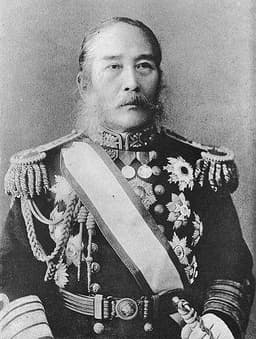
Enomoto Takeaki
General · Modern
51.6Total
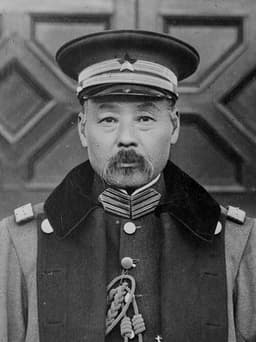
Feng Guozhang
General · Modern
49.1Total
Basic Information
Born
1836
1859
Died
1908
1919
Era
Modern
Modern
Nationality
Japan
China
Occupation
General
General
Civilization
Eastern
Eastern
Score Comparison
Military (10%)
25.0
30.0
Political (20%)
54.7
61.3
Influence (20%)
54.1
54.9
Legacy (20%)
46.7
45.8
Leadership (15%)
68.0
40.0
Strategy (15%)
55.0
57.5
TOTAL
51.6
49.1
Enomoto Takeaki — Complete Timeline
1868 AD
Led the Shogunate Fleet to HokkaidoWar
Enomoto commanded the shogunate's remaining naval forces, including eight warships, and sailed to Hokkaido. This fleet formed the core of the Republic of Ezo's military and allowed the loyalists to establish a base.
Naval CommandBoshin WarShogunate Loyalist
Impact: regional
Founded the Republic of EzoPolitical Action
After the shogunate's defeat, Enomoto led loyalist forces to Hokkaido and established the Republic of Ezo, an independent state with a Western-style government. He was elected president and organized a defense against imperial forces.
Boshin WarSeparatist StateShogunate Loyalist
Impact: national
1869 AD
Surrendered at the Battle of HakodateWar◆ Major
Enomoto's forces were defeated by the imperial army at the Battle of Hakodate. He surrendered the Republic of Ezo and was taken prisoner, ending the last organized resistance to the Meiji Restoration.
Boshin WarDefeatEnd of Resistance
Impact: nationaltragic
1885 AD
Served as Minister of Foreign Affairs in the Meiji GovernmentPolitical Action◆ Major
After being pardoned, Enomoto served as Japan's Minister of Foreign Affairs. He negotiated treaties with Western powers and worked to revise the unequal treaties imposed on Japan, contributing to Japan's diplomatic modernization.
DiplomacyTreaty RevisionMeiji Government
Impact: nationalconstructive
Feng Guozhang — Complete Timeline
1912 AD
Command of the Beiyang ArmyPolitical Action◆ Major
Feng Guozhang became a key commander of the Beiyang Army under Yuan Shikai. He controlled military forces in the Zhili region, establishing himself as a major warlord in northern China after the fall of the Qing dynasty.
Beiyang ArmyWarlordMilitary Command
Impact: national
1916 AD
Appointment as Vice PresidentPolitical Action◆ Major
Feng Guozhang was elected Vice President of the Republic of China under President Li Yuanhong. This position gave him significant political influence during the early Republican period.
Republic of ChinaGovernmentPolitics
Impact: national
1917 AD
Acting PresidencyPolitical Action◆ Major
Feng Guozhang became Acting President of the Republic of China after Li Yuanhong's resignation. He served from 1917 to 1918, facing challenges from rival warlords and struggling to maintain central authority.
Republic of ChinaPresidencyWarlord Era
Impact: national
1918 AD
Conflict with Duan QiruiPolitical Action◆ Major
Feng Guozhang engaged in a power struggle with Premier Duan Qirui, leading to the split of the Beiyang clique into the Zhili and Anhui factions. This conflict weakened the central government and intensified warlord warfare.
Beiyang CliquePower StruggleWarlord Era
Impact: nationaldestructive
Expert Analysis
Feng Guozhang vs Enomoto Takeaki
### The General Who Surrendered, and the General Who Served
History has a peculiar sense of irony. In 1869, on the snowy shores of Hokkaido, a Japanese admiral knelt before the emperor’s army and surrendered the last bastion of the shogunate. Forty-eight years later, in the Forbidden City of Beijing, a Chinese general took the oath of office as President of the Republic. Enomoto Takeaki and Feng Guozhang never met, yet their lives trace a single, haunting question: What separates a defeated rebel from a national leader? The answer lies not in their ambitions, but in the worlds they were born to serve.
### Origins
Enomoto Takeaki was born in 1836, a child of the Edo period’s twilight. His family served the Tokugawa shogunate, a feudal order that had ruled Japan for 250 years. Enomoto was sent to study naval science in the Netherlands, absorbing Western technology and law. He returned a modern man in an ancient system—loyal to the shogun, but armed with the tools of Europe. When the Meiji Restoration erupted in 1868, Enomoto did not see a revolution. He saw a betrayal of legitimate authority.
Feng Guozhang was born in 1859, just as China’s own old order began to crack. His family were minor gentry in Hebei province, and like Enomoto, he studied at a military academy—the Beiyang Military Academy, founded by Li Hongzhang. But where Enomoto learned to command ships, Feng learned to command men. He was a creature of the Beiyang Army, a personal army loyal not to the Qing emperor, but to its creator, Yuan Shikai. Feng’s loyalty was never to a dynasty; it was to a patron.
### Rise to Power
Enomoto’s rise was a desperate gamble. When the shogunate fell, he refused to bend. He gathered eight warships and 3,000 loyalists and sailed north to Hokkaido, where in 1868 he founded the Republic of Ezo—the first independent republic in Asian history. It was a bold, almost quixotic act. He wrote a constitution, held elections, and tried to negotiate with the imperial government. But the Meiji emperor’s army came in 1869, and after the Battle of Hakodate, Enomoto surrendered. For him, power meant defiance.
Feng Guozhang’s rise was a slow, careful climb. In 1912, when Yuan Shikai became president of the new Republic of China, Feng was given command of the Beiyang Army’s elite units. He was a loyal lieutenant, never a rebel. In 1916, after Yuan’s death, Feng was elected Vice President under Li Yuanhong. When Li fled in 1917, Feng became Acting President. He did not seize power; he inherited it—a man who arrived at the top by never stepping out of line.
### Leadership & Governance
As president from 1917 to 1918, Feng Guozhang faced a shattered nation. Warlords fought across provinces, and Premier Duan Qirui, his rival, controlled the parliament. Feng tried to govern through compromise. He brokered a fragile peace with southern secessionists, but his real strength was survival. He was a political weathervane, shifting between factions. His military score is modest—62.6—but his leadership score is high: 87.3. He was not a great commander; he was a great manager of men.
Enomoto Takeaki’s leadership was of a different kind. As leader of the Republic of Ezo, he built a government from nothing, defended it for eight months, and then surrendered with dignity. After his pardon in 1872, he entered the Meiji government and rose to become Minister of Foreign Affairs in 1885. There, he negotiated treaties with Western powers, using the very skills he had learned in the Netherlands. His military score is low—28.1—but his political score is 72.4. He was not a warrior; he was an organizer.
### Triumph & Tragedy
Feng’s greatest moment was his presidency—but it was also his tragedy. He could not unite China. In 1918, his conflict with Duan Qirui split the Beiyang clique into the Zhili and Anhui factions, plunging the country into a decade of civil war. He resigned in 1918 and died a year later, a man who had held the highest office but left no lasting peace.
Enomoto’s greatest moment was his surrender. It sounds paradoxical, but his willingness to yield—and his later service—transformed him from a rebel into a statesman. His tragedy was that he fought for a lost cause. The Republic of Ezo was crushed, and Enomoto became a footnote in the Meiji story. But he lived to serve the emperor he had once fought, a quiet testament to Japan’s capacity for reconciliation.
### Character & Destiny
Feng Guozhang was a survivor. He was cautious, pragmatic, and deeply aware of his own limitations. He once said, “I am not a man of great talent, but I know how to follow.” His destiny was to be a bridge between eras—a general of the old Beiyang system who became a president of the new republic. He never sought to remake China; he only sought to hold it together.
Enomoto Takeaki was a believer. He was stubborn, principled, and willing to risk everything for a cause. His surrender was not cowardice; it was a recognition that loyalty to Japan meant more than loyalty to the shogun. He wrote in his memoirs: “I fought for the shogun because I believed in order. When I saw that the emperor would bring order, I served him.” His destiny was to be a symbol of transition—a man who lost the war but won the peace.
### Legacy
Feng Guozhang is remembered dimly. In China, he is a footnote in the warlord era—a president who failed to prevent chaos. His legacy score is 64.4, a middling mark. He is studied by historians of the Beiyang government, but the general public has forgotten him.
Enomoto Takeaki is remembered more fondly. In Japan, he is seen as a tragic hero—the last samurai of the sea, who founded a republic and then served the nation. His legacy score is 65.6, slightly higher, but more importantly, his story is taught in schools. The Republic of Ezo is a symbol of Japan’s capacity for change, and Enomoto is its patron saint.
### Conclusion
What separates the rebel from the president? In Enomoto’s case, defeat led to redemption. In Feng’s case, victory led to irrelevance. Both men served their nations in times of crisis, but Enomoto’s failure was heroic, while Feng’s success was hollow. Perhaps the difference is that Enomoto fought for a principle, while Feng fought for a position. Or perhaps it is that Japan’s Meiji Restoration created a path for defeated enemies to serve, while China’s Republic offered no such mercy. The two generals mirror each other across the sea—one who surrendered and became a statesman, one who governed and became a ghost. History does not reward the man who holds power; it rewards the man who holds meaning.
Rankings
🥇
Enomoto TakeakiLeader
Mil: 25.0Pol: 54.7Inf: 54.1
51.6
🥈
Feng Guozhang
Mil: 30.0Pol: 61.3Inf: 54.9
49.1
+2.5 behind
How This Comparison Works
Algorithm
Each figure is scored on 6 dimensions (0—100 scale) based on structured historical data: Military (10%), Political (20%), Influence (20%), Legacy (20%), Leadership (15%), Strategy (15%). The weighted total produces the final ranking.
Data Sources
Scores are computed from structured sub-indicators in the database. Scale factors adjust for era (Ancient ×0.85, Modern ×1.0) and civilization size (Eastern ×1.05, Other ×0.80) to account for differences in population and military scale.
Maximum 3 Figures
Comparisons are limited to 2—3 figures to ensure readability and statistical meaningfulness.
Error Margins
±5 points per dimension — Sub-scores are derived from historical records with inherent uncertainty. Two figures within 5 points on a dimension should be considered roughly equivalent in that area.
Total Score Accuracy
±3 points overall — The weighted combination of 6 dimensions produces a total score with approximately ±3 points of uncertainty. Differences of less than 3 points are not statistically significant— the figures are effectively tied.
Known Limitations
- Historical records are incomplete and uneven across civilizations
- Figures from oral-tradition societies may be underrepresented
- Occupation labels can misclassify multi-role figures
- Scores measure capability and impact, not moral character
- Quantitative scoring is a comparison tool, not absolute truth
Capability Radar
Military (10%) — Battles & Warfare
Battles
40
45
Win Rate
35
40
Expansion
30
35
Political (20%) — Governance & Reform
Reform
30
30
Diplomacy
40
45
Economy
25
25
Influence (20%) — Cultural & Global Reach
Cultural
25
30
Global
20
20
Legacy (20%) — Historical Impact
Historical
40
40
Longevity
30
25
Leadership (15%) — Power & Stability
Tenure
35
55
Stability
20
20
Strategy (15%) — Tactics & Innovation
Strategy
50
55
Tactics
55
50
Reform
45
40
Similar Comparisons
Comments & Discussion
北洋剑客6/16/2026
冯国璋就是个军阀时代的投机者,嘴上喊着民主共和,手里攥着北洋军队,最后还不是想当皇帝?别拿他和榎本武扬比——人家可是实打实为幕府战到最后一刻,流亡北海道还在搞虾夷共和国,这才是武士道精神!冯国璋呢?见风使舵,袁世凯一死就抢副总统位子,这也能叫"国家领导人"?笑话。
The Admiral's Ghost6/16/2026
Enomoto Takeaki surrendered, but he never broke. He knelt at Hakodate, then rebuilt Japan's navy, became a minister, and even served the Meiji emperor who crushed his cause. That's a man who understood statecraft. Feng was just a Beiyang warlord playing politics—his loyalty was to cash and connections, not China. Enomoto's defeat was honorable; Feng's victory was hollow. The difference? One had a cause worth losing for.
数据拆解师6/16/2026
别被"海军天才"的人设骗了。榎本武扬去荷兰学的是造船技术,不是军事战略,他的舰队在箱馆湾被明治政府的新式军舰碾压——那可不是什么"悲壮抵抗",纯粹是技术代差下的单方面屠杀。冯国璋至少在北洋陆军里真刀真枪打过仗,指挥过大规模步兵作战。论实战经验,榎本连冯国璋的副官都不如,别把学术背景吹成军事天赋。
The Revisionist's Lens6/16/2026
Here's what everyone misses: Feng Guozhang was a transitional figure—he kept China barely functional during the warlord era, allowing a fragile republic to breathe. Enomoto, for all his "loyalty," was a dead end. He fought to preserve a feudal shogunate that had no future, while Feng navigated the chaos of collapse. One served a ghost; the other managed a corpse. Feng's pragmatism beats Enomoto's romanticism every time.
史海钩沉客6/16/2026
最讽刺的是,两人都背叛了自己的"天命"。榎本武扬作为德川家遗臣,最后却给明治政府当海军大臣,帮他们征讨萨摩藩——这不就是投降后吃皇粮的典型?冯国璋呢,嘴上说忠于清朝,武昌起义后却通电"拥护共和",转头就跟袁世凯分赃。历史从不奖赏忠臣,只记住赢家。但说实话,榎本至少比冯国璋多活了二十年,见证了日本崛起;冯国璋呢,54岁就病死了,连民国乱局都没熬过去。