Loading...
Empress Dowager Cixi vs Winston Churchill
Winston Churchill leads by 16.8 pts · 2 figures compared
…
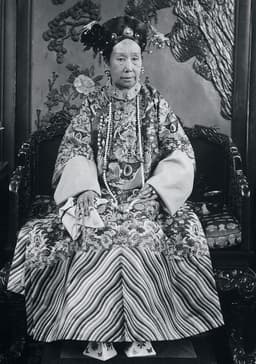
Empress Dowager Cixi
Politician · Modern
55.0Total
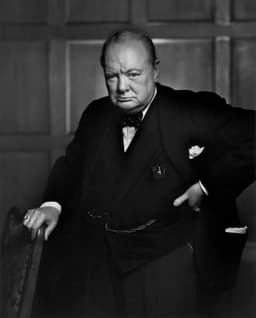
Winston Churchill
Politician · Modern
71.8Total
Basic Information
Born
1835
1874
Died
1908
1965
Era
Modern
Modern
Nationality
China
United Kingdom
Occupation
Politician
Politician
Civilization
Eastern
Western
Score Comparison
Military (10%)
25.9
55.0
Political (20%)
53.8
78.0
Influence (20%)
58.3
75.0
Legacy (20%)
52.0
68.0
Leadership (15%)
72.0
82.0
Strategy (15%)
60.0
65.0
TOTAL
55.0
71.8
Empress Dowager Cixi — Complete Timeline
1861 AD
Self-Strengthening MovementReform◆ Major
Cixi supported the Self-Strengthening Movement, which modernized China's military and infrastructure. Arsenals, shipyards, and railways were built, and the Tongwen Guan language school was established. However, the movement avoided political reform, limiting its effectiveness.
Qing dynastyModernizationReform
Impact: nationalconstructive
Xinyou CoupPolitical Action
Cixi, with Prince Gong, staged a coup against the eight regents appointed by the dying Xianfeng Emperor. She had the regents arrested and executed, establishing herself as co-regent for the young Tongzhi Emperor. This began her effective control over the Qing government.
Qing dynastyCoupRegency
Impact: national
1898 AD
Hundred Days' Reform CoupPolitical Action◆ Major
Cixi staged a coup to end the Hundred Days' Reform, a series of modernization edicts by the Guangxu Emperor. She imprisoned the emperor, executed six reform leaders, and rescinded most reforms. This reversed political liberalization and strengthened conservative forces.
Qing dynastyReform suppressionCoup
Impact: nationaldestructive
1900 AD
Boxer RebellionWar◆ Major
Cixi declared war on eight foreign powers after the Boxers besieged foreign legations in Beijing. The Eight-Nation Alliance invaded, defeated Qing forces, and occupied Beijing. Cixi fled to Xi'an. The resulting Boxer Protocol imposed heavy reparations and further weakened the Qing.
Qing dynastyForeign interventionWar
Impact: globaldestructive
1901 AD
Late Qing ReformsReform◆ Major
After the Boxer Rebellion, Cixi initiated the Late Qing Reforms, including abolition of the civil service examination, establishment of modern schools, and military modernization. These reforms aimed to strengthen the dynasty but came too late to prevent its collapse.
Qing dynastyModernizationReform
Impact: nationalconstructive
Winston Churchill — Complete Timeline
1940 AD
Appointed Prime Minister of the United KingdomPolitical Action◆ Major
On May 10, 1940, Winston Churchill became Prime Minister of the United Kingdom, replacing Neville Chamberlain. His appointment came as Nazi Germany invaded France and the Low Countries, and Churchill formed a coalition government to lead Britain through World War II.
World War IILeadershipCoalition Government
Impact: globalconstructive
Delivered the 'We Shall Fight on the Beaches' SpeechOther◆ Major
On June 4, 1940, Churchill delivered a speech to the House of Commons following the evacuation of British forces from Dunkirk. He declared that Britain would fight on the beaches, landing grounds, fields, streets, and hills, and never surrender, rallying British morale during the darkest days of World War II.
World War IIOratoryMorale
Impact: nationalconstructive
1941 AD
Signed the Atlantic CharterOther◆ Major
On August 14, 1941, Churchill and U.S. President Franklin D. Roosevelt signed the Atlantic Charter aboard HMS Prince of Wales. This joint declaration outlined post-war goals including self-determination, disarmament, and free trade, and became a foundational document for the Allied war aims and the United Nations.
World War IIAllied CooperationPost-war Planning
Impact: globalconstructive
1945 AD
Attended the Yalta ConferenceOther◆ Major
In February 1945, Churchill attended the Yalta Conference with Roosevelt and Stalin to discuss the post-war reorganization of Europe. The conference agreed on the division of Germany, the establishment of the United Nations, and the fate of Eastern Europe, though Churchill later expressed regret over concessions to Stalin.
World War IIPost-war SettlementBig Three
Impact: global
1946 AD
Delivered the 'Iron Curtain' SpeechOther◆ Major
On March 5, 1946, Churchill delivered a speech at Westminster College in Fulton, Missouri, where he stated that an 'iron curtain' had descended across Europe from Stettin to Trieste. This speech is widely regarded as marking the beginning of the Cold War, as it highlighted the division between Soviet-controlled Eastern Europe and the West.
Cold WarSoviet UnionDivision of Europe
Impact: globaldestructive
1953 AD
Awarded the Nobel Prize in LiteratureOther◆ Major
In 1953, Churchill was awarded the Nobel Prize in Literature for his historical writings, particularly 'The Second World War' and 'A History of the English-Speaking Peoples'. The Nobel committee cited his mastery of historical and biographical description as well as his brilliant oratory in defending human values.
LiteratureNobel PrizeHistorical Writing
Impact: nationalconstructive
Expert Analysis
Winston Churchill vs Empress Dowager Cixi
# The Iron Will and the Iron Lady: Churchill and Cixi in the Crucible of History
On a May evening in 1940, as German bombs fell on London, Winston Churchill stood before the House of Commons and declared, “I have nothing to offer but blood, toil, tears and sweat.” Forty-two years earlier, in the Forbidden City of Beijing, the Empress Dowager Cixi had issued her own declaration of war against eight foreign powers, a decision that would nearly destroy her dynasty. Two leaders, two civilizations, two very different paths to power—yet both shaped the modern world through sheer force of will. What drove one to triumph and the other to tragedy?
Origins
Winston Churchill was born in 1874 into the British aristocracy, the son of Lord Randolph Churchill, a maverick politician, and Jennie Jerome, an American heiress. His was a world of privilege, but also of expectation. At Harrow and Sandhurst, he struggled academically but found his métier in the military, serving in India, Sudan, and South Africa. His era was one of imperial confidence, when the British Empire seemed unshakeable.
Cixi’s origins could not have been more different. Born in 1835 into a Manchu banner family of modest means, she entered the Forbidden City as a low-ranking concubine—a “noble lady of the fifth rank.” In a court where women were expected to be silent, she learned to read, write, and navigate the labyrinthine politics of the harem. Her era was one of decline: the Qing dynasty, once the Middle Kingdom’s glory, was being battered by the Opium Wars and internal rebellions. Where Churchill inherited power, Cixi had to seize it.
Rise to Power
Churchill’s path was a zigzag of ambition and luck. He entered Parliament in 1900, switched parties twice, and held cabinet posts from Home Secretary to Chancellor of the Exchequer. Yet by the 1930s, he was a political outcast, warning of Nazi Germany while others appeased. His moment came in 1940, when Neville Chamberlain fell and King George VI reluctantly called on the man many considered a reckless warmonger.
Cixi’s rise was a masterclass in survival. In 1861, after the Xianfeng Emperor’s death, she and Prince Gong staged the Xinyou Coup against the eight regents appointed to rule for her young son. She had the regents arrested, one forced to commit suicide, and installed herself as co-regent. From that moment, she wielded power from behind the throne—first as mother, then as aunt, and finally as the undisputed ruler of China for over forty years. Where Churchill’s ascent was public and parliamentary, Cixi’s was clandestine and deadly.
Leadership & Governance
As war leader, Churchill was a titan. His speeches—“We shall fight on the beaches,” “This was their finest hour”—steeled a nation against the Blitz. He forged the Grand Alliance with Roosevelt and Stalin, directed the D-Day landings, and presided over victory in 1945. Yet his military judgment was flawed: he championed the disastrous Gallipoli campaign in World War I and resisted decolonization after World War II. His political wisdom lay in his refusal to surrender, not in his strategic brilliance.
Cixi’s governance was a paradox of conservatism and reform. She supported the Self-Strengthening Movement from 1861, building arsenals, shipyards, and a modern navy. She abolished the civil service examination in 1905 and sent students abroad. Yet she crushed the Hundred Days’ Reform in 1898, imprisoning the Guangxu Emperor and executing reformers. Her calculation was brutal: modernization must never threaten her power. When the Boxer Rebellion erupted in 1900, she declared war on eight nations, a catastrophic miscalculation that led to the Eight-Nation Alliance’s sack of Beijing. She fled, disguised as a peasant, and returned to sign the humiliating Boxer Protocol.
Triumph & Tragedy
Churchill’s greatest moment was 1940–41, when Britain stood alone against Hitler. His refusal to negotiate, his bulldog defiance, saved Western civilization—or so the story goes. His greatest failure was his own stubbornness: his belief in empire, his opposition to Indian independence, his nostalgia for a world that was dying. He lost the 1945 election even as he celebrated victory.
Cixi’s triumph was her longevity. She outmaneuvered every rival—princes, eunuchs, emperors—and kept the Qing dynasty alive through its most turbulent decades. Her tragedy was that she kept it alive only to die with her. In 1908, she died hours after the Guangxu Emperor, likely poisoned on her orders. Her nephew, the infant Puyi, was left to inherit a crumbling throne that would fall in 1912.
Character & Destiny
Churchill was a man of immense ego, wit, and melancholy. He suffered from “black dog” depression, drank heavily, and dictated his speeches from his bath. Yet his courage was contagious. He believed history was made by great men, and he willed himself to be one.
Cixi was a woman of iron discipline and ruthless pragmatism. She had no illusions about the world; she knew the Qing was weak, but she believed only she could hold it together. She was a master of manipulation, using eunuchs, courtiers, and foreign diplomats as pawns. But her conservatism, born of fear, doomed her reforms. She could not see that the old order was beyond saving.
Legacy
Churchill is remembered as the lion that roared against tyranny. His statue stands in London, his name adorns aircraft carriers and cigars. Yet his legacy is contested: critics point to his racism, his role in the Bengal Famine of 1943, his imperialism. He remains a symbol of defiance, but a flawed one.
Cixi’s legacy is more ambiguous. In China, she was long vilified as a corrupt, superstitious tyrant who sold the nation’s soul. Today, historians reassess her as a pragmatic reformer who tried to save a dynasty from collapse. She modernized China’s military, railways, and education—but always too little, too late. She is buried in the Eastern Qing Tombs, her grand mausoleum a monument to a power that was absolute and ultimately futile.
Conclusion
Churchill and Cixi never met, but their worlds collided in the Boxer Rebellion, where British troops helped sack Beijing. Both believed they were saving their civilizations. Churchill succeeded, in part because Britain’s institutions could survive his mistakes. Cixi failed, in part because China’s could not survive her fears. In the end, the difference between triumph and tragedy is not just character—it is the era that shapes the leader, and the leader who shapes the era. One gave his people hope; the other gave her people time. Neither could give them what they truly needed: a future that was not their own.
Rankings
🥇
Winston ChurchillLeader
Mil: 55.0Pol: 78.0Inf: 75.0
71.8
🥈
Empress Dowager Cixi
Mil: 25.9Pol: 53.8Inf: 58.3
55.0
+16.8 behind
How This Comparison Works
Algorithm
Each figure is scored on 6 dimensions (0—100 scale) based on structured historical data: Military (10%), Political (20%), Influence (20%), Legacy (20%), Leadership (15%), Strategy (15%). The weighted total produces the final ranking.
Data Sources
Scores are computed from structured sub-indicators in the database. Scale factors adjust for era (Ancient ×0.85, Modern ×1.0) and civilization size (Eastern ×1.05, Other ×0.80) to account for differences in population and military scale.
Maximum 3 Figures
Comparisons are limited to 2—3 figures to ensure readability and statistical meaningfulness.
Error Margins
±5 points per dimension — Sub-scores are derived from historical records with inherent uncertainty. Two figures within 5 points on a dimension should be considered roughly equivalent in that area.
Total Score Accuracy
±3 points overall — The weighted combination of 6 dimensions produces a total score with approximately ±3 points of uncertainty. Differences of less than 3 points are not statistically significant— the figures are effectively tied.
Known Limitations
- Historical records are incomplete and uneven across civilizations
- Figures from oral-tradition societies may be underrepresented
- Occupation labels can misclassify multi-role figures
- Scores measure capability and impact, not moral character
- Quantitative scoring is a comparison tool, not absolute truth
Capability Radar
Military (10%) — Battles & Warfare
Battles
30
55
Win Rate
25
60
Expansion
15
40
Political (20%) — Governance & Reform
Reform
65
70
Diplomacy
60
85
Economy
50
60
Influence (20%) — Cultural & Global Reach
Cultural
60
85
Global
60
85
Legacy (20%) — Historical Impact
Historical
75
90
Longevity
55
80
Leadership (15%) — Power & Stability
Tenure
85
75
Stability
40
70
Strategy (15%) — Tactics & Innovation
Strategy
55
85
Tactics
40
65
Reform
70
70
Similar Comparisons
Comments & Discussion
FIREBRAND REALIST6/16/2026
Comparing Churchill and Cixi is like comparing a bulldog to a tiger. Churchill had the luxury of a parliamentary system and naval supremacy; Cixi faced collapsing institutions and a technology gap that doomed her reforms. The real tragedy? Churchill's "blood, toil, tears" worked because Britain had industrial allies. Cixi's 1898 coup against reformers like Guangxu was a desperate choice, but let's not pretend she had easy options—the Boxer Protocol debts still crippled China decades later. Neith
数据猎人6/16/2026
别给我看情绪化的“意志对决”。统计一下:1940年英国人均GDP约$9,000,1900年清朝不到$600。丘吉尔靠的是五百年累积的资本和全球殖民红利,慈禧拿什么赌?她1900年宣战八国时,北洋海军1888年后就没更新过军舰,而英国皇家海军单艘战列舰造价等于清朝全年海防预算。用意志解释历史,就是给数字披戏服。差距在铁和蒸汽,不在谁更倔。
CLASSICS SCHOLAR6/16/2026
Churchill quoted Gibbon and Macaulay to justify empire; Cixi knew her Confucian classics and dynastic histories. Both were autodidacts who weaponized tradition. But note: Churchill wrote award-winning history while in power — he literally framed his own legacy. Cixi never wrote memoirs; her voice comes through in edicts and court records. That asymmetry matters. One controlled the narrative in English for Atlantic audiences; the other's story was filtered through ministers and missionaries. Whic
反骨修正派6/16/2026
所谓“铁娘子”?歇了吧。慈禧从1861年政变掌权后,把北洋水师买舰的银子挪去修颐和园祝寿是铁证。1894年甲午战败,她第一时间求和割地,连光绪都敢软禁。丘吉尔1915年加里波利战役惨败后照样滚蛋下野——但人家回来领导战争。慈禧输了就铲除异己,搞义和团闹剧,最后让八国联军烧圆明园。两套对比:一个越挫越勇,一个越输越作。别拿乱世当遮羞布。
历史迷妹6/16/2026
我站丘吉尔,但也得承认慈禧的狠劲儿。她26岁守寡,从“兰贵人”爬到权力顶端,靠的不是美貌,是清醒。翻阅《清宫档案》,她每天批奏章到后半夜,对各省粮价、税收数字门儿清——这比多少皇帝强。但她最大的失误是没送皇族子弟留洋学科技,而丘吉尔哪怕当陆军大臣都推动坦克研发。意志