Loading...
Emilio Aguinaldo vs Theobald Wolfe Tone
Theobald Wolfe Tone leads by 3.7 pts · 2 figures compared
…

Emilio Aguinaldo
Revolutionary · Modern
44.1Total
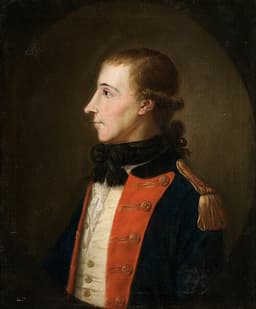
Theobald Wolfe Tone
Revolutionary · Modern
47.8Total
Basic Information
Born
1869
1763
Died
1964
1798
Era
Modern
Modern
Nationality
Philippines
Ireland
Occupation
Revolutionary
Revolutionary
Civilization
Eastern
Western
Score Comparison
Military (10%)
46.7
39.9
Political (20%)
29.3
27.9
Influence (20%)
54.1
57.2
Legacy (20%)
45.8
49.2
Leadership (15%)
43.8
57.1
Strategy (15%)
35.0
45.0
TOTAL
44.1
47.8
Emilio Aguinaldo — Complete Timeline
1896 AD
Execution of José Rizal (involvement)Political Action◆ Major
Aguinaldo, as a leader of the Katipunan, was involved in the Philippine Revolution against Spain, which was catalyzed by Rizal's execution. He led revolutionary forces in Cavite, winning early victories against Spanish troops.
Philippine RevolutionKatipunanCavite
Impact: national
1898 AD
Proclamation of Philippine IndependencePolitical Action
Aguinaldo proclaimed the independence of the Philippines from Spain in Kawit, Cavite, establishing the First Philippine Republic. This declaration followed the Spanish-American War and Aguinaldo's return from exile, asserting Filipino sovereignty.
IndependencePhilippine RevolutionFirst Republic
Impact: nationalprogressive
1899 AD
Battle of Manila (1899)War◆ Major
Aguinaldo's forces engaged American troops in Manila, marking the start of the Philippine-American War. The conflict arose from tensions over U.S. annexation of the Philippines, leading to a brutal war that lasted until 1902.
Philippine-American WarBattleColonial Conflict
Impact: nationaldestructive
1901 AD
Capture of Emilio AguinaldoPolitical Action
Aguinaldo was captured by U.S. forces in Palanan, Isabela, after a months-long pursuit led by General Frederick Funston. His capture effectively ended the organized phase of the Philippine-American War, leading to his oath of allegiance to the United States.
CapturePhilippine-American WarU.S. Occupation
Impact: nationaltragic
Theobald Wolfe Tone — Complete Timeline
1791 AD
Founding of the United IrishmenPolitical Action◆ Major
Tone co-founded the Society of United Irishmen in Belfast, a revolutionary organization seeking parliamentary reform and Catholic emancipation. The society later became a secret republican movement aiming for Irish independence.
Irish RepublicanismFoundingReform
Impact: nationalprogressive
Publication of 'An Argument on Behalf of the Catholics of Ireland'Cultural
Tone published a pamphlet arguing for the inclusion of Catholics in Irish political life. It helped bridge the gap between Protestant radicals and the Catholic majority, broadening the base of the United Irishmen.
PamphletCatholic EmancipationPolitical Thought
Impact: nationalprogressive
1796 AD
Expédition d'IrlandeWar◆ Major
Tone accompanied a French fleet of 43 ships carrying 15,000 troops to invade Ireland. The expedition was scattered by storms off Bantry Bay and failed to land, a major setback for the republican cause.
French InvasionNavalFailure
Impact: nationaltragic
Mission to FrancePolitical Action◆ Major
Tone traveled to France to secure French military support for an Irish rebellion. He persuaded the French Directory to launch an invasion of Ireland, leading to the dispatch of a large expeditionary force.
DiplomacyFrench RevolutionInvasion
Impact: national
1798 AD
Battle of Tory IslandWar◆ Major
Tone was captured aboard a French ship at the Battle of Tory Island, part of a second French invasion attempt. The French squadron was defeated by the Royal Navy, ending French hopes of aiding the Irish Rebellion.
1798 RebellionNaval BattleCapture
Impact: nationaltragic
Trial and SuicidePolitical Action◆ Major
Tone was tried for treason in Dublin and sentenced to death by hanging. Before execution, he cut his own throat to deny the British the spectacle of his hanging, dying from the wound a week later.
TrialSuicideMartyrdom
Impact: nationaltragic
Expert Analysis
Origins
Emilio Aguinaldo was born on March 22, 1869, in Kawit, Cavite, Philippines, to a wealthy Chinese-Filipino mestizo family. His father, Carlos Aguinaldo, was a gobernadorcillo (municipal governor), providing young Emilio with a privileged upbringing and access to education at the Colegio de San Juan de Letran. However, he left school early to help manage the family farm. His early exposure to local politics and the abuses of Spanish colonial authorities shaped his revolutionary inclinations.
Theobald Wolfe Tone was born on June 20, 1763, in Dublin, Ireland, to a Protestant middle-class family. His father, Peter Tone, was a coach maker. Tone studied law at Trinity College Dublin and was called to the bar in 1789. Initially a moderate reformer, Tone was radicalized by the French Revolution and the discrimination against Irish Catholics. His legal background and eloquence made him a formidable propagandist for Irish independence.
Rise to Power
Aguinaldo's rise began in 1895 when he joined the Katipunan, a secret revolutionary society led by Andrés Bonifacio. He quickly rose through the ranks due to his military acumen and social status. In 1896, the Philippine Revolution against Spain erupted. After a series of battles, Aguinaldo emerged as a key leader, winning the Battle of Imus (September 1896) and the Battle of Binakayan (November 1896). However, internal conflicts led to the Tejeros Convention in March 1897, where Aguinaldo was elected president of the revolutionary government, supplanting Bonifacio. Bonifacio was later executed on Aguinaldo's orders, a controversial act that marked Aguinaldo's consolidation of power. By December 1897, Aguinaldo signed the Pact of Biak-na-Bato, agreeing to exile in Hong Kong in exchange for Spanish payments and reforms.
Tone's rise was through intellectual and diplomatic channels. In 1791, he co-founded the Society of United Irishmen, initially a parliamentary reform group. The government's suppression of the society pushed Tone toward armed rebellion. In 1794, he began negotiations with Revolutionary France, traveling to Paris in 1796. His charisma and republican ideals convinced the French Directory to support an Irish invasion. Tone was appointed a chef de brigade in the French army, a remarkable achievement for an Irish exile. His mission to France (1794-1796) was his peak influence, securing a fleet of 43 ships and 15,000 troops for the 1796 Expédition d'Irlande.
Leadership & Governance
Aguinaldo's leadership was authoritarian and militaristic. As president of the First Philippine Republic (from 1899), he centralized power, often sidelining civilian institutions. He commanded armies personally, but his strategic decisions were inconsistent. For example, during the Philippine-American War, he opted for conventional warfare initially, leading to disastrous losses at the Battle of Manila (1899) and the Battle of Caloocan. He then shifted to guerrilla warfare, which proved more effective but prolonged the conflict. His governance score of 29.3 reflects his inability to build stable institutions. In contrast, Tone never held political office; his leadership was purely revolutionary. He was a visionary and organizer, scoring 57.1 in leadership. He inspired loyalty and coordinated with French allies, but his lack of military command on the ground limited his tactical impact.
Triumph & Tragedy
Aguinaldo's greatest triumph was the Proclamation of Philippine Independence on June 12, 1898, in Kawit, which established the first Asian constitutional republic. He also successfully led guerrilla campaigns that prolonged the Philippine-American War for years. His greatest tragedy was the execution of Andrés Bonifacio, which fractured the revolutionary movement and tarnished his legacy. Additionally, his capture by US forces on March 23, 1901, ended the war and led to his oath of allegiance to the US. He scored 46.7 in military and 43.8 in leadership.
Tone's triumph was the founding of the United Irishmen, which inspired generations of Irish republicans. His diplomatic success in securing French support was unprecedented. However, the 1796 expedition failed due to storms at Bantry Bay, and his final attempt in 1798 ended with his capture at the Battle of Tory Island. He died by suicide on November 19, 1798, to avoid execution. His military score of 39.9 reflects these failures, but his influence (57.2) and legacy (49.2) endure.
Character & Destiny
Aguinaldo was pragmatic and ambitious, but also ruthless. His decision to execute Bonifacio showed a willingness to eliminate rivals. He was adaptable, shifting from conventional to guerrilla war. However, his vanity and overconfidence led him to challenge the US prematurely. His destiny was to be a symbol of Philippine independence, but also a controversial figure for his collaboration with US forces after capture.
Tone was idealistic, eloquent, and principled. He believed in uniting Catholics and Protestants for independence. His legal training made him a skilled propagandist. His destiny was to die a martyr, his suicide ensuring his legacy as the father of Irish republicanism. He lacked Aguinaldo's military experience but possessed greater ideological clarity.
Legacy
Aguinaldo's legacy is mixed. He is celebrated as the first president of the Philippines, but his role in Bonifacio's death and his later collaboration with US authorities are criticized. His legacy score is 45.8. The Philippine Republic he proclaimed was short-lived, but it set a precedent for Asian nationalism.
Tone's legacy is more profound. He is revered as the father of Irish republicanism, his ideas influencing the 1916 Easter Rising and the eventual creation of the Irish Free State. His legacy score of 49.2 reflects his enduring impact. The United Irishmen's ideals of secularism and democracy remain central to Irish nationalism.
Conclusion
While Aguinaldo achieved more immediate political power, Tone's ideological influence proved more enduring. Aguinaldo's military and political scores (46.7 and 29.3) are overshadowed by Tone's leadership (57.1) and influence (57.2). Tone's vision shaped a century of Irish struggle, whereas Aguinaldo's republic collapsed within a year. Thus, Theobald Wolfe Tone had a greater impact on history, scoring 47.8 total to Aguinaldo's 44.1.
Rankings
🥇
Theobald Wolfe ToneLeader
Mil: 39.9Pol: 27.9Inf: 57.2
47.8
🥈
Emilio Aguinaldo
Mil: 46.7Pol: 29.3Inf: 54.1
44.1
+3.7 behind
How This Comparison Works
Algorithm
Each figure is scored on 6 dimensions (0—100 scale) based on structured historical data: Military (10%), Political (20%), Influence (20%), Legacy (20%), Leadership (15%), Strategy (15%). The weighted total produces the final ranking.
Data Sources
Scores are computed from structured sub-indicators in the database. Scale factors adjust for era (Ancient ×0.85, Modern ×1.0) and civilization size (Eastern ×1.05, Other ×0.80) to account for differences in population and military scale.
Maximum 3 Figures
Comparisons are limited to 2—3 figures to ensure readability and statistical meaningfulness.
Error Margins
±5 points per dimension — Sub-scores are derived from historical records with inherent uncertainty. Two figures within 5 points on a dimension should be considered roughly equivalent in that area.
Total Score Accuracy
±3 points overall — The weighted combination of 6 dimensions produces a total score with approximately ±3 points of uncertainty. Differences of less than 3 points are not statistically significant— the figures are effectively tied.
Known Limitations
- Historical records are incomplete and uneven across civilizations
- Figures from oral-tradition societies may be underrepresented
- Occupation labels can misclassify multi-role figures
- Scores measure capability and impact, not moral character
- Quantitative scoring is a comparison tool, not absolute truth
Capability Radar
Military (10%) — Battles & Warfare
Battles
45
5
Win Rate
40
5
Expansion
30
5
Political (20%) — Governance & Reform
Reform
35
30
Diplomacy
30
25
Economy
20
5
Influence (20%) — Cultural & Global Reach
Cultural
55
45
Global
40
40
Legacy (20%) — Historical Impact
Historical
55
50
Longevity
50
55
Leadership (15%) — Power & Stability
Tenure
40
10
Stability
20
5
Strategy (15%) — Tactics & Innovation
Strategy
45
15
Tactics
50
10
Reform
35
20
Similar Comparisons
Comments & Discussion
No comments yet. Be the first to share your thoughts!