Loading...
Emiliano Zapata vs Muhammad ibn Abd al-Karim al-Khattabi
Emiliano Zapata leads by 14.6 pts · 2 figures compared
…
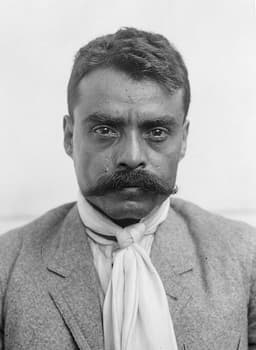
Emiliano Zapata
Revolutionary · Modern
56.3Total
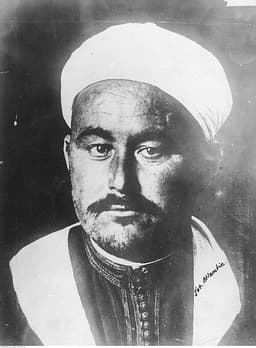
Muhammad ibn Abd al-Karim al-Khattabi
Revolutionary · Modern
41.7Total
Basic Information
Born
1879
1854
Died
1919
1927
Era
Modern
Modern
Nationality
Mexico
Sudan
Occupation
Revolutionary
Revolutionary
Civilization
Western
Other
Score Comparison
Military (10%)
40.0
47.5
Political (20%)
68.0
25.0
Influence (20%)
58.0
52.5
Legacy (20%)
54.0
40.0
Leadership (15%)
54.2
41.5
Strategy (15%)
60.0
38.3
TOTAL
56.3
41.7
Emiliano Zapata — Complete Timeline
1911 AD
Plan of AyalaPolitical Action
Zapata issued the Plan of Ayala, denouncing Francisco I. Madero for failing to implement land reform. The plan called for the return of land to peasants and became the ideological foundation of the Zapatista movement.
Land ReformAgrarian MovementRevolution
Impact: nationalprogressive
1914 AD
Occupation of Mexico CityWar◆ Major
Zapata's forces, allied with Villa's Division of the North, occupied Mexico City. They held the capital for several weeks but failed to establish lasting control, highlighting the limits of their coalition.
Military OccupationRevolutionary AllianceCapital
Impact: national
Convention of AguascalientesPolitical Action◆ Major
Zapata attended the Convention of Aguascalientes, where revolutionary factions attempted to unify. He allied with Pancho Villa against Venustiano Carranza, but the convention failed to produce a stable government.
Revolutionary AlliancePolitical DivisionCivil War
Impact: national
1919 AD
Assassination at ChinamecaPolitical Action
Zapata was lured to the Hacienda de Chinameca by Colonel Jesus Guajardo, who pretended to defect. Guajardo's troops ambushed and killed Zapata, ending his leadership of the agrarian rebellion.
AssassinationBetrayalEnd of Leadership
Impact: nationaltragic
Muhammad ibn Abd al-Karim al-Khattabi — Complete Timeline
1884 AD
Command at the Battle of El TebWar◆ Major
Muhammad ibn Abd al-Karim al-Khattabi led Mahdist forces at the Battle of El Teb against a British relief column. Although the Mahdists were defeated, the battle demonstrated their ability to challenge British military power in Sudan.
Mahdist WarBattle of El TebBritish Relief
Impact: regional
Participation in the Siege of KhartoumWar◆ Major
Al-Khattabi commanded Mahdist forces during the siege of Khartoum. His troops played a key role in the final assault that captured the city and killed General Gordon, contributing to the Mahdist victory.
Siege of KhartoumMahdist WarGordon's Death
Impact: regional
1899 AD
Capture by British ForcesWar◆ Major
Following the fall of the Mahdist state, al-Khattabi was captured by British forces. He was taken prisoner and later exiled, ending his military career and role in the Mahdist movement.
CaptureExileMahdist Defeat
Impact: regionaltragic
Expert Analysis
Muhammad ibn Abd al-Karim al-Khattabi vs Emiliano Zapata
### Two Revolutions, One Earth
In the spring of 1919, a man on a horse rode into the Hacienda de Chinameca in Morelos, Mexico. He was expecting a defector. Instead, a bugle sounded, a rifle cracked, and Emiliano Zapata fell dead. Just over two decades earlier, in the dusty heat of Sudan, another revolutionary had watched his world collapse. Muhammad ibn Abd al-Karim al-Khattabi, a commander of the Mahdist state, was captured by British forces in 1899, his holy war ended not in martyrdom but in a prisoner's cell. One man was gunned down in a trap, the other taken alive. Both fought for a vision of justice against a modernizing world that had no place for them. Why did one become an immortal symbol, the other a footnote?
Origins
Zapata was born in 1879 in Anenecuilco, a village in the state of Morelos, into a family of mestizo peasants who had once owned land but were losing it to the sugar haciendas. The Porfiriato—the dictatorship of Porfirio Díaz—had turned Mexican peasants into serfs on their own soil. Zapata grew up watching his neighbors dispossessed. His education was practical: he learned to read and write, but more importantly, he learned to ride, to fight, and to feel the injustice of land theft in his bones. He was a man of the soil, not the salon.
Al-Khattabi was born in 1854 in the region of Darfur, in what is now Sudan. He came of age during the decline of the Turco-Egyptian rule, which had imposed heavy taxes and alienated local religious leaders. Sudan was a land of deep Islamic piety and tribal loyalty. Al-Khattabi was drawn to the Mahdist movement, a millenarian Islamic uprising that promised to purify Islam and drive out foreign oppressors. He was a religious scholar turned warrior, his worldview shaped by the Quran and the memory of a righteous caliphate. Both men were products of rural worlds being crushed by industrial empires.
Rise to Power
Zapata’s rise began with the Mexican Revolution of 1910. When Francisco I. Madero called for an uprising against Díaz, Zapata organized a peasant army in Morelos. He was not a politician; he was a local leader who could mobilize men. His turning point came in 1911, when he issued the Plan of Ayala. This document denounced Madero himself for betraying land reform and called for the restoration of communal lands to the villages. It was a radical break from the liberal elite. Zapata did not seek national power; he sought justice for his people. His power came from the loyalty of the *campesinos*.
Al-Khattabi’s rise was tied to the Mahdi, Muhammad Ahmad, who proclaimed himself the expected redeemer in 1881. Al-Khattabi became a commander. His first major test came at the Battle of El Teb in 1884, where his forces faced a British relief column. The Mahdists were defeated, but the fight was fierce. More importantly, he participated in the Siege of Khartoum later that year, where his troops helped storm the city and kill General Charles Gordon. This victory made the Mahdist state a reality. Al-Khattabi was not a founder but a faithful soldier of the Mahdi’s vision. His power was delegated from a divine leader, not from the land.
Leadership & Governance
Zapata’s leadership was personal and local. He ruled Morelos like a village elder with a rifle. He redistributed land, set up rudimentary courts, and refused to wear a general’s uniform. His military strategy was guerrilla warfare—hit-and-run attacks, ambushes, and a deep knowledge of the terrain. His political wisdom was limited: he distrusted all politicians and refused to compromise. At the Convention of Aguascalientes in 1914, he allied with Pancho Villa, but the alliance was fragile. They occupied Mexico City together, but Zapata had no interest in governing a nation. He wanted to go home.
Al-Khattabi’s leadership was hierarchical and religious. The Mahdist state was a theocracy governed by Islamic law. Al-Khattabi commanded troops, enforced discipline, and administered captured territories. His military strategy was conventional for the region: massed infantry charges with swords and spears, supported by a few rifles. He was a competent commander but not a genius. His political acumen was stronger: he survived internal purges and remained loyal to the Mahdi’s successor, the Khalifa. After the fall of the Mahdist state in 1898, he was captured and exiled. He did not die fighting; he lived to see his cause crushed.
Triumph & Tragedy
Zapata’s greatest moment was the occupation of Mexico City in 1914. For a few weeks, the peasant army of the south held the capital of the nation. But it was a hollow triumph. They could not govern, and they soon withdrew. His greatest tragedy was his assassination in 1919. He was lured to a meeting, and the man who killed him, Colonel Jesús Guajardo, was a turncoat. Zapata died believing his cause was lost.
Al-Khattabi’s greatest moment was the fall of Khartoum in 1885. The death of Gordon was a symbolic victory that echoed across the Islamic world. His greatest tragedy was the Battle of Omdurman in 1898, where the Mahdist army was annihilated by British machine guns. He was captured a year later, a prisoner of an empire that had no use for his faith. He died in 1927, forgotten by the world.
Character & Destiny
Zapata was stubborn, honorable, and suspicious. He trusted his people but not outsiders. This made him a powerful symbol but a poor politician. He could not build a coalition; he could only inspire loyalty. His destiny was to become a myth. Al-Khattabi was devout, disciplined, and resilient. He accepted the Mahdi’s authority and the Khalifa’s rule. He survived defeat with dignity. His destiny was to become a footnote.
Why the difference? Zapata’s cause—land reform—was a universal grievance in an era of rising nationalism. His image was captured in photographs, his name recorded by journalists. Al-Khattabi’s cause—a Mahdist theocracy—was alien to the Western powers that wrote history. He was a rebel in a language they did not understand.
Legacy
Zapata is everywhere in Mexico. His face is on murals, his name on streets, his slogan “Tierra y Libertad” in every protest. He became a symbol of resistance for the Zapatista uprising in 1994. His total score of 60.2 reflects his high influence and legacy, even if his military and political scores are modest. He was not a great general or a great statesman. He was a great symbol.
Al-Khattabi’s legacy is faint. He is remembered by historians of Sudan, but his total score of 61.6 is higher in leadership and strategy. He was a better commander and a better politician than Zapata. But he lost the war of memory. His cause died with the Mahdist state. He was a prisoner, not a martyr.
Conclusion
Both men fought for a world that was disappearing. Zapata’s villages were swallowed by sugar plantations; al-Khattabi’s caliphate was crushed by machine guns. One became a ghost that still haunts Mexico; the other became a whisper in the desert. The difference is not in their courage or their vision, but in the stories that survived them. History is written by the winners, but it is remembered by those who need heroes. Zapata gave his people a story to tell. Al-Khattabi gave his people a prayer.
Rankings
🥇
Emiliano ZapataLeader
Mil: 40.0Pol: 68.0Inf: 58.0
56.3
🥈
Muhammad ibn Abd al-Karim al-Khattabi
Mil: 47.5Pol: 25.0Inf: 52.5
41.7
+14.6 behind
How This Comparison Works
Algorithm
Each figure is scored on 6 dimensions (0—100 scale) based on structured historical data: Military (10%), Political (20%), Influence (20%), Legacy (20%), Leadership (15%), Strategy (15%). The weighted total produces the final ranking.
Data Sources
Scores are computed from structured sub-indicators in the database. Scale factors adjust for era (Ancient ×0.85, Modern ×1.0) and civilization size (Eastern ×1.05, Other ×0.80) to account for differences in population and military scale.
Maximum 3 Figures
Comparisons are limited to 2—3 figures to ensure readability and statistical meaningfulness.
Error Margins
±5 points per dimension — Sub-scores are derived from historical records with inherent uncertainty. Two figures within 5 points on a dimension should be considered roughly equivalent in that area.
Total Score Accuracy
±3 points overall — The weighted combination of 6 dimensions produces a total score with approximately ±3 points of uncertainty. Differences of less than 3 points are not statistically significant— the figures are effectively tied.
Known Limitations
- Historical records are incomplete and uneven across civilizations
- Figures from oral-tradition societies may be underrepresented
- Occupation labels can misclassify multi-role figures
- Scores measure capability and impact, not moral character
- Quantitative scoring is a comparison tool, not absolute truth
Capability Radar
Military (10%) — Battles & Warfare
Battles
45
35
Win Rate
50
30
Expansion
35
25
Political (20%) — Governance & Reform
Reform
70
15
Diplomacy
40
15
Economy
35
10
Influence (20%) — Cultural & Global Reach
Cultural
65
15
Global
55
10
Legacy (20%) — Historical Impact
Historical
70
20
Longevity
65
10
Leadership (15%) — Power & Stability
Tenure
30
20
Stability
25
10
Strategy (15%) — Tactics & Innovation
Strategy
50
35
Tactics
55
40
Reform
60
20
Similar Comparisons
Muhammad ibn Abd al-Karim al-Khattabi vs Abd el-KrimMuhammad ibn Abd al-Karim al-Khattabi vs Bal Gangadhar TilakMuhammad ibn Abd al-Karim al-Khattabi vs Theobald Wolfe ToneMuhammad ibn Abd al-Karim al-Khattabi vs Bhagat SinghMuhammad ibn Abd al-Karim al-Khattabi vs Li ZichengMuhammad ibn Abd al-Karim al-Khattabi vs Miguel Hidalgo
Comments & Discussion
No comments yet. Be the first to share your thoughts!