Loading...
Elizabeth I vs Yoweri Museveni
Elizabeth I leads by 1.8 pts · 2 figures compared
…
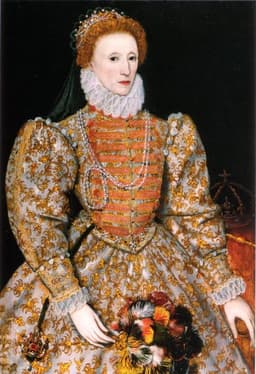
Elizabeth I
Politician · Modern
65.7Total

Yoweri Museveni
Politician · Modern
63.9Total
Basic Information
Born
1533
1944
Died
1603
—
Era
Modern
Modern
Nationality
England
Uganda
Occupation
Politician
Politician
Civilization
Western
Other
Score Comparison
Military (10%)
45.0
67.5
Political (20%)
78.0
72.0
Influence (20%)
65.0
61.0
Legacy (20%)
68.0
50.0
Leadership (15%)
75.0
80.0
Strategy (15%)
50.0
66.3
TOTAL
65.7
63.9
Elizabeth I — Complete Timeline
1559 AD
Act of Supremacy 1559Political Action◆ Major
Elizabeth I re-established the Church of England's independence from Rome, declaring herself Supreme Governor. This act, part of the Elizabethan Religious Settlement, restored Protestantism while maintaining some Catholic traditions, creating a via media that aimed to unify the nation.
Religious SettlementProtestantismChurch of England
Impact: nationalconstructive
1587 AD
Execution of Mary, Queen of ScotsPolitical Action◆ Major
After years of imprisonment, Elizabeth I signed the death warrant for Mary, Queen of Scots, who had been implicated in the Babington Plot to assassinate Elizabeth and claim the English throne. Mary's execution removed a major Catholic rival and solidified Elizabeth's position.
ExecutionCatholic RivalPlot
Impact: nationaltragic
1588 AD
Defeat of the Spanish ArmadaWar
The English navy under Lord Howard and Sir Francis Drake defeated the Spanish Armada, a massive invasion fleet sent by Philip II. Storms and English fireships scattered the Spanish fleet, preventing the invasion and establishing England as a major naval power.
Naval BattleSpainProtestantism
Impact: globalconstructive
1600 AD
Chartering of the East India CompanyPolitical Action◆ Major
Elizabeth I granted a royal charter to the East India Company, giving it a monopoly on English trade with Asia. This company would become a powerful instrument of British imperialism, eventually controlling large parts of India and shaping global trade.
TradeColonialismCharter
Impact: globalconstructive
1601 AD
Golden SpeechPolitical Action
In her final address to Parliament, Elizabeth I delivered the 'Golden Speech,' expressing her love for her subjects and her dedication to the realm. She addressed grievances over monopolies, promising reform, and cemented her image as a beloved monarch devoted to her people.
SpeechParliamentMonarchy
Impact: nationalconstructive
Yoweri Museveni — Complete Timeline
1986 AD
Bush War Victory and Capture of KampalaWar
Museveni's National Resistance Army (NRA) captured Kampala, ending the Ugandan Bush War. He was sworn in as President on January 29, 1986, overthrowing the government of Tito Okello and beginning his long rule.
Ugandan Bush WarSeizure of PowerNRA
Impact: national
Introduction of the Movement SystemPolitical Action◆ Major
Museveni established a 'no-party' Movement system, banning political party activity. This system concentrated power in the National Resistance Movement (NRM) and was justified as necessary to prevent ethnic conflict, but was criticized as authoritarian.
Political SystemNRMAuthoritarianism
Impact: national
1998 AD
Invasion of the Democratic Republic of CongoWar◆ Major
Ugandan forces, allied with Rwanda, invaded the Democratic Republic of Congo (DRC) to overthrow Laurent Kabila. This intervention escalated the Second Congo War, drawing in multiple African nations and causing widespread devastation.
Second Congo WarRegional ConflictIntervention
Impact: regionaldestructive
2005 AD
Constitutional Amendment Removing Term LimitsPolitical Action◆ Major
Museveni's government pushed through a constitutional amendment removing presidential term limits. This allowed him to run for a third term in 2006 and subsequent elections, consolidating his hold on power and drawing domestic and international criticism.
Constitutional ChangeTerm LimitsPower Consolidation
Impact: nationaldestructive
2014 AD
Anti-Homosexuality ActPolitical Action◆ Major
Museveni signed the Anti-Homosexuality Act, which imposed life imprisonment for certain same-sex acts. The law was widely condemned internationally, leading to aid cuts from some Western nations, though it was later annulled by the Constitutional Court on procedural grounds.
LGBTQ RightsLegislationInternational Condemnation
Impact: nationaldestructive
Expert Analysis
Elizabeth I vs Yoweri Museveni
# The Virgin Queen and the Bush Warrior: Two Paths to Power, Two Legacies of Rule
In the autumn of 1601, an aging queen stood before her Parliament in London, her voice trembling with emotion as she delivered what would become known as the Golden Speech. "There is no jewel, be it of never so rich a price, which I set before this jewel," Elizabeth I told her assembled subjects, "I mean your love." Four centuries later, in January 1986, a ragged guerrilla commander named Yoweri Museveni rode into Kampala atop a tank, his National Resistance Army having just captured the Ugandan capital after five years of bush war. He promised not love, but liberation from tyranny. These two leaders, separated by oceans and centuries, both reshaped their nations. But the differences in how they came to power, how they governed, and what they left behind tell a profound story about the relationship between character and destiny.
Origins
Elizabeth Tudor was born in 1533 into the storm of the English Reformation. Her mother, Anne Boleyn, was executed when Elizabeth was not yet three years old. Declared illegitimate, she spent her childhood in the shadow of the axe, learning that survival required silence, patience, and the careful reading of faces. She was educated alongside her half-brother Edward, receiving a humanist education in Latin, Greek, and philosophy that would later make her one of the most intellectually formidable monarchs in European history. The chaos of her youth—the Protestant reign of Edward, the Catholic terror of Mary—taught her that religion was not merely faith but a battlefield.
Yoweri Museveni was born in 1944 in western Uganda, a world away from Tudor palaces. He grew up in a cattle-keeping family under British colonial rule, witnessing the slow unraveling of empire. Where Elizabeth learned courtly intrigue, Museveni learned the politics of the bush. He studied political science at the University of Dar es Salaam in Tanzania, where he absorbed Marxist theory and the anti-colonial fervor of the 1960s. The defining trauma of his generation was not religious schism but the brutal dictatorship of Idi Amin. When Amin seized power in 1971, Museveni was a young man with a rifle and a revolutionary's conviction that power grew from the barrel of a gun.
Rise to Power
Elizabeth's path to the throne was a waiting game played with nerves of steel. She survived the Tower of London, survived accusations of treason, survived her sister Mary's paranoid hatred. When Mary died in 1558, Elizabeth inherited a kingdom fractured by religious violence, bankrupt, and vulnerable to invasion. She was twenty-five years old, a woman in a world of men, and her legitimacy was questioned by Catholic powers across Europe. She ascended not through conquest but through the accident of blood and the slow turning of the wheel of fortune.
Museveni's rise was the opposite: deliberate, violent, and forged through fire. He fought alongside Tanzania's army to overthrow Idi Amin in 1979, then watched in disgust as Milton Obote returned to power and plunged Uganda back into civil war. Disillusioned with traditional politics, Museveni retreated to the forests of central Uganda with twenty-seven followers and a handful of rifles. The Ugandan Bush War lasted from 1981 to 1986, a grueling guerrilla campaign that taught Museveni the art of mobile warfare, the importance of winning peasant loyalty, and the brutal calculus of revolutionary violence. When he finally captured Kampala, he had earned his victory in blood.
Leadership & Governance
Elizabeth's governing style was built on the politics of balance. She understood that her power depended on managing factions—Protestants and Catholics, Puritans and traditionalists, the ambitious nobles of her court. Her 1559 Act of Supremacy was a masterstroke of political compromise: she declared herself "Supreme Governor" of the Church of England rather than "Supreme Head," a subtle concession that allowed conservative Catholics to accept her authority. She never married, using the possibility of marriage as a diplomatic tool to dangle before foreign princes for decades. Her political score of 82 reflects this genius for survival through ambiguity.
Museveni governed with a different logic. Upon taking power, he banned political parties and established the "Movement System," arguing that Uganda needed unity, not division. He declared that the old politics of ethnic and religious rivalry had destroyed the country, and that only a no-party state could rebuild it. Where Elizabeth used Parliament as a partner—however tense—Museveni concentrated power in the presidency. His military score of 61.8 reflects his guerrilla origins, but his political score of 72 shows a leader who understood that in Africa, stability often came before democracy. He brought relative peace to northern Uganda after decades of chaos, but at the cost of hollowing out democratic institutions.
Triumph & Tragedy
Elizabeth's greatest triumph was the defeat of the Spanish Armada in 1588. When Philip II of Spain sent the largest invasion fleet Europe had ever seen to conquer England, Elizabeth rode to Tilbury in armor and delivered a speech that has echoed through history: "I know I have the body but of a weak and feeble woman; but I have the heart and stomach of a king." The English navy, under Lord Howard and Sir Francis Drake, scattered the Armada through a combination of superior seamanship and providential storms. It was a victory that secured England's independence and launched its rise as a naval power.
Yet Elizabeth's reign had its shadows. The execution of Mary, Queen of Scots, in 1587 was a decision that haunted her—she signed the death warrant reluctantly, then claimed her ministers had acted without her full consent. And the chartering of the East India Company in 1600, which would later become the instrument of colonial exploitation across Asia, was a decision whose consequences she could not have foreseen. Her Golden Speech in 1601, so full of love for her subjects, was also the farewell of a woman who had outlived all her friends and seen her dynasty end without an heir.
Museveni's triumph was the sheer fact of his survival. He came to power when Uganda was a failed state, and he built a functioning government. He brought the International Criminal Court to investigate the Lord's Resistance Army, and his early years saw economic growth and relative stability. But his tragedy is the tragedy of the long-ruling autocrat. The 2005 constitutional amendment removing term limits transformed him from a liberator into a permanent fixture. The invasion of the Democratic Republic of Congo in 1998 dragged Uganda into a regional war that killed millions. The Anti-Homosexuality Act of 2014, imposing life imprisonment for same-sex acts, turned him into a symbol of intolerance on the global stage.
Character & Destiny
Elizabeth's character was shaped by the fundamental insecurity of her youth. She was cautious, calculating, and deeply suspicious of those around her. She surrounded herself with brilliant advisors—William Cecil, Francis Walsingham—but trusted no one completely. Her virginity was not merely a personal choice but a political strategy: by remaining unmarried, she preserved her independence and kept the great powers of Europe guessing. Her strategy score of 55 reflects a leader who was more tactician than grand strategist, more survivor than visionary.
Museveni's character was forged in the certainty of the revolutionary. He believed he had a historical mission to save Uganda, and this conviction gave him both his strength and his blindness. He could endure years in the bush because he never doubted his cause. But that same certainty made him unable to see when his own rule had become the problem. His leadership score of 80.8 reflects a man who could command loyalty and inspire sacrifice, but his legacy score of 66.8 suggests that history judges the long-term consequences more harshly than the immediate achievements.
Legacy
Elizabeth's legacy is the golden age that bears her name. She left behind a stable Protestant nation, a flourishing of English drama that produced Shakespeare and Marlowe, and the foundations of an empire that would span the globe. Her score of 70.2 overall reflects a ruler who understood that the art of governance was the art of the possible. She never wanted to be a saint or a conqueror—she wanted to survive, and in surviving, she made England great.
Museveni's legacy is still being written, and the verdict is contested. To some, he is the man who saved Uganda from the abyss. To others, he is the autocrat who betrayed the revolution. His overall score of 69.5 is remarkably close to Elizabeth's, but it measures a very different kind of achievement. He came to power through violence, held it through control, and now faces the twilight of his rule with no clear successor and a country still scarred by his compromises.
Conclusion
What separates Elizabeth I from Yoweri Museveni is not the scale of their ambition but the nature of their constraints. Elizabeth ruled in a world where monarchs were checked by Parliament, by law, and by the constant threat of rebellion. She learned early that power required consent. Museveni ruled in a world where the colonial state had collapsed, where the very idea of legitimate authority was contested, and where the gun often spoke louder than the vote. He learned that power required force.
Perhaps the deepest lesson is this: Elizabeth built institutions that outlasted her; Museveni built a system that depends on him. The Virgin Queen understood that the greatest legacy is not the power you hold but the structures you leave behind. The Bush Warrior, for all his brilliance, may yet learn that lesson too late. History, as always, will have the final word.
Rankings
🥇
Elizabeth ILeader
Mil: 45.0Pol: 78.0Inf: 65.0
65.7
🥈
Yoweri Museveni
Mil: 67.5Pol: 72.0Inf: 61.0
63.9
+1.8 behind
How This Comparison Works
Algorithm
Each figure is scored on 6 dimensions (0—100 scale) based on structured historical data: Military (10%), Political (20%), Influence (20%), Legacy (20%), Leadership (15%), Strategy (15%). The weighted total produces the final ranking.
Data Sources
Scores are computed from structured sub-indicators in the database. Scale factors adjust for era (Ancient ×0.85, Modern ×1.0) and civilization size (Eastern ×1.05, Other ×0.80) to account for differences in population and military scale.
Maximum 3 Figures
Comparisons are limited to 2—3 figures to ensure readability and statistical meaningfulness.
Error Margins
±5 points per dimension — Sub-scores are derived from historical records with inherent uncertainty. Two figures within 5 points on a dimension should be considered roughly equivalent in that area.
Total Score Accuracy
±3 points overall — The weighted combination of 6 dimensions produces a total score with approximately ±3 points of uncertainty. Differences of less than 3 points are not statistically significant— the figures are effectively tied.
Known Limitations
- Historical records are incomplete and uneven across civilizations
- Figures from oral-tradition societies may be underrepresented
- Occupation labels can misclassify multi-role figures
- Scores measure capability and impact, not moral character
- Quantitative scoring is a comparison tool, not absolute truth
Capability Radar
Military (10%) — Battles & Warfare
Battles
45
65
Win Rate
70
70
Expansion
55
55
Political (20%) — Governance & Reform
Reform
80
60
Diplomacy
85
70
Economy
80
55
Influence (20%) — Cultural & Global Reach
Cultural
85
45
Global
80
50
Legacy (20%) — Historical Impact
Historical
85
55
Longevity
85
50
Leadership (15%) — Power & Stability
Tenure
90
85
Stability
75
50
Strategy (15%) — Tactics & Innovation
Strategy
75
80
Tactics
60
75
Reform
65
60
Similar Comparisons
Comments & Discussion
No comments yet. Be the first to share your thoughts!