Loading...
Charles de Gaulle vs Elizabeth I
Charles de Gaulle leads by 2.5 pts · 2 figures compared
…
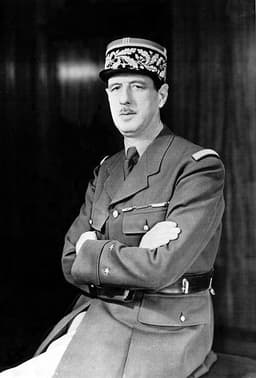
Charles de Gaulle
Politician · Modern
68.2Total
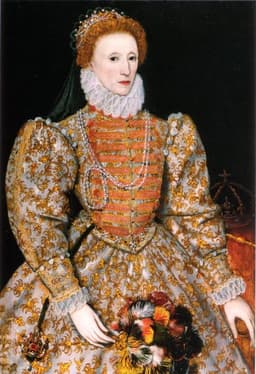
Elizabeth I
Politician · Modern
65.7Total
Basic Information
Born
1890
1533
Died
1970
1603
Era
Modern
Modern
Nationality
France
England
Occupation
Politician
Politician
Civilization
Western
Western
Score Comparison
Military (10%)
55.0
45.0
Political (20%)
75.0
78.0
Influence (20%)
65.0
65.0
Legacy (20%)
68.0
68.0
Leadership (15%)
78.0
75.0
Strategy (15%)
65.0
50.0
TOTAL
68.2
65.7
Charles de Gaulle — Complete Timeline
1940 AD
Appeal of 18 June 1940Political Action
From London, de Gaulle broadcast a radio appeal urging French resistance against Nazi occupation. He called on French soldiers and citizens to continue the fight, founding the Free French Forces and becoming the symbol of French defiance.
World War IIResistanceLeadership
Impact: nationalconstructive
1958 AD
Founding of the Fifth RepublicPolitical Action
De Gaulle returned to power during the Algerian crisis and oversaw the drafting of a new constitution. The Fifth Republic established a strong executive presidency, replacing the unstable parliamentary system of the Fourth Republic.
ConstitutionGovernment ReformPolitical System
Impact: nationalconstructive
1962 AD
End of the Algerian WarPolitical Action◆ Major
De Gaulle negotiated the
DecolonizationPeace TreatyAlgeria
Impact: regionalconstructive
1968 AD
May 1968 CrisisPolitical Action◆ Major
Mass student protests and general strikes paralyzed France, challenging de Gaulle's government. De Gaulle briefly fled to Germany, then returned to dissolve the National Assembly and call elections, which his party won, but his authority was weakened.
ProtestPolitical CrisisSocial Unrest
Impact: nationaldestructive
1969 AD
Resignation as PresidentPolitical Action
De Gaulle resigned after losing a referendum on regional reform and Senate restructuring. The defeat marked the end of his political career, as he withdrew from public life and died the following year.
ResignationPolitical DefeatReferendum
Impact: nationaltragic
Elizabeth I — Complete Timeline
1559 AD
Act of Supremacy 1559Political Action◆ Major
Elizabeth I re-established the Church of England's independence from Rome, declaring herself Supreme Governor. This act, part of the Elizabethan Religious Settlement, restored Protestantism while maintaining some Catholic traditions, creating a via media that aimed to unify the nation.
Religious SettlementProtestantismChurch of England
Impact: nationalconstructive
1587 AD
Execution of Mary, Queen of ScotsPolitical Action◆ Major
After years of imprisonment, Elizabeth I signed the death warrant for Mary, Queen of Scots, who had been implicated in the Babington Plot to assassinate Elizabeth and claim the English throne. Mary's execution removed a major Catholic rival and solidified Elizabeth's position.
ExecutionCatholic RivalPlot
Impact: nationaltragic
1588 AD
Defeat of the Spanish ArmadaWar
The English navy under Lord Howard and Sir Francis Drake defeated the Spanish Armada, a massive invasion fleet sent by Philip II. Storms and English fireships scattered the Spanish fleet, preventing the invasion and establishing England as a major naval power.
Naval BattleSpainProtestantism
Impact: globalconstructive
1600 AD
Chartering of the East India CompanyPolitical Action◆ Major
Elizabeth I granted a royal charter to the East India Company, giving it a monopoly on English trade with Asia. This company would become a powerful instrument of British imperialism, eventually controlling large parts of India and shaping global trade.
TradeColonialismCharter
Impact: globalconstructive
1601 AD
Golden SpeechPolitical Action
In her final address to Parliament, Elizabeth I delivered the 'Golden Speech,' expressing her love for her subjects and her dedication to the realm. She addressed grievances over monopolies, promising reform, and cemented her image as a beloved monarch devoted to her people.
SpeechParliamentMonarchy
Impact: nationalconstructive
Expert Analysis
Charles de Gaulle vs Elizabeth I
# The Virgin Queen and the Last Great Frenchman
On a gray November morning in 1601, an aging Elizabeth I stood before Parliament, her voice trembling with emotion as she delivered what would become known as her "Golden Speech." "Though God hath raised me high," she declared, "yet this I count the glory of my crown: that I have reigned with your loves." Across the Channel, nearly four centuries later, another aging leader—Charles de Gaulle—stepped down from power in 1969 after losing a referendum on regional reform, his towering figure diminished but unbowed. Two monarchs of their respective nations, one born to a throne, the other seizing it by force of will. What drove their divergent paths, and why did one leave a golden age, the other a contested legacy?
Origins
Elizabeth Tudor entered the world in 1533 as a princess, but her royal blood was a poisoned chalice. Her mother, Anne Boleyn, was executed when Elizabeth was not yet three years old. Declared illegitimate by her own father, Henry VIII, she spent her youth navigating the treacherous currents of Tudor politics, learning early that survival required cunning, patience, and an iron mask over her emotions. The England of her youth was a religious battleground, torn between Catholicism and Protestantism, and Elizabeth understood that her very existence was a political statement.
Charles de Gaulle was born in 1890 into a devoutly Catholic, patriotic family in Lille. His father taught philosophy and history, instilling in young Charles a sense of France's eternal greatness. Unlike Elizabeth, de Gaulle grew up in a nation humiliated—first by the Franco-Prussian War of 1870, then by the trenches of World War I, where he was wounded and captured. Where Elizabeth learned to dissemble, de Gaulle learned to stand firm. His vision of France was not a kingdom to be inherited, but an idea to be restored.
Rise to Power
Elizabeth's path to the throne was a miracle of survival. She outlived the bloody reign of her Catholic half-sister Mary I, who had imprisoned her in the Tower of London on suspicion of treason. When Elizabeth became queen in 1558 at age 25, she inherited a kingdom bankrupt, divided, and militarily weak. Her power came not from conquest but from her bloodline—and her extraordinary ability to play the political game.
De Gaulle's rise was the opposite: he created his own legitimacy. In June 1940, as France collapsed before the Nazi blitzkrieg, de Gaulle—then a little-known brigadier general—fled to London and broadcast his famous Appeal of 18 June, calling on French soldiers to resist. He was a voice in the wilderness, condemned as a traitor by the Vichy regime, dismissed as a fantasist by the Allies. But he refused to accept defeat. "France has lost a battle," he said, "but France has not lost the war." His power was built on sheer will and the audacity to claim he *was* France.
Leadership & Governance
Elizabeth's genius was political, not military. Her defeat of the Spanish Armada in 1588—score 45 in military—was less her own tactical brilliance than the work of Lord Howard and Sir Francis Drake, aided by storms. Her true strength lay in her political score of 82: the Act of Supremacy of 1559 established a moderate Protestant church that could contain both Catholic and Puritan extremes. She chartered the East India Company in 1600, planting the seeds of empire. Her rule was a masterclass in balancing factions, using marriage negotiations as diplomatic weapons, and cultivating an image of herself as the "Virgin Queen" wedded to her nation.
De Gaulle's leadership was forged in war. His military score of 65 reflects his strategic vision—he understood armored warfare before most French generals—but his true legacy was political. In 1958, he returned from retirement to found the Fifth Republic, crafting a constitution that gave France a strong executive. He ended the brutal Algerian War in 1962 through the Évian Accords, despite facing assassination attempts from both French extremists and Algerian nationalists. Where Elizabeth balanced, de Gaulle commanded. He believed in a "certain idea of France" and bent reality to match it.
Triumph & Tragedy
Elizabeth's greatest triumph was the Armada's defeat in 1588—a moment that cemented England's naval dominance and Protestant identity. But her greatest tragedy was the execution of Mary, Queen of Scots in 1587. For years, Elizabeth hesitated, haunted by the specter of killing an anointed queen. When she finally signed the death warrant, she claimed it was done against her will, weeping and denying responsibility. It was a moment of profound moral ambiguity, revealing the cost of power.
De Gaulle's triumph was the liberation of France in 1944, when he walked down the Champs-Élysées as the symbol of French resistance. His tragedy came in May 1968, when student protests and general strikes paralyzed France. De Gaulle, the man who had embodied national unity, suddenly seemed an anachronism. He briefly fled to Germany, a moment of panic that shattered his mystique. The referendum defeat in 1969 was the final humiliation—a quiet end for a man who had always spoken in thunder.
Character & Destiny
Elizabeth's character was shaped by insecurity. She was a woman in a man's world, and she turned her perceived weakness into strength, using her femininity as a political tool. She was cautious to the point of paralysis, delaying decisions until events forced her hand. Yet this caution gave England stability. Her motto, *Semper Eadem* ("Always the Same"), was both a promise and a shield.
De Gaulle's character was shaped by certainty. He was aloof, arrogant, and convinced of his own historical mission. "I have never been able to consent to the division of France," he wrote. His height—six feet five inches—was a metaphor for his towering self-regard. Where Elizabeth compromised, de Gaulle polarized. He could not bend, and in the end, he broke.
Legacy
Elizabeth's legacy is the "Golden Age"—Shakespeare, the Armada, the birth of empire. She left England stronger, richer, and more confident than she found it. But her reign also sowed seeds of future conflict: the religious settlement satisfied no one completely, and the monarchy's power would be challenged within a generation.
De Gaulle's legacy is more contested. He restored French pride after World War II and gave France the Fifth Republic, which endures today. But his vision of a strong, independent France—withdrawn from NATO's military command, skeptical of European integration—now seems dated. He is revered as a symbol, but his policies are often quietly abandoned.
Conclusion
Two leaders, two nations, two very different ideas of power. Elizabeth ruled by weaving herself into the fabric of her people's affections, a queen who loved her subjects and demanded their love in return. De Gaulle ruled by standing above the crowd, a solitary figure who believed he alone understood France's destiny. One was a pragmatist who survived by bending; the other was a prophet who fell by refusing to bend. Their stories remind us that leadership is not a formula but an art—shaped by the accidents of birth, the wounds of history, and the mysterious alchemy of character. Elizabeth's England still speaks to us through Shakespeare's sonnets; de Gaulle's France still echoes in the speeches of presidents who invoke his name. Both, in their own way, achieved what they set out to do. But only one left a people who truly loved her.
Rankings
🥇
Charles de GaulleLeader
Mil: 55.0Pol: 75.0Inf: 65.0
68.2
🥈
Elizabeth I
Mil: 45.0Pol: 78.0Inf: 65.0
65.7
+2.5 behind
How This Comparison Works
Algorithm
Each figure is scored on 6 dimensions (0—100 scale) based on structured historical data: Military (10%), Political (20%), Influence (20%), Legacy (20%), Leadership (15%), Strategy (15%). The weighted total produces the final ranking.
Data Sources
Scores are computed from structured sub-indicators in the database. Scale factors adjust for era (Ancient ×0.85, Modern ×1.0) and civilization size (Eastern ×1.05, Other ×0.80) to account for differences in population and military scale.
Maximum 3 Figures
Comparisons are limited to 2—3 figures to ensure readability and statistical meaningfulness.
Error Margins
±5 points per dimension — Sub-scores are derived from historical records with inherent uncertainty. Two figures within 5 points on a dimension should be considered roughly equivalent in that area.
Total Score Accuracy
±3 points overall — The weighted combination of 6 dimensions produces a total score with approximately ±3 points of uncertainty. Differences of less than 3 points are not statistically significant— the figures are effectively tied.
Known Limitations
- Historical records are incomplete and uneven across civilizations
- Figures from oral-tradition societies may be underrepresented
- Occupation labels can misclassify multi-role figures
- Scores measure capability and impact, not moral character
- Quantitative scoring is a comparison tool, not absolute truth
Capability Radar
Military (10%) — Battles & Warfare
Battles
60
45
Win Rate
55
70
Expansion
20
55
Political (20%) — Governance & Reform
Reform
95
80
Diplomacy
90
85
Economy
70
80
Influence (20%) — Cultural & Global Reach
Cultural
70
85
Global
80
80
Legacy (20%) — Historical Impact
Historical
85
85
Longevity
75
85
Leadership (15%) — Power & Stability
Tenure
85
90
Stability
75
75
Strategy (15%) — Tactics & Innovation
Strategy
85
75
Tactics
70
60
Reform
80
65
Similar Comparisons
Comments & Discussion
No comments yet. Be the first to share your thoughts!