Loading...
Catherine the Great vs Elizabeth I
Catherine the Great leads by 1.1 pts · 2 figures compared
…
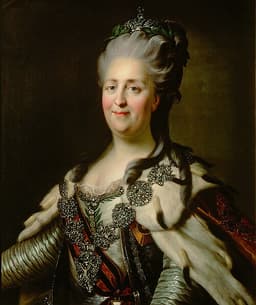
Catherine the Great
Emperor · Modern
66.8Total
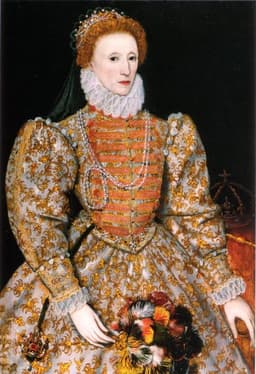
Elizabeth I
Politician · Modern
65.7Total
Basic Information
Born
1729
1533
Died
1796
1603
Era
Modern
Modern
Nationality
Russia
England
Occupation
Emperor
Politician
Civilization
Western
Western
Score Comparison
Military (10%)
78.5
45.0
Political (20%)
90.0
78.0
Influence (20%)
65.0
65.0
Legacy (20%)
40.0
68.0
Leadership (15%)
80.0
75.0
Strategy (15%)
72.0
50.0
TOTAL
66.8
65.7
Catherine the Great — Complete Timeline
1762 AD
Coup d'État of 1762Political Action
Catherine II led a coup d'
CoupAccessionPower
Impact: national
1764 AD
Hermitage Museum FoundedCultural◆ Major
Catherine the Great founded the Hermitage Museum in St. Petersburg by purchasing a large collection of paintings from Berlin. The museum grew into one of the world's largest art collections, reflecting her patronage of Enlightenment culture.
ArtMuseumEnlightenment
Impact: globalconstructive
1768 AD
Russo-Turkish War (1768-1774)War◆ Major
Catherine the Great initiated a war against the Ottoman Empire, resulting in Russian victory. The Treaty of K
WarOttoman EmpireExpansion
Impact: regional
1783 AD
Annexation of CrimeaPolitical Action◆ Major
Catherine the Great formally annexed the Crimean Peninsula from the Ottoman Empire. This strategic acquisition gave Russia a dominant position in the Black Sea and a warm-water port, fulfilling a long-standing imperial ambition.
AnnexationCrimeaBlack Sea
Impact: regional
1785 AD
Charter to the Gentry GrantedReform◆ Major
Catherine the Great issued the Charter to the Gentry, which codified the rights and privileges of the Russian nobility. It exempted nobles from taxation and military service, solidifying their social status and support for her rule.
NobilityReformSocial Structure
Impact: nationalconstructive
Elizabeth I — Complete Timeline
1559 AD
Act of Supremacy 1559Political Action◆ Major
Elizabeth I re-established the Church of England's independence from Rome, declaring herself Supreme Governor. This act, part of the Elizabethan Religious Settlement, restored Protestantism while maintaining some Catholic traditions, creating a via media that aimed to unify the nation.
Religious SettlementProtestantismChurch of England
Impact: nationalconstructive
1587 AD
Execution of Mary, Queen of ScotsPolitical Action◆ Major
After years of imprisonment, Elizabeth I signed the death warrant for Mary, Queen of Scots, who had been implicated in the Babington Plot to assassinate Elizabeth and claim the English throne. Mary's execution removed a major Catholic rival and solidified Elizabeth's position.
ExecutionCatholic RivalPlot
Impact: nationaltragic
1588 AD
Defeat of the Spanish ArmadaWar
The English navy under Lord Howard and Sir Francis Drake defeated the Spanish Armada, a massive invasion fleet sent by Philip II. Storms and English fireships scattered the Spanish fleet, preventing the invasion and establishing England as a major naval power.
Naval BattleSpainProtestantism
Impact: globalconstructive
1600 AD
Chartering of the East India CompanyPolitical Action◆ Major
Elizabeth I granted a royal charter to the East India Company, giving it a monopoly on English trade with Asia. This company would become a powerful instrument of British imperialism, eventually controlling large parts of India and shaping global trade.
TradeColonialismCharter
Impact: globalconstructive
1601 AD
Golden SpeechPolitical Action
In her final address to Parliament, Elizabeth I delivered the 'Golden Speech,' expressing her love for her subjects and her dedication to the realm. She addressed grievances over monopolies, promising reform, and cemented her image as a beloved monarch devoted to her people.
SpeechParliamentMonarchy
Impact: nationalconstructive
Expert Analysis
Elizabeth I vs Catherine the Great
# Two Queens Who Shaped an Age
On a winter morning in 1603, an aging woman lay dying in Richmond Palace, her fingers tracing the worn fabric of a ring she had worn for forty-five years. Three thousand miles east, in the gilded halls of St. Petersburg, a German princess who had remade herself into a Russian empress was planning her next war, her next building project, her next lover. Elizabeth I of England and Catherine II of Russia never met, never corresponded, and ruled worlds apart in every sense—yet both women seized power in eras that told them women could not rule, and both bent history to their will. The question is not which was greater, but why their paths diverged so dramatically: one became the Virgin Queen who defined her nation's soul, the other the "Semiramis of the North" who transformed an empire into a European power.
Origins
Elizabeth was born into danger. Her mother, Anne Boleyn, was executed when Elizabeth was not yet three years old. Declared illegitimate by her father Henry VIII, then restored to the succession, she spent her youth navigating a court where a misplaced word could mean the Tower of London—or the block. She learned to speak six languages, to translate Cicero, to debate theology, and above all, to conceal her thoughts behind a mask of ambiguity. Her tutors were humanists; her textbooks were the classics; her real education was survival.
Catherine, born Sophia Augusta Frederica in the minor German principality of Anhalt-Zerbst, arrived in Russia at fourteen with little more than ambition and a willingness to adapt. She learned Russian so intensely that she rose at night to memorize vocabulary, and when her tutor fell ill, she studied alone until she collapsed from pneumonia. She converted from Lutheranism to Orthodoxy with theatrical devotion, took the name Catherine, and began the long, patient work of making herself indispensable to a court that despised her German origins. Where Elizabeth inherited a kingdom, Catherine had to steal one.
Rise to Power
Elizabeth's accession in 1558 was almost anticlimactic: her Catholic sister Mary died, and the crown passed to the Protestant Elizabeth without bloodshed. But her early reign was anything but secure. The Pope declared her illegitimate, Catholic powers plotted to replace her with Mary Queen of Scots, and the question of marriage—whom she would wed, when she would produce an heir—dominated every diplomatic exchange. She answered by refusing to answer, keeping suitors dangling for decades while building a cult of virginity that transformed her political weakness into spiritual strength.
Catherine's rise was a coup d'état. On July 9, 1762, she rode at the head of fourteen thousand soldiers to the Winter Palace, wearing a borrowed officer's uniform, while her husband Emperor Peter III was arrested and soon murdered—probably with her tacit consent. She was thirty-three, foreign, and a usurper. Yet within months, she had secured the loyalty of the nobility, crushed a coup attempt against her, and begun the most ambitious reform program Russia had ever seen. Elizabeth played defense with her throne; Catherine played offense.
Leadership & Governance
Elizabeth governed through indirection. She delayed decisions, split her council's advice, and let factions exhaust themselves while she waited for consensus. Her greatest political achievement—the 1559 Act of Supremacy, which re-established the Church of England's independence from Rome—succeeded precisely because it was vague enough to offend no one. She called herself "Supreme Governor" rather than "Supreme Head" of the Church, a linguistic dodge that allowed both Protestants and Catholics to worship without civil war. She was not a reformer; she was a balancer.
Catherine governed through energy. She corresponded with Voltaire and Diderot, founded the Hermitage Museum in 1764, and issued the 1785 Charter to the Gentry that codified noble privileges. But her Enlightenment ideals had limits. She expanded serfdom, crushed the Pugachev Rebellion with savage brutality, and never considered abolishing the institution that made her reforms possible. Her political genius lay in making absolutism look progressive: she gave the nobility rights in exchange for absolute loyalty, and she gave Russia the appearance of modernity while preserving autocratic reality.
On military matters, the contrast is stark. Elizabeth's 1588 victory over the Spanish Armada was largely defensive and owed more to storms and Spanish incompetence than English naval brilliance—though she understood the propaganda value perfectly, appearing at Tilbury in armor to declare, "I know I have the body of a weak and feeble woman, but I have the heart and stomach of a king." Catherine, by contrast, waged aggressive war. Her 1768–1774 conflict with the Ottoman Empire won Russia a foothold on the Black Sea, and her 1783 annexation of Crimea gave Russia its first warm-water port. She expanded Russia's borders by over 200,000 square miles.
Triumph & Tragedy
Elizabeth's greatest triumph was survival itself. She outlived her enemies, outmaneuvered her suitors, and outlasted the Spanish threat. Her 1601 "Golden Speech," delivered to Parliament in her final years, remains a masterpiece of political theater: "Though God hath raised me high, yet this I count the glory of my crown, that I have reigned with your loves." Her tragedy was the same as her triumph: she never married, never had children, and the Tudor line died with her. The cousin she executed in 1587, Mary Queen of Scots, would have her grandson inherit Elizabeth's throne.
Catherine's triumph was transformation. She took a backward, isolated empire and made it a European power. Her tragedy was the gap between her ideals and her actions. She wrote to Voltaire about liberty while crushing Polish independence; she founded schools while tightening serfdom; she collected Enlightenment art while the peasants who built her palaces starved.
Character & Destiny
Elizabeth's caution was her genius. She had learned early that a queen could not afford to show her hand, and she turned indecision into a governing philosophy. Her virginity was not merely personal but political: by remaining unmarried, she kept England free from foreign domination and preserved her own authority. She was vain, jealous, and capable of terrible cruelty—witness her treatment of her cousin Mary—but she was also deeply pragmatic. She understood that power required performance, and she performed magnificently.
Catherine's ambition was her engine. She had seized a throne and knew she could lose it just as easily. She took lovers—most famously Grigory Potemkin—but never let them rule her. She worked sixteen-hour days, read voraciously, and wrote her own memoirs. She was ruthless, sensual, and genuinely curious about the world. Where Elizabeth protected what she had, Catherine wanted more: more territory, more art, more glory.
Legacy
Elizabeth's legacy is England itself: the defeat of the Armada, the flourishing of Shakespeare and Marlowe, the establishment of a Protestant nation that would become the world's dominant power. She is remembered as Gloriana, the Virgin Queen, a symbol of national pride and feminine power that still resonates. Her East India Company charter of 1600 planted the seed of an empire that would outlast hers by three centuries.
Catherine's legacy is modern Russia: the expansion to the Black Sea, the cultural awakening of St. Petersburg, the Hermitage collection that remains one of the world's great museums. She is remembered as Catherine the Great, but also as a ruler who deepened serfdom and crushed dissent. Her empire grew, but its internal contradictions remained unresolved.
Conclusion
Elizabeth and Catherine both proved that women could rule in an age of men, but they proved it in opposite ways. Elizabeth ruled by appearing to yield while never yielding; Catherine ruled by seizing what she wanted and daring anyone to stop her. One preserved her kingdom; the other expanded hers. One left a nation defined by its island identity; the other left an empire that stretched across continents. Their differences were not merely personal but structural: Elizabeth inherited a stable, constitutional monarchy and kept it stable; Catherine seized an unstable autocracy and made it stronger. Both succeeded, but success looked very different in a damp island kingdom than on the vast Russian steppe. The Virgin Queen and the Empress of the North: two women who bent history to their will, and left behind worlds their successors still inhabit.
Rankings
🥇
Catherine the GreatLeader
Mil: 78.5Pol: 90.0Inf: 65.0
66.8
🥈
Elizabeth I
Mil: 45.0Pol: 78.0Inf: 65.0
65.7
+1.1 behind
How This Comparison Works
Algorithm
Each figure is scored on 6 dimensions (0—100 scale) based on structured historical data: Military (10%), Political (20%), Influence (20%), Legacy (20%), Leadership (15%), Strategy (15%). The weighted total produces the final ranking.
Data Sources
Scores are computed from structured sub-indicators in the database. Scale factors adjust for era (Ancient ×0.85, Modern ×1.0) and civilization size (Eastern ×1.05, Other ×0.80) to account for differences in population and military scale.
Maximum 3 Figures
Comparisons are limited to 2—3 figures to ensure readability and statistical meaningfulness.
Error Margins
±5 points per dimension — Sub-scores are derived from historical records with inherent uncertainty. Two figures within 5 points on a dimension should be considered roughly equivalent in that area.
Total Score Accuracy
±3 points overall — The weighted combination of 6 dimensions produces a total score with approximately ±3 points of uncertainty. Differences of less than 3 points are not statistically significant— the figures are effectively tied.
Known Limitations
- Historical records are incomplete and uneven across civilizations
- Figures from oral-tradition societies may be underrepresented
- Occupation labels can misclassify multi-role figures
- Scores measure capability and impact, not moral character
- Quantitative scoring is a comparison tool, not absolute truth
Capability Radar
Military (10%) — Battles & Warfare
Battles
85
45
Win Rate
80
70
Expansion
90
55
Political (20%) — Governance & Reform
Reform
90
80
Diplomacy
85
85
Economy
85
80
Influence (20%) — Cultural & Global Reach
Cultural
85
85
Global
80
80
Legacy (20%) — Historical Impact
Historical
85
85
Longevity
80
85
Leadership (15%) — Power & Stability
Tenure
95
90
Stability
80
75
Strategy (15%) — Tactics & Innovation
Strategy
85
75
Tactics
75
60
Reform
90
65
Similar Comparisons
Comments & Discussion
StilettoScholar6/16/2026
Forget the "Great" vs "Gloriana" nonsense. The real winner? Catherine, no question. She actually had to build power from scratch—a foreigner who seized the throne in a coup, while Elizabeth inherited a functioning crown despite the illegitimacy stigma. Catherine reformed law codes, expanded borders by 200,000 square miles, and patronized Voltaire. Elizabeth spent decades playing virginity as political theater. Catherine had 12 lovers; Elizabeth had zero. Who actually lived?——冷血统计员|zh|数据不会撒谎,凯瑟琳大