Loading...
Elizabeth I vs Mao Zedong
Mao Zedong leads by 13.7 pts · 2 figures compared
…
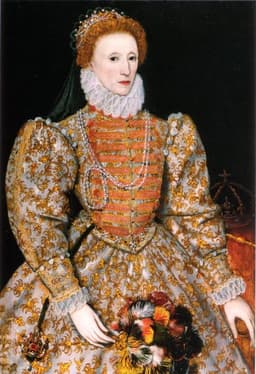
Elizabeth I
Politician · Modern
65.7Total
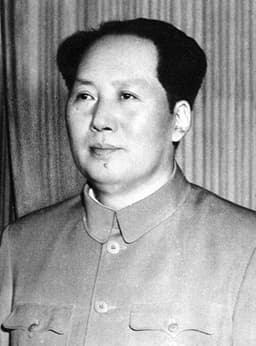
Mao Zedong
Politician · Modern
79.4Total
Basic Information
Born
1533
1893
Died
1603
1976
Era
Modern
Modern
Nationality
England
China
Occupation
Politician
Politician
Civilization
Western
Eastern
Score Comparison
Military (10%)
45.0
75.0
Political (20%)
78.0
88.0
Influence (20%)
65.0
85.0
Legacy (20%)
68.0
70.0
Leadership (15%)
75.0
85.0
Strategy (15%)
50.0
72.0
TOTAL
65.7
79.4
Elizabeth I — Complete Timeline
1559 AD
Act of Supremacy 1559Political Action◆ Major
Elizabeth I re-established the Church of England's independence from Rome, declaring herself Supreme Governor. This act, part of the Elizabethan Religious Settlement, restored Protestantism while maintaining some Catholic traditions, creating a via media that aimed to unify the nation.
Religious SettlementProtestantismChurch of England
Impact: nationalconstructive
1587 AD
Execution of Mary, Queen of ScotsPolitical Action◆ Major
After years of imprisonment, Elizabeth I signed the death warrant for Mary, Queen of Scots, who had been implicated in the Babington Plot to assassinate Elizabeth and claim the English throne. Mary's execution removed a major Catholic rival and solidified Elizabeth's position.
ExecutionCatholic RivalPlot
Impact: nationaltragic
1588 AD
Defeat of the Spanish ArmadaWar
The English navy under Lord Howard and Sir Francis Drake defeated the Spanish Armada, a massive invasion fleet sent by Philip II. Storms and English fireships scattered the Spanish fleet, preventing the invasion and establishing England as a major naval power.
Naval BattleSpainProtestantism
Impact: globalconstructive
1600 AD
Chartering of the East India CompanyPolitical Action◆ Major
Elizabeth I granted a royal charter to the East India Company, giving it a monopoly on English trade with Asia. This company would become a powerful instrument of British imperialism, eventually controlling large parts of India and shaping global trade.
TradeColonialismCharter
Impact: globalconstructive
1601 AD
Golden SpeechPolitical Action
In her final address to Parliament, Elizabeth I delivered the 'Golden Speech,' expressing her love for her subjects and her dedication to the realm. She addressed grievances over monopolies, promising reform, and cemented her image as a beloved monarch devoted to her people.
SpeechParliamentMonarchy
Impact: nationalconstructive
Mao Zedong — Complete Timeline
1934 AD
Long MarchWar
Mao Zedong led the Chinese Red Army on a strategic retreat from Nationalist forces, covering approximately 6,000 miles over 370 days. The march solidified Mao's leadership within the Chinese Communist Party and became a foundational myth of the Communist revolution.
Chinese Civil WarCommunist RevolutionRetreat
Impact: national
1949 AD
Proclamation of the People's Republic of ChinaPolitical Action
Mao Zedong declared the founding of the People's Republic of China from Tiananmen Gate in Beijing. This ended the Chinese Civil War and established Communist rule over mainland China, with Mao as Chairman of the Central People's Government.
Founding of PRCCommunist VictoryRevolution
Impact: global
1958 AD
Great Leap ForwardReform◆ Major
Mao launched a campaign to rapidly industrialize China and collectivize agriculture. The policy led to widespread mismanagement, resulting in a famine that caused an estimated 15-45 million deaths between 1959 and 1961.
FamineIndustrializationCollectivization
Impact: nationaldestructive
1960 AD
Sino-Soviet SplitPolitical Action◆ Major
Mao's ideological differences with Soviet leader Nikita Khrushchev led to a breakdown in relations between China and the Soviet Union. The split ended the Sino-Soviet alliance and reshaped global Cold War dynamics, with China pursuing an independent path.
Cold WarIdeological ConflictAlliance Breakdown
Impact: global
1966 AD
Cultural RevolutionPolitical Action
Mao initiated a sociopolitical movement to purge capitalist and traditional elements from Chinese society. The Red Guard youth groups attacked intellectuals and officials, leading to widespread violence, destruction of cultural artifacts, and an estimated 1-2 million deaths.
Political PurgeSocial UpheavalRed Guard
Impact: nationaldestructive
1971 AD
Ping-Pong DiplomacyCultural◆ Major
Mao approved an invitation for the U.S. table tennis team to visit China, initiating a thaw in Sino-American relations. This cultural exchange paved the way for President Nixon's visit to China in 1972 and the eventual normalization of diplomatic ties.
DiplomacyU.S.-China RelationsCultural Exchange
Impact: globalconstructive
Expert Analysis
Mao Zedong vs Elizabeth I
# The Virgin Queen and the Great Helmsman: Two Paths to Power
In the winter of 1601, an aging queen stood before her parliament, her voice trembling not with weakness but with emotion. Elizabeth I, the Virgin Queen, spoke of her love for her subjects, calling them her "children" and declaring that though she had the body of a weak woman, she had the heart and stomach of a king. Nearly four centuries later, in the autumn of 1976, a dying man lay in a Beijing hospital, his body ravaged by disease, his mind still churning with revolutionary fervor. Mao Zedong, the Great Helmsman, had steered China through civil war, famine, and ideological purges, leaving behind a nation transformed—and traumatized. What drove these two figures, both rulers of vast realms, to such radically different ends? The answer lies not merely in their choices but in the worlds that shaped them.
Origins
Elizabeth was born into a world of precarious royalty. Her father, Henry VIII, had broken with Rome to marry her mother, Anne Boleyn, only to have Anne executed when Elizabeth was not yet three. Declared illegitimate, she spent her childhood navigating the treacherous currents of Tudor court politics, learning to mask her intelligence with deference and her ambition with caution. The England of her youth was a small island kingdom, still recovering from the Wars of the Roses, its power balanced between a fractious nobility and a rising merchant class.
Mao, by contrast, was born in 1893 into a China crumbling under the weight of dynastic decline and foreign humiliation. His father was a prosperous farmer in Hunan province, a man who beat his son and demanded obedience. Young Mao rebelled, leaving home to study, reading voraciously about revolution and nationalism. The China of his youth was a wounded giant—opium-addicted, divided by warlords, and humiliated by Western powers and Japan. Where Elizabeth learned to survive by subtlety, Mao learned to fight by fury.
Rise to Power
Elizabeth’s path to the throne was a slow, careful ascent. She survived the reign of her Catholic sister Mary I, who imprisoned her in the Tower of London and suspected her of Protestant plots. When Mary died in 1558, Elizabeth inherited a kingdom torn by religious conflict, bankrupt by war, and surrounded by hostile Catholic powers. She became queen not by conquest but by blood—and by outliving her rivals.
Mao’s rise was the opposite: a violent, chaotic struggle against overwhelming odds. He was not born to rule but had to seize power. In 1934, he led the Red Army on the Long March, a six-thousand-mile retreat that killed nine out of ten participants but forged him into an icon. By 1949, when he proclaimed the People’s Republic of China from Tiananmen Gate, he had defeated both the Japanese invaders and the Nationalist forces of Chiang Kai-shek. He did not inherit a throne; he burned the old one down.
Leadership & Governance
Elizabeth governed through consensus and compromise. Her Act of Supremacy in 1559 re-established the Church of England, but she refused to persecute Catholics who kept their faith private. She cultivated a cult of personality—the Virgin Queen, married to her nation—but she never sought absolute power. She consulted her Privy Council, flattered her parliament, and balanced factions with the skill of a tightrope walker. Her military score of 45 reflects not weakness but wisdom: she knew England could not win a land war in Europe, so she invested in a navy that, in 1588, shattered the Spanish Armada.
Mao governed through revolution and upheaval. His Great Leap Forward of 1958 aimed to industrialize China overnight, but it led to mismanagement and famine that killed millions. His Cultural Revolution, launched in 1966, purged intellectuals, destroyed temples, and turned children against parents. His political score of 82 matches Elizabeth’s, but his methods were diametrically opposed: she built institutions; he tore them down. Where Elizabeth sought stability, Mao sought perpetual revolution.
Triumph & Tragedy
Elizabeth’s greatest triumph was the defeat of the Spanish Armada in 1588, a victory that secured England’s independence and launched its naval dominance. Her greatest tragedy was personal: she never married, never had children, and died without a direct heir, the Tudor dynasty ending with her. Her signing of the death warrant for Mary, Queen of Scots in 1587 was a necessary cruelty, but it haunted her.
Mao’s triumph was the unification of China under Communist rule, a feat that ended a century of civil war and foreign domination. His tragedy was the cost of that unification. The Great Leap Forward and Cultural Revolution caused suffering on a scale that dwarfs any English calamity. Yet his influence—scored at 79.7—endures, as China remains a Communist state shaped by his ideology.
Character & Destiny
Elizabeth’s character was defined by caution, intelligence, and a deep sense of duty. She once said, "I know I have the body of a weak and feeble woman, but I have the heart and stomach of a king." She was a master of delay, using marriage negotiations as diplomatic tools, never committing until necessary. Her destiny was to preserve her kingdom, not to expand it.
Mao’s character was defined by ambition, ruthlessness, and a belief in his own infallibility. He wrote, "Political power grows out of the barrel of a gun." He was a poet and a philosopher, but also a destroyer. His destiny was to remake China in his image, whatever the cost.
Legacy
Elizabeth’s legacy is the Elizabethan Age—Shakespeare, Drake, the East India Company chartered in 1600, the flowering of English culture and power. She is remembered as a symbol of national unity and feminine strength. Her total score of 70.2 reflects a reign that was stable, prosperous, and culturally brilliant.
Mao’s legacy is more contested. He is revered as the founder of modern China, a nation that has risen to global power. But his policies caused immense suffering, and his legacy score of 69.9 reflects this ambiguity. He is both hero and villain, liberator and tyrant.
Conclusion
What separates Elizabeth I from Mao Zedong is not merely time or place but the fundamental question of what a ruler owes to their people. Elizabeth believed she was a steward of a kingdom she had inherited; Mao believed he was the architect of a nation he had created. One sought to preserve, the other to transform. One ruled with the consent of her subjects; the other ruled by the force of his will. In the end, both left their marks on history—but the marks are as different as the women and men who made them. Elizabeth’s England became a constitutional monarchy; Mao’s China became a one-party state. The Virgin Queen gave her people a golden age; the Great Helmsman gave his people a revolution. Which legacy endures depends on who is asking—and what they are willing to sacrifice.
Rankings
🥇
Mao ZedongLeader
Mil: 75.0Pol: 88.0Inf: 85.0
79.4
🥈
Elizabeth I
Mil: 45.0Pol: 78.0Inf: 65.0
65.7
+13.7 behind
How This Comparison Works
Algorithm
Each figure is scored on 6 dimensions (0—100 scale) based on structured historical data: Military (10%), Political (20%), Influence (20%), Legacy (20%), Leadership (15%), Strategy (15%). The weighted total produces the final ranking.
Data Sources
Scores are computed from structured sub-indicators in the database. Scale factors adjust for era (Ancient ×0.85, Modern ×1.0) and civilization size (Eastern ×1.05, Other ×0.80) to account for differences in population and military scale.
Maximum 3 Figures
Comparisons are limited to 2—3 figures to ensure readability and statistical meaningfulness.
Error Margins
±5 points per dimension — Sub-scores are derived from historical records with inherent uncertainty. Two figures within 5 points on a dimension should be considered roughly equivalent in that area.
Total Score Accuracy
±3 points overall — The weighted combination of 6 dimensions produces a total score with approximately ±3 points of uncertainty. Differences of less than 3 points are not statistically significant— the figures are effectively tied.
Known Limitations
- Historical records are incomplete and uneven across civilizations
- Figures from oral-tradition societies may be underrepresented
- Occupation labels can misclassify multi-role figures
- Scores measure capability and impact, not moral character
- Quantitative scoring is a comparison tool, not absolute truth
Capability Radar
Military (10%) — Battles & Warfare
Battles
45
85
Win Rate
70
80
Expansion
55
85
Political (20%) — Governance & Reform
Reform
80
95
Diplomacy
85
80
Economy
80
70
Influence (20%) — Cultural & Global Reach
Cultural
85
90
Global
80
90
Legacy (20%) — Historical Impact
Historical
85
95
Longevity
85
85
Leadership (15%) — Power & Stability
Tenure
90
95
Stability
75
60
Strategy (15%) — Tactics & Innovation
Strategy
75
85
Tactics
60
75
Reform
65
90
Similar Comparisons
Comments & Discussion
黄河守望者6/16/2026
把伊丽莎白和毛泽东摆在一起比,就像拿绣花针比铁锤。伊丽莎白统治的是三百万人的小岛,靠联姻和外交维系权位;毛泽东掌舵的是四亿人的大国,从井冈山打到天安门,靠的是土地革命和阶级动员。没有毛泽东,中国可能还是半殖民地。伊丽莎白留下一顶王冠,毛泽东留下一个站起来的新中国。别拿宫廷戏比革命史。
Armada Analyst6/16/2026
Here's what the data actually says: Elizabeth I inherited a nearly bankrupt England with a population of ~4 million and left a stable Protestant state with the foundations of empire. Mao inherited a war-torn China of ~550 million and left a nation of 900 million, but with a famine that killed 15-45 million people. The scale difference is staggering, but so is the human cost per capita. The Virgin Queen's "golden age" had its own executions and enclosures, but she never attempted to forcibly reor
汾河旧梦6/16/2026
说伊丽莎白“伟大”的人,该去读读爱尔兰殖民史。她派遣的军队在芒斯特屠杀了三分之一的爱尔兰人,用焦土政策饿死了数万平民。这和毛泽东的三年困难时期相比,只是规模不同,逻辑一模一样:为了政治目标,牺牲底层百姓。但毛泽东至少没有装成“爱民如子”,他清楚地说革命不是请客吃饭。虚伪的温情比坦率的冷酷更可怕。
Historian3906/16/2026
Elizabeth I's reign proves that soft power can be just as lethal as armies. Her 1588 Tilbury speech was pure psychological warfare—she convinced a terrified nation that a woman could lead them to victory against the Spanish Armada. Meanwhile, Mao's "paper tiger" rhetoric was borrowed from this same playbook, but with five million dead during the Great Leap Forward, his charisma came at a much higher price. One ruled by inspiration, the other by intimidation.