Loading...
Elizabeth I vs Winston Churchill
Winston Churchill leads by 6.1 pts · 2 figures compared
…
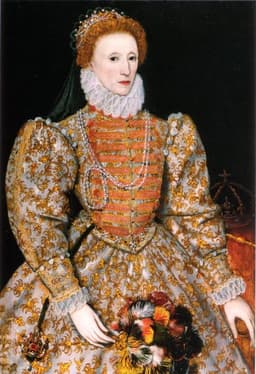
Elizabeth I
Politician · Modern
65.7Total
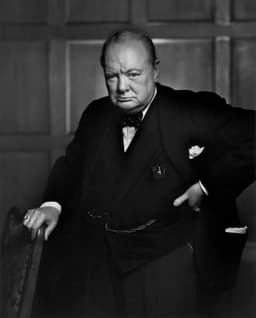
Winston Churchill
Politician · Modern
71.8Total
Basic Information
Born
1533
1874
Died
1603
1965
Era
Modern
Modern
Nationality
England
United Kingdom
Occupation
Politician
Politician
Civilization
Western
Western
Score Comparison
Military (10%)
45.0
55.0
Political (20%)
78.0
78.0
Influence (20%)
65.0
75.0
Legacy (20%)
68.0
68.0
Leadership (15%)
75.0
82.0
Strategy (15%)
50.0
65.0
TOTAL
65.7
71.8
Elizabeth I — Complete Timeline
1559 AD
Act of Supremacy 1559Political Action◆ Major
Elizabeth I re-established the Church of England's independence from Rome, declaring herself Supreme Governor. This act, part of the Elizabethan Religious Settlement, restored Protestantism while maintaining some Catholic traditions, creating a via media that aimed to unify the nation.
Religious SettlementProtestantismChurch of England
Impact: nationalconstructive
1587 AD
Execution of Mary, Queen of ScotsPolitical Action◆ Major
After years of imprisonment, Elizabeth I signed the death warrant for Mary, Queen of Scots, who had been implicated in the Babington Plot to assassinate Elizabeth and claim the English throne. Mary's execution removed a major Catholic rival and solidified Elizabeth's position.
ExecutionCatholic RivalPlot
Impact: nationaltragic
1588 AD
Defeat of the Spanish ArmadaWar
The English navy under Lord Howard and Sir Francis Drake defeated the Spanish Armada, a massive invasion fleet sent by Philip II. Storms and English fireships scattered the Spanish fleet, preventing the invasion and establishing England as a major naval power.
Naval BattleSpainProtestantism
Impact: globalconstructive
1600 AD
Chartering of the East India CompanyPolitical Action◆ Major
Elizabeth I granted a royal charter to the East India Company, giving it a monopoly on English trade with Asia. This company would become a powerful instrument of British imperialism, eventually controlling large parts of India and shaping global trade.
TradeColonialismCharter
Impact: globalconstructive
1601 AD
Golden SpeechPolitical Action
In her final address to Parliament, Elizabeth I delivered the 'Golden Speech,' expressing her love for her subjects and her dedication to the realm. She addressed grievances over monopolies, promising reform, and cemented her image as a beloved monarch devoted to her people.
SpeechParliamentMonarchy
Impact: nationalconstructive
Winston Churchill — Complete Timeline
1940 AD
Appointed Prime Minister of the United KingdomPolitical Action◆ Major
On May 10, 1940, Winston Churchill became Prime Minister of the United Kingdom, replacing Neville Chamberlain. His appointment came as Nazi Germany invaded France and the Low Countries, and Churchill formed a coalition government to lead Britain through World War II.
World War IILeadershipCoalition Government
Impact: globalconstructive
Delivered the 'We Shall Fight on the Beaches' SpeechOther◆ Major
On June 4, 1940, Churchill delivered a speech to the House of Commons following the evacuation of British forces from Dunkirk. He declared that Britain would fight on the beaches, landing grounds, fields, streets, and hills, and never surrender, rallying British morale during the darkest days of World War II.
World War IIOratoryMorale
Impact: nationalconstructive
1941 AD
Signed the Atlantic CharterOther◆ Major
On August 14, 1941, Churchill and U.S. President Franklin D. Roosevelt signed the Atlantic Charter aboard HMS Prince of Wales. This joint declaration outlined post-war goals including self-determination, disarmament, and free trade, and became a foundational document for the Allied war aims and the United Nations.
World War IIAllied CooperationPost-war Planning
Impact: globalconstructive
1945 AD
Attended the Yalta ConferenceOther◆ Major
In February 1945, Churchill attended the Yalta Conference with Roosevelt and Stalin to discuss the post-war reorganization of Europe. The conference agreed on the division of Germany, the establishment of the United Nations, and the fate of Eastern Europe, though Churchill later expressed regret over concessions to Stalin.
World War IIPost-war SettlementBig Three
Impact: global
1946 AD
Delivered the 'Iron Curtain' SpeechOther◆ Major
On March 5, 1946, Churchill delivered a speech at Westminster College in Fulton, Missouri, where he stated that an 'iron curtain' had descended across Europe from Stettin to Trieste. This speech is widely regarded as marking the beginning of the Cold War, as it highlighted the division between Soviet-controlled Eastern Europe and the West.
Cold WarSoviet UnionDivision of Europe
Impact: globaldestructive
1953 AD
Awarded the Nobel Prize in LiteratureOther◆ Major
In 1953, Churchill was awarded the Nobel Prize in Literature for his historical writings, particularly 'The Second World War' and 'A History of the English-Speaking Peoples'. The Nobel committee cited his mastery of historical and biographical description as well as his brilliant oratory in defending human values.
LiteratureNobel PrizeHistorical Writing
Impact: nationalconstructive
Expert Analysis
Winston Churchill vs Elizabeth I
# The Virgin Queen and the Bulldog: Two Britains, Two Destinies
On a grey November morning in 1940, Winston Churchill stood among the rubble of a bombed-out London street, his cigar clenched between his teeth, his walking stick tapping against broken stones. A woman emerged from a collapsed shelter, dust-covered but alive, and called out to him: "When are we going to get some of that famous fighting spirit, Mr. Churchill?" The prime minister stopped, removed his cigar, and replied: "Madam, I have been fighting for you all my life."
Three and a half centuries earlier, another British leader stood before her Parliament, her voice steady despite her years. Elizabeth I, then sixty-seven and nearing the end of her reign, delivered what would become known as her Golden Speech: "Though God hath raised me high, yet this I count the glory of my crown: that I have reigned with your loves." Two monarchs separated by time, yet bound by a shared burden—the defense of a small island nation against overwhelming continental power. But why did one lead her country to a golden age while the other led his through the valley of death?
Origins
Elizabeth Tudor was born into danger. Her father, Henry VIII, had executed her mother, Anne Boleyn, when Elizabeth was not yet three. She spent her childhood in the shadow of the block, declared illegitimate, shuffled between country estates, educated by scholars who risked their lives to teach her. The Reformation tore Europe apart, and England bled with it. Elizabeth learned early that survival required silence, that power demanded masks.
Winston Churchill, by contrast, was born into privilege. His father was a prominent Conservative politician, his mother an American heiress. Young Winston played with lead soldiers, dreaming of military glory. He attended Harrow and Sandhurst, rode with the cavalry in India, charged with the lancers at Omdurman, escaped from a Boer prison camp. Where Elizabeth learned to hide her feelings, Churchill learned to display them. The difference was not merely temperament—it was the difference between a world where a wrong word could mean death and a world where a bold word could bring fame.
Rise to Power
Elizabeth ascended the throne at twenty-five, the third of Henry VIII's children to rule, and the one no one had expected. Her sister Mary had burned Protestants; her brother Edward had persecuted Catholics. The country was bankrupt, divided, surrounded by enemies. Elizabeth's first act was the Act of Supremacy of 1559, which re-established the Church of England's independence from Rome. But she did not call herself "Supreme Head" as her father had—she chose "Supreme Governor," a subtle distinction that left room for conscience. She understood that the art of ruling was the art of leaving people room to breathe.
Churchill's rise was slower, more erratic. He crossed the floor of Parliament from Conservative to Liberal and back again. He was blamed for the disaster at Gallipoli in 1915, a failure that nearly destroyed his career. For a decade he was a voice in the wilderness, warning about Nazi Germany while the British government appeased Hitler. When war finally came, Churchill was sixty-five, an age when most men retire. But on May 10, 1940, as German tanks rolled through the Ardennes, King George VI asked Churchill to form a government. He later wrote: "I felt as if I were walking with destiny, and that all my past life had been but a preparation for this hour."
Leadership & Governance
Elizabeth governed through indirection. She never married, using the prospect of marriage as a diplomatic weapon against France and Spain. She surrounded herself with brilliant men—William Cecil, Francis Walsingham, Walter Raleigh—but she never let any of them forget who was queen. When the Spanish Armada sailed in 1588, she rode to Tilbury in armor, addressing her troops: "I know I have the body but of a weak and feeble woman, but I have the heart and stomach of a king." The English navy, under Lord Howard and Sir Francis Drake, scattered the Spanish fleet. It was not merely a military victory—it was a transformation of national identity.
Churchill governed through directness. He spoke to the British people as if they were equals in a great struggle. "We shall fight on the beaches, we shall fight on the landing grounds, we shall fight in the fields and in the streets, we shall fight in the hills; we shall never surrender." His speeches were not poetry—they were promises. He understood that in a democracy at war, the people must know what they are dying for. He also understood that victory would require alliance with Stalin's Soviet Union and Roosevelt's America. He called it "the Grand Alliance," and he managed it with a mixture of flattery, bluff, and sheer force of personality.
Triumph & Tragedy
Elizabeth's greatest triumph was the defeat of the Armada. But her greatest tragedy came from the same source: the execution of Mary, Queen of Scots, in 1587. Elizabeth signed the death warrant, then claimed she had never meant for it to be carried out. She wept, raged, dismissed her secretary. For years, Mary had been a focus for Catholic rebellion; Elizabeth knew she had to die. But the act haunted her. She had killed an anointed queen, a relative, a woman. It was the price of security, and she felt it.
Churchill's triumph was the victory in 1945. But his tragedy came immediately after: the British people voted him out of office while the war was still technically ongoing. He had led them through the darkest hours; they chose a Labour government to build the peace. Churchill took it with dignity, but privately he was devastated. He returned to power six years later, but the empire was fading, and Britain was no longer the global power it had been. He spent his final years writing history, trying to ensure that the story of the war would be told correctly.
Character & Destiny
Elizabeth's character was shaped by the need for control. She kept her emotions locked away, used ambiguity as a shield, delayed decisions until they became inevitable. She was frugal, cautious, and deeply suspicious of military glory. She never visited Ireland, never traveled beyond southern England, never saw the ocean. Her world was the court, the council chamber, the Privy Garden. Yet from this narrow stage, she projected power across the globe, chartering the East India Company in 1600, planting the seeds of an empire that would outlast her by three centuries.
Churchill's character was shaped by the need for action. He was impulsive, extravagant, and romantic about war. He loved uniforms, ceremonies, and grand phrases. He painted landscapes, laid bricks at Chartwell, wrote books by the dozen. He suffered from what he called the "Black Dog" of depression, but he fought it with work, whiskey, and will. He was a man of the nineteenth century who saved the twentieth. His destiny was to be the voice of defiance when defiance seemed hopeless.
Legacy
Elizabeth left a golden age: Shakespeare, Drake, the defeat of Spain, the stabilization of the Church of England. Her legacy score of 75 reflects a reign remembered as a time when England found its confidence. But she also left problems unsolved—the Irish question, the poverty of the countryside, the growing tension between Crown and Parliament that would explode in civil war sixty years after her death.
Churchill left a different legacy: a nation that survived, a Europe that was free, a language that had been enriched by his speeches. His legacy score of 75 matches Elizabeth's, but it is a different kind of legacy. He is remembered not for creating an age but for saving one. The Nobel Prize in Literature he won in 1953 was not for poetry or novels—it was for history, for oratory, for the defense of civilization.
Conclusion
Standing before Parliament in 1601, Elizabeth told her listeners: "Though you have had and may have many mightier and wiser princes sitting in this seat, yet you never had nor shall have any that will love you better." Standing before Parliament in 1940, Churchill told them: "I have nothing to offer but blood, toil, tears and sweat."
One offered love; the other offered struggle. Both were telling the truth. The difference between them is the difference between a queen who built a golden age and a prime minister who prevented a dark age. Elizabeth expanded the horizon of what England could be; Churchill defended the ground of what England already was. Both were necessary. Both were, in their own way, magnificent.
Rankings
🥇
Winston ChurchillLeader
Mil: 55.0Pol: 78.0Inf: 75.0
71.8
🥈
Elizabeth I
Mil: 45.0Pol: 78.0Inf: 65.0
65.7
+6.1 behind
How This Comparison Works
Algorithm
Each figure is scored on 6 dimensions (0—100 scale) based on structured historical data: Military (10%), Political (20%), Influence (20%), Legacy (20%), Leadership (15%), Strategy (15%). The weighted total produces the final ranking.
Data Sources
Scores are computed from structured sub-indicators in the database. Scale factors adjust for era (Ancient ×0.85, Modern ×1.0) and civilization size (Eastern ×1.05, Other ×0.80) to account for differences in population and military scale.
Maximum 3 Figures
Comparisons are limited to 2—3 figures to ensure readability and statistical meaningfulness.
Error Margins
±5 points per dimension — Sub-scores are derived from historical records with inherent uncertainty. Two figures within 5 points on a dimension should be considered roughly equivalent in that area.
Total Score Accuracy
±3 points overall — The weighted combination of 6 dimensions produces a total score with approximately ±3 points of uncertainty. Differences of less than 3 points are not statistically significant— the figures are effectively tied.
Known Limitations
- Historical records are incomplete and uneven across civilizations
- Figures from oral-tradition societies may be underrepresented
- Occupation labels can misclassify multi-role figures
- Scores measure capability and impact, not moral character
- Quantitative scoring is a comparison tool, not absolute truth
Capability Radar
Military (10%) — Battles & Warfare
Battles
45
55
Win Rate
70
60
Expansion
55
40
Political (20%) — Governance & Reform
Reform
80
70
Diplomacy
85
85
Economy
80
60
Influence (20%) — Cultural & Global Reach
Cultural
85
85
Global
80
85
Legacy (20%) — Historical Impact
Historical
85
90
Longevity
85
80
Leadership (15%) — Power & Stability
Tenure
90
75
Stability
75
70
Strategy (15%) — Tactics & Innovation
Strategy
75
85
Tactics
60
65
Reform
65
70
Similar Comparisons
Comments & Discussion
CigarStrategist6/16/2026
Churchill didn’t inherit crisis—he manufactured it. Gallipoli, the Gold Standard fiasco, the Dardanelles disaster—each a self-inflicted wound. Elizabeth inherited a bankrupt, religiously fractured England and never lost a war she started. She played Philip II like a fiddle, using privateers instead of bankrupting the crown. Churchill’s bulldog myth ignores that his blunders nearly lost Britain before Hitler saved him with Barbarossa.
盔甲女王6/16/2026
数据不会说谎:伊丽莎白在位45年,国债减少40%,海军从34艘膨胀到197艘,贸易额增长300%。丘吉尔呢?1945年英国国债占GDP 240%,帝国在两年内瓦解。暴风中的演说家 vs. 大风中的舵手——一个用词语筑墙,一个用船队开路。读读《黄金演说》再比比《热血、辛劳、眼泪和汗水》就知道了。
GrecoLatinGuy6/16/2026
Apples to oranges. Elizabeth was a Renaissance prince in corset, ruling through Machiavellian subtlety and Virgin cult propaganda. Churchill was a Victorian imperialist fighting a mechanized war. Elizabeth never faced a Blitz, just Armada storms and Catholic plots. Churchill never negotiated marriage alliances for twenty years. Comparing their "fighting spirit" ignores that one ruled through strategic virginity, the other through borrowed American dollars and Russian blood.
铁幕之前6/16/2026
说是“两个不列颠”,不如说是“两个帝国的错觉”。伊丽莎白的黄金时代建立在美洲白银流入和西班牙衰落的偶然性上,而她的“伟大”只是都铎宣传机器的胜利。丘吉尔捍卫的帝国早已在布尔战争中腐朽。两人都是神话的受益者,而非创造者——一个被斯宾塞写进史诗,一个被自己写进历史。英雄叙事总是比税务记录好看。
Historian4576/16/2026
Let’s talk GDP: under Elizabeth, per capita growth averaged 0.5% annually—modest but stable. Under Churchill’s peacetime chancellorship (1924-1929), Britain grew at 2.1%, yet he returned to Gold Standard at pre-war parity, crushing exports. Wartime Churchill oversaw 6% contraction in 1940 alone. Elizabeth never managed macroeconomics, but she didn’t ruin her country’s currency twice. The Bulldog barked numbers he couldn’t add.