Loading...
Cleopatra VII vs Elizabeth I
Elizabeth I leads by 18.5 pts · 2 figures compared
…
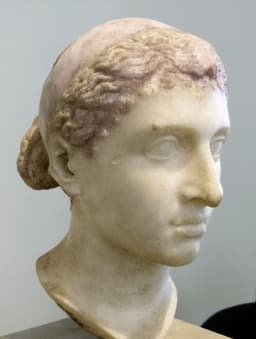
Cleopatra VII
Politician · Ancient
47.2Total
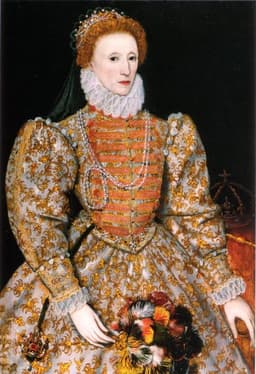
Elizabeth I
Politician · Modern
65.7Total
Basic Information
Born
-69
1533
Died
-30
1603
Era
Ancient
Modern
Nationality
Egypt
England
Occupation
Politician
Politician
Civilization
Middle Eastern
Western
Score Comparison
Military (10%)
20.0
45.0
Political (20%)
45.0
78.0
Influence (20%)
40.0
65.0
Legacy (20%)
80.0
68.0
Leadership (15%)
40.0
75.0
Strategy (15%)
25.0
50.0
TOTAL
47.2
65.7
Cleopatra VII — Complete Timeline
48 BC
Alliance with Julius CaesarPolitical Action◆ Major
Cleopatra allied with Julius Caesar during the Roman civil war. She had herself smuggled into his palace in Alexandria rolled in a carpet. Caesar supported her claim to the throne, defeating her brother Ptolemy XIII and restoring her as co-ruler of Egypt.
Impact: regional
47 BC
Birth of CaesarionPolitical Action◆ Major
Cleopatra gave birth to Ptolemy XV Caesar (Caesarion), claiming he was Julius Caesar's son. This birth strengthened her political position and provided a potential heir to both Egypt and Rome, though Caesar never officially acknowledged him as his heir.
Impact: regional
41 BC
Alliance with Mark AntonyPolitical Action◆ Major
Cleopatra formed a political and romantic alliance with Mark Antony, a Roman triumvir. She provided him with financial and military support for his campaigns in the East. Their relationship produced three children and solidified her control over Egypt.
Impact: regional
31 BC
Battle of ActiumWar
The combined naval forces of Cleopatra and Mark Antony were decisively defeated by Octavian's fleet under Agrippa at Actium in Greece. Cleopatra fled with her ships, and Antony followed, leading to their eventual downfall and Octavian's rise as Augustus.
Impact: globaltragic
30 BC
Death of CleopatraPolitical Action
After Octavian's forces captured Alexandria, Cleopatra died by suicide, traditionally said to be from the bite of an asp. Her death ended the Ptolemaic dynasty and Egypt became a Roman province, marking the end of Hellenistic Egypt's independence.
Impact: globaltragic
Elizabeth I — Complete Timeline
1559 AD
Act of Supremacy 1559Political Action◆ Major
Elizabeth I re-established the Church of England's independence from Rome, declaring herself Supreme Governor. This act, part of the Elizabethan Religious Settlement, restored Protestantism while maintaining some Catholic traditions, creating a via media that aimed to unify the nation.
Religious SettlementProtestantismChurch of England
Impact: nationalconstructive
1587 AD
Execution of Mary, Queen of ScotsPolitical Action◆ Major
After years of imprisonment, Elizabeth I signed the death warrant for Mary, Queen of Scots, who had been implicated in the Babington Plot to assassinate Elizabeth and claim the English throne. Mary's execution removed a major Catholic rival and solidified Elizabeth's position.
ExecutionCatholic RivalPlot
Impact: nationaltragic
1588 AD
Defeat of the Spanish ArmadaWar
The English navy under Lord Howard and Sir Francis Drake defeated the Spanish Armada, a massive invasion fleet sent by Philip II. Storms and English fireships scattered the Spanish fleet, preventing the invasion and establishing England as a major naval power.
Naval BattleSpainProtestantism
Impact: globalconstructive
1600 AD
Chartering of the East India CompanyPolitical Action◆ Major
Elizabeth I granted a royal charter to the East India Company, giving it a monopoly on English trade with Asia. This company would become a powerful instrument of British imperialism, eventually controlling large parts of India and shaping global trade.
TradeColonialismCharter
Impact: globalconstructive
1601 AD
Golden SpeechPolitical Action
In her final address to Parliament, Elizabeth I delivered the 'Golden Speech,' expressing her love for her subjects and her dedication to the realm. She addressed grievances over monopolies, promising reform, and cemented her image as a beloved monarch devoted to her people.
SpeechParliamentMonarchy
Impact: nationalconstructive
Expert Analysis
Cleopatra VII vs Elizabeth I
# The Queen and the Pharaoh: Two Women Who Defied Their Worlds
On a winter morning in 1601, an aging Elizabeth I stood before Parliament, her voice steady as she delivered what would become known as her Golden Speech. "Though God hath raised me high," she told them, "yet this I count the glory of my crown, that I have reigned with your loves." Across the centuries, another queen had once commanded a different kind of devotion. Cleopatra VII, draped in the silks of the Nile, had entered Julius Caesar's presence rolled in a carpet—a gesture as bold as it was theatrical. Both women ruled in ages dominated by men. Both faced empires that could crush them. Yet one died in her bed at sixty-nine, leaving a nation transformed, while the other died by her own hand at thirty-nine, leaving a kingdom swallowed by Rome. What made the difference?
Origins
Elizabeth was born in 1533 to Anne Boleyn, the second wife of Henry VIII—a marriage that had shattered England's ties with Rome. Her mother was executed when she was two years old, and Parliament declared Elizabeth illegitimate. She grew up in the shadow of the block, learning that survival meant silence, patience, and the careful reading of faces. Her education was rigorous: Latin, Greek, French, Italian, history, rhetoric. She learned to think like a scholar while watching courtiers like a hawk.
Cleopatra was born in 69 BCE into the Ptolemaic dynasty, a Greek family ruling Egypt from Alexandria. Her ancestors spoke Greek, dressed Greek, and kept their court Greek. But Cleopatra was different. She studied Egyptian language and religion, presenting herself as the living reincarnation of the goddess Isis. She was the first Ptolemy in three centuries to learn the language of her people. Where Elizabeth learned to navigate the treacherous currents of Tudor court politics, Cleopatra learned to navigate the even more dangerous currents of Roman ambition.
Rise to Power
Elizabeth's path to the throne was a narrow corridor between disaster and death. Her half-sister Mary I, a Catholic, imprisoned her in the Tower of London on suspicion of treason. Elizabeth survived by keeping her head down and her faith ambiguous. When Mary died in 1558, Elizabeth inherited a kingdom torn between Catholics and Protestants, bankrupt from war with France, and regarded by much of Europe as a bastard queen. She was twenty-five.
Cleopatra's rise was far more brutal. Her father Ptolemy XII had left the throne jointly to her and her younger brother Ptolemy XIII, whom she was expected to marry. Instead, her brother's advisors drove her into exile. She raised an army in Syria and marched on Alexandria. It was a civil war in miniature, and she was losing—until Julius Caesar arrived in pursuit of his rival Pompey. Cleopatra gambled everything on one meeting. She had herself smuggled past her brother's guards, rolled in a carpet, and presented to Caesar. He was fifty-two. She was twenty-one. Within months, she was his ally, his lover, and once again queen.
Leadership & Governance
Elizabeth governed through Parliament, but she understood that real power lay in the hearts of her people. She never married, turning her virginity into a political weapon. "I have the heart and stomach of a king," she told her troops at Tilbury in 1588, as the Spanish Armada approached. She surrounded herself with brilliant advisors—William Cecil, Francis Walsingham—and listened to them. She was cautious, frugal, and slow to war. When she signed the death warrant for Mary, Queen of Scots in 1587, it was after nineteen years of agonizing delay. Her military score of 45 reflects a queen who won wars through strategy and luck, not battlefield command.
Cleopatra ruled as an absolute monarch in the Hellenistic tradition. She controlled Egypt's grain, its treasury, and its bureaucracy directly. She was a capable administrator who stabilized a kingdom plagued by drought and corruption. Her alliances with Caesar and later Mark Antony were not mere romances; they were calculated acts of statecraft. She provided ships, money, and soldiers to Antony's campaigns. But her political score of 55 reveals a fundamental weakness: she could not build lasting institutions. Her power depended entirely on her personal relationships with Roman warlords, and when those relationships failed, her kingdom failed with them.
Triumph & Tragedy
Elizabeth's greatest triumph came in 1588. The Spanish Armada, the largest invasion fleet Europe had ever seen, sailed against England. A storm scattered the Spanish ships, and the smaller, faster English vessels harried them to destruction. It was not a decisive naval victory—more Spanish ships sank from weather and poor navigation than from English cannons—but it was a psychological triumph that cemented Elizabeth's legend. She followed this by chartering the East India Company in 1600, planting the seeds of an empire that would outlast her by three centuries.
Cleopatra's greatest moment was also her most tragic. At the Battle of Actium in 31 BCE, she and Antony faced Octavian's fleet. In the midst of battle, Cleopatra's ships fled, and Antony followed. Whether this was a planned retreat or a panic remains debated. What is certain is that it was a disaster. Octavian pursued them to Egypt, and within a year, both were dead. Cleopatra's suicide in 30 BCE, traditionally said to be from the bite of an asp, ended not just her life but the three-hundred-year rule of the Ptolemies. Egypt became a Roman province.
Character & Destiny
Elizabeth's defining trait was caution. She delayed decisions, balanced factions, and avoided commitments. She was frugal to a fault, suspicious of glory, and allergic to risk. This made her reign long and stable, but it also meant she often acted only when forced. Her refusal to marry created succession anxieties that haunted her final years. Yet her caution was born from a childhood spent watching heads roll. She knew that in politics, the bold often die young.
Cleopatra's defining trait was audacity. She seduced the most powerful men in the world, bore children to them, and dreamed of a global empire ruled by her dynasty. She was brilliant, multilingual, and ruthless. But audacity without institutional power is a gamble. She bet everything on Antony, and when he lost, she had nothing to fall back on. Where Elizabeth could afford to wait, Cleopatra could not. Rome was expanding, and Egypt was in its path.
Legacy
Elizabeth left behind a nation transformed. England was Protestant, stable, and beginning its ascent to global power. The arts flourished—Shakespeare, Marlowe, Spenser all wrote under her reign. Her legacy score of 75 reflects a queen whose influence shaped the next four centuries of British history. She is remembered as Gloriana, the Virgin Queen, the ruler who made England matter.
Cleopatra left behind a legend. Her story was rewritten by her enemies—Roman historians portrayed her as a seductress who corrupted noble Romans. But she also left something else: a model of resistance. She was the last pharaoh, the last independent ruler of ancient Egypt. Her legacy score of 50 is lower, but more personal. She is remembered not as a builder of institutions but as a woman who refused to bow, who chose death over humiliation, who made Rome work for her alliance even if she could not make it work forever.
Conclusion
In the end, the difference between these two queens is the difference between building a house on rock and building one on sand. Elizabeth built on the institutions of Parliament, common law, and a national church. Cleopatra built on the shifting loyalties of Roman generals. One played the long game, the other the short. One died in her bed, the other by her own hand. Yet both understood something that their male contemporaries often missed: that in a world of empires and armies, a woman could rule not by imitating men, but by mastering the arts of patience, persuasion, and the careful reading of human nature. Elizabeth's England still stands. Cleopatra's Egypt is dust. But the courage of both women remains, across the centuries, a testament to what it means to rule when the world expects you to obey.
Rankings
🥇
Elizabeth ILeader
Mil: 45.0Pol: 78.0Inf: 65.0
65.7
🥈
Cleopatra VII
Mil: 20.0Pol: 45.0Inf: 40.0
47.2
+18.5 behind
How This Comparison Works
Algorithm
Each figure is scored on 6 dimensions (0—100 scale) based on structured historical data: Military (10%), Political (20%), Influence (20%), Legacy (20%), Leadership (15%), Strategy (15%). The weighted total produces the final ranking.
Data Sources
Scores are computed from structured sub-indicators in the database. Scale factors adjust for era (Ancient ×0.85, Modern ×1.0) and civilization size (Eastern ×1.05, Other ×0.80) to account for differences in population and military scale.
Maximum 3 Figures
Comparisons are limited to 2—3 figures to ensure readability and statistical meaningfulness.
Error Margins
±5 points per dimension — Sub-scores are derived from historical records with inherent uncertainty. Two figures within 5 points on a dimension should be considered roughly equivalent in that area.
Total Score Accuracy
±3 points overall — The weighted combination of 6 dimensions produces a total score with approximately ±3 points of uncertainty. Differences of less than 3 points are not statistically significant— the figures are effectively tied.
Known Limitations
- Historical records are incomplete and uneven across civilizations
- Figures from oral-tradition societies may be underrepresented
- Occupation labels can misclassify multi-role figures
- Scores measure capability and impact, not moral character
- Quantitative scoring is a comparison tool, not absolute truth
Capability Radar
Military (10%) — Battles & Warfare
Battles
20
45
Win Rate
15
70
Expansion
10
55
Political (20%) — Governance & Reform
Reform
40
80
Diplomacy
85
85
Economy
55
80
Influence (20%) — Cultural & Global Reach
Cultural
80
85
Global
85
80
Legacy (20%) — Historical Impact
Historical
85
85
Longevity
90
85
Leadership (15%) — Power & Stability
Tenure
60
90
Stability
35
75
Strategy (15%) — Tactics & Innovation
Strategy
30
75
Tactics
25
60
Reform
10
65
Similar Comparisons
Comments & Discussion
DaggerAndCrown6/16/2026
Cleopatra was a genius strategist, not just a seductress. She spoke nine languages and ruled a multicultural empire while Elizabeth barely managed a small island. Let's stop romanticizing the virgin queen who used marriage as a political tool—Cleopatra actually built alliances with Caesar and Antony, securing Egypt's independence for over two decades. Elizabeth inherited a stable nation; Cleopatra inherited a crumbling dynasty on Rome's doorstep. Apples and oranges, but give the Nile its due.
铁血宰相6/16/2026
Elizabeth是现代间谍战的祖师爷。她建立了英格兰第一个高效情报网,用Walsingham把Mary Queen of Scots送上断头台。Cleopatra?全靠个人魅力收买罗马将领,一旦Antony战败就没了招数。Elizabeth活到70岁是因为她懂得让敌人互相残杀,Cleopatra39岁就咬蛇自尽是因为她赌错了最后一局。政治智慧不在颜值,在冷血。
NumismaticNerd6/16/2026
Look at their coins, not the Hollywood versions. Elizabeth's portraits show a controlled ruler—steady gaze, elaborate dress, symbolic pearls for virginity. Cleopatra's coins from 35-34 BCE show a hooked nose, strong chin, and masculine features. She wasn't a beauty; she was a commander. One wore a mask of femininity to rule, the other wielded raw authority. Yet both minted propaganda that worked—Elizabeth's "Faerie Queene" imagery, Cleopatra's "New Isis" cult. Coinage never lies about power.
丝绸与玫瑰6/16/2026
Elizabeth最牛的遗产是文化品牌打造。莎士比亚、马洛、斯宾塞全在她治下爆发出最高创造力,她把英国从宗教废墟变成文艺复兴乐园。Cleopatra只有Alexandria图书馆的余晖,她的文化影响力全部来自罗马人的丑化描写。一个创造了黄金时代,一个只是时代的注脚。别拿毒蛇和凤凰比,她们根本不在一个量级。
ParchmentPirate6/16/2026
Both monarchies failed differently. Cleopatra's endgame was a direct consequence of Ptolemaic inbreeding—her father Auletes was a drunk, her siblings were murderers, and she married her own brother. Elizabeth's Tudors were fresh blood strategically married. One dynasty crumbled from internal rot, the other from infertility. Cleopatra fought Rome with her wits, Elizabeth outlasted Spain through luck and weather. Give me the Egyptian's courage over the Englishman's Armada storms any day.