Loading...
Abraham Lincoln vs Elizabeth I
Abraham Lincoln leads by 11.8 pts · 2 figures compared
…
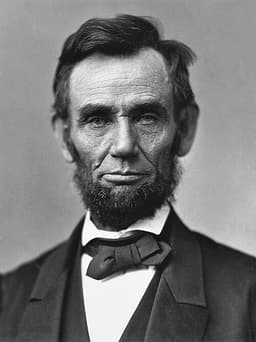
Abraham Lincoln
Politician · Modern
77.5Total
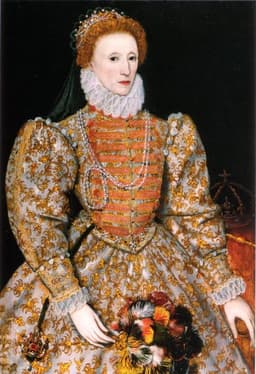
Elizabeth I
Politician · Modern
65.7Total
Basic Information
Born
1809
1533
Died
1865
1603
Era
Modern
Modern
Nationality
United States
England
Occupation
Politician
Politician
Civilization
Western
Western
Score Comparison
Military (10%)
50.0
45.0
Political (20%)
88.0
78.0
Influence (20%)
80.0
65.0
Legacy (20%)
82.0
68.0
Leadership (15%)
85.0
75.0
Strategy (15%)
60.0
50.0
TOTAL
77.5
65.7
Abraham Lincoln — Complete Timeline
1861 AD
Suspension of Habeas CorpusPolitical Action◆ Major
Lincoln suspended the writ of habeas corpus in parts of the Union, allowing the military to arrest and detain suspected Confederate sympathizers without trial. This action was controversial and challenged civil liberties during wartime.
Habeas CorpusCivil LibertiesCivil War
Impact: nationaldestructive
1862 AD
Signing of the Homestead ActPolitical Action◆ Major
Lincoln signed the Homestead Act, granting 160 acres of public land to settlers for a small fee. This encouraged westward expansion and agricultural development, but also displaced Native American tribes.
Homestead ActWestward ExpansionLand Policy
Impact: nationalconstructive
1863 AD
Emancipation ProclamationPolitical Action
Lincoln issued the Emancipation Proclamation, declaring slaves in Confederate states free. This shifted the Civil War's focus to ending slavery and allowed African Americans to join the Union Army.
EmancipationCivil WarSlavery
Impact: globalprogressive
Gettysburg AddressCultural◆ Major
Lincoln delivered the Gettysburg Address at the dedication of the Soldiers' National Cemetery. The speech redefined the Civil War as a struggle for national unity and equality, and became one of the most famous speeches in US history.
Gettysburg AddressCivil WarOratory
Impact: nationalconstructive
1865 AD
Assassination by John Wilkes BoothOther
Lincoln was shot by John Wilkes Booth at Ford's Theatre in Washington, D.C., and died the next day. His assassination occurred just days after the Civil War ended, plunging the nation into mourning and affecting Reconstruction.
AssassinationCivil WarReconstruction
Impact: nationaltragic
Elizabeth I — Complete Timeline
1559 AD
Act of Supremacy 1559Political Action◆ Major
Elizabeth I re-established the Church of England's independence from Rome, declaring herself Supreme Governor. This act, part of the Elizabethan Religious Settlement, restored Protestantism while maintaining some Catholic traditions, creating a via media that aimed to unify the nation.
Religious SettlementProtestantismChurch of England
Impact: nationalconstructive
1587 AD
Execution of Mary, Queen of ScotsPolitical Action◆ Major
After years of imprisonment, Elizabeth I signed the death warrant for Mary, Queen of Scots, who had been implicated in the Babington Plot to assassinate Elizabeth and claim the English throne. Mary's execution removed a major Catholic rival and solidified Elizabeth's position.
ExecutionCatholic RivalPlot
Impact: nationaltragic
1588 AD
Defeat of the Spanish ArmadaWar
The English navy under Lord Howard and Sir Francis Drake defeated the Spanish Armada, a massive invasion fleet sent by Philip II. Storms and English fireships scattered the Spanish fleet, preventing the invasion and establishing England as a major naval power.
Naval BattleSpainProtestantism
Impact: globalconstructive
1600 AD
Chartering of the East India CompanyPolitical Action◆ Major
Elizabeth I granted a royal charter to the East India Company, giving it a monopoly on English trade with Asia. This company would become a powerful instrument of British imperialism, eventually controlling large parts of India and shaping global trade.
TradeColonialismCharter
Impact: globalconstructive
1601 AD
Golden SpeechPolitical Action
In her final address to Parliament, Elizabeth I delivered the 'Golden Speech,' expressing her love for her subjects and her dedication to the realm. She addressed grievances over monopolies, promising reform, and cemented her image as a beloved monarch devoted to her people.
SpeechParliamentMonarchy
Impact: nationalconstructive
Expert Analysis
Abraham Lincoln vs Elizabeth I
# The Throne and the Log Cabin: How Elizabeth I and Abraham Lincoln Forged Their Legacies
On a grey January morning in 1603, an aging queen stood before her Parliament, her voice trembling with emotion as she delivered what would be remembered as the "Golden Speech." "Though God hath raised me high," Elizabeth I declared, "yet this I count the glory of my crown: that I have reigned with your loves." Across the Atlantic and two and a half centuries later, a gaunt man in a black suit climbed a wooden platform in rural Pennsylvania to speak of a "new birth of freedom." Abraham Lincoln's Gettysburg Address lasted barely two minutes; the photographer never even had time to set up his plate. Yet those 272 words would echo through history as powerfully as any royal decree. What connects these two figures—a queen born to rule and a frontiersman who rose from nothing—is not their circumstances, but their shared burden: to hold a nation together when everything conspired to tear it apart.
Origins
Elizabeth Tudor entered a world of peril. Born in 1533 to Henry VIII and Anne Boleyn, she was declared illegitimate at age two when her mother was executed. Her childhood was a gauntlet of shifting alliances, religious upheaval, and constant suspicion. She learned early that survival meant reading people, masking emotions, and never showing her hand. Elizabeth's education was rigorous—she mastered Latin, Greek, French, and Italian—but her true schooling came in the Tower of London, where her half-sister Mary imprisoned her on suspicion of treason. She emerged not broken, but steeled.
Abraham Lincoln, born in 1809 in a one-room log cabin in Kentucky, knew a different kind of hardship. His mother died when he was nine; his father moved the family relentlessly through the frontier. Lincoln had barely a year of formal schooling. What he possessed was an insatiable hunger for words—he walked miles to borrow books, read by firelight, and taught himself law while splitting rails for fence posts. Where Elizabeth learned to navigate courts, Lincoln learned to navigate forests, rivers, and the rough democracy of frontier politics.
Their eras shaped them differently. Elizabeth came of age when monarchy was absolute and religion was the currency of power. Lincoln emerged when democracy was still an experiment, and the question of whether it could survive was not yet settled.
Rise to Power
Elizabeth's path to the throne was a narrow corridor through dynastic chaos. When her Catholic half-sister Mary died in 1558, England was impoverished, divided, and threatened by the great Catholic powers of Europe. Elizabeth, at twenty-five, inherited not just a crown but a crisis. Her first major act—the Act of Supremacy of 1559—reestablished the Church of England's independence from Rome, but she crafted it as a compromise, a middle way that could hold both Protestants and moderate Catholics. It was a political masterpiece, not a theological crusade.
Lincoln's rise was slower, more improbable. He lost his first election, failed in business, and suffered a nervous breakdown. But he kept running—for the Illinois legislature, for Congress, for the Senate. In 1858, he debated Stephen Douglas across Illinois and lost the Senate race, but won a national reputation. When the Republican Party nominated him in 1860, he was the compromise candidate, the one who offended the fewest factions. He won with less than forty percent of the popular vote. Within weeks, Southern states began seceding.
Leadership & Governance
Here the comparison sharpens. Elizabeth ruled through indirection. She cultivated an image of the Virgin Queen, wedded to her people, while playing European powers against each other. She never married, never committed to an alliance that would compromise English independence. Her political score of 82 reflects a master of maneuver: she charmed, delayed, equivocated, and survived. When the Spanish Armada sailed in 1588—a fleet of 130 ships carrying 30,000 men—she did not lead the navy herself, but she rode to Tilbury in armor and delivered a speech that became legend: "I know I have the body of a weak and feeble woman, but I have the heart and stomach of a king."
Lincoln governed differently. He was direct where Elizabeth was oblique. When the Civil War began, he suspended habeas corpus—a decision historians still debate—to suppress dissent. He signed the Homestead Act in 1862, giving 160 acres of public land to settlers, transforming the American West. But his greatest act was the Emancipation Proclamation of 1863, which declared slaves in Confederate states free. It was a military necessity as much as a moral one, but it changed the war's meaning. Lincoln's political score of 88 reflects not cunning but conviction—a willingness to use every power of the presidency to preserve the Union.
Triumph & Tragedy
Elizabeth's greatest triumph was the defeat of the Spanish Armada in 1588. It was not a clean victory—the English fireships and the weather did as much damage as the navy—but it was decisive. Spain never recovered its naval supremacy, and England emerged as a Protestant power that could challenge the greatest empire in the world. Yet her reign also held tragedy. The execution of Mary, Queen of Scots in 1587 haunted Elizabeth for years. She signed the death warrant reluctantly, then claimed it had been sent without her consent. It was the act of a queen who knew that mercy could be fatal.
Lincoln's triumph was the preservation of the Union. When he delivered the Gettysburg Address in November 1863, the war was far from over, but the meaning of the war had been redefined. He spoke of a nation "conceived in liberty and dedicated to the proposition that all men are created equal." It was not a speech about victory; it was a speech about purpose. His tragedy came five days after the Confederate surrender, when John Wilkes Booth shot him at Ford's Theatre on April 14, 1865. Lincoln died the next morning, never seeing the peace he had fought to build.
Character & Destiny
Elizabeth's character was shaped by survival. She was cautious, calculating, and deeply private. She trusted almost no one completely—and she was right not to. Her motto, *Semper Eadem* ("Always the Same"), was a mask. Behind it, she was constantly adapting. Her strategy score of 55 reflects a queen who preferred diplomacy to war, patience to action. She understood that time was often her greatest ally.
Lincoln's character was shaped by loss. He buried a mother, a sister, and two of his four sons. He suffered from deep depressions he called "the hypo." Yet he carried a profound belief in the Union, not as a piece of territory but as an idea. His strategy score of 65 reflects a commander who learned war by waging it, who fired generals until he found Ulysses S. Grant, who understood that emancipation was both a moral imperative and a military weapon.
Legacy
Elizabeth left a golden age—Shakespeare, the defeat of Spain, the East India Company chartered in 1600, the foundations of empire. She is remembered as Gloriana, the Virgin Queen, the symbol of an England that found its confidence. Her legacy score of 75 reflects a reign that defined an era.
Lincoln left a preserved Union and a transformed nation. The Thirteenth Amendment, passed just before his death, abolished slavery. The Homestead Act opened the West. His words—"government of the people, by the people, for the people"—became the definition of democracy itself. His legacy score of 80 reflects a martyr who died for his cause, but also a leader who lived long enough to see it through.
Conclusion
One was born to a throne, the other to a log cabin. One ruled through indirection, the other through conviction. One died in her bed after forty-five years, the other on a theater floor in the fifth year of a war. Yet both faced the same question: Can a nation divided against itself stand? Elizabeth answered by building a middle way, a Church of England that could hold competing faiths. Lincoln answered by fighting a war to prove that "a house divided against itself cannot stand." They governed differently because their worlds were different—one a world of courts and dynasties, the other a world of constitutions and democracies. But they shared the same burden: to hold something together when everything was breaking apart. And in that, they remain not just historical figures, but mirrors for every leader who has ever faced the fragile work of preserving a nation.
Rankings
🥇
Abraham LincolnLeader
Mil: 50.0Pol: 88.0Inf: 80.0
77.5
🥈
Elizabeth I
Mil: 45.0Pol: 78.0Inf: 65.0
65.7
+11.8 behind
How This Comparison Works
Algorithm
Each figure is scored on 6 dimensions (0—100 scale) based on structured historical data: Military (10%), Political (20%), Influence (20%), Legacy (20%), Leadership (15%), Strategy (15%). The weighted total produces the final ranking.
Data Sources
Scores are computed from structured sub-indicators in the database. Scale factors adjust for era (Ancient ×0.85, Modern ×1.0) and civilization size (Eastern ×1.05, Other ×0.80) to account for differences in population and military scale.
Maximum 3 Figures
Comparisons are limited to 2—3 figures to ensure readability and statistical meaningfulness.
Error Margins
±5 points per dimension — Sub-scores are derived from historical records with inherent uncertainty. Two figures within 5 points on a dimension should be considered roughly equivalent in that area.
Total Score Accuracy
±3 points overall — The weighted combination of 6 dimensions produces a total score with approximately ±3 points of uncertainty. Differences of less than 3 points are not statistically significant— the figures are effectively tied.
Known Limitations
- Historical records are incomplete and uneven across civilizations
- Figures from oral-tradition societies may be underrepresented
- Occupation labels can misclassify multi-role figures
- Scores measure capability and impact, not moral character
- Quantitative scoring is a comparison tool, not absolute truth
Capability Radar
Military (10%) — Battles & Warfare
Battles
15
45
Win Rate
20
70
Expansion
0
55
Political (20%) — Governance & Reform
Reform
95
80
Diplomacy
80
85
Economy
70
80
Influence (20%) — Cultural & Global Reach
Cultural
85
85
Global
85
80
Legacy (20%) — Historical Impact
Historical
95
85
Longevity
90
85
Leadership (15%) — Power & Stability
Tenure
65
90
Stability
55
75
Strategy (15%) — Tactics & Innovation
Strategy
55
75
Tactics
10
60
Reform
60
65
Similar Comparisons
Comments & Discussion
LogCabinStrategist6/16/2026
Lincoln’s military instincts as commander-in-chief actually surpassed Elizabeth’s. While she relied on Drake and sea dogs for naval gambles, Lincoln personally overrode timid generals like McClellan to push total war—Sherman’s March to the Sea was his brainchild. The Emancipation Proclamation was a strategic masterstroke that turned European sympathy into Union leverage. A queen delegates; a log-splitter commands.
数据破壁者6/16/2026
Elizabeth ruled 44 years to Lincoln’s four, yet her England had half the population and no steamships. Population of England in 1558: ~3 million. US in 1860: 31 million. She never faced a war that killed 2% of her people. Lincoln’s Civil War losses would be proportional to England losing 60,000 citizens—Elizabeth’s entire court. Scale matters. Stop romanticizing. Lincoln operated on a continent-sized chessboard.
GoldenSpeechSkeptic6/16/2026
That “Golden Speech” was pure political theater. Elizabeth knew Parliament held the purse strings—she’d already sold crown lands to fund her wars. Lincoln’s Gettysburg Address had zero self-interest; he wasn’t securing a pension or legitimizing a dynasty. Elizabeth wrapped herself in virginity myths to avoid sharing power; Lincoln wrapped himself in an old shawl and signed the Homestead Act. One performed power, the other redistributed it.
紫袍女王控6/16/2026
Elizabeth ruled without a standing army or police state—she kept England Catholic-Protestant peace for decades with sheer charisma and spy networks. Walsingham’s intelligence unraveled the Babington Plot. Lincoln had to suspend habeas corpus and jail newspaper editors. The queen never threw a journalist in the Tower for criticizing her war policy. She held unity through persuasion; Lincoln through suppression. Fix your categories before comparing.
战争与修辞6/16/2026
Lincoln’s 272 words at Gettysburg rewrote the nation’s founding DNA—he made the Declaration of Independence the real constitution. Elizabeth’s Tilbury speech (“I know I have the body of a weak and feeble woman”) was dramatic but she never actually fought. Lincoln visited battlefields, comforted wounded soldiers, and lost sleep over casualty lists. He felt the war in his bones. She felt the throne in her joints. That’s the difference between a ruler and a leader.